Introduction
Because of the critical relationship between the diet and human wellbeing, consumers worldwide pay close attention to the choice of right food and its nutritional composition1,2,3. Natural antioxidant-rich foods are becoming increasingly popular around the world. Natural antioxidants from plant sources are used to supplement an extensive foods and dairy items’ range4,5,6,7,8. Milk is usually used in the development of various food products9. The structure of milk is an important, since it affects the consistency of the finished product. The relative proportion of milk components vary greatly between the dairy animals based on their types, breeds, practices of milking, lactation stage, season, climate, and the feed given. While buffalo milk is considered as a good source of fat and other nutrients10,11. Because of its special nutritional profile, buffalo milk is receiving increased scientific interest and ventures in many countries. It’s high in cholesterol, protein, lactose, minerals, and vitamins12. For human diet milk is considered as healthy and essential food13. It is a gift from nature as it contains almost all food components in proper proportion, which are essential for human health14. Various physical forms like cheese, butter, concentrated milk, fermented milk, buttermilk, ice cream, yoghurt and yoghurt like products, utilize milk and its components15. Other dairy products besides milk have been made and consumed for centuries all over the world. Dairy products have a substantial impact on human health, as various studies have looked at both the overall product and individual components to determine this health promoting potential16. Dairy products account for about 25–30% of an individual’s total diet17.
Yoghurt is considered as an ideal food because of its splendid aromatic flavor and thick creamy consistency. The product is called as yoghurt with the specified use of bacterial cultures and presence of high bacterial content18. Consumption of yoghurt is increasing all around the globe however aroma, flavor and consistency of the yoghurt vary from area to area, and these factors depend on various factors19. Moisture content is high in yoghurt and its texture is affected by the presence of good quality proteins, stabilizers, fruits and total solids. Due to the therapeutic properties of yoghurt, it is produced and consumed all over the globe20. However, scientists are always in search to modify the physicochemical and bioactive contents of the yoghurt in a way that it could become healthier and more functional. For this purpose, at different times different plant materials, rich in bioactives have been tried to be added in the yoghurt formulations.
Moringa is genus of flowering plant of family Moringaceae. Total 13 species combine to form the genus Moringa. Moringa oleifera is the general genus Moringa specie and is found in numerous tropical and subtropical areas. This plant has a high potential for people, particularly those living in under develop and developing countries suffering from malnutrition, poverty, poor health, unemployment and separation in international trade. As reported in many studies, the Moringa oleifera leaves have significantly high content of protein and iron. The leaves of this plant are rich in B complex vitamins, iron, potassium and calcium21,22. Due to the substantial number of flavonoids, phenolics, carotenoids and ascorbic acid, Moringa oleifera leaves are considered as great source of antioxidants23,24,25. The use of plants and their byproducts in dairy products has been gaining importance and several trials have been found in the literature aiming to improve the nutritional and antioxidant abilities of the dairy products7,8. Yoghurt fortified with Moringa oleifera have showed promise as a functional food with higher antioxidant qualities and a better nutritional profile, according to an analysis by Azis et al.26. Higher concentrations, however, could result in unfavorable sensory qualities as astringency and greenish coloring, which could influence customer approval. In a recent study, Getsemani et al.27 investigated the incorporation of Moringa oleifera seeds in yoghurt, and changes in microbial and antioxidant properties were observed. In another relevant study, Sari et al.28 studied the effect of Moringa oleifera leaves extracts on the physicochemical and antioxidant quality of the frozen yoghurt, however, the authors have not performed sensory analysis. In a study by Shokery et al.29, ten bio-stirred set type yoghurt samples were prepared with different concentrations of Moringa oleifera leaves powder. The scientists verified that adding more Moringa oleifera powder to probiotic yoghurt greatly improves the symbiotic condition, offers health advantages, and is regarded as a crucial prebiotic component for the probiotic adjunct strains. Powdered Moringa oleifera leaves are a useful addition to food products and can be used as a fortifier in any edible product. It’s a great plant food with health benefits because it’s a good source of minerals, vitamins, phenolics, proteins, unsaturated fats, and folates30,31. The acceptance of the finished product is adversely affected when large concentrations of plant powders or extracts, for example of Moringa oleifera, are added to the yoghurt. These effects include greenish colorations, herbal flavors, and changes in the physicochemical qualities26. However, at the same time the high concentrations of these powders and extracts also enhance the functional characteristics of fortified yoghurts, through provision of different bioactive components. Therefore, it is vital to investigate what concentration of dried Moringa oleifera leaves powder would prove optimum to develop the yoghurt that may conform the standards of dairy foods but having high nutritional and antioxidant contents. Thus, Moringa oleifera leaf powder could be considered as appropriate contender to be used in the development of yoghurt due to its significant amount of nutrients and bioactive components. Therefore, the purpose of this study was to utilize dried Moringa oleifera leaf powder at different concentrations in the buffalo milk, to develop functional yoghurt with high nutritional and antioxidant contents. Further, the developed yoghurt formulations were stored for 21 days at refrigerated temperature to assess the changes occurred in different quality parameters, during 7 days of interval.
Materials and methods
The plant materials used in this work are cultivated and no permission was required for their use. Further, national/International guidelines were followed for the use of plant materials.
Procurement of raw materials
This research was conducted at IFSN, UOS, Sargodha, Pakistan, during the year 2022-23. For the research project, the raw materials were purchased from the local market of Sargodha, Pakistan. Yoghurt starter cultures (Lactobacillus bulgaricus and Streptococcus thermophilus) of CHR-Hansen, Denmark were purchased from Alpha scientific store, Sargodha, Pakistan. Moringa leaves of specie Moringa oleifera were carefully selected from local market and brought to the laboratory for further experiments. Full fat fresh buffalo milk was collected from Sadiq dairy farm Sargodha. After collection, milk was homogenized (55 °C, 20 Mpa) and pasteurized (65 °C, 15 min) for further use to develop yoghurt for the research work. All the chemical and reagents were of analytical grade and were procured from Aladdin chemicals Shanghai China and Sigma Aldrich Germany.
Procedure for moringa leaves powder manufacturing
After collection of leaves, they were washed with tap water and dried in a microwave oven (Model R-3556 M, 2450 MHz, Sharp Electronics Ltd., UK) using 800 W power, at 60 °C, as was guided by Hussain et al.4. After drying, these leaves were grounded to form fine powder with 50 mesh size, by using stainless steel grinding machine and 0.5 mm diameter plastic sieve. The final powder was carefully packed and stored in polythene pouches under standard laboratory conditions.
Analysis of moringa leaves powder
Moringa oleifera leaves powder was analyzed for its proximate composition following the procedures detailed by AOAC32. Briefly, ash of Moringa oleifera leaves powders was examined according to AOAC32 method No. 923.03, moisture was determined following the method No. 925.10, For protein content Kjeldahl’s method was used, for fat contents Soxhlet method was used, and fiber contents were determined by method No 962.09. Whereas nitrogen free extract (NFE) was determined by difference method by using the formula as; [100 – (fat% + protein% + ash% + moisture%)].
Analysis of milk and yoghurt
Determination of fat content
Fat concentration of milk and yoghurt was evaluated by Gerber method as reported by Gurd et al.33. Briefly explaining, sulphuric acid (10 mL) was poured into butyrometer and then 10.94 mL of sample was also slowly mixed in the acid. Sample was added slowly into butyrometer followed by 1 mM of isoamyl alcohol. Thorough mixing and centrifugation of the contents of butyrometer was done at 1100 rpm for 5 min. Butyrometer was relocated to a water bath for about 3 min at 65 °C and percentage of fat was noted directly from scale of butyrometer.
Determination of protein content
As previously described for Moringa oleifera leaves powder, the protein content of milk and yoghurt was determined using the Kjeldahl’s method, following the protocols given in method No. 991.20 of AOAC32,.
Determination of total solids (TS)
TS of milk were determined by method No. 925.23 given by AOAC32. Briefly explaining a known amount of milk samples was placed in crucible and relocated in hot air oven for drying. The content of total solids in milk was experimented by drying the milk to constant weight at 105 °C overnight using a laboratory scale heating oven, and adopting the below given formula (Eq. 1);
$$:text{T}text{o}text{t}text{a}text{l}:text{s}text{o}text{l}text{i}text{d}text{s}:left(text{%}right)=:frac{text{W}text{e}text{i}text{g}text{h}text{t}:text{o}text{f}:text{d}text{r}text{i}text{e}text{d}:text{s}text{a}text{m}text{p}text{l}text{e}:left(text{g}right)}{text{W}text{e}text{i}text{g}text{h}text{t}:text{o}text{f}:text{s}text{a}text{m}text{p}text{l}text{e}}times:100$$
Determination of solids not fat (SNF)
The SNF content in milk was calculated by the difference in TS and fat content of the milk, as has been given in the formula below (Eq. 2);
$$:text{S}text{N}text{F}:left(text{%}right)hspace{0.17em}=hspace{0.17em}text{T}text{S}:text{o}text{f}:text{m}text{i}text{l}text{k}:text{a}text{f}text{t}text{e}text{r}:text{d}text{r}text{y}text{i}text{n}text{g}: -text{o}text{r}text{i}text{g}text{i}text{n}text{a}text{l}:text{f}text{a}text{t}:text{i}text{n}:text{t}text{h}text{e}:text{m}text{i}text{l}text{k}$$
Determination of pH
Electronic digital pH meter (Inolab WTW Series 720) was used to determine the pH of milk. Calibration of the pH meter was done by the buffer solution of pH 4 and 7. Electrodes of pH meter were immersed into the milk sample taken in a beaker to determine pH, following the procedure provided by AOAC32,, and taking guidelines from the study of Fatima et al.34.
For pH determination of yoghurt, the sample was lightly stirred for brief period of time and then pH probe was inserted in the sample and reading was taken. All yoghurt samples were tested for pH with the same technique using same apparatus. After incubation and on 1 st day intervals, pH of each of the sample was determined and recorded. The pH values of all the samples stored at 4 °C were also examined after 7, 14 and 21 days of interval, according to the guidelines of AOAC32,.
Determination of titratable acidity
Method No. 947.05 given in AOAC32, was used to determine the titratable acidity of the buffalo milk sample. Briefly, 2–3 drops of phenolphthalein were added to titration flask including 9 mL f milk sample. The sample comprising indicator was titrated against 0.1 N NaOH until the appearance of light pink color. Volume of 0.1 N NaOH used was noted to evaluate the acidity of sample in terms of lactic acid by utilizing formula given below (Eq. 3);
Similarly, according to the procedure given in AOAC32, the determination of titratable acidity of yoghurt was also carried out for each treatment. In a beaker, 10 mL of a thoroughly blended, homogenous yoghurt sample was diluted with 20 mL of distilled water. As an indication, two to three drops of phenolphthalein solution were then added. This was titrated against a solution of 0.1 N sodium hydroxide until a light pink color appeared, which might last for around 30 s. The percent of titratable acidity was measured following the below given formula (Eq. 3);
$$:text{%}:text{T}text{i}text{t}text{r}text{a}text{b}text{l}text{e}:text{a}text{c}text{i}text{d}text{i}text{t}text{y}=:frac{0.009:times:text{v}text{o}text{l}.:text{o}text{f}:text{N}text{a}text{O}text{H}:text{u}text{s}text{e}text{d}}{text{W}text{e}text{i}text{g}text{h}text{t}:text{o}text{f}:text{t}text{h}text{e}:text{s}text{a}text{m}text{p}text{l}text{e}}times:100$$
Manufacturing of yoghurt
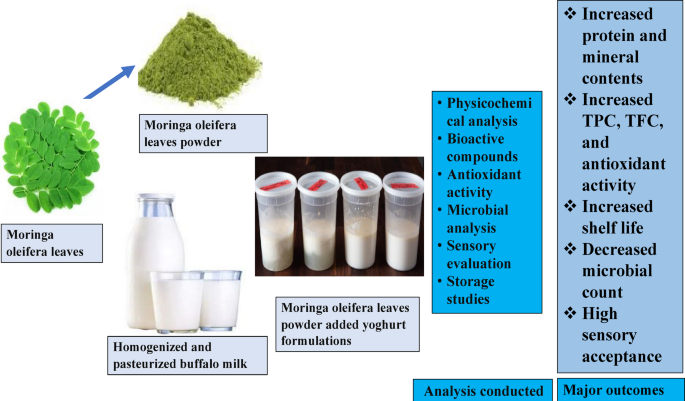
Yoghurt with and without Moringa oleifera leaves powder was prepared by using same concentration of bacterial culture and different percentages of Moringa oleifera leaves powder. Control sample was prepared by 1 L of buffalo milk, and using 2% sugar and 2.5% yoghurt culture in the same 1:1 ratio. Milk was heated to destroy harmful microorganisms. The incubation temperature (45 °C) and time (6 h) was same for all samples. Milk was cooled to about to 4 °C to control the growth of micro-organisms and enzymatic activities. The whole process of yoghurt manufacturing was in accordance to the guidelines provided by Ahari and Massoud35,. Different treatments of yoghurt having different concentrations of the Moringa oleifera leaves powder have been shown in Table 1, and a graphical representation of this work is shown in Fig. 1.

Graphical representation of the work.
Analysis of yoghurt
All proximate analysis, physicochemical analysis, antioxidant potential, and mineral analysis of yoghurt were performed after 0, 7, 14, and 21 days, during the storage.
Determination of TPC
The TPC, TFC, and antioxidant capacity of the yoghurts were assessed using an extraction method according to Gomes et al.36. To do that, 8 mL of ethanol was combined with 2 g of each sample. The combination was vortexed for one min, and then it was immersed in an ultrasonic bath for five min. The same process was repeated twice. Last but not least, the samples were centrifuged for 20 min at 3000 rpm in order to analyze the TPC and TFC further. After that, the supernatant was gathered and stored in the dark at 4 °C. The Folin–Ciocalteu technique was used to calculate the TPC of the yoghurt extracts. First, 20 µL of each extract was mixed with 1580 µL of water and 100 µL of Folin-Ciocalteu reagent. After 3–6 min, 300 µL of sodium carbonate was added, and the mixture was left to rest at room temperature in the dark for two hr. The absorbance at 750 nm was ultimately measured using a spectrophotometer (Thermo Fisher Scientific, Waltham, MA, EUA). Three measurements were made for each. The data were expressed in mg gallic acid equivalents (GAE)/g after a calibration curve for gallic acid was created.
Determination of TFC
The TFC of the yoghurt formulations was assessed using the aluminium chloride colorimetric technique in compliance with the instructions provided by Hussain et al.37. The absorbance at 510 nm was measured using the same spectrophotometer that was previously reported for TPC, and a standard curve was created using catechin. The findings were given as mg catechin equivalents (CE)/g. Every experiment was run three times in order to get the mean data.
Antioxidant activity (DPPH assay)
The antioxidant activity of yoghurt samples was determined using the method of Brand-Williams et al.38, with slight modifications. Briefly, divided into 200 µL aliquots, each sample was mixed with 1.0 mL of 0.1 mM DPPH in ethanol. The reaction mixture was thoroughly shaken and then allowed to react at room temperature for 20 min. The residual DPPH free radical was identified by measuring the absorbance at 517 nm using a spectrophotometer (UNICO SQ2802S, UNICO Co. Suite E Dayton, New Jersey, USA) and comparing the results to trolox blanks. The control was a 0.1 mM DPPH solution without extract, while the blank was pure methanol. Each measurement was performed three times, and the percentage of antioxidant activity was the output.
Minerals analysis
In 100 mL digestion flask, 1 mL of yoghurt was mixed with 10 mL of concentrated nitric acid. Heating was done for the time period of 20 min. Afterwards; cooling was done at room temperature. Then 5 mL of perchloric acid (Panreac quimica SA) was added and heating was done vigorously till the appearance of white fumes, and reduction of the sample to 2–3 mL. By adding 50 mL re-distilled water the final volume was made. Mineral’s concentration was determined by atomic absorption spectrophotometric as reported by Hussain et al.37. The concentration of minerals was calculated by using graphite atomic absorption spectrophotometry with an Analyst 800 (Perkin Elmer, USA). The maximum absorbance was pursued by the adjustment of the cathode lamp at specific wave lengths and slit. For graphite furnace measurements, inert gas used was argon. Graphite tubes coated pyrolytically with a platform was used. Single element hollow lamps were used for calculation of measurements like integrated absorbance peak areas. The results were expressed as mg/kg.
Microbial analysis (total plate count)
The sample was prepared by using normal saline solution as by mixing 8.9 g sodium chloride in 1 L of water, the saline solution was prepared. Afterwards, media was prepared by taking 15 g plate count agar, which was weighed and dissolved in distilled water (1 L), and then sterilized for 15 min at 121 °C. The method of media preparation was adopted from the study of Mada et al.39. Samples were prepared by taking 9 mL of prepared normal saline, which was poured into sterilized test tubes for the preparation of dilution blank. Micropipette ware was used for inoculation, and only one tip was used for one milk sample. A fresh tip dipped half an inch into the liquid, sucked up and down the sample ten times to mix it thoroughly. Each 1 mL sample was taken and relocated to next dilution blank. The tip was discarded and the process was recurring till the requisite number of dilutions was obtained. Afterwards, on the surface of separate nutrient agar plates, 1 mL concentration from every dilution was spread and shifted well. These plates were incubated for 24 h at 37 °C. Counting of colonies of average numbers was done from those dilutions and total plate count was determined using below given formula (Eq. 4);
$$:Total:Plate:Count:left(TPCright)=:Average:numbers:of:colonies:times:dilution: factor/{volume} :TPC:was:expressed:as:CFU/ml$$
Sensory evaluation
Using a 9-point hedonic scale, the sensory qualities of yoghurt were assessed for texture, appearance, color, flavor, and general acceptability during the course of a 21-day storage period. This approach was followed by Rafique et al.40. The finished product’s quality and accessibility were assessed by semi-trained panelists from the University of Sargodha’s Institute of Food Science and Nutrition. The panelists were provided with brief recommendations regarding the procedures and technique of sensory evaluation. The evaluation was conducted at room temperature and under standard lighting. There were thirty male and twenty-five female participants in the sensory panel, aged thirty to forty. A score of one signified extreme poverty; two very poor; three poor; four below fair and above fair; five as fair; six below fair and below poor; seven good; eight very good; and nine excellent. In order to facilitate evaluation, code numbers were allocated to the yoghurt samples placed in the disposable plates, and panelists were given bottles of distilled water to rinse and neutralize. Sensory evaluation performa has been provided at the end of document, as Appendix 1.
Statistical analysis
Results, which were obtained from various parameters were evaluated statistically by using TWO-WAY Analysis of Variance Technique (ANOVA) under least significant difference (LSD) test as selected by Steel et al.41 to analyze the effects on acceptability and quality of yoghurt statistically, by Statistix 8.1 software (Analytical software Tllahassee, FL, USA). LSD pair wise comparison was completed at a significance level of p ≤ 0.05 and p < 0.01.
Results and discussion
Proximate analysis of moringa oleifera leaves powder
The Moringa oleifera leaves powder was evaluated for the proximate composition i.e., moisture, crude protein, crude fiber, crude fat, ash and NFE, and the results of the analysis are given in Fig. 2. From the results, it can be seen the Moringa oleifera leaves powder is a good source of ash, fiber and protein, while presents quite low amount of moisture. In a relevant study, Saeed et al.42 also found that Moringa oleifera leaves powder contained moisture 8.36%, ash 10.72%, protein 25.43% and fibre 19.47%. Their results were very similar to results of the current study, revealing Moringa oleifera leaves powder to be a good source of nutrients. Present results were also supported when Shokery et al.43 found that Moringa oleifera leaves powder has a protein content of 24.7%, moisture 8.81%, fat 1.9% and fibre 11.28%. In another study, Garba et al.44 found protein content 19.95% and fat content 1.29% in the Moringa oleifera leaves powder. In another similar study, Karki et al.45 reported 25.89% proteins, 9.67% ash and 2.1% fat. These findings were in line with the current ones, regarding the chemical composition of Moringa oleifera leaves powder.

Proximate analysis of Moringa oleifera leaves powder.
Physicochemical parameters of buffalo milk
Before utilization in the manufacturing of yoghurt formulations, the collected raw buffalo milk was analyzed for its physicochemical properties including pH, acidity (%), fat (%), protein, SNF, and TS, and the results for these analyses are given in Fig. 3, which shows the values of these parameters. From the findings it was seen that acidity of milk was quite low and pH was high, while milk was a good source of fat and protein. Saeed et al.42 conducted a study on the physico-chemical composition of mango flavoured yoghurt fortified with Moringa oleifera leaves powder, and found that milk that was used in the work contained TS 12.7%, fat 3.7%, SNF 8.68%, and protein 3.2%. Their results were very similar to the results of the current study. Present results were also very comparable to those when, Imran et al.46 found that moisture content ranged from 76.4 to 86.8% in various milk samples collected, while TS ranged from 12.9 to 15.8%, and pH was from 6.59 to 6.92.

Physicochemical parameters of milk (SNF: Solid Not Fat, TS: Total Solids).
Analysis of yoghurt
Fat
The Moringa oleifera leaves powder fortified yoghurt samples were assessed for their fat content at various days of storage, and the results have been presented in Table 2. It can be seen from the results that non-significant (p < 0.01) results were obtained among treatments, various days of storage, and their interaction. Further the mean values (Table 2) regarding the treatments revealed that highest (4.42 ± 0.014%) overall fat content was obtained for T0, while the lowest (3.37 ± 0.018) fat content was obtained for T4. Regarding the effect of storage days, the mean values showed highest (4.40 ± 0.047%) overall fat content at 0 day of storage, while lowest (4.38 ± 0.048%) overall fat content was obtained at 21 st day of storage. Hassan et al.47, in their study on yoghurt formulation with different concentrations of Moringa oleifera leaves powder found that fat percentage of fortified yoghurt was ranging from 6.00 to 6.20 among different treatments in a 15 days storage period, while this high fat possibly was due to different chemical composition of milk being used. Saeed et al.42 also performed a study on the physico-chemical composition of mango flavoured yoghurt fortified with Moringa oleifera leaves powder and found that fat content decreases with the addition of Moringa oleifera leaves powder, as this powder is low in fat. Providing same fat contents in the yoghurt samples having different concentrations of Moringa oleifera powder, Karki et al.45 also reported very similar findings as has been given in the current study. Al-Ahwal et al.48 also reported that with the addition of Moringa oleifera extracts, fat content was unchanged among all the treatments. It has been reported that polyunsaturated fatty acid of Moringa oleifera includes omega-6 fatty acids and omega-3 fat, which could be the positive aspect of this study49,50.
Protein
All the Moringa oleifera leaves powder added yoghurt samples were assessed for their protein content at various days of storage, and the obtained results have been presented in Table 3. It can be seen from Table 3 that highly significant (p < 0.01) results were obtained among the treatments, various days of storage, and their interaction. From the results it was revealed that highest (4.15 ± 0.021%) overall mean value of protein content was found for T4, while the lowest overall mean value (3.61 ± 0.009%) of protein content was obtained for T0. Regarding the effect of storage days, the mean values showed highest (3.98 ± 0.044%) protein content at 0 day of storage, while lowest (3.88 ± 0.057%) protein content was found at 21 st day of storage. It was observed that as the level of incorporation of Moringa oleifera leaves powder was increased the protein contents of yoghurt were increased, while as the storage period was increased the protein contents were decreased. Hassan et al.47 developed yoghurt formulation with different concentrations of Moringa oleifera leaves powder and found that protein content of yoghurt increases as a result of incorporation of Moringa oleifera leaves powder, just as was seen in the current work. Saeed et al.42 also found that protein content of yoghurt increases with the addition of Moringa oleifera leaves powder, and their results were also in line with the results of the current study. Karki et al.45 also reported that with the addition of Moringa oleifera leaves powder, protein content in the yoghurt samples was significantly improved. In another related work, Abdel-Hamid et al.51 found very similar results, as they reported an increase in the protein content of milk fortified with Chinese sweet tea extracts. Al-Ahwal et al.48 also reported an increase in the protein content of dairy foods with increasing the level of Moringa oleifera extract. It has been demonstrated that the addition of Moringa oleifera leaf powder increases the polyphenols of the food items, as these polyphenols act as antioxidants, and break the anti-nutritional factors, due to which protein degradation is curtailed and amino acids are increased52. On the other hand, when the storage period is increased, due to the increased activity of protease enzyme, a decrease in protein contents is occurred, that results in the reduction of protein percentage during storage53.
Moisture
The mean values (Table 4) regarding the results of moisture content of different treatments of Moringa oleifera leaves powder added yoghurt samples revealed that as the level of Moringa oleifera leaves powder increases the moisture of yoghurt decreases, while as the storage period increases the moisture also increases, as the highest (87.43 ± 0.021%) overall moisture content was obtained for T0, while the lowest (81.98 ± 0-0.033%) moisture content was obtained for T4. Regarding the effect of storage days, the mean values showed highest (85.52 ± 0.603%) overall moisture content at 21 st day of storage, while the lowest (84.62 ± 0.571%) overall moisture value was obtained at 0 day of storage. Saeed et al.42 also observed that moisture content of yoghurt decreases with the addition of Moringa oleifera leaves powder. Karki et al.45 also reported very similar findings in their study, as they observed that with the addition of Moringa oleifera leaves powder total solids in the yoghurt samples was increased that ultimately decreased the overall moisture content. Al-Ahwal et al.48 also reported an increase in the totals solids that ultimately decreased the moisture content. With increase of Moringa oleifera leaf powder syneresis of yoghurt decrease while WHC increases. The reduction of syneresis is due to the interaction of polyphenols with protein contents that results in the formation of gel like network that hold all components firmly also improve the affinity of protein content. Similarly, dietary fibers are also having the capacity to hold the water22.
pH
All the yoghurt samples having different concentrations of Moringa oleifera leaves powder were assessed for their pH, at various days of storage, and the obtained results have been presented in Table 5. It can be seen from the results that highly significant (p < 0.01) results were obtained among treatments, various days of storage and their interaction. The mean values (Table 5) regarding the treatments revealed that highest (3.863 ± 0.023) overall pH content was obtained for T0, while the lowest (3.392 ± 0.014) pH content was obtained for T4. Regarding the effect of storage days, the mean values showed that the highest (3.8407 ± 0.55) overall pH content was obtained at 0 days of storage, while lowest (3.350 ± 0.10) overall pH content was obtained at 21 st day of storage. Present findings were in line, when Dhawi et al.54 in their study found that the pH in different treatments of yoghurt fortified with Moringa oleifera, reduced from 4.58 ± 0.15 to 4.04 ± 0.13, 14 days storage period. Al-Ahwal et al.48 also reported a decrease in the pH of yoghurt with the addition of Moringa oleifera extracts. The pH of the product is inversely linked with the total acidity of the product. Moringa oleifera leaf powder increased the total acidity of yoghurt with the increase of percentage because Moringa oleifera leaf powder increased phosphate and lactic acid production. In yoghurt bacterial activity increases the production of lactic acids that increases the TA during the storage55. Yoghurt culture remains active even at low temperatures and can ferment lactose into lactic acid, resulting in the reduction of pH and increment in the acidity56.
Total phenolic content (TPC)
All the yoghurt samples were assessed for their variations in the TPC at various days of storage. The obtained results have been presented in Table 6, from where it can be seen that highly significant (p < 0.01) results were obtained among treatments, various days of storage, and their interaction. The mean values (Table 6) regarding the treatments revealed that highest (0.41 ± 0.009 mg GAE/g) overall mean value for TPC was obtained for T4, while the lowest (0.21 ± 0.008 mg GAE/g) TPC was obtained for T0. Regarding the effect of storage days, the mean values showed highest (0.34 ± 0.019 mg GAE/g) result of TPC at 0 days of storage, while the lowest (0.29 ± 0.02 mg GAE/g) value at 21 st day of storage. In case of interaction, highest (0.45 ± 0.005 mg GAE/g) TPC was observed for T4 at 0 days of storage, while lowest (0.17 ± 0.004 mg GAE/g) TPC was observed for T0 at 21 st day of storage. There was a significant increment in TPC of the yoghurt formulations as a result of increasing the level of incorporation of Moringa oleifera leaf powder. Present results were supported when Shokery et al.43 found that TPC of yoghurt was significantly increased with addition of Moringa oleifera leaves powder. Al-Ahwal et al.48 also reported an increase in the TPC of yoghurt with the increased addition of Moringa oleifera extract. The addition of Moringa oleifera leaf powder is a rich source of polyphenols, and when this powder is added in food products it increases the polyphenol contents of that product52. The dried Moringa oleifera leaves are well known for high phenols in them according to the study of Rocchetti et al.57, as they found Moringa oleifera leaves contain anthocyanins, lignans, flavanols, flavones, alkylphenols and phenolic acids. Some more recent studies26,27 have also confirmed that addition of Moringa oleifera can raise the TPC of the yoghurt formulations, as Moringa oleifera is a good source of TPC.
Total flavonoid content (TFC)
All the yoghurt samples were assessed for their TFC at various levels of incorporation of Moringa oleifera leaves powder and different days of storage, and the obtained results are presented in Table 7. The mean values (Table 7) regarding the treatments revealed that highest (0.15 ± 0.004 mg CE/g) overall TFC value was obtained for T4, while the lowest (0.08 ± 0.002 mg CE/g) TFC was obtained for T0. Regarding the effect of storage days, the mean values showed highest overall TFC at 0 and 7 days of storage (0.13 ± 0.007 mg CE/g) and (0.13 ± 0.007 mg CE/g), respectively, while the lowest overall value of TFC was obtained at 14 and 21 st day of storage (0.12 ± 0.007 mg CE/g) and (0.12 ± 0.007 mg CE/g). From these findings it was clear that increasing the level of incorporation of Moringa oleifera leaves powder, resulted in increment in TFC of the yoghurt samples, however, this TFC was decreased with storage. Present findings were also confirmed when Shokery et al.43 found that TFC of yoghurt was increased with addition of Moringa oleifera leaves powder. Abdel-Hamid et al.51 also observed similar results as they reported an increase in the TFC with the addition of Chinese sweet tea extract in the milk. Recent findings of Getsemani et al.27 are also in line with the current ones, as they also witnessed that addition of Moringa oleifera causes increase in the TFC of the yoghurt. The addition of Moringa oleifera leaf powder increased the TFC because Moringa oleifera leaf powder contains a high quantity of flavonoids such as, quercetin, and catechin. Moringa oleifera leaf powder can also be used as a preservative to enhance the shelf life of the product, because of the antioxidant and antimicrobial features of these flavonoids. Similarly, Moringa oleifera leaf powder is also rich in phytosterols such as kampesterol, sitosterol, and stigmasterol that are precursors of hormones26,58.
Antioxidant activity (DPPH assay)
All the yoghurt samples were assessed for their antioxidant activity (DPPH assay) at various days of storage, and the obtained results have been presented in Table 8. The mean values regarding the treatments revealed that highest (82.73 ± 3.138%) overall antioxidant activity value was obtained for T4, while the lowest (52.47 ± 3.295%) was obtained for T0. Regarding the effect of storage days, the mean values showed highest (70.8 ± 3.682%) overall antioxidant activity value at 0 days of storage, while lowest (64.4 ± 4.342%) overall antioxidant activity value was obtained at 21 st day of storage. These results demonstrated that antioxidant activity of yoghurt formulations was found to be increased with increasing the level of Moringa oleifera leaves powder, whereas as the storage period was increased this antioxidant activity was found to be decreased. These results could be related to the findings presented in Tables 6 and 7, as TPC and TFC have direct relation with the antioxidant activity of the yoghurt. Similar findings have also been reported by Getsemani et al.27, in their investigations on yoghurt formulations with different level of Moringa oleifera. Shokery et al.43 in their study on yoghurt fortification by addition of Moringa and green tea leaf powders found that DPPH activity was increased with addition of Moringa oleifera leaves powder. Al-Ahwal et al.48 also reported an increase in the antioxidant potential of dairy product with increasing the level of addition of Moringa oleifera extract. The addition of Moringa oleifera leaf powder significantly increased the antioxidant activity of the yoghurt because Moringa oleifera leaf powder contains a high amount of vitamin C and β-carotene, quercetin, and chlorogenic acid, as these compounds contribute towards the antioxidant potential26,58.
Total plate count
Moringa oleifera leaves powder added yoghurt samples were assessed for their total plate count during various days of storage, the obtained results have been presented in Table 9. The highest (6.39 ± 0.424 CFU/mL) overall total plate count was obtained for T0, while the lowest (4.24 ± 0.368 CFU/mL) total plate count was obtained for T4. Regarding the effect of storage days, the mean values showed highest (7.27 ± 0.364 CFU/mL) overall total plate count value at 21 st days of storage, while lowest (3.37 ± 0.308 CFU/mL) overall total plate count mean value was obtained at 0 day of storage. In case of interaction, highest (85.93 ± 4.15 CFU/mL) total plate count was observed for T1 at 21 st days of storage, while lowest (2.29 ± 0.349 CFU/mL) total plate count was observed for T4 and0 day of storage. This lower total plate count in yoghurt formulations might be due to the presence of TPC, TFC and other antimicrobial compounds, which might have contributed in retarding the growth of spoilage microorganisms26,27. In a relevant study with similar findings, Karki et al.45 found that microbial content of the yoghurt decreases with addition of Moringa oleifera leaves powder. The decrease in the microbial count is because of Moringa oleifera leaf power, that is known as an excellent source of phytochemicals such as flavonoids and phenolic acids, which have capability to act as antimicrobials agents59,60. Similarly, according to the study of Shaukat and Mahmood61, Moringa oleifera leaf extract have strong antimicrobial potential. Quantitative phytochemical determination of Moringa oleifera have shown that it contains flavonoids, tannins, cyanogenic glycosides, alkaloids, and saponins that can be successfully used to reduce and eventually destroy microbes in appropriate dosages62.
Mineral contents
The yoghurt samples enriched with Moringa oleifera leaves powder were assessed for their mineral content at various days of storage, and the obtained results have been presented in Table 10. It can be seen from the values that significant (p < 0.05) results were obtained among treatments, while non-significant results (p > 0.05) were obtained among various days of storage and their interaction for all the minerals. The highest (1508.3 ± 0.14 mg/kg) overall Ca content was obtained for treatment T0, while the lowest (1544.0 ± 0.02 mg/kg) Ca was obtained for T4. Regarding the effect of storage days, the highest (1528.5 ± 3.70 mg/kg) overall mean value of Ca content was obtained at 21 st days of storage, while lowest (1525.8 ± 1.49 mg/kg) overall Ca content was obtained at 0 day of storage. The highest (1275.55 ± 0.38 mg/kg) overall mean value of K content was obtained for T4, while the lowest (1238.1 ± 0.28 mg/kg) K content was obtained for T0. Regarding the effect of storage days, the overall mean values showed highest (1257.4 ± 6.38 mg/kg) K content was obtained at 21 st day of storage, while lowest (1256.4 ± 6.22 mg/kg) overall mean value of K content was obtained at 0 day of storage. Similarly, the highest (855.58 ± 1.24 mg/kg) overall mean value of Na content was obtained for T4, while the lowest (813.31 ± 0.91 mg/kg) Na content was obtained for T0. While discussing the effect of storage days, the highest overall mean value (841.52 ± 3.41 mg/kg) of Na content was observed at 21 st days of storage, while lowest (834.15 ± 5.21 mg/kg) Na content was observed at 0 day of storage.
Just like macro minerals, the two important micro minerals were also found to be increased in the yoghurt formulations, as the highest (0.390 ± 0.012 mg/kg) overall mean value of Zn content was noted for T4, while the lowest (0.355 ± 0.006 mg/kg) Zn content was obtained for T0. However, storage showed non-significant effect on the Zn contents as the results showed highest (0.3778 ± 0.003 mg/kg) overall mean value of Zn content was obtained at 21 st day of storage, while lowest (0.3747 ± 0.004 mg/kg) overall Zn content was obtained at 0 day of storage. Further the mean values (Table 10) regarding the treatments revealed that highest (4.764 ± 0.01 mg/kg) overall mean of Fe content was obtained for T4, while the lowest (4.377 ± 0.006 mg/kg) Fe content was obtained for T0. Regarding effect of storage days, the mean values showed highest (4.591 ± 0.039 mg/kg) overall mean for Fe content was obtained at 21 st days of storage, while lowest (4.542 ± 0.031 mg/kg) overall Fe content was obtained at 0 day of storage. In the current study it was found that with the addition of Moringa oleifera leaves powder, the mineral content in the formulated yoghurt were significantly improved. This could be possible because of the reason that Moringa oleifera leaves powder is a potential source of various minerals including calcium, potassium, sodium, zinc and iron43,64. In a relevant study with similar findings, Dhawi et al.54 reported that with the addition of Moringa seed powder at 0.1 and 0.2%, the mineral content of the yoghurt was greatly improved. It has previously been observed that fortification of dairy products with plants sources, the mineral content of the products could be greatly improved26. Attalla and El-Hussieny65, observed that with the use of chia seeds for yoghurt fortification, mineral content of the yoghurt was greatly improved. Karim et al.63 also found very similar results; as they noted that Moringa oleifera leaves powder is an excellent fortification agent for minerals’ improvement. Karki et al.45 also reported very similar findings as were seen in the current study. They reported that with addition of Moringa oleifera leaves powder, the mineral content of the yoghurt was greatly improved. Very similar results supporting the current findings regarding the increment of mineral contents, were also found in studies by Bolarinwa et al.66, Oluyimika et al.67, Van der Merwe et al.68, Karim et al.63, and Adetola et al.69.
Sensory evaluation
The entire yoghurt samples were assessed for sensorial scores at various days of storage. The obtained results have been presented in Table 11, from where it can be seen that highly significant results were obtained among treatments, and for various days of storage. Further the mean values regarding the treatments revealed that highest (6.92 ± 0.67) overall sensorial color scores were obtained for T2, while the lowest (5.71 ± 0.44) sensorial color scores were obtained for T4. Regarding the effect of storage days, the results showed highest (6.56 ± 0.18) overall mean value for color scores at 0 days of storage, while lowest (6.12 ± 0.47) overall color scores were obtained at 21 st day of storage. Similar findings have also been observed in a relevant study, as according to the study of Dhawi et al.54, the highest color score of Moringa seed flour enriched yoghurt, at the start of storage was 4.5, and decreased on 14th day of storage to 4.1. Further the results regarding the treatments revealed that highest (6.67 ± 0) overall taste scores were obtained for T2, while the lowest (5.45 ± 0) taste scores were obtained for T4. Regarding the effect of storage days, the mean values showed highest (6.26 ± 0) overall taste scores at 0 days of storage, while lowest (5.82 ± 0) overall taste scores were obtained at 21 st day of storage. These results were supported when according to the results of Dhawi et al.54, the highest taste score at day 0 was 4.23 that decreased on 14th day of storage to 4.03, and Moringa oleifera seed flour in concentration of 0.1 provided taste score of 4.23 that increased with the concentration of 0.2% to 4.33.
The mean values (Table 11) regarding the treatments revealed that highest (6.81 ± 0.62) overall flavor scores were obtained for T1, while the lowest (5.45 ± 0.87) flavor scores were obtained for T4. While regarding during the storage days, the mean values showed highest (6.58 ± 0.64) flavor scores at day 0, while the lowest (6.21 ± 0.43) flavor scores were obtained at 21 st day of storage. These results were found in line with the findings of Dhawi et al.54, as they observed that flavor of yoghurt was improved when level of incorporation of Moringa oleifera seed flour was increased, whereas these flavor scores were significantly decreased with storage. The highest (5.77 ± 0.78) overall texture scores were obtained for T2, while the lowest (4.55 ± 0.70) texture scores were obtained for T4. Regarding the effect of storage days, the mean values showed that highest (5.39 ± 0.29) overall mean value of texture scores was obtained at day 0, while lowest (4.95 ± 0.78) texture scores were obtained at 21 st day of storage. These results were very comparable when according to the study of Dhawi et al.54 the highest textural score at day 0 was 4.33 that decreased on 14th day of storage to 4.62, and with increasing the Moringa oleifera seed flour concentration from 0.1 to 0.2% in the yoghurt, the score decreased from 4.62 to 4.33. Discussing about the overall acceptability of the yoghurt formulations, the highest (6.51 ± 0.06) overall acceptability scores were obtained for T2, while the lowest (5.29 ± 0.66) overall acceptability scores were obtained for T4. Whereas, during the storage duration, the mean values showed highest (6.2 ± 0.6) overall acceptability scores were obtained at day 0, while the lowest (5.77 ± 0.22) overall acceptability scores were obtained at 21 st day of storage. Karki et al.45 also have reported very similar findings as were seen in the current study. They observed that with addition of 0.5% Moringa oleifera leaves powder the sensorial attributes of the yoghurt samples were improved. Moreover, they reported that control samples had the highest acceptability followed by 0.5%, 1.00%, 1.50% and 2.00% Moringa oleifera leaves powder fortified yoghurt. They reported that acceptability of yoghurt was decreased with the addition of Moringa oleifera leaves powder, just as was seen in the current study. In another similar study, Abdel-Hamid et al.51 found that with the addition of Chinese tea extracts the sensorial acceptability of the yoghurt was increased to some extent, whereas it was significantly decreased with the storage. Al-Ahwal et al.48 also reported very similar results as were observed in the current study. They reported that with the addition of Moringa oleifera extract at higher levels, and with the storage duration, the sensorial acceptability of the yoghurt was decreased. These results demonstrated that Moringa oleifera leaves powder at a 0.4% concentration (T2) was found to be acceptable in developing good quality yoghurt, which was preferred by the sensory panel members, however with the storage duration sensory scores of all the yoghurt samples were found to be decreased.
Conclusion
In the current study, using buffalo milk and Moringa oleifera leaves powder at 0, 0.2, 0.4, 0.6, and 0.8% concentrations, the functional yoghurt was developed to check the increments in the nutritional, bioactive, and antioxidant contents of the yoghurt, during 21 days of storage period under refrigerated condition. The study results concluded that Moringa oleifera leaves powder could be an excellent fortification ingredient for yoghurt manufacturing. As the addition of Moringa oleifera leaves powder significantly improved the protein and mineral content, TPC, TFC, and antioxidant activity of the yoghurt. The antioxidant activity of the control yoghurt was significantly increased from 55.67 to 85.93% in the yoghurt having 0.8% Moringa oleifera leaves powder. Inclusion of Moringa oleifera leaves powder also significantly reduced the total plate count of the yoghurt from 4.44 CFU/mL (control) to 2.29 CFU/mL in the yoghurt having 0.8% Moringa oleifera leaves powder. Sensory evaluation of the different yoghurt samples came to the conclusion that 0.4% inclusion of Moringa oleifera leaves powder provided significantly high scores for color, taste, texture, flavor, and overall acceptability, as compared to the other treatments. However, storage analysis revealed a gradual decrease in the sensory scores of all yoghurt samples, but were more prominent in control as compared to the samples containing higher levels of Moringa oleifera leaves powder. Thus, in order to develop functional dairy products such as yoghurt, Moringa oleifera leaves powder could be a suitable choice, as it has potential to boost the bioactive contents and antioxidant capacity of such products.
Data availability
All data generated or analyzed during this study are included in this published article.
References
-
Hussain, A. et al. A review on biochemical constituents of pumpkin and their role as pharma foods; a key strategy to improve health in post COVID 19 period. Food Prod. Process. Nutr. 5 (1), 22. https://doi.org/10.1186/s43014-023-00138-z (2023). https://link.springer.com/article/
-
Hussain, A., Kausar, T., Siddique, T., Kabir, K., An, Q. U., Rukhsar, F., … Mahdi,A. A. (2024a). Physiological and biochemical variations of naturally ripened mango(Mangifera Indica L.) with synthetic calcium carbide and ethylene. Scientific Reports, 14(1), 2121. https://www.nature.com/articles/s41598-024-52483-9.
-
Siddique, F., Hussain, A., Mahdi, A. A., Hassan, M., Noreen, S., Siddique, T., … Korma,S. A. (2024). Comparison of Chemically Treated, Pasteurized, and Microwave-Treated(at Different Time Durations) Chia Seeds Added To Mango‐Whey Beverage, during Different Storage Periods, for Physicochemical and Sensory Parameters. Journal of Food Quality, 2024(1), 6688945. https://doi.org/10.1155/2024/6688945.
-
Hussain, A., Arif, M. R., Ahmed, A., Fiaz, I., Zulfiqar, N., Ali, M. Q., … Elkhedir,A. E. (2024b). Evaluation of Leaves, Flowers, and Seeds of Coriander (Coriandrum sativum L.) through Microwave Drying and Ultrasonic-Assisted Extraction, for Biologically Active Components. Journal of Food Processing and Preservation, 2024(1), 2378604. https://doi.org/10.1155/2024/2378604.
-
Kauser, S., Hussain, A., Ashraf, S., Fatima, G., Javaria, S., Abideen, Z. U., … Korma,S. A. (2024). Flaxseed (Linum usitatissimum); phytochemistry, pharmacological characteristics and functional food applications.Food Chemistry Advances, 4, 100573. https://doi.org/10.1016/j.focha.2023.100573.
-
Kauser, S., Murtaza, M. A., Hussain, A., Imran, M., Kabir, K., Najam, A., … Yaqub,S. (2023). Apple pomace, a bioresource of functional and nutritional components with potential of utilization in different food formulations; a review. Food Chemistry Advances, 100598. https://doi.org/10.1016/j.focha.2023.100598.
-
Shelke, G., Kad, V., Yenge, G., Desai, S. & Kakde, S. Utilization of Jamun pomace as functional ingredients to enhance the physico-chemical and sensory characteristics of ice cream. J. Food Process. Preserv. 44 (10), e14736. https://doi.org/10.1111/jfpp.14736 (2020).
-
Shelke, G. N., Kad, V. P., Yenge, G. B., Kukde, R. B., Kakade, S. R., Al-Dalain, S.Y., … Morsy, M. K. (2023). Physicochemical attributes, antioxidant activity, and sensory responses of low-fat cheese supplemented with spray-dried Jamun juice (Syzygium cumini L.) powder. Frontiers in Sustainable Food Systems, 7, 1243477. https://doi.org/10.3389/fsufs.2023.1243477.
-
Martin, N. H., Evanowski, R. L. & Wiedmann, M. Invited review: redefining Raw milk quality—Evaluation of Raw milk Microbiological parameters to ensure high-quality processed dairy products. J. Dairy Sci. 106 (3), 1502–1517. https://doi.org/10.3168/jds.2022-22416 (2023).
-
Omar, A. I., Khan, M. Y. A., Su, X., Dhakal, A., Hossain, S., Razu, M. T., … Zhang,Y. (2024). Factors Affecting the Milk Production Traits and Lactation Curve of the Indigenous River Buffalo Populations in Bangladesh. Animals, 14(8), 1248. https://doi.org/10.3390/ani14081248.
-
Petrocchi Jasinski, F., Evangelista, C., Basiricò, L. & Bernabucci, U. Responses of dairy Buffalo to heat stress conditions and mitigation strategies: a review. Animals 13 (7), 1260. https://doi.org/10.3390/ani13071260 (2023).
-
Mohamed, A. G., Ibrahim, O. A. E. H., Gafour, W. A. & Farahat, E. S. Comparative study of processed cheese produced from sheep and cow milk. J. Food Process. Preserv. 45 (1), e15003. https://doi.org/10.1111/jfpp.15003 (2021).
-
Christian, P. et al. The need to study human milk as a biological system. Am. J. Clin. Nutr. 113 (5), 1063–1072. https://doi.org/10.1093/ajcn/nqab075 (2021).
-
Givens, D. I. MILK Symposium review: The importance of milk and dairy foods in the diets of infants, adolescents, pregnant women, adults, and the elderly. Journal of dairy science, 103(11), 9681–9699. (2020). https://doi.org/10.3168/jds.2020-18296
-
Makwana, M. & Hati, S. Fermented beverages and their health benefits. Fermented beverages, 1–29. (2019). https://doi.org/10.1016/B978-0-12-815271-3.00001-4
-
Grout, L., Baker, M. G., French, N. & Hales, S. A review of potential public health impacts associated with the global dairy sector. GeoHealth 4 (2), e2019GH000213. https://doi.org/10.1029/2019GH000213 (2020).
-
Nadeem, M., Anwar, A., Ullah, R., Ahmad, S. & Babar, M. E. Photo-oxidation of pasteurized milk in polyethylene pouch packs. Biol. Sciences-PJSIR. 60 (1), 46–48. https://doi.org/10.5555/20173206186 (2017). https://www.cabidigitallibrary.org/doi/full/
-
Tasneem, M., Siddique, F., Ahmad, A. & Farooq, U. Stabilizers: indispensable substances in dairy products of high rheology. Crit. Rev. Food Sci. Nutr. 54 (7), 869–879. https://doi.org/10.1080/10408398.2011.614702 (2014).
-
Wang, X. et al. Comparison of physicochemical properties and volatile flavor compounds of plant-based yoghurt and dairy yoghurt. Food Res. Int. 164, 112375. https://doi.org/10.1016/j.foodres.2022.112375 (2023).
-
Boukria, O., El Hadrami, E. M., Sameen, A., Sahar, A., Khan, S., Safarov, J., … Aït-Kaddour,A. (2020). Biochemical, physicochemical and sensory properties of yoghurts made from mixing milks of different mammalian species. Foods, 9(11), 1722. https://doi.org/10.3390/foods9111722.
-
Abd Rani, N. Z., Husain, K. & Kumolosasi, E. Moringa genus: a review of phytochemistry and Pharmacology. Front. Pharmacol. 9, 108. https://doi.org/10.3389/fphar.2018.00108 (2018).
-
Zhang, T. et al. Moringa extract enhances the fermentative, textural, and bioactive properties of yogurt. Lwt 101, 276–284. https://doi.org/10.1016/j.lwt.2018.11.010 (2019).
-
Hassan, M. A. et al. Health benefits and phenolic compounds of Moringa Oleifera leaves: A comprehensive review. Phytomedicine 93, 153771. https://doi.org/10.1016/j.phymed.2021.153771 (2021).
-
Islam, Z. et al. Moringa Oleifera is a prominent source of nutrients with potential health benefits. Int. J. Food Sci. 2021 (1), 6627265. https://doi.org/10.1155/2021/6627265 (2021).
-
Al-Muhe, R. M. & Abdul-Wahid, M. S. Study of the protein patterns under the effect of spraying with Moringa plant extract and potassium silicate for banana obtained from tissue culture Musa spp. J. Global Innovations Agricultural Sci. 12 (1), 155–160. https://doi.org/10.54174/utjagr.v12i2.260 (2024).
-
Azis, R., Lestari, J. W. & Puspaningsih, E. S. Fortification of yogurt with Moringa leaf extract (Moringa oleifera) on quality and quality as a functional food: A review. Int. J. Sustainable Social Cult. Sci. Technol. Manage. Law Humanit. 2 (1), 24–32. https://doi.org/10.71131/3a431y62 (2025).
-
Getsemani, L. G. et al. Evaluation of the addition of Moringa Oleifera L. and Salvia Hispanica L. on the antioxidant activity and viability of lactic acid bacteria in yogurt during refrigerated storage. Dairy. Sci. Manage. 2 (1), 4. https://doi.org/10.1186/s44363-025-00005-x (2025). https://link.springer.com/article/
-
Sari, P. D. I., Swasti, Y. R. & Purwijatiningsih, E. Antioxidant activity and quality of frozen yogurt with Moringa Oleifera Lamk. Leaves Extract agriTECH, 45(1), 31–40. https://doi.org/10.22146/agritech.83392
-
Shokery, E., Alasfoury, M., Ibrahim, M. & S., &, E Identification of functional therapeutic compounds in Moringa Oleifera fortified Bio-yoghurt. Alexandria Sci. Exch. J. 46 (2), 211–239. https://doi.org/10.21608/asejaiqjsae.2025.422342 (2025).
-
Ma, Z. F., Ahmad, J., Zhang, H., Khan, I. & Muhammad, S. Evaluation of phytochemical and medicinal properties of Moringa (Moringa oleifera) as a potential functional food. South. Afr. J. Bot. 129, 40–46. https://doi.org/10.1016/j.sajb.2018.12.002 (2020).
-
Peñalver, R., Martínez-Zamora, L., Lorenzo, J. M., Ros, G. & Nieto, G. Nutritional and antioxidant properties of Moringa Oleifera leaves in functional foods. Foods 11 (8), 1107. https://doi.org/10.3390/foods11081107 (2022).
-
AOAC. Official Methods of Analysis. 18th edn. Association of Official Analytical Chemists; Arlington, VA, USA: 2005 (2005).
-
Gurd, C., Jefferson, B., Villa, R. & De Castro Rodriguez, C. Determination of fats, oils and greases in food service establishment wastewater using a modification of the Gerber method. Water Environ. J. 34 (1), 5–13. https://doi.org/10.1111/wej.12431 (2020).
-
Fatima, P., Nadeem, M., Hussain, A., Kausar, T., Rehman, A., Siddique, T., … Simal-Gandara,J. (2023). Synergistic effect of microwave heating and thermosonication on the physicochemical and nutritional quality of muskmelon and sugarcane juice blend. Food Chemistry, 425, 136489. https://doi.org/10.1016/j.foodchem.2023.136489.
-
Ahari, H. & Massoud, R. The effect of cuminum essential oil on rheological properties and shelf life of probiotic yoghurt. Journal of Nutrition and Food Security, 5(4), 296–305. (2020). https://jnfs.ssu.ac.ir/browse.php?a_id=292&sid=1&slc_lang=en&html=1
-
Gomes, S. M., Leitão, A., Alves, A. & Santos, L. Incorporation of Moringa Oleifera leaf extract in yoghurts to mitigate children’s malnutrition in developing countries. Molecules 28 (6), 2526. https://doi.org/10.3390/molecules28062526 (2023).
-
Hussain, A., Kausar, T., Din, A., Murtaza, M. A., Jamil, M. A., Noreen, S., … Ramzan,M. A. (2021). Determination of total phenolic, flavonoid, carotenoid, and mineral contents in peel, flesh, and seeds of pumpkin (Cucurbita maxima). Journal of Food Processing and Preservation, 45(6), e15542. https://doi.org/10.1111/jfpp.15542.
-
Brand-Williams, W., Cuvelier, M. E. & Berset, C. L. W. T. Use of a free radical method to evaluate antioxidant activity. LWT-Food Sci. Technol. 28 (1), 25–30. https://doi.org/10.1016/S0023-6438(95)80008-5 (1995).
-
Mada, T., Duraisamy, R., Abera, A. & Guesh, F. Effect of mixed banana and Papaya Peel pectin on chemical compositions and storage stability of Ethiopian traditional yoghurt (ergo). Int. Dairy J. 131, 105396. https://doi.org/10.1016/j.idairyj.2022.105396 (2022).
-
Rafique, H. S., Hussain, A., Nadeem, M., Rehman, A., Siddique, T., Najam, A., … Laaraj,S. (2023). Impact of different proportions of sweet potato (Ipomoea batatas L.) flour on physical, chemical and sensory parameters of straight grade flour-based cake rusk. Food and Humanity, 1, 1282–1296. https://doi.org/10.1016/j.foohum.2023.09.024.
-
Steel, R., Torrie, J. & Dickey, D. Principles and procedures of statistics A biometrical approach 3rd ed McGraw Hill Book Company Inc. New York, USA pp, 334–381. (1997).
-
Saeed, M., Ali, S. W. & Ramzan, S. Physicochemical analysis of Mango flavored yogurt supplemented with Moringa Oleifera leaf powder. J. Food Sci. Technol. 58 (12), 4805–4814. https://doi.org/10.1007/s13197-021-05146-w (2021). https://link.springer.com/article/
-
Shokery, E. S., El-Ziney, M. G., Yossef, A. H. & Mashaly, R. I. Effect of green tea and Moringa leave extracts fortification on the physicochemical, rheological, sensory and antioxidant properties of set-type yoghurt. J. Adv. Dairy. Res. 5 (179), 2–12 (2017).
-
Garba, H., Shettima, Y. M., Mustapha, B. U. A. & Putaya, H. A. N. Proximate composition and phytochemical screening of Moringa Oleifera leaves. Appl. Res. J. 1, 470–472 (2015).
-
Karki, S., Prajapati, S. & Bhattarai, S. Preparation and quality evaluation of yogurt by incorporation with Moringa Oleifera leaves powder. Acta Sci. Nutr. Health. 4, 2–8 (2020).
-
Imran, M., Khan, H., Hassan, S. S. & Khan, R. Physicochemical characteristics of various milk samples available in Pakistan. J. Zhejiang Univ. Sci. B. 9, 546–551 (2008). https://link.springer.com/article/10.1631/jzus.B0820052
-
Hassan, F. A., Bayoumi, H. M., El-Gawad, M. A. M. A., Enab, A. K. & Youssef, Y. B. Utilization of Moringa Oleifera leaves powder in production of yoghurt. Int. J. Dairy. Sci. 11 (2), 69–74. https://doi.org/10.5555/20163156981 (2016). https://www.cabidigitallibrary.org/doi/full/
-
Al-Ahwal, R. I. H., Saleh, A. E. & Moussa, M. A. M. The importance of using Moringa Oleifera extract on the quality and nutritive value of yoghurt. J. Food Dairy. Sci. 8 (6), 237–241. https://doi.org/10.21608/jfds.2017.38684 (2017).
-
Rina Agustina, M. D., Erfi Prafiantini, M. D. & Inge Permadhi, M. D. Development and evaluation of a semiquantitative food frequency questionnaire for estimating omega-3 and omega-6 fatty acid intakes in Indonesian children. Asia Pac. J. Clin. Nutr. 25, S20 (2016). https://www.proquest.com/openview/54d43b2936404a5886f12e1dfda887f 5/1?pq-origsite=gscholar&cbl=45812
-
Lamothe, S., Rémillard, N., Tremblay, J. & Britten, M. Influence of dairy matrices on nutrient release in a simulated Gastrointestinal environment. Food Res. Int. 92, 138–146. https://doi.org/10.1016/j.foodres.2016.12.026 (2017).
-
Abdel-Hamid, M. et al. Development of a multifunction set yogurt using rubus suavissimus S. Lee (Chinese sweet tea) extract. Foods 9 (9), 1163. https://doi.org/10.3390/foods9091163 (2020).
-
Moyo, B., Masika, P. J., Hugo, A. & Muchenje, V. Nutritional characterization of Moringa (Moringa Oleifera Lam.) leaves. Afr. J. Biotechnol. 10 (60), 12925–12933. https://doi.org/10.5897/AJB10.1599 (2011).
-
Donkor, O. N., Henriksson, A., Vasiljevic, T. & Shah, N. P. Effect of acidification on the activity of probiotics in yoghurt during cold storage. Int. Dairy J. 16 (10), 1181–1189. https://doi.org/10.1016/j.idairyj.2005.10.008 (2006).
-
Dhawi, F., El-Beltagi, H. S., Aly, E. & Hamed, A. M. Antioxidant, antibacterial activities and mineral content of Buffalo yoghurt fortified with Fenugreek and Moringa Oleifera seed flours. Foods 9 (9), 1157. https://doi.org/10.3390/foods9091157 (2020).
-
Kim, H. Y., Kim, S. H., Choi, M. J., Min, S. G. & Kwak, H. S. The effect of high pressure–low temperature treatment on physicochemical properties in milk. J. Dairy Sci. 91 (11), 4176–4182. https://doi.org/10.3168/jds.2007-0883 (2008).
-
Shah, N. P., Lankaputhra, W. E., Britz, M. L. & Kyle, W. S. Survival of Lactobacillus acidophilus and bifidobacterium bifidum in commercial yoghurt during refrigerated storage. Int. Dairy J. 5 (5), 515–521. https://doi.org/10.1016/0958-6946(95)00028-2 (1995).
-
Rocchetti, G., Pagnossa, J. P., Blasi, F., Cossignani, L., Piccoli, R. H., Zengin,G., … Lucini, L. (2020). Phenolic profiling and in vitro bioactivity of Moringa oleiferaleaves as affected by different extraction solvents. Food Research International, 127, 108712. https://doi.org/10.1016/j.foodres.2019.108712.
-
Shalini Kushwaha, S. K., Chawla, P., Anita Kochhar, A. K. & P. C., & Effect of supplementation of drumstick (Moringa oleifera) and Amaranth (Amaranthus tricolor) leaves powder on antioxidant profile and oxidative status among postmenopausal women. J. Food Sci. Technol. 51 (11), 3464–3469. https://doi.org/10.5555/20143393976 (2014). https://www.cabidigitallibrary.org/doi/full/
-
Peixoto, J. R. O. et al. In vitro antibacterial effect of aqueous and ethanolic Moringa leaf extracts. Asian Pac. J. Trop. Med. 4 (3), 201–204. https://doi.org/10.1016/S1995-7645(11)60069-2 (2011).
-
Adetitun, D. O., Araoye, H. K., Akinyanju, J. A. & Anibijuwon, I. I. Antimicrobial effect of the leaf extracts of Moringa Oleifera on some selected clinical bacterial isolates. Agrosearch 13 (1), 95–114. https://doi.org/10.4314/agrosh.v13i1.10 (2013).
-
Shaukat, A. & Mahmood, M. S. Phytochemical analysis and in-vitro evaluation of antimicrobial properties of Moringa Oleifera leaf extract against food borne pathogens. J. Global Innovations Agricultural Sci. 8 (4), 217–221 (2020). https://jgiass.com/uploads/issue_papers/7-923-PHYTOCHEMICAL-ANALYSIS-AND-IN-VITRO-.pdf
-
Okorondu, S. I., Akujobi, C. O., Okorondu, J. N. & Anyado-Nwadike, S. O. Antimicrobial activity of the leaf extracts of Moringa Oleifera and Jatropha Curcas on pathogenic bacteria. Int. J. Biol. Chem. Sci. 7 (1), 195–202. https://doi.org/10.4314/ijbcs.v7i1.16 (2013).
-
Karim, O. R., Kayode, R. M. O., Oyeyinka, S. A. & Oyeyinka, A. T. Proximate, mineral and sensory qualities of ‘amala’prepared from Yam flour fortified with Moringa leaf powder. Food Sci. Qual. Manage. 12 (7), 10–22 (2013).
-
Rébufa, C., Pany, I. & Bombarda, I. NIR spectroscopy for the quality control of Moringa Oleifera (Lam.) leaf powders: prediction of minerals, protein and moisture contents. Food Chem. 261, 311–321. https://doi.org/10.1016/j.foodchem.2018.04.066 (2018).
-
Attalla, N. R. & El-Hussieny, E. A. Characteristics of nutraceutical yoghurt mousse fortified with Chia seeds. Int. J. Environ. Agric. Biotechnol. 2 (4), 238873 (2017).
-
Bolarinwa, I. F., Aruna, T. E. & Raji, A. O. Nutritive value and acceptability of bread fortified with Moringa seed powder. J. Saudi Soc. Agricultural Sci. 18 (2), 195–200. https://doi.org/10.1016/j.jssas.2017.05.002 (2019).
-
Oluyimika, Y. A., Kruger, J., White, Z. & Taylor, J. R. Comparison between food-to-food fortification of Pearl millet porridge with Moringa leaves and baobab fruit and with adding ascorbic and citric acid on iron, zinc and other mineral bioaccessibility. LWT 106, 92–97. https://doi.org/10.1016/j.lwt.2019.02.044 (2019).
-
Van der Merwe, R., Kruger, J., Ferruzzi, M. G., Duodu, K. G. & Taylor, J. R. Improving iron and zinc bioaccessibility through food-to-food fortification of Pearl millet with tropical plant foodstuffs (moringa leaf powder, roselle Calyces and baobab fruit pulp). J. Food Sci. Technol. 56, 2244–2256. https://doi.org/10.1007/s13197-019-03711-y (2019). https://link.springer.com/
-
Adetola, O. Y., Kruger, J., Ferruzzi, M. G., Hamaker, B. R. & Taylor, J. R. Potential of Moringa leaf and baobab fruit food-to-food fortification of wholegrain maize porridge to improve iron and zinc bioaccessibility. Int. J. Food Sci. Nutr. 73 (1), 15–27. https://doi.org/10.1080/09637486.2021.1911962 (2022).
Acknowledgements
The authors extend their appreciation to the staff members of the laboratories, from the authors affiliated institutes.
Ethics declarations
Ethics approval and consent to participate
No animal or human study was involved in this work, however for sensory evaluation study, informed consent was obtained from all individual participants included in the study (all above 18 years age). This study was performed in line with the principles of the Declaration of Helsinki. Approval was granted by the Ethics Committee of University of Sargodha, Sargodha, Pakistan, wide order No. UOS/IFSN/24/2023.
Consent for publication
All the authors provided informed consent and approval for publication of this manuscript in this journal.
Competing interests
The authors declare no competing interests.
Conflict of interest
The authors have declared no conflicts of interest for this article.
Additional information
Publisher’s note
Springer Nature remains neutral with regard to jurisdictional claims in published maps and institutional affiliations.
Appendix 1. Sensory evaluation performa
Appendix 1. Sensory evaluation performa
|
SENSORY EVALUATION |
|||||
|---|---|---|---|---|---|
|
9 POINT HEDONIC SCALE |
|||||
|
Sensory Panel: |
Key for ranking: |
CRITERIA |
Score |
||
|
Dislike extremely |
1 |
||||
|
Dislike very much |
2 |
||||
|
Dislike moderately |
3 |
||||
|
Dislike slightly |
4 |
||||
|
Neither dislikes nor like |
5 |
||||
|
Like slightly |
6 |
||||
|
Like moderately |
7 |
||||
|
Like very much |
8 |
||||
|
Like extremely |
9 |
||||
|
TYPE OF PRODUCT BEING EVALUATED: |
|||||
|
T0 |
|||||
|
T1 |
|||||
|
T2 |
|||||
|
T3 |
|||||
|
T4 |
|||||
|
Category |
T0 |
T1 |
T2 |
T3 |
T4 |
|
Colour |
|||||
|
Taste |
|||||
|
Odour |
|||||
|
Texture |
|||||
|
Overall Acceptability |
|||||
Rights and permissions
Open Access This article is licensed under a Creative Commons Attribution-NonCommercial-NoDerivatives 4.0 International License, which permits any non-commercial use, sharing, distribution and reproduction in any medium or format, as long as you give appropriate credit to the original author(s) and the source, provide a link to the Creative Commons licence, and indicate if you modified the licensed material. You do not have permission under this licence to share adapted material derived from this article or parts of it. The images or other third party material in this article are included in the article’s Creative Commons licence, unless indicated otherwise in a credit line to the material. If material is not included in the article’s Creative Commons licence and your intended use is not permitted by statutory regulation or exceeds the permitted use, you will need to obtain permission directly from the copyright holder. To view a copy of this licence, visit http://creativecommons.org/licenses/by-nc-nd/4.0/.
About this article

Cite this article
Siddique, F., Ahmad, S., Hussain, A. et al. Development, physicochemical, and sensory analysis of moringa oleifera l. powder added buffalo milk yoghurt with pharmacological potential. Sci Rep 15, 31519 (2025). https://doi.org/10.1038/s41598-025-17428-w
-
Received:
-
Accepted:
-
Published:
-
DOI: https://doi.org/10.1038/s41598-025-17428-w