Introduction
Arabinoxylans (AX) are significant polysaccharides in plant cell walls, particularly in wheat, where they contribute to both nutritional and functional properties. Their structure, primarily a backbone of D-xylopiranose with arabinofuranose substitutions, influences their health benefits and applications in food and pharmaceuticals1. AX in wheat flour ranges from 1.37% to 2.06%, with bran containing significantly higher levels (19.38% to 25%)2[,3. The presence of ferulic acid esters in AX enhances their functional properties, impacting dough rheology and nutritional quality.
Arabinoxylans (AX) play a crucial role in breadmaking, primarily due to their ability to bind water, which significantly influences dough rheology. The optimal water absorption capacity of AX varies, impacting the specific volume of bread produced. For instance, different vital gluten samples showed specific volumes ranging from 1.74 to 5.49 mL/g, depending on their water absorption characteristics4. Water migration between AX and gluten affects the baking quality of whole wheat bread. Smaller particle sizes of flour lead to increased water absorption by AX, which can detrimentally impact gluten’s water retention and, consequently, the dough’s quality5. Higher concentrations of AX in flour resulting in increased dough consistency. This effect varies across different wheat types, indicating the importance of AX in tailoring dough characteristics6, and excessive amounts can disrupt the gluten network, leading to inferior mechanical properties during baking7.
The conversion of water-extractable arabinoxylans (WEAX) into more beneficial forms through enzymatic treatment can significantly enhance bread characteristics. Endo-β-(1,4)-D-xylanases effectively degrade non-starch polysaccharides, increasing the concentration of water-extractable arabinoxylans (WEAX) and producing xylooligosaccharides, which improve dough viscosity and texture8. The incorporation of hydrolyzed arabinoxylans with high ferulic acid content lead to improved dough extensibility and stability, while unhydrolyzed fractions can create stiff doughs with poor gluten networks. Incorporating hydrolyzed arabinoxylans results in bread with better volume and crumb structure, while maintaining moisture content during storage9. Also, enzymatic treatments not only enhance bread quality but also modify the prebiotic potential of arabinoxylans10. While enzymatic modifications generally yield positive effects on bread quality, the balance between structural changes and functional properties must be carefully managed to avoid potential negative impacts on texture and flavor.
Xylanase, an enzyme crucial for bread production, is sourced from various microorganisms, particularly fungi and bacteria. These microbial sources are capable of producing xylanases that enhance dough quality and bread volume. Filamentous fungi, such as Chaetomiumsp., are prominent producers of xylanases, particularly those belonging to glycoside hydrolase families 10 and 1111[,12. Both terrestrial and marine bacteria also produce xylanases, contributing to the enzyme’s availability for industrial applications13. Xylanases can be produced through submerged liquid fermentation or solid-state fermentation. For instance, Aspergillus niger has been utilized to express xylanase genes, achieving high enzyme activity12,14. Studies have shown that optimizing fermentation conditions can significantly enhance xylanase yield, with reported activities reaching up to 1.52 × 10⁶ U/mL15. Also, the use of cellulase enzymes in bread making has been shown to significantly enhance bread quality by improving texture and delaying staling16,17. Cellulase enzymes work by breaking down cellulose, which can interfere with gluten network formation, thus enhancing the dough’s properties and the final bread’s texture. This enzymatic action results in softer bread with improved sensory qualities, making it a valuable addition to bread formulations17.
The addition of xylanase improves dough handling properties, reduces mixing time, and enhances the loaf volume. For example, using xylanase at 100 U/100 g flour increased loaf volume significantly14. While the benefits of xylanase in bread production are well-documented, some studies suggest that excessive enzyme activity may lead to over-hydrolysis, potentially compromising the structural integrity of the bread. Balancing enzyme concentration is crucial for optimal results. Hence, in our previous study gamma irradiation was employed to create mutants of Trichoderma afroharzianum, resulting in strains with xylanase activities 1.6–2.5 times higher than the parent strain. These mutants demonstrated superior enzyme production capabilities, particularly in the hydrolysis of corn bran, showcasing the potential of induced mutations for industrial enzyme applications18.
The application of induced mutagenesis to improve microbial enzyme yield represents a promising strategy to overcome limitations of wild-type strains, enabling higher enzymatic efficiency and better bread quality outcomes. While xylanase use in breadmaking is well established, the dual enzyme complex derived from a genetically improved fungal mutant offers synergistic effects on dough rheology and bread quality not extensively reported before. Thus, in this study, a superior mutant isolate T. afroharzianum NAS107-M82 was used to produce xylanase enzyme, and the functional properties of this enzyme and its effect on the rheological properties of flour were studied.
Materials and methods
Materials
Commercial type wheat flour (Barbari bread flour with 82% extraction rate, moisture = 12.57 ± 0.06% (w/w, wet basis), ash = 0.703 ± 0.008%(w/w, wet basis), protein = 11.53 ± 0.06%, Zeleny number = 22.00 ± 1.00 mm, falling number = 384.00 ± 14.00 s, Wet gluten = 25.00 ± 1.00% (w/w, wet basis)) was procured from Roshan Flour Production Company, Tehran. All other chemicals used in this study were obtained from Merck (Darmstadt, Germany).
Xylanase and cellulase enzyme-producing superior mutant isolate
The fungus of Trichoderma afroharzianum NAS107 and its superior mutant isolate (T. afroharzianum NAS107-M82) from our previous study was used to produce xylanase-cellulase enzymes. The best T. afroharzianum NAS107-M82 mutant isolate was cultured on MYG agar media for seven days in 28 °C. One milliliter-washed spore suspension (1 × 10⁷ spore’s/mL saline solution) was used as inoculum of the 50 ml of TCM in 250 ml Erlenmeyer flasks (pH 4.8, containing 0.3% w/v glucose as a carbon source) and then incubated at 28 °C for 24 h under agitation rate of 150 rpm. Trichoderma complete medium (TCM or Mendel’s mineral salts solution medium) contained (g/L): KH2PO4, 2.0; Bactopeptone, 1.0; (NH4)2SO4, 1.4; Urea, 0.3; CaCl2.6H2O, 0.4; MgSO4. 7H2O, 0.3; FeSO4.7H2O, 0.005; MnSO4, 0.0016; ZnSO4, 0.0014; CoCl2.6H2O, 0.002 and 0.2 mL/L, Tween 80. The seed culture underwent centrifugation (4500 ×g, 5 min), and the washed mycelium was subsequently transferred to 50 ml of Trichoderma fermentation medium (TFM), which consisted of TCM (at a pH of 5.3) supplemented with 0.5% w/v corn bran powder as a substrate. The growing conditions were described above previously, and triplicate flasks were harvested after 72 h of incubation at 28 °C. The supernatant obtained from the centrifugation of TFM (4500 ×g, 7 min, and 4 °C) was used for the extracellular protein content (µg/mL) and enzyme (cellulase and xylanase) activity assay18. The supernatant of the fermentation medium was dried using a freeze dryer, and the resulting powder was stored at −20 °C for subsequent experiments.
The secreted protein concentration and enzyme potency tests
The secreted protein content (µg/mL) in the TFM supernatant of wild type and the best mutant isolate was estimated by the Bradford dye-binding method and measurement of reagent color changes at 595 nm by UV/Vis spectrophotometer (Jenway, USA)19. The bovine serum albumin (BSA) was used as a standard (0–500 µg/mL) for the protein content calculation. Also, cellulase and xylanase activity (U/mL) were determined by the dinitrosalicylic acid (DNS) method20,21 by UV/Vis spectrophotometer (Jenway, USA) at 540 nm. The amount of enzyme that liberates 1 µmol of glucose or xylose per hour in a standard assay was defined as a unit (U) of cellulase or xylanase activity, respectively. Avicel, carboxymethyl cellulose (CMC), cellubiose, filter paper Whatman no. 1 (strip with size 1 × 6 cm or 50 mg), and xylan were used as a substrate, for exo-glucanase (avicelase), endo-glucanase (CMCase), β-glucosidase (cellobiase), total cellulase (Filter paperase or FPase), and Xylanase, respectively. Pure Glucose or xylose was used as a standard.
Farinograph and extensograph analysis of the dough
Dough rheology analyses were carried out using farinograph (C.W. Brabender Farinograph, Germany) and extensograph (C.W. Brabender, Germany) measurements. Farinograph and extensograph tests were performed as a function of xylanase activity (0, 300 and 600 U/kg flour) in triplicate. The Farinograph is a crucial tool in assessing the mixing properties and technological characteristics of dough, particularly in the flour and baking industry. It evaluates parameters such as water absorption, resistance, degree of softening, dough development time, and mixing tolerance, which are essential for understanding dough behavior under stress. The operation of a farinograph involves measuring the resistance of dough as it interacts with rotating blades, and its curve is recorded, which provides critical insights into dough properties. This process is essential for understanding the mechanical behavior of dough during mixing, as the force exerted by the dough is recorded to evaluate its quality and performance. All experiments were conducted at a temperature of 30 °C and using 300 g of flour per replicate. An extensograph device was used to assess the ability of dough extension due to the force of tearing, resistance to extension, the ratio of these two parameters against each other, and fermentation effects on these parameters. The assessments were carried out using AACC methods No. 54 − 21 and 54 − 1022. The pieces of 150 g of the dough were prepared in the form of a tube and placed in the special chambers of the device and fermentation was performed under controlled conditions of temperature and relative humidity. After 45, 90, and 135 min, graphs of samples were drawn.
Bulk bread production and its quality evaluations
Bulk bread was produced using a modified procedure based on previous research23. The dough formulation consisted of 100% flour, 2% yeast, 2% salt, 4% sugar, 3% oil, 4% powdered milk, and water added according to farinograph-measured absorption rates. Xylanase enzyme doses were calculated based on the purified enzyme activity and tested at 300 and 600 U/kg of flour. Enzyme solutions were dissolved in water before incorporation to facilitate uniform distribution in the dough. For comparison, two control treatments were included: one with wheat flour supplemented with 1% commercial improver, and another with Nol flour plus 1% commercial improver. Dough was mixed in a laboratory mixer for 2 min at low speed (75 rpm), followed by 5 min at high speed (150 rpm). After mixing, the dough rested for 15 min at room temperature. The dough was then proofed and aerated at 30 °C and 80% relative humidity for 80 min. Dough pieces weighing 300 g were hand-shaped into rounds, placed in baking pans (5.8 × 5.8 × 5.8 cm), and proofed for 45 min at 45 °C. Baking was performed in an oven at 200 °C for 40 min.
Following baking, all bread samples from each treatment were allowed to cool to room temperature under aseptic conditions. Subsequently, the loaves were hermetically sealed in polyethylene packaging to maintain microbial safety and minimize moisture loss, consistent with recommended bread storage practices that effectively prolong shelf life and maintain quality by reducing dehydration and contamination risk. The packaged breads were then stored at ambient temperature. Comprehensive quality evaluations (encompassing moisture content: AACC Method 44 − 16, crust and crumb color measurements, and texture profile analysis) were performed at 1, 4, and 7 days post-baking to assess changes during storage. Additionally, specific volume and density (AACC Method 10–72), crumb porosity, and sensory attributes (AACC Method 50–33 A) were evaluated immediately after baking to characterize the initial bread quality24,25. Crumb porosity was assessed 2 h post-baking via image analysis. A 2 × 2 cm section of the crumb was scanned at 300 dpi resolution. Images were analyzed using ImageJ software, where porosity percentage was quantified using the software’s analysis tool26,27. TPA was performed on bread crumb samples at 1, 4, and 7 days after baking using a texture analyzer. Cubes of 30 mm per side were prepared and tested with a 12.7 mm diameter probe. The probe began 10 mm above the sample surface and compressed with a force of 0.07 N at speeds of 2 mm/s (pre-test), 1 mm/s (test), and 2 mm/s (post-test), with a compression distance of 15 mm. Each sample was tested in triplicate. Parameters measured included hardness, cohesiveness, gumminess, chewiness, adhesiveness, springiness, and resilience, derived from force–time graph analysis28. Color measurements of crust and crumb were conducted using a colorimeter (model M.A.H 3000, Iran). A 2 × 2 cm slice of crust was sampled, and L* (lightness), a* (red-green), and b* (yellow-blue) color indices were recorded29. Sensory evaluation of bread samples was conducted according to the procedure described Łysakowska and other, with minor modifications30. Freshly baked loaves prepared from each flour treatment—control flour, control flour supplemented with 300 U/kg and 600 U/kg xylanase, control flour containing 1% commercial improver, and Nol flour with 1% commercial improver—were cooled at room temperature (25 ± 2 °C) for 1 h before evaluation. A trained panel of ten assessors (five males and five females, aged 22–45 years) evaluated the bread samples under daylight conditions. Each panelist received coded slices (approximately 25 mm thick) in randomized order to minimize positional and sequential bias. The attributes assessed included bread volume, crust color, crumb texture, baking uniformity, odor, taste, and overall acceptance. Panelists scored each characteristic on a 9-point hedonic scale, where 9 represented “extremely good” and 1 represented “extremely poor.” For each parameter, mean scores were calculated from individual panelist ratings. The average sensory scores were plotted as radar diagrams to compare the effects of different xylanase levels and improvers on bread quality attributes.
Statistical analyses
Data analysis was carried out using analysis of variance and comparison of the mean of data with Duncan’s test at a probability of 5%. All tests were carried out three times and analyzed using SPSS Software v.27 (IBM Analytics, USA).
Results and discussions
The secreted protein concentration and enzyme activity assays
Extracellular protein concentration in the fermentation medium (TFM) was quantified using the Bradford assay, with results summarized in Table 1. Statistically significant differences (p < 0.05) were observed between the wild-type and mutant strains in extracellular protein production. Notably, the wild-type strain secreted higher protein levels into the culture supernatant compared to the M82 mutant.
Enzymatic activities of xylanase and cellulase were also evaluated and are presented in Table 1. The M82 mutant demonstrated the highest xylanase activity (5.61 ± 0.48 U/mL), surpassing the wild-type by approximately 3.3-fold (p < 0.05). Cellulase activities were expressed in international units (U), where one unit corresponds to the enzyme amount liberating 1 µmol glucose per hour under assay conditions. Among cellulase components, the mutant strain showed significantly elevated exo-glucanase and endo-glucanase activities. Exo-glucanase activity in M82 was approximately 1.78 times greater than that of the wild-type. These enzymes, identified as cellobiohydrolases (CBH I and II), target cellulose chain extremities by cleaving both reducing and non-reducing ends, thereby facilitating the release of cellobiose and glucose31.
Endo-glucanases (EGs) hydrolyze internal β−1,4-glycosidic bonds primarily within the amorphous regions of cellulose fibers, disrupting the polysaccharide matrix randomly. The M82 mutant exhibited an approximately 1.48-fold increase in EG activity relative to the parental strain. Minor variations in β-glucosidase activity were detected between strains. Overall, total cellulase activity, encompassing exo-glucanases, endo-glucanases, and β-D-glucosidases, was highest in the mutant. The synergistic interaction among these cellulolytic enzymes is well-documented as critical for efficient hydrolysis of crystalline cellulose31. The enhanced cellulase performance of the M82 mutant is likely due to the combined increases in exo- and endo-glucanase activities. The molecular weights and profiles of the secreted enzymes in the mutant strain of M82 studied here are consistent with previously published data on Trichoderma species. Electrophoretic analysis of extracellular proteins and associated densitometric results have been comprehensively detailed by Askari et al. (2024), including identification of prominent protein bands corresponding to cellobiohydrolases (CBH I and CBH II) and major endo-glucanases.
The enzymatic components identified reflect the typical spectrum of cellulase and xylanase enzymes known from Trichoderma spp., as extensively characterized in earlier studies32. The secretome of T. afroharzianum mutant M82 comprises a mixture of cellulases and hemicellulases, including Xyl I (17 kDa), Xyl II (21 kDa), Xyl IV (43 kDa), and cellulase Cel12A (EG III, 26 kDa), Cel3A (BGL I, ~ 73 kDa) and Cel1A (BGL II, ~ 107 kDa), and cellobiohydrolases (CBH I and CBH II), which act synergistically to degrade complex polysaccharides. The identification of key enzyme isoforms in the enzyme complex was conducted using SDS-PAGE electrophoresis and densitometric analysis. Notably, Cel12A, which was highly abundant (32.37% of total secreted protein), contributes to both cellulose and β−1,3/β−1,4-xylan hydrolysis, enhancing overall xylanase activity33. The composition and relative abundance of these enzymes align closely with the profiles described in previous investigations18, supporting their roles in lignocellulosic biomass conversion. The supernatant fermentation media of the T. afroharzianum NAS107-M82 was freeze dreied and its effect on rheological properties of dough was investigated. The produced enzyme powder had a specific xylanase enzyme activity of 62,000 U/g, and the optimum temperature 45 ℃ and the optimum pH of 5.0. Also, this enzyme powder has a total cellulase enzyme specific activity of 45,000 U/g, and the optimal activity temperature of the cellulase enzyme complex is 50 °C and the optimal pH of its activity is 4.8. The enzyme included a complex of xylanase enzymes consisting of Xyl I, Cel12A, and Xyl IV enzymes (approximately 58.29%) and a complex of cellulase enzymes consisting of CBH I, CBH II, EG II, BGL I, BGL II, Xyl I, Xyl IV and Cel 12 A (or EG III) enzymes (approximately 41.71%), which act synergistically on hemicellulosic compounds. While the optimal temperature and pH of the xylanase and cellulase enzymes were established, assessment of their thermostability and pH stability, including determination of enzyme half-life at elevated temperatures and residual activity following pre-incubation across pH ranges, remains to be investigated. Such studies will provide critical insights for their industrial application and are planned for future work.
The effect of produced Xylanase enzyme on farinograph parameters of dough
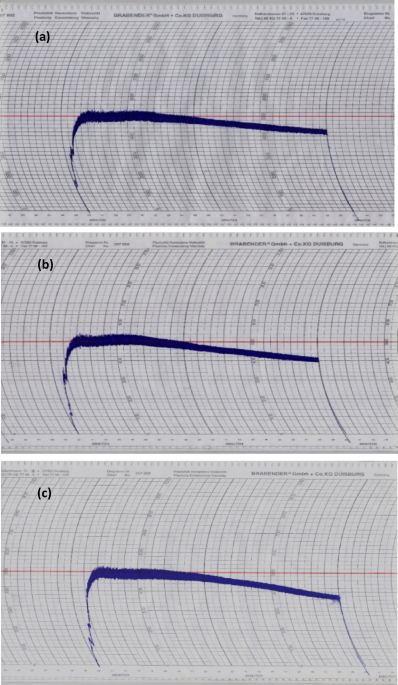
The farinograph test is essential for assessing the rheological properties of wheat flour, particularly its water absorption rate, dough development time, stability, and softening. These parameters are crucial for predicting bread quality and optimizing production efficiency. Figure 1; Table 2 shows the changes in the farinograph test parameters of wheat flour containing xylanase enzyme. With increasing xylanase enzyme dose and subsequently increasing xylanase enzyme activity per kilogram (kg) of flour, the changes in water absorption percentage decreased significantly (p < 0.05).
This change was observed for every 300 enzyme units per kilogram of flour, equivalent to about 0.4%. The farinograph measures the water absorption capacity of flour, which is vital for dough yield and gluten network development34. Studies indicate that water absorption rates can range from 57.43% to 65.72% across different wheat varieties. Increased water absorption correlates with improved dough stability and reduced moisture loss during baking. The optimal water absorption range for flour is typically between 61.76% and 68.40%, with higher values indicating better quality when paired with low softening degrees35. High-quality flour exhibits a balance of these constituents, enhancing water retention36. Variations in WAC can lead to significant differences in dough performance, impacting the final product’s volume and texture4.

Farinograms of wheat flour (a), wheat flour containing 300 units of xylanase enzyme per kilogram (b), and wheat flour containing 600 units of xylanase enzyme per kilogram.
Higher water absorption values contribute to dough stability, which is essential for maintaining structure during baking37. A high-water absorption with low softening degree is indicative of good flour quality, while the opposite suggests inferior quality35. Xylanase alters the viscoelastic properties of dough, leading to decreased water-binding capacity of pentosans, which can indirectly affect gluten network formation38,39. Laurikainen et al. (1998) reported a reduction in water absorption from 72% to 64% when xylanase was added to bread dough15,39. The findings of the present study are consistent with those of Harus et al. (2002) who observed a decrease in water absorption with the addition of xylanase during wheat tempering. The supplementation of bread dough with xylanase, particularly from Aspergillus feetidus, has been shown to significantly alter its water absorption properties. Specifically, the addition of xylanase reduced water absorption from 72% to 64%, indicating a notable impact on dough characteristics40. Overally, xylanase treatment leads to a lower water retention capacity in dough, which is crucial for its handling and baking properties38. The hydration time of flour, defined as the interval from water addition to the moment the consistency curve crosses the 500 Brabender line, is significantly influenced by enzyme supplementation. The addition of different levels of enzyme caused a statistically significant difference in dough arrival time. The level of 300 (U/kg) of xylanase did not show a statistically significant difference with the control, but the longest arrival time was observed at the level of 600 (U/kg) enzyme, which showed a statistically significant difference with the control and the level of 300 (U/kg) enzyme. Various studies indicate that different enzyme levels can alter dough ripening times, impacting the overall quality and processing of the dough38,41,42. The presence of enzymes can lead to a faster hydration time, as they facilitate the breakdown of starches, allowing for quicker water absorption43. Additionally, studies suggest that optimal enzyme dosages for complete hydration of dough vary by flour type, indicating the need for tailored enzyme applications44,45. Also, some studies suggest that while xylanase can improve certain dough properties, the addition of a mixture of hemicellulases may not significantly alter farinographic properties, indicating a complex interaction between enzymes and dough components39. Conversely, while higher enzyme levels can enhance dough properties, excessive enzyme activity may lead to over-hydration or undesirable dough characteristics, necessitating careful balance in enzyme application.
The investigation into the effects of xylanase enzyme on flour’s departure time reveals significant insights into flour strength. The addition of xylanase at levels of 300 and 600 (U/kg) enzyme resulted in a notable decrease in departure time compared to the control sample, indicating a weakening of the flour. This suggests that the enzyme alters the dough’s rheological properties, impacting its overall quality.
The stability time of dough, defined as the duration between the initial intersection and the exit from the 500 Brabander line, is significantly influenced by the addition of xylanase enzyme. Research indicates that varying levels of xylanase lead to notable changes in dough properties, particularly in stability time, which is closely related to flour strength 46. The addition of different levels of xylanase caused a statistically significant difference in the dough stability time of the flour compared to the control. The enzyme activities of 300, and 600 (U/kg) of xylanase were not statistically significantly different from each other, but they showed a significant decrease of dough stability time compared to the control. The addition of xylanase resulted in shorter dough stability times compared to control samples, indicating improved dough handling characteristics 38. The previous study was showed that the enhanced dough stability correlated with improved bread quality attributes, such as volume and texture 47. Overall, the stability time of dough with xylanase was significantly different from the control, highlighting the produced enzyme’s role in modifying dough rheology 48. Xylanase treatments enhanced dough extensibility while reducing elasticity, which contributed to improved stability 49. Conversely, while xylanase improves dough stability, excessive enzyme activity can lead to diminished dough strength, potentially affecting the final product quality. Balancing enzyme levels is crucial for optimal results. These results are consistent with the findings of Laurikainen et al. (1998) who treated bread dough with xylanase from Aspergillus foetidus and found that it reduced dough stability. Other studies such as McCleary (1986) and Jiang et al. (2005) also reported a reduction in dough stability time in relation to xylanase treatment.
Also, both 300 and 600 (U/kg wheat flour) of xylanase treatments showed significant decrease in dough development time, although they did not differ statistically from each other (Table 2). The dough development time is a critical parameter in the baking industry, reflecting the time required for optimal gluten network formation during mixing. Stronger flours exhibit longer development times compared to weaker flours, which is essential for achieving the desired dough structure and volume in bread production. Various methods, including farinograph tests, help evaluate dough behavior and development time, linking mechanical energy input to dough structure52,53. Adequate mixing time allows for proper hydration and gluten network formation, which is crucial for dough elasticity and strength52. Insufficient mixing leads to a weak gluten network, resulting in poor dough formation and reduced bread volume53. This technique provides rapid estimations of dough development times, enhancing efficiency in commercial baking operations54.
While the focus of dough development time emphasizes its role in achieving optimal dough quality, it is also important to consider that over-mixing can lead to gluten overdevelopment, which may negatively affect dough extensibility and final product texture. This balance is crucial for successful baking outcomes. Dough development time is actually the time taken for gluten network formation, which is significantly reduced by the addition of xylanase, reflecting the reduction in kneading time by the addition of the enzyme. This decrease did not mean a decrease in the strength of the flour, but rather a decrease in the kneading time required to achieve the gluten network, meaning the dough became looser and more malleable. Stronger flours with higher content have a longer development time than weaker flours using equivalent particle size. The dough swelling process can be found during the dough development time55. Kneading the dough for a shorter time than the dough development time will result in poor dough formation due to a weak gluten network, which will negatively affect the volume of the bread. These results are closely related to those of Haros et al., (2002), who reported that dough development time was reduced by increasing the level of xylanase enzyme during wheat equilibration and dough mixing.
The reduction of dough development time through increased xylanase levels highlights the enzyme’s significant role in gluten network formation. This process involves complex interactions among flour components, where xylanase facilitates the hydration and softening of gluten proteins, ultimately leading to a more malleable dough. Xylanase hydrolyzes arabinoxylans, which indirectly affects gluten proteins, enhancing dough quality by improving hydration and reducing mixing time39. Studies show that xylanase treatments lead to decreased water absorption and dough development time, with optimal effects observed at 600 IU 57. The presence of pentosans, influenced by xylanase, can hinder gluten agglomeration, affecting the gluten network’s strength and properties58. Also, xylanase treatment (300 and 600 U/kg wheat flour) results in softer dough, allowing for easier handling and processing without compromising the flour’s strength59.
While increased xylanase levels improve dough properties, excessive enzyme application may lead to over-hydrolysis, potentially weakening the gluten network and affecting the final product quality. Balancing enzyme levels is crucial for optimal dough performance60. The bread dough production process causes changes in the physical properties of the dough, and in particular, improves its ability to retain carbon dioxide gas by gluten network, which is later produced by yeast fermentation61. A well-developed gluten structure allows for better gas cell stability, preventing rupture and ensuring that gas remains within the dough62. This improvement in gas retention is especially important when the dough pieces reach the oven. While the focus is often on gluten and yeast, it is important to recognize that other factors, such as the presence of liquid films and the dough’s overall composition, also play significant roles in gas retention and dough quality during baking61,62.
In the early stages of baking, before the dough sets, yeast activity is at its highest and large amounts of carbon dioxide gas are produced and released from solution in the aqueous phase of the dough. If the dough pieces are to continue to expand during this time, the dough must be able to retain a large amount of that produced gas, and it can only do so if we have developed a gluten structure with suitable physical properties63. It is important to distinguish between gas production and gas retention in fermented dough. Gas production refers to the production of carbon dioxide gas as a natural result of yeast fermentation. As long as the yeast cells in the dough remain viable and there is sufficient substrate, gas production will continue, but dough expansion can only occur if carbon dioxide gas remains in the dough. Not all of the gas produced during the baking process will remain in the dough before it is finally baked. The proportion that will be retained depends on the creation of a suitable gluten matrix in which to retain the expanding gas. Gas retention in dough is therefore closely related to the degree of dough expansion and the inputs that affect it. The most commonly considered factors are those related to the protein component of wheat flour. However, dough expansion is influenced by a large number of ingredients and processing parameters, many of which are not necessarily independent of each other.
The mean values of dough stability changes (maximum dough consistency) as a function of xylanase enzyme levels are shown in Table 2. The maximum dough consistency in the control treatment did not have a statistically significant difference at the p < 0.05 level with the enzyme level of 300 (U/kg wheat flour) used. However, the maximum dough consistency showed a significant difference with the control sample with an increase in the level of 600 (U/kg wheat flour) xylanase enzyme and had a significant decrease compared to the other two treatments.
The degree of dough softening in response to xylanase enzyme levels demonstrates a clear relationship between enzyme concentration and dough texture over time. As observed, increasing xylanase levels significantly enhanced dough softening at all mixing durations, with notable differences emerging particularly after 12 min of mixing. The degree of dough softening after 10, 12 and 20 min was compared as a function of xylanase enzyme levels and the results are listed in Table 2. The results showed that at all times of dough mixing, the degree of dough softening increased significantly with increasing enzyme levels. At 10 min, both 300 and 600 (U/kg) of xylanase resulted in significant softening compared to the control, with no significant difference between the two enzyme levels. Both enzyme levels (300 and 600 U/kg) did not show significant differences compared to each other until ten minutes after dough mixing, but the dough became softer by 15 and 16 Brabender units, respectively. The degree of dough softening after 12 min of mixing showed a greater difference with increasing enzyme levels and all treatments had statistically significant differences. After 12 min, the 300 (U/kg) treatment achieved 12.08 Brabender units, while the 600 (U/kg) treatment reached 61.74 Brabender units, indicating a marked increase in softening with higher enzyme levels (Table 2). By 20 min, the softening was 15 and 44.75 Brabender units for 300 and 600 units, respectively, reinforcing the trend of enhanced softening with increased enzyme concentration57,59.These results are consistent with the findings of Jiang et al. (2005), Laurikainen et al. (1998), and McCleary (1986). They reported a similar trend regarding the addition of xylanase enzyme and dough softening after enzyme treatment.
Xylanase acts by hydrolyzing arabinoxylans, which reduces water absorption and destabilizes the dough structure, leading to increased softness39,49. The breakdown of soluble pentosans releases water, further contributing to dough softening. Conversely, while xylanase improves dough softness, excessive enzyme levels may lead to over-softening, potentially compromising dough stability and structure, which could affect the final product quality.
The Mixing Tolerance Index (MTI) is a critical parameter in assessing the quality of hard wheat flours, particularly in relation to their performance during mechanical handling and dough shaping. Research indicates that an increase in xylanase levels correlates with higher MTI values, suggesting that the enzyme affects dough rheology. The values of the MTI as a function of different levels of xylanase are given in Table 2. The results showed that increasing the level of xylanase in the flour leads to an increase in the MTI of the dough, indicating weaker dough. Specifically, a xylanase level of 600 (U/kg) results in an MTI exceeding 50 Brabender units. An MTI of 30 Brabender units or less for hard wheat flours is associated with a very good or excellent index. Flours with an MTI above 50 indicate less tolerance and often indicate more problems during mechanical handling and dough shaping. In fact, weaker flours show higher MTI values. Weaker flours, often with higher MTI, can complicate baking processes64. While the focus on xylanase’s impact on MTI is significant, it is essential to consider that other factors, such as genetic traits65, and alternative testing methods66,67, also play crucial roles in determining flour quality and baking performance.
In the farinograph curve, if the percentage of water addition is observed completely correctly, the center (middle part) of the curve will be tangent at the maximum point on the 500 Brabender unit line. In this case, if a line (with a length unit of millimeter) is drawn parallel to the standard 500 line and 30 Farinograph units lower, from the beginning of the curve to its intersection with the center of the Farinograph curve (at the point of exit from the 500 line), the Farinograph qualitative number will be obtained. In old Farinograph models, where the resulting curve is drawn on paper, a number called the valorimetric value is extracted from the Farinograph curve using a special Brabender ruler, which is a result of all Farinogram indices. The valorimetric number and the farinograph qualitative number as a function of xylanase enzyme levels are given in Table 2. The results showed that the valorimetric number and the farinograph qualitative number showed a significant decrease with increasing enzyme levels, indicating that the dough weakened due to increasing enzyme levels. The farinograph quality number (FQN) serves as a crucial indicator of flour quality, correlating strongly with various dough properties. It simplifies the assessment of flour by providing a single numerical value that reflects dough strength and stability. In this regard, weak flours show a low farinograph quality number and strong flours show a high farinograph quality number68. The FQN is positively correlated with dough properties such as development time, stability, and weakening time. It serves as a reliable measure for evaluating mixing resistance and dough strength, although it has limitations in assessing extensibility69.
In a study by Lei et al. in 2008, it was reported that the farinograph quality number has a positive and very strong correlation with indices such as dough weakening time, dough strength or stability, and dough development time70. Various studies have shown that the addition of xylanase to bread formulations prepared from whole wheat (with bran) reduces water absorption, while the dough consistency is similar to the control sample of whole wheat formulas71,72,73. These results are consistent with the results obtained in this study. It has been reported that the release of free water by the addition of xylanase reduces the amount of water that must be added to the dough. Conversely, in a study on whole wheat dough, it was reported that the incorporation of hemicellulases, which were mainly composed of endoxylanases, did not cause any significant changes in the farinographic properties of whole wheat dough74. Doughs containing xylanase had a higher rise height. These changes are attributed to more complete hydration of gluten due to the transfer of water from pentose molecules to protein. In general, xylanases increase dough quality properties such as stability, flexibility, extensibility, and cohesion by modifying the elasticity of the gluten network, which leads to better crumb structure, improved porosity, firmness, and textural characteristics, better moisture retention, and increased shelf life of bread56,75,76. In summary, while the FQN is a valuable tool for assessing flour quality, the effects of different enzymes like xylanase and hemicellulases highlight the complexity of dough formulation and the need for further research to optimize baking processes.
Effect of different levels of Xylanase enzyme on the extensograph parameters of dough
The extensograph provides information on the viscoelastic properties of the dough. The effect of different levels of xylanase enzyme (300 and 600 units per kilogram of flour) on the extensographic properties of the dough during different fermentation times (at 45, 90 and 135 min) are given in Fig. 2; Table 3. The extensographic properties of dough are significantly influenced by the addition of xylanase enzymes, particularly at varying levels and fermentation times. The results indicated that higher xylanase concentrations (600 U/kg) lead to a notable decrease in resistance to extension compared to lower levels (300 U/kg) and control samples. This trend is consistent across different fermentation durations, with significant differences observed at the p < 0.05 level during the initial 45 min of fermentation. The increase in xylanase enzyme activity in the flour led to a decrease in the energy of the dough compared to the control. This behavior was also observed in the resistance to extension after 5 cm and showed a significant decrease at the xylanase enzyme level of 600 (U/kg). The resistance to extension after 5 cm at the enzyme level of 300 (U/kg) did not show a statistically significant difference with the control. The amount of extensibility also showed a statistically significant difference in the enzyme levels used, and the amount of extensibility decreased with the addition of enzyme, but the enzyme level of 600 (U/kg) showed a higher amount of extensibility compared to the level of 300 (U/kg). The ratio number, which is the ratio of resistance to extension after 5 cm to the length of the stretch, was showed a statistically significant difference due to the addition of xylanase enzyme. Specifically, a lower enzyme concentration (300 U/kg) resulted in ratio number compared to both a higher concentration (600 U/kg) and control samples. Furthermore, the energy required to deform the dough decreased with xylanase addition, indicating improved dough handling properties. The amount of energy required to deform the dough also showed a statistically significant difference with the control at the p < 0.05 level with the addition of the enzyme, and the treatments containing the xylanase enzyme showed a lower amount of energy.
The effect of different levels of xylanase enzyme treatment on the extensograph properties of the dough after 90 min is shown in Table 3. At 90 min of fermentation, the resistance to extension as a function of the xylanase enzyme showed a statistically significant difference at the p < 0.05, and with increasing the enzyme level, the resistance to extension showed a statistically significant decrease. This behavior was also observed in the measurement of resistance to extension after 5 cm. The extensibility of dough is significantly influenced by fermentation time and enzyme treatments, particularly xylanase. The results indicated that after 90 min of fermentation, dough extensibility increased by 300 (U/kg), while enzyme treatment of 600 (U/kg) did not show a statistically significant difference. In fact, the use of enzymes to decompose arabinoxylan compounds leads to the release of free water and a change in the ratio of soluble substances in the dough.
The enzymatic breakdown of arabinoxylan compounds enhances gluten hydration, leading to improved elasticity and a more robust gluten network39. A fermentation duration of 90 min was optimal for achieving desirable dough properties, as longer times may alter the balance of gluten structure and hydration77. Also, the energy required to deform dough was significantly lower in enzyme-treated samples compared to controls, particularly with xylanase addition. This reduction in energy correlates with enhanced dough handling properties, making it easier to process and shape78.
At 135 min, higher xylanase levels correlated with decreased resistance to extension, indicating a complex relationship between enzyme concentration and dough properties39. The addition of xylanase reduced the energy needed to deform the dough, suggesting improved extensibility39. The results indicated that the addition of enzymes, particularly xylanase, significantly reduced the energy required for deformation after 135 min of fermentation time. To obtain a dough suitable for toasting, the dough must have good elasticity. To achieve this goal, according to the results obtained, we can predict that the enzyme level of 300 (U/kg) will have a good effect on the quality of voluminous bread. As shown in the previous results (Table 3), there is an inverse relationship between the effect of xylanase and the amount of energy required to deform the dough. The reason for this is that the softening of the dough under the influence of xylanase is due to the depolymerization of arabinoxylans affected by this enzyme, the increase of which can reduce the amount of force required to deform the dough. Also, Ognean et al. (2011) stated that the xylanase enzyme reduces the dough energy in white flour dough.

Extensograms of wheat flour (a, d, g), wheat flour containing 300 units of xylanase enzyme per kilogram (b, e, h) and wheat flour containing 600 units of xylanase enzyme (g, h, i) per kilogram. (a, b, c) time 45 min, (d, e, f) time 90 min and (g, h, i) time 135 min after fermentation.
The enzyme treatments, lead to a notable decrease in the ratio number, indicating higher tensile strength in the dough41. The combination of xylanase with other enzymes, such as α-amylase and cellulase, has been shown to synergistically improve dough extensibility and resistance to extension80.
Conversely, while enzyme treatments can enhance dough properties, excessive enzyme activity may lead to undesirable effects, such as reduced tensile strength, indicating a need for careful optimization in industrial applications. While enzyme treatments improve dough properties, there may be trade-offs in other areas, such as the overall quality of the final baked product. For instance, excessive enzyme levels can lead to undesirable changes in dough consistency and texture, which may affect consumer acceptance81.
The relationship between xylanase enzyme and dough elasticity is complex, as it can enhance dough properties up to a certain concentration, beyond which negative effects may occur. While lower levels of xylanase (300 U/kg) improve gluten structure and dough elasticity, excessive amounts (600 U/kg) can lead to reduced dough strength and elasticity, as evidenced by studies showing that higher enzyme concentrations diminish the tensile strength of dough41,82. It has also been reported that the addition of glucose oxidase and endo-xylanase enzymes reduces the resistance to extension of dough obtained from whole wheat flour74.
Xylanase enhances the gluten network, leading to better dough elasticity and extensibility39,82. Studies indicate that an optimal enzyme level (e.g., 200–400 U/kg) is crucial for maximizing dough quality, while higher levels (e.g., 600 U/kg) can be detrimental41,83, highlighting the need for careful optimization in baking applications.
In general, while xylanase generally improves dough properties, the balance between enzyme concentration and dough strength is critical. In general, depending on the type of flour, the characteristics of the enzyme, and the dose of enzyme applied, there are positive or negative effects on the extensograph properties of the dough79. The results of this test showed that an enzyme dose of 300 units per kilogram flour led to improved extensograph properties and increased dough elasticity after 90 min of fermentation.
The role of produced Xylanase enzyme in improving bulk bread characteristics
Bulk bread production
The application of the xylanase enzyme at different concentrations notably influenced the physical characteristics of bulk bread. Figure 3 compares the bread volumes and slice cross-sections produced under five treatments: (a) control flour, (b) control flour with 300U/kg xylanase, (c) control flour with 600U/kg xylanase, (d) control flour with 1% commercial improver, and (e) Nol flour with 1% commercial improver. Bread samples supplemented with xylanase enzyme (both 300U/kg and 600U/kg) exhibited a more porous and uniform crumb structure than the control bread, as evidenced by their cross-sectional images. This improvement suggests that xylanase enhances gas cell formation and stabilization during baking, leading to increased bread volume and a softer texture. These biochemical changes facilitate dough expansion during fermentation leading to increased bread volume74,84. Breads with xylanase supplementation show a more porous and uniform crumb structure, indicative of improved gas cell formation and stabilization. Such textural improvements align with studies reporting higher crumb porosity and softness due to enzymatic modification of hemicelluloses and starch-protein interactions72,85. In contrast, the bread from Nol flour with commercial improver exhibits lower volume and a denser crumb, likely due to the lower protein or fiber content affecting dough extensibility and gas retention capacity.

The volume of bread produced (1) and the cross-sectional slices of the breads (2): The bread made from control flour (a), the bread made from control flour supplemented with 300 U/kg xylanase enzyme(b), bread made from control flour supplemented with 600 U/kg xylanase enzyme (c), bread made from control flour supplemented with 1% commercial improver (d), and the bread made from Nol flour supplemented with 1% commercial improver (e).
Overall, Fig. 3 visually demonstrates that xylanase enzyme application at optimized levels improves bread volume and crumb structure, consistent with literature emphasizing the enzyme’s role in enhancing bread quality attributes through improved dough rheology and fermentation dynamics.
Effect of Xylanase enzyme on bread moisture
Moisture content changes in different bread treatments were measured as a function of storage time (1, 4, and 7 days), with results presented in Table 4. The data indicated no significant difference in bread moisture among treatments one day after baking. However, at 4 and 7 days of storage, statistically significant differences emerged. At day 4, the highest moisture content was observed in bread made from control flour, control flour with improver, and then Nol flour with improver. Jaekel et al. (2012) reported that adding xylanase at 4, 8, and 12 g/100 kg flour did not significantly affect bread moisture content. Similarly, Altınel and Ünal (2017) showed cellulase enzyme did not alter final wheat bread moisture significantly. At 7 days, moisture remained highest similarly in control flour bread, control flour with improver, and Nol flour samples.
The mean moisture variation analysis revealed significant reductions only in treatments containing 300 U/kg xylanase and control flour with improver during storage. These findings align with observations that enzyme activity may influence moisture retention dynamics, but substantial moisture changes require prolonged storage or high enzyme levels73.
Effect of Xylanase on specific volume of bread
Table 5 compares specific volume and density of breads treated with different enzyme dosages and improvers. All treatments showed significant differences (p < 0.05). The highest specific volume occurred in breads treated with 300 and 600 U/kg xylanase, more than double that of the control. Conversely, bread density was highest in the control and lowest in high xylanase treatments. These results corroborate numerous studies documenting volume enhancement via xylanase supplementation72,73,74,86. Xylanase improves gluten hydration and network formation by reducing flour water absorption and releasing free water through hemicellulose hydrolysis, thus enhancing dough rise during fermentation73,86. Kumar and Satyanaana (2014) noted elevated levels of reducing sugars and soluble proteins in xylanase-treated bread, indicating improved fermentation substrates. Furthermore, partial hydrolysis of hemicellulose reduces molecular weight, diminishing interference with gluten network formation and improving crumb volume87.
* Different letters within each column indicate a statistically significant difference (p < 0.05) between the different treatments.
Altınel and Ünal (2017) proposed that xylanase converts water-unextractable arabinoxylan (WU-AX) to water-extractable arabinoxylan (WE-AX), thereby enhancing gas retention capacity in dough. They reported volume increases in both white and whole wheat breads after hemicellulase addition, although moisture reduction during baking was observed only in whole wheat bread. This is consistent with Jaekel et al. (2012), who found that xylanase doses above 8 g/100 kg flour led to dough collapse during baking despite maximal gas retention, indicating an optimal enzyme dosage is critical to prevent destabilization. Da Silva et al., (2016) confirmed that moderate xylanase levels did not significantly increase whole wheat bread volume due to interactions with emulsifiers and native gluten. Variability in enzyme source, specificity, and purity also impacts efficacy89.
Effect of Xylanase on bread crumb porosity
The porosity of bread crumb significantly (p < 0.05) differed among treatments containing xylanase enzyme, commercial improvers, and control flour (Fig. 4, and Table 6). The highest porosity percentage was observed in breads treated with 300 U/kg xylanase (35.30% ± 0.39), followed closely by those treated with 600 U/kg xylanase (31.44% ± 0.85). Breads made with commercial improvers had intermediate porosity values (28.86% ± 1.01 for control flour + improver and 26.86% ± 0.35 for Nol flour + improver), while the control bread exhibited the lowest porosity (19.00% ± 0.48). The marked increase in porosity for xylanase-treated breads can be attributed to the enzyme’s ability to degrade arabinoxylans in the wheat cell wall structure, which reduces dough viscosity and enhances gas retention during fermentation and baking. This enzymatic activity leads to improved dough rheology and gas cell stabilization, promoting an open crumb structure with higher porosity, as observed in other studies90.

A selected area from the bread surface (a), and the processed image using ImageJ software for calculating the percentage of bread crumb porosity (b): bread containing control flour (1), bread containing 300 units of xylanase enzyme (2), bread containing 600 units of xylanase enzyme (3), bread containing control flour with improver (4), and bread containing nol flour with improver (5).
In contrast, the relatively low porosity in control samples is indicative of a denser, more compact crumb structure likely resulting from minimal oven spring and less effective gas retention, consistent with previously reported findings. Commercial improvers also positively influenced porosity, albeit to a lesser extent than xylanase, likely due to their multifunctional components such as emulsifiers and oxidizing agents that improve dough strength and gas retention capacity91,92.
The porosity improvements seen with xylanase treatments align with research demonstrating that xylanase facilitates hydrolysis of non-starch polysaccharides, thereby increasing water absorption and contributing to a softer, more aerated crumb. Furthermore, higher porosity is often correlated with improved sensory attributes such as softness and texture, which compares favorably with earlier reports linking crumb structure modifications to enhanced bread quality. Table 6 reports significant differences (p < 0.05) in porosity among treatments, with highest porosity observed in breads treated with 300 and 600 U/kg xylanase, and lowest in control bread. Reduced porosity in control is attributable to compact crumb structure from minimal oven spring.
Effect of Xylanase on bread texture
Texture Profile Analysis (TPA) was performed to evaluate the effects of xylanase treatment on various bread texture parameters (including hardness, cohesiveness, springiness, gumminess, chewiness, adhesiveness, and resilience) over a 7-day storage period (Fig. 5; Table 7). Statistical analysis demonstrated significant differences between treatments and storage times in all measured parameters (p < 0.05).

Comparison of changes in texture characteristics of different bread treatments containing improvers or xylanase enzyme as a function of storage time at room temperature (25 ± 2 °C) using TPA test: (a) after 1 day, (b) after 4 days, and (c) after 7 days.
Hardness data revealed that control bread was significantly harder at day one, while breads with 300 and 600 U/kg xylanase exhibited significantly lower hardness throughout storage. Notably, the treatment with 300 U/kg xylanase maintained consistent hardness up to 7 days, suggesting enzyme efficacy in retarding staling. Secondary hardness (after second compression) followed similar trends (Table 7). Cohesiveness increased with storage time and was highest in control breads, whereas xylanase-treated samples remained lower (Table 7). Springiness—a measure of elasticity—was significantly lower in Nol flour bread with improver and 600 U/kg xylanase treatments, decreasing over storage (Table 7). Gumminess and chewiness indices were highest in control and Nol flour bread, while xylanase supplementation reduced these parameters, indicating softer texture (Table 7). Adhesiveness was lowest in control flour with improver and 300 U/kg xylanase treatments, and highest in Nol flour with improver (Tables 3, 4, 5, 6, 7, 8, 9, 10, 11, 12, 13, 14, 15, 16, 17, 18, 19, 20, 21, 22, 23 and 24). Resilience showed significant differences across treatments, with higher values generally observed in improver and xylanase-containing flour breads (Table 7).
The reduction in bread hardness over storage with xylanase addition can be explained by moisture retention acting as a plasticizer, limiting starch retrogradation and protein-starch cross-linking that contribute to crumb firming88. Similarly, Driss et al., (2013) and Ghoshal et al. (2013) reported xylanase significantly decreases hardness in both fresh and stored breads, delaying staling. Kim and Yoo, (2020) observed reductions of 63.4% and 56.9% in hardness using α-amylase and endoxylanase, respectively, and highlighted synergistic effects in delaying staling. These enzymes facilitate hydrolysis of insoluble arabinoxylans into smaller polysaccharides, mitigating structural disruptions responsible for crumb hardening94. Jaekel et al. (2012) also emphasized optimal enzyme dosing, as excessive xylanase can compromise bread volume and texture. Da Silva et al. (2016) confirmed that xylanase combined with oxidants optimally reduces hardness and improves moisture retention in whole wheat breads. Grausgruber et al. (2008) demonstrated enhanced hardness reduction when xylanase was applied with emulsifiers and other enzymatic treatments.
Effect of Xylanase on crust and crumb color
Color is a key quality attribute influencing consumer acceptance96. The average color characteristics of the crumb and crust of different bread treatments containing improvers or xylanase enzyme were evaluated as a function of storage time (1, 4, and 7 days), as presented in Table 8.
In the crumb, the highest L* value was observed in the treatment containing 600 U/kg xylanase on day 1 (46.64), indicating a brighter crumb compared to other treatments. However, the L* value decreased in all treatments over the storage period, reflecting darkening consistent with staling processes and oxidation reactions during storage, as reported in previous studies97. In the crust, the “Nol flour + 1% commercial improver” treatment showed the highest L* values throughout the storage time (ranging from 34.87 to 30.96), indicating a lighter crust color compared to other treatments. In contrast, treatments containing xylanase exhibited lower L* values, likely due to intensified Maillard reactions and enzymatic activity affecting crust coloration97. Crust surface examination (Table 8) revealed no significant difference in L* values between 300 and 600 U/kg xylanase treatments, though improver-containing flours exhibited greater brightness and uniformity. Kim and Yoo (2020) also noted darker crusts with combined α-amylase and xylanase treatments due to enhanced caramelization and Maillard browning. In contrast, crumb color differences reflected lower Maillard reaction intensity, as crumb temperatures rarely exceed 100 °C during baking98.
The crumb’s a* values were generally higher in control flour treatments (ranging from 9.96 to 12.16), while xylanase and Nol flour treatments showed lower redness values. Conversely, in the crust, treatments with 600 U/kg xylanase exhibited the highest a* values (around 22), suggesting increased redness likely driven by enhanced production of reactive sugars and intensified non-enzymatic browning. Xylanase treatments generally increased redness and yellowness, especially in crust, consistent with intensified browning reactions72,93. The crumb treated with 600 U/kg xylanase showed the highest initial b* value (33.10), which gradually declined over time. Treatments containing Nol flour combined with improver also demonstrated relatively high b* values, potentially due to its lower fiber content and resulting lighter crumb color. All treatments showed decreasing L* values in both crumb and crust during storage, indicating darkening due to staling and oxidation. The a* and b* values fluctuated less dramatically, remaining relatively stable or slightly increasing in some treatments. These findings align with known biochemical changes affecting bread color during storage. Also, The enzymatic activity reduces water absorption and moisture loss, contributing to a brighter color and improved texture15,73.
Effect of Xylanase on sensory evaluation
The sensory evaluation indexes (bread volume, crust color, baking uniformity, crumb texture, odor, and taste) of various bread treatments containing improvers or xylanase enzyme are presented in Fig. 6. Bread volume scores were significantly higher in breads containing xylanase, especially at 300U/kg (8.73 ± 0.43), followed by 600U/kg (7.20 ± 0.60). Bread volume is critical for consumer acceptance of both toast and bulk breads. Reduced volume is typically due to decreased dough extensibility and disruption of the gluten network, limiting gas retention capacity99. Control samples showed the lowest scores (3.24 ± 0.63), confirming that enzymatic treatment notably increases loaf volume. Highest volume scores were assigned to breads treated with 300 U/kg xylanase in control flour, concordant with studies confirming enzyme’s role in enhancing volume through improved gluten hydration and network structuring72,73,74,84,85. Altınel & Ünal, (2017b) credited volume increase to transformation of water-unextractable to water-extractable arabinoxylan, improving gas retention. Jaekel et al. (2012) emphasized dosage optimization, as excessive xylanase concentrations cause dough collapse during baking. Similar patterns were observed for crust color and baking uniformity, with the highest scores attributed to xylanase treatments (8.66 ± 0.54 for crust color and 9.00 ± 0.00 for baking uniformity, with 300U/kg xylanase) and lowest scores for the control (2.81 ± 0.59, 3.00 ± 0.00, respectively).

Comparison of the average sensory evaluation indexes of different bread treatments containing improvers or xylanase enzyme.
Crumb texture assessments revealed that breads with xylanase were superior, with maximum scores for 300U/kg (8.70 ± 0.51) and 600U/kg (8.64 ± 0.51). Control samples scored significantly lower (2.70 ± 0.32). Other sensory attributes such as odor and taste followed the same trend; breads treated with xylanase and commercial improvers generally received higher scores compared to controls. The highest taste ratings were for breads with xylanase (7.86 ± 0.72 for 300U/kg, 7.98 ± 0.64 for 600U/kg), while controls scored lowest (2.82 ± 0.29). The sensory evaluation results demonstrated that bread samples prepared with the addition of either 1% commercial improver or 300 U/kg xylanase to control flour achieved the highest scores in overall acceptance, indicating notable consumer preference for these formulations. In contrast, breads made with untreated control flour or Nol flour supplemented with the commercial improver exhibited lower acceptance ratings. This corresponds with Ghoshal and others73, who reported superior organoleptic properties in whole wheat bread treated with xylanase during freshness and after storage. Kumar & Satyanaana85 also noted improved crumb structure with xylanase supplementation. Xylanase and pentosanase enzymes produce fermentable sugars that participate in Maillard reactions, enhancing crust color and flavor72. Carbon dioxide release during fermentation promotes porous crumb structure99. Xylanase-induced hydrolysis of arabinoxylan liberates xylose and pentoses, providing additional substrates for yeast fermentation, increasing gas production and bread volume, directly affecting crumb softness. Nol flour bread exhibited lighter crumb color, consistent with its lower fiber content, and was preferred in sensory evaluations. Xylanase-treated samples generally scored higher for crumb and crust color, flavor, and texture than controls, reflecting improved overall acceptability and consumer preference72,73,86.
Conclusion
The present study successfully demonstrated the production of a potent xylanase-cellulase enzyme complex from a gamma-radiated mutant strain of Trichoderma afroharzianum NAS107-M82. This mutant exhibited significantly enhanced enzyme activities, with xylanase and cellulase levels approximately 3.3 and 1.7 times higher than those of the wild-type strain, respectively. The characterization of this enzyme complex revealed optimal activity at 45 °C and pH 5.0 for xylanase and at 50 °C and pH 4.8 for cellulase, with a diverse set of enzyme isoforms that synergistically hydrolyze hemicellulosic and cellulosic substrates. Application of the enzyme complex to wheat flour significantly improved dough rheological properties, as evidenced by farinograph and extensograph analyses. Notably, xylanase supplementation at 300 U/kg flour reduced dough water absorption, enhanced dough extensibility, and moderated dough development and stability times, facilitating more manageable dough consistency. These rheological improvements correlated with superior bread quality outcomes, including increased specific volume, improved crumb porosity, and more uniform crumb structure, surpassing both control and commercially improver-treated breads. Furthermore, sensory evaluation substantiated the beneficial effects of the enzyme, particularly at doses of 300 and 600 U/kg, demonstrating marked enhancements in bread volume, crust color, crumb texture, odor, and taste. The enzyme effectively delayed crumb firming and staling over seven days of storage, attributable to improved moisture retention and modulation of starch retrogradation and protein-starch interactions. These effects indicate the enzyme’s role as a natural bread improver that extends shelf life while enhancing sensory attributes.
The use of endo-β-(1,4)-D-xylanases, commonly referred to as xylanases, in breadmaking is primarily due to their ability to hydrolyze arabinoxylans (AX) into water-extractable arabinoxylans (WEAX) and xylooligosaccharides (AXOS). This enzymatic action can yield both beneficial and detrimental effects on dough properties, depending on the type of AX being hydrolyzed. Hydrolysis of water-unextractable arabinoxylan (WUAX) into WEAX can enhance dough volume by up to 60%. The enzymatic breakdown reduces texture hardness by over 50%, while also decreasing gumminess and chewiness by 40%. The resulting WEAX exhibits pseudoplastic fluid properties, which can improve dough handling and processing101. Hydrolysis of WEAX may lead to negative effects, as the resultant AX may not contribute positively to dough structure and could impair the overall quality101. The molecular weight of WEAX produced can influence the viscosity and stability of the dough, potentially leading to undesirable characteristics if not managed properly101. While the hydrolysis of WUAX generally yields positive outcomes for breadmaking, the hydrolysis of WEAX can have adverse effects, highlighting the importance of controlling the enzymatic process to optimize bread quality.
According to our results, both 300 and 600 U/kg doses of the xylanase-cellulase enzyme complex produced by the mutant Trichoderma afroharzianum NAS107-M82 improved wheat bread quality, enhancing volume, softness, and sensory properties. However, the higher dose (600 U/kg) caused more pronounced dough weakening, as evidenced by decreased dough stability and strength parameters. This softening effect, while beneficial to dough extensibility and handling, can compromise dough integrity if excessive. Balancing these effects, our data indicate that the 300 U/kg enzyme dose provides an optimal industrial application range, effectively improving bread quality without significantly weakening the dough structure. This dose enhances dough rheology to facilitate better fermentation and gas retention, achieving superior bread volume and crumb texture while maintaining adequate dough strength for processing. In industrial practice, using enzyme dosages around 300 U/kg flour would help optimize the trade-off between dough strength and improved bread quality. Higher doses may be used cautiously when softer doughs or specific bread textures are desired but may require process adjustments to prevent over-weakening.
The study also highlighted the importance of enzyme dosage optimization, as excessive levels may lead to over-softening and compromised dough strength. Integration with other functional ingredients such as emulsifiers and oxidants could further augment the beneficial effects. Moreover, the use of induced mutation techniques, such as gamma radiation, proved effective in generating robust microbial strains capable of producing industrially relevant enzymes with enhanced catalytic properties. In conclusion, the xylanase-cellulase enzyme complex produced by the Trichoderma afroharzianum NAS107-M82 mutant represents a promising natural additive for wheat bread production, improving dough handling, baking performance, and final product quality. Its application can serve as a sustainable alternative to chemical improvers, supporting the development of bakery products with superior textural, sensory, and storage characteristics. Future investigations should focus on scaling up enzyme production, enzyme stability under industrial processing conditions, and exploring synergistic effects with other baking additives to maximize bread quality and process efficiency. In summary, while the mutant enzyme complex offers promising activity and yield enhancements, complementary techno-economic and stability evaluations are necessary to fully benchmark against commercial benchmarks, thus guiding future industrial adoption.
Data availability
All data generated or analyzed during this study are included in this published article.
References
-
Rose, D. J. & Inglett, G. E. A method for the determination of soluble arabinoxylan released from insoluble substrates by Xylanases. Food Anal. Methods. 4, 66–72 (2011).
-
Izydorczyk, M. S., Biliaderis, C. G. & Arabinoxylans Technologically and nutritionally functional plant polysaccharides. Funct. Food Carbohydrates. 249–290. https://doi.org/10.1201/9781420003512-12 (2006).
-
Shogren, M. D., Hashimoto, S. & Pomeranz, Y. Cereal pentosans: their Estimation and Significance. IV. Pentosans in wheat flour varieties and fractions. Cereal Chem. 65, 182–185 (1988).
-
Schopf, M. & Scherf, K. A. Water absorption capacity determines the functionality of vital gluten related to specific bread volume. Foods 10, 228 (2021).
-
Li, J. et al. Effect of water migration between arabinoxylans and gluten on baking quality of whole wheat bread detected by magnetic resonance imaging (MRI). J. Agric. Food Chem. 60, 6507–6514 (2012).
-
Németh, R. et al. Investigation of the role of arabinoxylan on dough mixing properties in native and model wheat dough systems. Period Polytech. Chem. Eng. 66, 437–447 (2022).
-
Zhu, X. F., Tao, H., Wang, H. L. & Xu, X. M. Impact of water soluble arabinoxylan on starch-gluten interactions in dough. Lwt 173, 114289 (2023).
-
Peng, Z. & Jin, Y. Effect of an endo-1,4-β-xylanase from wheat malt on water-unextractable arabinoxylan derived from wheat. J. Sci. Food Agric. 102, 1912–1918 (2022).
-
Pietiäinen, S. et al. Feruloylation and hydrolysis of arabinoxylan extracted from wheat bran: effect on dough rheology and microstructure. Foods 13, 103920 (2024).
-
Sun, N. et al. Effect of glucose oxidase and pentosanase on the prebiotic potentials of wheat arabinoxylans in an: in vitro fermentation system. RSC Adv. 9, 18429–18438 (2019).
-
Kaur, D., Joshi, A., Sharma, V., Batra, N. & Sharma, A. K. An insight into microbial sources, classification, and industrial applications of xylanases: A rapid review. Biotechnol. Appl. Biochem. 70, 1489–1503 (2023).
-
Liu, X. et al. Biochemical characterization of a novel glycoside hydrolase family 11 Xylanase from Chaetomium sp. suitable for bread making. Process. Biochem. 117, 1–9 (2022).
-
Bajpai, P. Sources, production, and classification of Xylanases. Microb. Xylanolytic Enzym. 69–97. https://doi.org/10.1016/b978-0-323-99636-5.00003-8 (2022).
-
Öngen Özgen, G. et al. Production of Xylanase intended to be used in bread-making: laboratory scale and pilot scale studies. Biocatal. Biotransform. 42, 509–523 (2024).
-
Hu, G. et al. Improving the quality of wheat flour bread by a thermophilic Xylanase with ultra activity and stability reconstructed by ancestral sequence and Computational-Aided analysis. Molecules 29, 1895 (2024).
-
Yurdugul, S., Pancevska, N. A., Yildiz, G. G. & Bozoglu, F. The influence of a cellulase bearing enzyme complex from anaerobic fungi on bread Staling. Rom Agric. Res. 29, 2067–5720 (2012).
-
Liu, X. et al. Effect of cellulase on dough structure and quality characteristics of tough biscuits enriched with potato whole flour. J. Food Sci. 89, 3484–3493 (2024).
-
Askari, H., Soleimanian-Zad, S., Kadivar, M. & Shahbazi, S. Creating a novel genetic diversity of trichoderma afroharzianum by γ-radiation for xylanase-cellulase production. Heliyon 10 (7), e28349. https://doi.org/10.1016/j.heliyon.2024.e28349 (2024).
-
Bradford, M. M. A rapid and sensitive method for the quantitation of microgram quantities of protein utilizing the principle of protein-dye binding. Anal. Biochem. 72, 248–254 (1976).
-
Shahbazi, S., Askari, H. & Mojerlou, S. The impact of different physicochemical parameters of fermentation on extracellular cellulolytic enzyme production by trichoderma Harzianum. J. Crop Prot. 5, 397–412 (2016).
-
Ghasemi, S., Safaie, N., Shahbazi, S., Shams-Bakhsh, M. & Askari, H. Enhancement of lytic enzymes activity and antagonistic traits of trichoderma Harzianum using γ-Radiation induced mutation. J. Agric. Sci. Technol. 21, 1035–1048 (2019).
-
Corto, E. M. A., Plazo, Y. L., Suplementación, D. E. L. A. & Fibra, C. O. N. American Association of Cereal Chemists (AACC). Method 66–50, 26–10A, 26.41, 66 41, 354–355 (2007).
-
Yegin, S., Altinel, B. & Tuluk, K. A novel extremophilic Xylanase produced on wheat Bran from aureobasidium pullulans NRRL Y-2311-1: effects on dough rheology and bread quality. Food Hydrocoll. 81, 389–397 (2018).
-
Rahman, M. et al. A comprehensive review on bio-preservation of bread: an approach to adopt wholesome strategies. Foods 11, 319 (2022).
-
Alpers, T. et al. Impact of storing condition on Staling and microbial spoilage behavior of bread and their contribution to prevent food waste. Foods 10, 76 (2021).
-
Bárcenas, M. E. & Rosell, C. M. Different approaches for increasing the shelf life of partially baked bread: low temperatures and hydrocolloid addition. Food Chem. 100, 1594–1601 (2007).
-
Naji-Tabasi, S. & Mohebbi, M. Evaluation of Cress seed gum and Xanthan gum effect on macrostructure properties of gluten-free bread by image processing. J. Food Meas. Charact. 9, 110–119 (2015).
-
Sahraiyan, B., Naghipour, F., Karimi, M. & Davoodi, M. G. Evaluation of lepidium sativum seed and Guar gum to improve dough rheology and quality parameters in composite rice-wheat bread. Food Hydrocoll. 30, 698–703 (2013).
-
Du, C. J., He, H. J. & Sun, D. W. Object Classification Methods. in Computer Vision Technology for Food Quality Evaluation: Second Edition 87–110 (Elsevier, 2016). https://doi.org/10.1016/B978-0-12-802232-0.00004-9
-
Łysakowska, P., Sobota, A. & Zarzycki, P. Evaluation of the Physicochemical, antioxidant and sensory properties of wheat bread with partial substitution of wheat flour with cordyceps sinensis powder. Pol. J. Food Nutr. Sci. 75, 170–183 (2025).
-
Zhang, Y. H. P. & Lynd, L. R. Toward an aggregated Understanding of enzymatic hydrolysis of cellulose: noncomplexed cellulase systems. Biotechnol. Bioeng. 88, 797–824 (2004).
-
Kubicek, C. P., Mikus, M., Schuster, A., Schmoll, M. & Seiboth, B. Metabolic engineering strategies for the improvement of cellulase production by hypocrea jecorina. Biotechnol. Biofuels. 2, 19 (2009).
-
Karlsson, J., Siika-Aho, M., Tenkanen, M. & Tjerneld, F. Enzymatic properties of the low molecular mass endoglucanases Cel12A (EG III) and Cel45A (EG V) of trichoderma Reesei. J. Biotechnol. 99, 63–78 (2002).
-
Cui, C., Caporaso, N., Chen, J. & Fearn, T. Farinograph characteristics of wheat flour predicted by near infrared spectroscopy with an ensemble modelling method. J. Food Eng. 359, 111689 (2023).
-
Diósi, G., Móré, M. & Sipos, P. Role of the farinograph test in the wheat flour quality determination. Acta Univ. Sapientiae Aliment. 8, 104–110 (2015).
-
Zhang, J. et al. Water absorption behavior of starch: A review of its determination methods, influencing factors, directional modification, and food applications. Trends Food Sci. Technol. 144, 104321 (2024).
-
Voicu, G., Constantin, G., Ipate, G. & Tudor, P. Farinographic parameter variation of doughs from wheat flour with amount of water added. Eng. Rural Dev. 16, 976–981 (2017).
-
Gu, Z., Zhao, R., Feng, J. & Jiang, H. Effects of Xylanase on starch isolation and functional properties of waxy wheat flour. J. Cereal Sci. 114, 103775 (2023).
-
Pourmohammadi, K. & Abedi, E. Hydrolytic enzymes and their directly and indirectly effects on gluten and dough properties: an extensive review. Food Sci. Nutr. 9, 3988–4006 (2021).
-
Laurikainen, T., Härkönen, H., Autio, K. & Poutanen, K. Effects of enzymes in fibre-enriched baking. J. Sci. Food Agric. 76, 239–249 (1998).
-
Mohammadi, M., Zoghi, A. & Azizi, M. H. Effect of Xylanase and Pentosanase Enzymes on Dough Rheological Properties and Quality of Baguette Bread. J. Food Qual. 2910821 (2022). (2022).
-
Sheikholeslami, Z., Mahfouzi, M., Karimi, M. & Ghiafehdavoodi, M. Modification of dough characteristics and baking quality based on whole wheat flour by enzymes and emulsifiers supplementation. Lwt 139, 110794 (2021).
-
Kornbrust, B. A., Forman, T. & Matveeva, I. Applications of enzymes in breadmaking. in Breadmaking: Improving Quality 415–440Elsevier, (2020). https://doi.org/10.1016/B978-0-08-102519-2.00014-1
-
Chereji, R., Căpriță, R. & Crețescu, I. The influence of asociated supplement of Alfa amylase and Xylanase on the rheology of dough concearning its constitographical parameters. Sci. Pap Anim. Sci. Biotechnol. 42, 548 (2009).
-
Chereji, R., Rodica, C. & Cre, I. The influence of Xylanase supplementation on dough rheology concerning its consistograph parameters. Sci. Pap Anim. Sci. Biotechnol. 43, 379–382 (2010).
-
Decamps, K., Joye, I. J., Courtin, C. M. & Delcour, J. A. Glucose and pyranose oxidase improve bread dough stability. J. Cereal Sci. 55, 380–384 (2012).
-
Indrani, D., Prabhasankar, P., Rajiv, J. & Venkateswara Rao, G. Scanning electron Microscopy, rheological Characteristics, and Bread-Baking performance of Wheat-Flour dough as affected by enzymes. J. Food Sci. 68, 2804–2809 (2003).
-
Bueno, M. M., Thys, R. C. S. & Rodrigues, R. C. Microbial enzymes as substitutes of chemical additives in baking wheat flour—Part I: individual effects of nine enzymes on flour dough rheology. Food Bioprocess. Technol. 9, 2012–2023 (2016).
-
Valeri, D., Lopes, A. M. & Pessoa-Júnior, A. Evaluation of Xylanases from Aspergillus Niger and trichoderma sp. on dough rheological properties. Afr. J. Biotechnol. 10, 9132–9136 (2011).
-
McCleary, B. V. Enzymatic modification of plant polysaccharides. Int. J. Biol. Macromol. 8, 349–354 (1986).
-
Jiang, Z., Li, X., Yang, S., Li, L. & Tan, S. Improvement of the breadmaking quality of wheat flour by the hyperthermophilic Xylanase B from thermotoga maritima. Food Res. Int. 38, 37–43 (2005).
-
Migliori, M. & Correra, S. Modelling of dough formation process and structure evolution during farinograph test. Int. J. Food Sci. Technol. 48, 121–127 (2013).
-
Millar, S. & Tucker, G. Controlling bread dough development. in Breadmaking: Improving quality, Second Edition 400–429Elsevier, (2012). https://doi.org/10.1533/9780857095695.2.400
-
Cited, R., City, O. & Data, R. U. A. MEMS Flow Sensor. vol. 1 0–4 at (2003). https://doi.org/10.1016/j.(73).
-
Majzobi, M., Roshan, F., Farahnaki, E. & Saberi, B. The effect of adding wheat starch adjusted by the thermal-moisture process on the properties of dough and bulk bread. J. Food Ind. Res. 32, 155–164 (2013).
-
Haros, M., Rosell, C. M. & Benedito, C. Effect of different carbohydrases on fresh bread texture and bread Staling. Eur. Food Res. Technol. 215, 425–430 (2002).
-
Ahmad, Z., Butt, M. S., Ahmed, A. & Khalid, N. Xylanolytic modification in wheat flour and its effect on dough rheological characteristics and bread quality attributes. J. Korean Soc. Appl. Biol. Chem. 56, 723–729 (2013).
-
Wang, M., Van Vliet, T. & Hamer, R. J. Evidence that pentosans and Xylanase affect the re-agglomeration of the gluten network. J. Cereal Sci. 39, 341–349 (2004).
-
Ha, E. & Kweon, M. Assessing the impact of arabinoxylans on dough mixing properties and Noodle-Making performance through Xylanase treatment. Foods 13, 3158 (2024).
-
Xie, W. et al. Response of the distribution and molecular transition of gluten proteins and quality of Chinese steamed bread to different hydration levels. Int. J. Biol. Macromol. 280, 135784 (2024).
-
Janssen, F., Wouters, A. G. B. & Delcour, J. A. Gas cell stabilization by aqueous-phase constituents during bread production from wheat and Rye dough and oat batter: dough or batter liquor as model system. Compr. Rev. Food Sci. Food Saf. 20, 3881–3917 (2021).
-
Koksel, F. & Scanlon, M. G. Kinetics of bubble growth in bread dough and crust formation. Food Eng. Ser. 129–167. https://doi.org/10.1007/978-3-319-24735-9_5 (2016).
-
Struyf, N. et al. Bread dough and baker’s yeast: an uplifting synergy. Compr. Rev. Food Sci. Food Saf. 16, 850–867 (2017).
-
Selga, L. Wheat flour quality for baking: linking flour components and dough performance to predict loaf volume. PhD thesis, Acta Univ. Agric. Sueciae. 2023, 79. https://doi.org/10.54612/a.6fk4lfac5g (2023).
-
Yu, H. et al. Genetic dissection of the mixing properties of wheat flour (Triticum aestivum L.) using unconditional and conditional QTL mapping. J. Genomics. 10, 8–15 (2021).
-
Rakita, S., Dokić, L., Dapčević Hadnađev, T., Hadnađev, M. & Torbica, A. Predicting rheological behavior and baking quality of wheat flour using a GlutoPeak test. J. Texture Stud. 49, 339–347 (2018).
-
Xhabiri, G. Q. Rheological qualities of dough from mixture of flour and wheat bran and possible correlation between bra Bender and Mixolab Chopin equipments. MOJ Food Process. Technol. 2, 42 (2016).
-
Steffolani, M. E., Ribotta, P. D., Pérez, G. T. & León, A. E. Effect of glucose oxidase, transglutaminase, and pentosanase on wheat proteins: relationship with dough properties and bread-making quality. J. Cereal Sci. 51, 366–373 (2010).
-
Deng ZhiYing, D. Z., Tian JiChun, T. J., Zhang HuaWen, Z. H. & Zhang YongXiang, Z. Y. & Liu YanLing, L. Y. Application of farinograph quality number (FQN) in evaluating dough and baking qualities of winter wheat. (2005).
-
FU, L. & chun, T. I. A. N. J. SUN, C. ling & LI, C. RVA and Farinograph Properties Study on Blends of Resistant Starch and Wheat Flour. Agric. Sci. China 7, 812–822 (2008).
-
Shabalin, K. A., Kulminskaya, A. A., Savel’ev, A. N., Shishlyannikov, S. M. & Neustroev, K. N. Enzymatic properties of α-galactosidase from trichoderma Reesei in the hydrolysis of galactooligosaccharides. Enzyme Microb. Technol. 30, 231–239 (2002).
-
Driss, D. et al. Improvement of breadmaking quality by Xylanase GH11 from penicillium Occitanis Pol6. J. Texture Stud. 44, 75–84 (2013).
-
Ghoshal, G., Shivhare, U. S. & Banerjee, U. C. Effect of Xylanase on quality attributes of whole-wheat bread. J. Food Qual. 36, 172–180 (2013).
-
Altınel, B. & Ünal, S. S. The effects of certain enzymes on the rheology of dough and the quality characteristics of bread prepared from wheat meal. J. Food Sci. Technol. 54, 1628–1637 (2017).
-
Collins, T., Gerday, C. & Feller, G. Xylanases, Xylanase families and extremophilic Xylanases. FEMS Microbiol. Rev. 29, 3–23 (2005).
-
Romanowska, I., Polak, J., Janowska, K. & Bielecki, S. The application of fungal endoxylanase in bread-making. Commun. Agric. Appl. Biol. Sci. 68, 317–320 (2003).
-
Wang, H., Feng, T., Kong, J., Cui, M. & Xu, M. Grappling with the trade-offs of carbon emission trading and green certificate: achieving carbon neutrality in China. J. Environ. Manage. 360, 121101 (2024).
-
Konieczny, D., Stone, A. K., Hucl, P. & Nickerson, M. T. Enzymatic cross-linking to improve the handling properties of dough prepared within a normal and reduced NaCl environment. J. Texture Stud. 51, 567–574 (2020).
-
Ognean, M., Ognean, C. F. & Bucur, A. Rheological effects of some Xylanase on doughs from high and low extraction flours. Procedia Food Sci. 1, 308–314 (2011).
-
Liu, W., Brennan, M., Tu, D. & Brennan, C. Influence of α-amylase, Xylanase and cellulase on the rheological properties of bread dough enriched with oat Bran. Sci. Rep. 13, 4534 (2023).
-
Saoud, R., Mohammad, R. & Sara, S. The effect of laccase enzyme addition to soft Syrian wheat flour or blending with durum flour on the rheological properties of dough. J. Cent. Eur. Agric. 24, 162–168 (2023).
-
Ahmad, Z. et al. Effect of Aspergillus Niger Xylanase on dough characteristics and bread quality attributes. J. Food Sci. Technol. 51, 2445–2453 (2014).
-
Ahn, J. E., Go, J. Y. & Koh, B. K. Effects of Xylanase on the baking properties of sorghum. Korean J. Food Cook. Sci. 31, 18–25 (2015).
-
Jaekel, L. Z., da Silva, C. B., Steel, C. J. & Chang, Y. K. Influência Da adição de Xilanase Nas características de pão de forma Preparado com Farinha de Trigo comum Ou Farinha de Trigo de grão Inteiro. Cienc. E Tecnol Aliment. 32, 844–849 (2012).
-
Kumar, V. & Satyanaana, T. Production of thermo-alkali-stable Xylanase by a novel polyextremophilic Bacillus halodurans TSEV1 in cane molasses medium and its applicability in making whole wheat bread. Bioprocess. Biosyst Eng. 37, 1043–1053 (2014).
-
Shah, A. R., Shah, R. K. & Madamwar, D. Improvement of the quality of whole wheat bread by supplementation of Xylanase from Aspergillus foetidus. Bioresour Technol. 97, 2047–2053 (2006).
-
Tian, B. et al. Monitoring the effects of hemicellulase on the different proofing stages of wheat aleurone-rich bread dough and bread quality. Foods 10, 2427 (2021).
-
Da Silva, C. B., Almeida, E. L. & Chang, Y. K. Interação entre xilanase, glicose oxidase e ácido ascórbico Na qualidade tecnológica de pão elaborado com Farinha do Trigo integral. Cienc. Rural. 46, 2249–2256 (2016).
-
Carvalho, E. A. et al. Thermoresistant Xylanases from trichoderma stromaticum: application in bread making and manufacturing xylo-oligosaccharides. Food Chem. 221, 1499–1506 (2017).
-
Courtin, C. M. & Delcour, J. A. Arabinoxylans and endoxylanases in wheat flour bread-making. J. Cereal Sci. 35, 225–243 (2002).
-
Caballero, P. A., Gómez, M. & Rosell, C. M. Bread quality and dough rheology of enzyme-supplemented wheat flour. Eur. Food Res. Technol. 224, 525–534 (2007).
-
Angioloni, A. & Collar, C. Physicochemical and nutritional properties of reduced-caloric density high-fibre breads. LWT-Food Sci. Technol. 44, 747–758 (2011).
-
Kim, H. J. & Yoo, S. H. Effects of combined α-amylase and endo-xylanase treatments on the properties of fresh and frozen doughs and final breads. Polymers vol. 12 at (2020). https://doi.org/10.3390/POLYM12061349
-
Matsushita, K. et al. The bread making qualities of bread dough supplemented with whole wheat flour and treated with enzymes. Food Sci. Technol. Res. 23, 403–410 (2017).
-
Grausgruber, H., Miesenberger, S., Schoenlechner, R. & Vollmann, J. Influence of dough improvers on whole-grain bread quality of Einkorn wheat. Acta Aliment. 37, 379–390 (2008).
-
Kimura, T. et al. Purification, characterization, and molecular cloning of acidophilic Xylanase from penicillium sp.40. Biosci. Biotechnol. Biochem. 64, 1230–1237 (2000).
-
Mohammed, I., Ahmed, A. R. & Senge, B. Dough rheology and bread quality of wheat-chickpea flour blends. Ind. Crops Prod. 36, 196–202 (2012).
-
Soleimani Pour-Damanab, A., Jafary, A. & Rafiee, S. Kinetics of the crust thickness development of bread during baking. J. Food Sci. Technol. 51, 3439–3445 (2014).
-
Rezaiimofrad, M. R., Jeddi, F. R., Kashani, H., Azarbad, Z. & Assarian, A. Study of sodium bicarbonate and sodium chloride in bakeries of Isfahan-Iran. RepOpinion 8, 1–6 (2016).
-
Passarinho, A. T. P., Ventorim, R. Z., Maitan-Alfenas, G. P., de Oliveira, E. B. & Guimarães, V. M. Engineered GH11 Xylanases from Orpinomyces sp. PC-2 improve techno-functional properties of bread dough. J. Sci. Food Agric. 99, 741–747 (2019).
-
Peng, Z. Q. et al. Cellulase production and efficient saccharification of biomass by a new mutant trichoderma afroharzianum MEA-12. Biotechnol. Biofuels. 14, 1–13 (2021).
Acknowledgements
This study was supported by the Nuclear Science and Technology Research Institute (NSTRI), Atomic Energy Organization of IRAN (AEOI).
Funding
This study was funded by grants awarded to Dr. Hamed Askari and Dr. Samira Shahbazi by the Nuclear Science and Technology Research Institute (NSTRI), Atomic Energy Organization of Iran (AEOI).
Ethics declarations
Competing interests
The authors declare no competing interests.
Additional information
Publisher’s note
Springer Nature remains neutral with regard to jurisdictional claims in published maps and institutional affiliations.
Rights and permissions
Open Access This article is licensed under a Creative Commons Attribution-NonCommercial-NoDerivatives 4.0 International License, which permits any non-commercial use, sharing, distribution and reproduction in any medium or format, as long as you give appropriate credit to the original author(s) and the source, provide a link to the Creative Commons licence, and indicate if you modified the licensed material. You do not have permission under this licence to share adapted material derived from this article or parts of it. The images or other third party material in this article are included in the article’s Creative Commons licence, unless indicated otherwise in a credit line to the material. If material is not included in the article’s Creative Commons licence and your intended use is not permitted by statutory regulation or exceeds the permitted use, you will need to obtain permission directly from the copyright holder. To view a copy of this licence, visit http://creativecommons.org/licenses/by-nc-nd/4.0/.
About this article

Cite this article
Askari, H., Soleimanian-Zad, S., Kadivar, M. et al. Enhancement of wheat bread quality using xylanase cellulase from gamma radiated Trichoderma afroharzianum mutant. Sci Rep 15, 43001 (2025). https://doi.org/10.1038/s41598-025-27026-5
-
Received:
-
Accepted:
-
Published:
-
Version of record:
-
DOI: https://doi.org/10.1038/s41598-025-27026-5