
- Comment
- Published:
Subjects
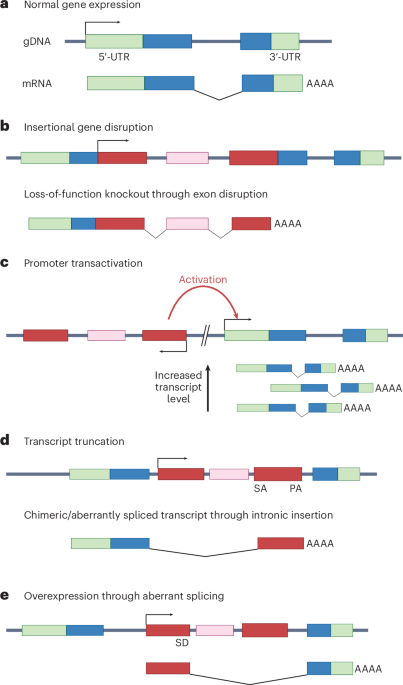
Although promising, gene and cell therapies can pose genotoxic risks that complicate clinical application. We describe the molecular basis of these risks, discuss tools to assess genotoxicity and highlight the advantages of non-viral genome engineering technologies for safer genome engineering.
This is a preview of subscription content, access via your institution
Access options
Access Nature and 54 other Nature Portfolio journals
Get Nature+, our best-value online-access subscription
$32.99 / 30 days
cancel any time
Subscribe to this journal
Receive 12 digital issues and online access to articles
$119.00 per year
only $9.92 per issue
Buy this article
- Purchase on SpringerLink
- Instant access to the full article PDF.
USD 39.95
Prices may be subject to local taxes which are calculated during checkout
References
-
Ferrari, G., Thrasher, A. J. & Aiuti, A. Nat. Rev. Genet. 22, 216–234 (2021).
-
Duncan, C. N. et al. N. Engl. J. Med. 391, 1287–1301 (2024).
-
Ott, M. G. et al. Nat. Med. 12, 401–409 (2006).
-
Braun, T. et al. Nat. Med. 31, 1145–1153 (2025).
-
Wang, J. Y. & Doudna, J. A. Science 379, eadd8643 (2023).
-
Kalter, N. et al. Mol. Ther. Nucleic Acids 36, 102636 (2025).
-
Anzalone, A. V. et al. Nature 576, 149–157 (2019).
-
Ivics, Z., Hackett, P. B., Plasterk, R. H. & Izsvák, Z. Cell 91, 501–510 (1997).
-
Gogol-Döring, A. et al. Mol. Ther. 24, 592–606 (2016).
-
Witte, I. P. et al. Science 388, eadt5199 (2025).
-
Fell, C. W. et al. Nature 642, 1080–1089 (2025).
-
Modlich, U. et al. Blood 108, 2545–2553 (2006).
-
Schwarzer, A. et al. Mol. Ther. 29, 3383–3397 (2021).
-
Musunuru, K. et al. N. Engl. J. Med. 392, 2235–2243 (2025).
-
Bimbo, J. F. et al. J. Immunother. Cancer 13, e011759 (2025).
Acknowledgements
Work in the authors’ laboratory has been supported by the Innovative Medicines Initiative 2 Joint Undertaking (T2Evolve, grant 945393), by Stiftung Deutsche Krebshilfe (German Cancer Aid) as part of the preclinical cancer drug development network (preCDD) and the CAR Factory consortium (grant 70115200), by the Deutsche Forschungsgemeinschaft (German Research Foundation, grant IV 21/22-1), by the NC3Rs’ CRACK IT Challenge programme under grant NC/C022201/01 and by the German Cancer Consortium (DKTK) at the German Cancer Research Center (DKFZ), Heidelberg, Germany.
Ethics declarations
Competing interests
Z.I. is co-inventor of several patents relating to Sleeping Beauty transposon technology and is a member of the scientific advisory board of NanoCell Therapeutics. M.-M.N. and U.K. declare no competing interests.
Rights and permissions
About this article

Cite this article
Nzila, MM., Koehl, U. & Ivics, Z. Non-viral vectors as beacons of hope for reducing genotoxic risks of gene therapy. Nat. Biomed. Eng (2026). https://doi.org/10.1038/s41551-025-01581-8
-
Published:
-
Version of record:
-
DOI: https://doi.org/10.1038/s41551-025-01581-8