
- Article
- Open access
- Published:
- K. Kiruthika1,
- A. Suganthi ORCID: orcid.org/0000-0001-7013-44591,
- R. Anandham2,
- Y. S. Johnson Thangaraj Edward1,
- P. Renukadevi3,
- M. Murugan1,
- Bimal Kumar Sahoo1,
- Mohammad Ikram1,
- J. Kousika1 &
- …
- M. Alagar1
Scientific Reports , Article number: (2026) Cite this article
We are providing an unedited version of this manuscript to give early access to its findings. Before final publication, the manuscript will undergo further editing. Please note there may be errors present which affect the content, and all legal disclaimers apply.
Subjects
Abstract
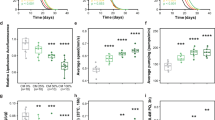
The persistence of insecticide residues on food crops poses a significant risk to human health and the environment, necessitating effective residue mitigation strategies. This study evaluates the potential of lactic acid bacteria (LAB) strains, Lactobacillus pentosus and Lactococcus lactis subsp. lactis, for degrading residues of cyantraniliprole and chlorantraniliprole under laboratory conditions, and further assessed their degradation potential for cyantraniliprole under field conditions. Residue levels were quantified using liquid chromatography-tandem mass spectrometry, allowing precise measurement of degradation rates. In minimal broth, both strains reduced cyantraniliprole residues up to 33.07% and chlorantraniliprole residues by up to 23.44% over 12 days, with Lactobacillus pentosus demonstrating a higher degradation efficiency. Nutrient broth significantly enhanced biodegradation efficiency, with both LAB strains removing more than 98% of cyantraniliprole within 4 days and achieving complete degradation by 10th day. Controlled field evaluation demonstrated the practical efficacy of LAB application, where Lactobacillus pentosus and Lactococcus lactis reduced insecticide residues by up to 40.99 and 34.52% respectively, after 8 h of spraying. Overall, these findings highlight the potential of LAB as a natural, eco-friendly solution for mitigating pesticide residues in food commodities, contributing to sustainable agricultural practices.
Data availability
All data generated or analyzed during this study are included in this published article and its supplementary information files (Tables S1 and S2).
References
-
Ahmad, M. F. et al. Pesticides impacts on human health and the environment with their mechanisms of action and possible countermeasures. Heliyon 10(7), e29128. https://doi.org/10.1016/j.heliyon.2024.e29128 (2024).
-
Sivasankari, S. et al. Study on impact of decontamination and processing methods on insecticide residues in green and red chilli (Capsicum annuum L.) using LC-MS/MS. Food Control 169, 110999. https://doi.org/10.1016/j.foodcont.2024.110999 (2025).
-
Yuan, S. et al. Screening of lactic acid bacteria for degrading organophosphorus pesticides and their potential protective effects against pesticide toxicity. LWT 147, 111672. https://doi.org/10.1016/j.lwt.2021.111672 (2021).
-
Yuan, S. et al. Recent advance in probiotics for the elimination of pesticide residues in food and feed: mechanisms, product toxicity, and reinforcement strategies. Crit. Rev. Food Sci. Nutr. https://doi.org/10.1080/10408398.2023.2246545 (2023).
-
Kiruthika, K. et al. Role of lactic acid bacteria in insecticide residue degradation. Probiotics Antimicrob. Proteins https://doi.org/10.1007/s12602-024-10298-0 (2024).
-
Richardson, E. B., Troczka, B. J., Gutbrod, O., Davies, T. E. & Nauen, R. Diamide resistance: 10 years of lessons from lepidopteran pests. J. Pest. Sci. 93, 911–928. https://doi.org/10.1007/s10340-020-01220-y (2020).
-
Awad, M. et al. Lethal and sublethal effects of cyantraniliprole on the biology and metabolic enzyme activities of Spodoptera littoralis and Agrotis ipsilon, and a generalist predator. Chrysoperla carnea. Insects 15, 450. https://doi.org/10.3390/insects15060450 (2024).
-
Jerez, P. G. P. et al. Diamide seed treatment may protect early soybean growth stages against Helicoverpa armigera. Crop Prot. 168, 106214. https://doi.org/10.1016/j.cropro.2023.106214 (2023).
-
Bosch, D., Rodríguez, M. A., Depalo, L. & Avilla, J. Determination of the baseline susceptibility of European populations of Cydia pomonella to chlorantraniliprole. J. Econ. Entomol. 111, 844–852. https://doi.org/10.1093/jee/toy020 (2018).
-
Anjum, F. & Wright, D. Relative toxicity of insecticides to the crucifer pests Plutella xylostella and Myzus persicae and their natural enemies. Crop Prot. 88, 131–136. https://doi.org/10.1016/j.cropro.2016.06.002 (2016).
-
Žunić, A., Vuković, S., Lazić, S., Šunjka, D. & Bošković, D. The efficacy of novel diamide insecticides in Grapholita molesta suppression and their residues in peach fruits. Plant Prot. Sci. https://doi.org/10.17221/71/2019-PPS (2020).
-
Tiwari, S. & Stelinski, L. L. Effects of cyantraniliprole against Asian citrus psyllid under laboratory and field conditions. Pest Manag. Sci. 69, 1066–1072. https://doi.org/10.1002/ps.3468 (2013).
-
Sun, C. P. et al. Simultaneous determination of five kinds of diamide insecticides in fruits and vegetables by Sin-QueChERS with UPLC-MS/MS. Food Chem. 11(6), 1784–1791 (2020).
-
Diaz-Garcia, L. et al. Top-down enrichment strategy to co-cultivate lactic acid and lignocellulolytic bacteria. Front. Microbiol. 12, 744075. https://doi.org/10.3389/fmicb.2021.744075 (2021).
-
Hamoud, N. H. & Sifour, M. Biodegradation of chlorpyrifos by Weissella confusa. Arch. Microbiol. 203, 3615–3621. https://doi.org/10.1007/s00203-021-02353-z (2021).
-
Lee, J. H. et al. Biodegradation of organophosphorus insecticides by Lactobacillus plantarum WCP931. Appl. Biol. Chem. 64, 1–12. https://doi.org/10.1186/s13765-021-00632-3 (2021).
-
Anastassiades, M. et al. QuEChERS multiresidue method for pesticides. J. AOAC Int. 86, 412–431. https://doi.org/10.1093/jaoac/86.2.412 (2003).
-
CIBRC. Major Uses of Pesticides (Registered under the Insecticides Act, 1968)… up to 31.03.2025. Government of India (2024).
-
FSSAI. Guidance Document & SOPs for Fixation of Maximum Residue Limits (MRLs) of Pesticides in Food Products. Government of India (2022).
-
SANTE. Analytical Quality Control and Method Validation Procedures for Pesticide Residue Analysis in Food and Feed. SANTE/11312/2021 (2021).
-
Liu, F. et al. Characterization of Lactobacillus pentosus 3–27 for β-cypermethrin degradation. J. Hazard. Mater. 423, 127101. https://doi.org/10.1016/j.jhazmat.2021.127101 (2022).
-
Tan, Y. S. et al. Microbial adaptation to enhance stress tolerance. Front. Microbiol. 13, 888746 (2022).
-
Kumral, A., Kumral, N. A. & Gurbuz, O. Degradation of chlorpyrifos and deltamethrin by Lactobacillus plantarum. Turk. J. Entomol. 44, 165–176. https://doi.org/10.16970/entoted.625156 (2020).
-
Misra, A., Vinod, R. & Bhattacharyya, A. Degradation of fenvalerate in milk by lactic acid bacteria. J. Dairy Res. 49(9), 635–639 (1996).
-
Zhao, X. H. & Wang, J. Degradation kinetics of organophosphorus pesticides in milk cultured with Lactobacillus spp. Food Chem. 131, 300–304. https://doi.org/10.1016/j.foodchem.2011.08.046 (2012).
-
Zhang, Y. H. et al. Enhanced degradation of five organophosphorus pesticides in milk by lactic acid bacteria. Food Chem. 164, 173–178. https://doi.org/10.1016/j.foodchem.2014.05.059 (2014).
-
Zhou, X. W. & Zhao, X. H. Susceptibility of nine OP pesticides in milk toward lactic acid bacteria. J. Sci. Food Agric. 95, 260–266. https://doi.org/10.1002/jsfa.6710 (2015).
-
Pinto, G. et al. Lactic acid bacteria for organophosphate degradation in food. LWT 110, 353–359. https://doi.org/10.1016/j.lwt.2019.02.037 (2019).
-
Zhang, M. et al. Cypermethrin-binding capacity of lactic acid bacteria. Food Chem. 347, 129000. https://doi.org/10.1016/j.foodchem.2021.129000 (2021).
-
Chen, W. J. et al. Bioremediation of β-cypermethrin by Pseudomonas aeruginosa. Environ. Res. 236, 116619. https://doi.org/10.1016/j.envres.2023.116619 (2023).
-
Park, H. et al. Carbofuran-degrading Chryseobacterium sp. BSC2–3. Metabolites 12(3), 219. https://doi.org/10.3390/metabo12030219 (2022).
-
Omeiri, M. et al. Chlorpyrifos biodegradation by soil bacteria. Bioremediat. J. 28, 14–33. https://doi.org/10.1080/10889868.2022.2130874 (2024).
-
Anita, V. & Chauhan, S. A. R. Indoxacarb dissipation in Lycopersicon esculentum. J. Entomol. Zool. Stud. 6, 814–819 (2018).
-
Radwan, M., Abu-Elamayem, M., Shiboob, M. & Abdel-Aal, A. Residual behaviour of profenofos on some field-grown vegetables and its removal using various washing solutions and household processing. Food Chem. Toxicol. 43, 553–557. https://doi.org/10.1016/j.fct.2004.12.009 (2005).
-
Elkins, E. R. Effect of commercial processing on pesticide residues. J. Assoc. Off. Anal. Chem. 72, 533–535. https://doi.org/10.1093/jaoac/72.3.533 (1989).
-
Đorđević, T. et al. Dissipation of pirimiphos-methyl in wheat fermentation. Lett. Appl. Microbiol. 57(5), 412–419. https://doi.org/10.1111/lam.12128 (2013).
-
Đorđević, T. M. et al. Stability of bifenthrin in milled wheat. J. Sci. Food Agric. 93(13), 3377–3383. https://doi.org/10.1002/jsfa.6188 (2013).
-
Zhang, Y. H. et al. Biodegradation of OP pesticides in corn silage by Lactobacillus plantarum. 3 Biotech 6, 1–6. https://doi.org/10.1007/s13205-016-0364-3 (2016).
Acknowledgements
The Researchers are grateful to Pesticide Toxicology Laboratory, Department of Agricultural Entomology, Centre for Plant Protection Studies, Tamil Nadu Agricultural University, Coimbatore, India, and All India Network Project on Pesticide Residues and Contaminants, for the facilities provided during this study.
Funding
No funding was received for this research work.
Ethics declarations
Competing interests
The authors declare no competing interests.
Additional information
Publisher’s note
Springer Nature remains neutral with regard to jurisdictional claims in published maps and institutional affiliations.
Supplementary Information
Rights and permissions
Open Access This article is licensed under a Creative Commons Attribution-NonCommercial-NoDerivatives 4.0 International License, which permits any non-commercial use, sharing, distribution and reproduction in any medium or format, as long as you give appropriate credit to the original author(s) and the source, provide a link to the Creative Commons licence, and indicate if you modified the licensed material. You do not have permission under this licence to share adapted material derived from this article or parts of it. The images or other third party material in this article are included in the article’s Creative Commons licence, unless indicated otherwise in a credit line to the material. If material is not included in the article’s Creative Commons licence and your intended use is not permitted by statutory regulation or exceeds the permitted use, you will need to obtain permission directly from the copyright holder. To view a copy of this licence, visit http://creativecommons.org/licenses/by-nc-nd/4.0/.
About this article

Cite this article
Kiruthika, K., Suganthi, A., Anandham, R. et al. Biodegradation of insecticide residue by lactic acid bacteria. Sci Rep (2026). https://doi.org/10.1038/s41598-025-34844-0
-
Received:
-
Accepted:
-
Published:
-
DOI: https://doi.org/10.1038/s41598-025-34844-0

