Neutrophils are known as first responders to threatening infections and feature prominently in the microenvironment of tumors to resist cancer progression. Though neutrophils have been linked to the growth of multiple cancers, such as lung and breast, these cells can assume multiple functional states.
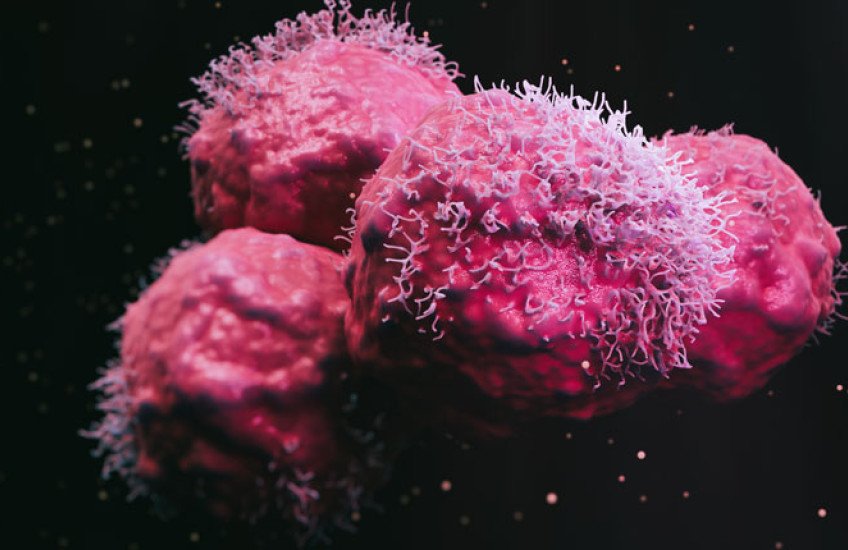
In a new study published in Cancer Cell titled, “CCL3 is produced by aged neutrophils across cancers and promotes tumor growth,” researchers from Ludwig Institute for Cancer Research in Lausanne have discovered a gene expression program executed by tumor-associated neutrophils (TANs) and a corresponding biomarker that uniformly support cancer cell survival and tumor progression across human and murine tumors.
Results demonstrate that TANs characterized by this conserved genetic program are a central variable of the tumor microenvironment (TME) linked to cancer progression. The authors also identify an associated marker, CCL3, as key to supporting cancer growth.
“We found that tumors induce in neutrophils a genetic program that sets them on a trajectory of continuous maturation, culminating in a terminal ‘aged’ state characterized by high CCL3 expression,” said Mikaël Pittet, PhD, professor at Ludwig Lausanne and corresponding author of the study.
He explains that these senescent, ‘CCL3hi’ neutrophils preferentially occupy niches in the TME that are starved of oxygen and engage in genetic subroutines that allow adaptation to harsh conditions. A broad suite of genes is then activated to promote the growth and survival of tumors.
The gene expression results of these aged TANs align with previous findings linking neutrophils to tumor growth. Senescent TANs, for example, have been found to fuel prostate cancer. Pittet says this conserved pro-tumor state in TANs represents a likely biomarker for predicting patient prognoses across multiple cancer types.
Pittet and his team applied a probability classifier to more than 190 human and murine tumors to sort neutrophils in distinct functional states based on raw sequencing data. The results uncovered the terminal CCL3hi state assumed by TANs spread across a wide spectrum of tumor types.
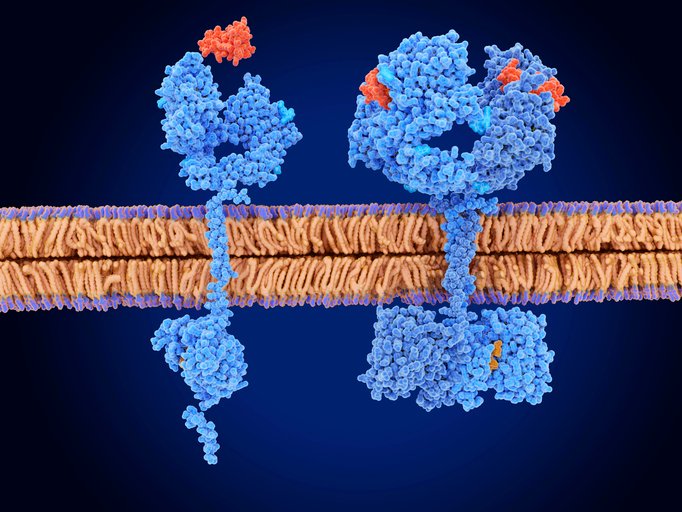
The authors show that CCL3 produced by TANs engages a receptor on their surface (CCR1) to transmit signals that drive TANs toward the terminally aged state, improve survival in the hypoxic microenvironment and trigger gene expression programs that drive tumor growth. Mice lacking CCL3 and CCR1 in their neutrophils failed to support tumor growth, demonstrating that loss of either component leads to the same impairment in TAN-mediated tumor support.
“Our work establishes that tumors actively maintain pro-tumor neutrophils through CCL3 and identifies these cells as a conserved and clinically relevant compartment of cells in the TME,” said Pittet. “This suggests that the genetic and biochemical circuits that ensure the survival of CCL3hi TANs might be targeted for cancer treatment.”
The findings complement a discovery reported by Pittet and colleagues in Science in 2023 that the ratio of a pair of genes (CXCL9 and SPP1) expressed by macrophages broadly predicts outcomes for cancer patients. The current study suggests that CCL3hi TANs could be a second variable of prognostic significance across tumor types and species.
The post Cancer Outcomes Across Tumors Predicted by CCL3 Production by Neutrophils appeared first on GEN – Genetic Engineering and Biotechnology News.