
As it celebrates its 15th anniversary this year, Foresite Capital is looking less back than ahead. After a year that saw an uptick in biopharma venture capital (VC) dollars invested, though not in the volume of such deals, the firm foresees the number of VC financings finally starting to grow year-over-year in 2026—and with them, first-time public stock offerings by the more mature of these startups.
While the forecast is ambitious, there are signs that appear to support an upbeat view of the biopharma capital market compared with 2025, which saw $149 billion invested across 76 biopharma deals, compared with $90 billion over 94 deals in 2024. Similarly, J.P. Morgan and DealForma reported a dollar value of biopharma M&A deals more than doubling year-over-year to $116.3 billion from $51.6 billion, while their reported number of VC deals barely budged, inching up to 129 from 128 in 2024.
Already this year, six companies have carried out initial public offerings (IPOs) while several others have filed registration forms to go public, including Generate: Biomedicines. The largest IPO at deadline was the $381 million offering priced earlier this month by Eikon Therapeutics, the late-stage oncology and neuroscience drug developer, followed by the $318 million IPO of radiopharma drug developer Aktis Oncology priced on January 8.
On the VC front, the largest completed venture financing this year as of deadline was the $305 million Series F round of Parabilis Medicines, a developer of cell-penetrant alpha-helical peptides or Helicons for rare and common cancers; followed by the $287 million Series D1 round of Corxel Pharmaceuticals, a cardiometabolic drug developer whose pipeline is led by oral small molecule glucagon-like peptide 1 (GLP-1) receptor agonist candidate CX11.
Based in San Francisco, Foresite Capital is a multi-stage healthcare and life sciences investment firm with more than $3.5 billion in assets under management (including a $900 million sixth fund raised in 2024), and a focus on funding promising startups at all stages of their life cycles—both instrument and drug companies.
Among Foresite Capital’s most successful instrument companies are 10x Genomics, a leading developer of instruments, reagents, and software used for spatial and single-cell biology, and Element Biosciences, which focuses on developing innovative genetic analysis tools for the research and diagnostic markets.
Notable drug developers funded by Foresite include the Foresite Labs-incubated Alumis, a developer of next-generation targeted therapies across a variety of immune-mediated diseases, and Xaira Therapeutics, an AI-based therapeutics company that launched in April 2024 with an eye-popping $1 billion in committed capital and a star-studded leadership that includes Nobel laureates David Baker, PhD, and Carolyn Bertozzi, PhD; former FDA Commissioner Scott Gottlieb, MD; and former Johnson & Johnson CEO Alex Gorsky.
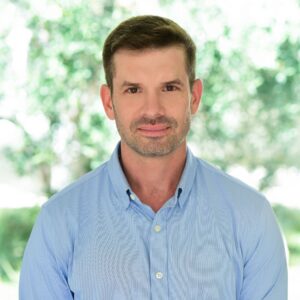
Jim Tananbaum, MD, Foresite Capital’s founder and CEO, and Michael Rome, PhD, the managing director who leads the firm’s therapeutics investing practice, recently discussed the investment firm’s approach to nurturing startups, the state of biopharma VC investment, and the challenges faced by young drug and data companies in an interview with GEN Edge.
This interview has been lightly edited for length and clarity.
GEN Edge: This year marks the 15th anniversary of Foresite. What about the firm has changed since 2011, and what has stayed the same?

Jim Tananbaum, MD: Actually, in a lot of ways, it’s been evolutionary in the sense that when we started Foresite, we had a belief that human biology, genetics, and frankly, computational methods would come together, and we thought that the entire healthcare system would be transformed by science and engineering advances. So early on, we focused on therapeutics that were best-in-class, but we also focused on data production methods, investing in companies that led in the sequencing world and the proteomics world, to produce the data that enabled more systematic learning to go on at scale.
Then, seven years ago, we started Forsite Labs, which is an incubation platform that does large AI builds as well as therapeutic builds. The first company to come off of that was a company called Alumis, which is now getting a lot of love in the public markets. They have a best-in-class compound for treating psoriasis and lupus and possibly Crohn’s disease. It’s really exciting.
Its Phase III data has read out in psoriasis; it’s as good as a biologic. It’s an incredibly well-run company. [President, CEO, and chairman] Martin Babler’s running it. And we assembled it basically in 2020, and it was one of the first things to come up from the Foresite Labs platform.
And then, most recently, [Project] Prometheus, which is the company that Jeff Bezos and Vik [Bajaj, PhD, co-founder and CEO of Foresite Labs] are running, and is the largest announcement of the Foresite Labs platform. We’re excited about how things have evolved.
GEN Edge: So online, Foresite Labs focuses on AI and data science. Any other areas of focus?
Tananbaum: Therapeutics. Alumis would be an example of that, which is a compound we’ve licensed from China, and that is now in the registration cycle.
GEN Edge: For Foresite Labs, how have the needs of the startups evolved over the years?
Tananbaum: As time has gone on, I think we’re getting more and more efficient in terms of starting up companies that have a direct line of sight as to what they’re trying to do. But we’ve been systematically looking at what’s worked, what hasn’t worked, and I think we’re just getting better and better at the start of the cycle.
Michael Rome, PhD: We’re also getting more efficient at the same time.
GEN Edge: What therapeutic areas are seeing more progress?
Rome: On the immunology side, there’s been a lot of advances, so I think we’re learning now how to make better drugs in a targeted way for patients. When I think back at different fields like oncology, for instance, there was probably a lot of low-hanging fruit for companies over the last decade, and we’ve just seen incredible advances. You can see that in just the survival of patients, if you look very broadly at the different advances of drugs.
The next frontier is going to be immunology. And when you think about how immunology has been treated, it’s been very broad, kind of sledgehammer-type mechanisms, right? You have a drug that broadly suppresses the patient’s immune system. You get the clinical benefit, but you also get a lot of side effects.
What we’re seeing right now is companies that are going after drugs that are very targeted in the immune system and going after the cell types that are producing autoantibodies that end up being the underlying pathogenesis of disease. There’s going to be a whole wave of companies now that are making new drugs. And you might have seen some of these in the CAR T space, for instance, that are going after autoimmunity, off-the-shelf free agents like T-cell engagers, which engage both the target of interest and T cells in your body. And since you’re asking about what we’re doing at Foresite Labs, we have a company doing exactly that called Candid Therapeutics, which is doing bispecifics.
GEN Edge: We’ve seen some of the even bigger VC firms do their own startup support places: Flagship Pioneering, for example, and there are some others like that. Where does Foresite Labs stand out?
Tananbaum: For example, with Alumis, we actually supported the clinical development of it entirely in-house. It’s moving into Phase II. We have the capabilities to take over the management of assets as we’re acquiring them or building up companies with them. Frankly, it’s our goal to attract world-class management teams and have them build up the organizations. That’s ultimately where we’re going. We have the capabilities internally and continue to lean on those capabilities internally and set things up, and to prosecute things as needed.
GEN Edge: You mentioned Alumis. Where did Foresite help them out?
Tananbaum: Well, we started them. We created the whole thing. We identified the asset, we in-licensed the asset, we built the company up alone, and then we brought in management, and then we brought in other investors.
Rome: We do very broad landscaping of drugs, so we’re looking for things like first-in-class or best-in-class drugs. The drug that Alumis has, which is a TYK2 inhibitor, there was an existing drug from BMS [Bristol Myers Squibb] called Sotyktu[® (deucravacitinib)], and it was a first-generation TYK2 drug; still, a major breakthrough.
But what we’ve learned by doing our analysis of Sotyktu was that their next class of drugs would be inhibiting the TYK2 pathway completely. That was a major search on our end for finding a comprehensive TYK2 inhibitor. We did this out of Foresite Labs and our scouting. Actually, that asset came out of a joint venture with a company in China and a biotech company that was based in the United States. We ended up acquiring that.
And that was an entrepreneur in our network that Jim actually had a relationship with for decades. So, that was the scouting of finding that asset and then assembling it. As Jim was saying, we ran the initial Phase I clinical development on our team.
GEN Edge: Another company of interest and one of the largest financings is Xaira Therapeutics. It emerged from stealth with $1 billion-plus in 2024 after six months. How did Xaira come together, and what was Foresite’s role in that?
Tananbaum: Again, another one we created. We teamed up with David Baker, [PhD], who ultimately co-won the [2024] Nobel Prize in Chemistry, and built out the company, recruiting Marc Tessier-Lavigne, [PhD]. We did this with Arch Venture Partners, and a couple of other funds ultimately ended up joining us.
GEN Edge: You mentioned before dealing with China. How has Foresite made China’s biopharma ecosystem a key piece of the investment strategy?
Rome: I would say, first of all, it’s a major source of innovation throughout the past decade or so. You have companies that are doing world-class science. I think it’s been increasingly recognized now from the clinical development standpoint that you’re seeing very high-quality Phase I, II, and III clinical trials being run in China.
Of course, you have to replicate that data in the United States for larger clinical studies. But going back, actually, the first transaction we did out of China was the TYP2 inhibitor for Alumis. So, we started actually building out and scouting assets in China, going back to 2020, even before. Pharma has now been very active out there, even before that was taking place.
Our model is not doing direct investments in China, but rather doing either asset in-licensing or asset purchases, and using that to form U.S. companies. I think there’s a perception that the efforts are competitive. But actually, there are a lot of ways they’re synergistic, because maybe you’re scouting an asset in China or you have some form of a company with R&D efficiencies.
But all the clinical development, the majority of it is being done in the United States. You could have half a billion in clinical development being done here, and then the asset originated from research efforts in China. The way we see it is that it opens up more of a landscape for finding assets. Maybe you’re not limited to the United States; you’re looking in Asia, you’re looking in Europe, and I think it’s very enabling.
GEN Edge: What form does the asset attraction take? Is it simply a company buying an asset from China? Are there possibilities for more collaboration?
Rome: Yeah. Actually, in a lot of ways, now companies are not only buying assets out of China or doing licensing agreements, but they’re working on clinical development together. Just to use another example, a company we mentioned, Candid Therapeutics, has a team on the ground in China where they’re doing clinical development and utilizing all of the great networks there.
They have a specialty: immunology hospitals. We’re actually getting a lot of clinical data, and we’ve built out a separate team there. I think the trend is, you’re going to see more and more people doing cross-border collaborations, not only research, but on the clinical development side.
GEN Edge: What, if any, concern does Foresite have about regulatory headwinds impeding cross-border collaborations with Chinese companies? We sometimes hear governments, whether it’s in the United States or Europe, talk about casting a warier eye or even limiting the kinds of partnerships companies can do.
Rome: From the regulatory point of view, for the FDA, we still have to replicate the data in the United States, and you still have to have typically more than 50% of the clinical trials that the patients have to be in the setting in the United States. You can’t walk into the FDA and say, hey, I’ve got 80% of the clinical trials done in China. Let me register the drug in the United States. That’s not changing. That standard’s there, and I think there’s a lot of ways that makes sense.
Look, there’s always the headline of geopolitical risk there. From our perspective, we’re not directly investing in companies there, so we feel like there’s a lot less geopolitical risk. But the amount of collaboration just across many different industries is still different.
There are certain areas that I think are more specific in other sectors of the healthcare system that are under scrutiny. But biotech, for the most part, especially when doing licensing agreements, we don’t see that being an imminent threat to not happening.
GEN Edge: Where does the VC market now stand? For years, we’ve heard that VC deals were driven to larger value awards in later phases, or more limited areas of therapeutic focus. What is Foresite seeing?
Tananbaum: Look, at the end of the day, I think that most markets go through a classic life cycle. And over 2023, 2024, and for a lot of 2025, I would say biotech was in the fourth quarter of its life cycle where it was declining, contracting, which pushed things to later and later in terms of their funding and narrower and narrower, closer to liquidity investment horizons and narrower theses that were very directed toward those specific points in time where things were going to read out.
I now believe that the biotech market is cycling through into its first quarter of recovery. And with that, you’ll see the IPO window open up. You’ll see, I think, more speculation and more investment in earlier stage opportunities.
You’ll see, basically, a clearing out effectively of the later stage opportunities, and then an opening up with the earlier stage opportunities. Part of the reason why the IPO markets are opening up is that the public markets are clearing out all of the public opportunities where there are really great assets and underfunded. So, the public market is now starting to look to where else can we invest.
And so, I think that with the re-emergence of the biotech marketplace, which should continue to go on this year, I think you’re going to see just continued more risk-taking in the segment, more money running into the segment, and more productivity from the segment in terms of drugs to make a difference.
GEN Edge: You mentioned the IPO window opening up. We saw at least two filings one week into this year, by companies that must still complete an involved process before they can go public. How much did those filings inspire your confidence in a potential bounce back for IPOs this year, even as some market watchers continue to predict another slow year for IPOs?
Tananbaum: We’ll see. But I hear from banks that over the last couple of months, they saw a lot more generalist activity there that’s generally supporting the IPO windows.
GEN Edge: In what startups or which areas are investors more interested in funding, either from a therapeutic area or from a technology or modality standpoint?
Tananbaum: Honestly, I think that’s a hard question. The metabolic area has been a big area over the last year or so. There are a lot of areas where the science is working. So, I think it’s going to continue to be generally in unmet needs, and best-in-class, and first-in-class.
Rome: I think neuro is going to continue to be a big area, neuro and pain. I think we’re seeing a lot of innovation in those spaces. And then the other core areas like oncology, inflammation, and immunology.
GEN Edge: Companies were fleeing from neuro drug development a decade ago. What changed?
Rome: I think there’s a fair amount of innovation. If you look at the Nav1.8 inhibitor pain space, that’s been really interesting. And those are novel breakthroughs. We’re continually looking for things that can replace opioids in the pain space. This has, for the first time, shown promise of doing that. So I think we’re going to continue to see drugs that are in this realm be important.
GEN Edge: How does Foresite look to position itself among VC firms?
Tananbaum: I think, honestly, we want to be seen as a great patient supplier of capital for entrepreneurs. We want to help catalyze entrepreneurs to be successful by being good partners and being able to help them through value-added services in addition to money.
GEN Edge: You mentioned obesity before. You said last October that GLPs could evolve into the first mass market therapies for longevity and preventive health. Wouldn’t they need to be used for more than cutting pounds to achieve that?
Tananbaum: Yeah, well, they have. GLP-1s have been shown to be cardiovascularly superior, which means that they impact heart attack rates. And that cardiovascular superiority has been studied in millions of people. The way that I would think about it is, for a third of the population, some very substantial portion of the population, GLP-1s are going to help them live longer because they’re going to have fewer heart attacks.
Rome: And some of those cardiovascular effects are independent of weight loss. Some of the newer reagents that we are following are going to be drugs that help maintain or increase muscle mass in patients who are on GLP-1s.
GEN Edge: What does Foresite look for in therapeutics and instrument startups?
Tananbaum: Therapeutics: Best-in-class, first-in-class. Instruments: We’re looking at data production; what can make a difference in terms of learning capabilities from data that’s being produced? We don’t do a lot of instrument investments per se. We’re more invested in the use of data from instruments of diagnostics, genomics, proteomics.
GEN Edge: How mature in your view is the market for AI drug development investment?
Tananbaum: Very, very, very early. I think it’s a ten-year conversation, not a two-year conversation.
GEN Edge: If AI is very early in development, how far past the hype stage is it?
Tananbaum: Well, I think that you’re going to see AI play a very significant role in a whole bunch of different places. It’s just a question of when. So, I think it’s going to live up to the hype. It’s going to take time for that to move into its own.
GEN Edge: One area that doesn’t seem of interest, presumably because of regulatory headwinds, is vaccines. You were quoted last fall about Foresite re-evaluating its strategy. What’s been the outcome of that rethinking?
Tananbaum: Well, in a funny way now, I think we’re quite interested and open to vaccines. We think they’re generally great products. It’s just that there was a lot of uncertainty and headwinds. Now that that’s better defined, we can look at the assets in that category with the mindset of the current regulatory environment.
GEN Edge: What has changed? We still see headlines about vaccines encountering regulatory headwinds [On February 10, the FDA declined to review Moderna’s application for an mRNA-based seasonal flu vaccine, faulting the company’s Phase III trial design in a refuse-to-file letter disclosed by Moderna].
Rome: Vaccine development timelines tend to be very long. If you’re developing a novel vaccine, that could take 5 to 10 years. So, the environment could be different in the future. And right now, I would say, the current regulatory environment wouldn’t stop us today from investing in a novel vaccine that may take 5 to 10 years to get to partner.
Tananbaum: We know we’re taking a very long-term view on vaccines.
The post On Its 15th Anniversary, Foresite Capital Looks Ahead appeared first on GEN – Genetic Engineering and Biotechnology News.