
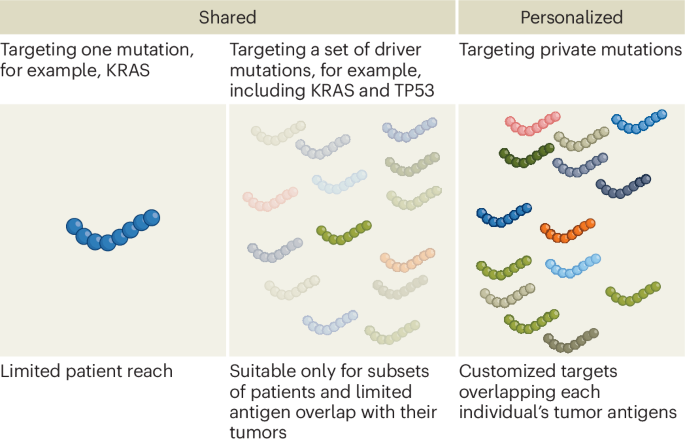
Martini, D. J. & Wu, C. J. The future of personalized cancer vaccines. Cancer Discov. 15, 1315–1324 (2025).
Finotello, F., Rieder, D., Hackl, H. & Trajanoski, Z. Next-generation computational tools for interrogating cancer immunity. Nat. Rev. Genet. 20, 724–746 (2019).
Sarkizova, S. et al. A large peptidome dataset improves HLA class I epitope prediction across most of the human population. Nat. Biotechnol. 38, 199–209 (2020).
Boon, T. & Kellermann, O. Rejection by syngeneic mice of cell variants obtained by mutagenesis of a malignant teratocarcinoma cell line. Proc. Natl Acad. Sci. USA 74, 272–275 (1977).
Karikó, K., Buckstein, M., Ni, H. & Weissman, D. Suppression of RNA recognition by Toll-like receptors: the impact of nucleoside modification and the evolutionary origin of RNA. Immunity 23, 165–175 (2005).
Akinc, A. et al. The Onpattro story and the clinical translation of nanomedicines containing nucleic acid-based drugs. Nat. Nanotechnol. 14, 1084–1087 (2019).
Baden, L. R. et al. Phase 3 trial of mRNA-1273 during the Delta-variant surge. N. Engl. J. Med. 385, 2485–2487 (2021).
Gupta, R. G., Li, F., Roszik, J. & Lizée, G. Exploiting tumor neoantigens to target cancer evolution: current challenges and promising therapeutic approaches. Cancer Discov. 11, 1024–1039 (2021).
Sellars, M. C., Wu, C. J. & Fritsch, E. F. Cancer vaccines: building a bridge over troubled waters. Cell 185, 2770–2788 (2022).
Verma, V. et al. PD-1 blockade in subprimed CD8 cells induces dysfunctional PD-1+CD38hi cells and anti-PD-1 resistance. Nat. Immunol. 20, 1231–1243 (2019).
Blank, C. U. et al. Neoadjuvant nivolumab and ipilimumab in resectable stage III melanoma. N. Engl. J. Med. 391, 1696–1708 (2024).
Patel, S. P. et al. Neoadjuvant-adjuvant or adjuvant-only pembrolizumab in advanced melanoma. N. Engl. J. Med. 388, 813–823 (2023).
Heymach, J. V. et al. Perioperative durvalumab for resectable non-small-cell lung cancer. N. Engl. J. Med. 389, 1672–1684 (2023).
Uppaluri, R. et al. Neoadjuvant and adjuvant pembrolizumab in locally advanced head and neck cancer. N. Engl. J. Med. 393, 37–50 (2025).
Zhou, S., Fan, C., Zeng, Z., Young, K. H. & Li, Y. Clinical and immunological effects of p53-targeting vaccines. Front. Cell Dev. Biol. 9, 762796 (2021).
Li, F. et al. Epidermal growth factor receptor-targeted neoantigen peptide vaccination for the treatment of non-small cell lung cancer and glioblastoma. Vaccines (Basel) 11, 1460 (2023).
Pant, S. et al. Lymph-node-targeted, mKRAS-specific amphiphile vaccine in pancreatic and colorectal cancer: the phase 1 AMPLIFY-201 trial. Nat. Med. 30, 531–542 (2024).
Wainberg, Z. A. et al. Lymph node-targeted, mKRAS-specific amphiphile vaccine in pancreatic and colorectal cancer: phase 1 AMPLIFY-201 trial final results. Nat. Med. 31, 3648–3653 (2025).
Rappaport, A. R. et al. A shared neoantigen vaccine combined with immune checkpoint blockade for advanced metastatic solid tumors: phase 1 trial interim results. Nat. Med. 30, 1013–1022 (2024).
Godazandeh, K. et al. Methods behind neoantigen prediction for personalized anticancer vaccines. Methods Cell. Biol. 183, 161–186 (2024).
Lybaert, L. et al. Challenges in neoantigen-directed therapeutics. Cancer Cell 41, 15–40 (2023).
Lang, F., Schrörs, B., Löwer, M., Türeci, Ö. & Sahin, U. Identification of neoantigens for individualized therapeutic cancer vaccines. Nat. Rev. Drug Discov. 21, 261–282 (2022).
Wells, D. K. et al. Key parameters of tumor epitope immunogenicity revealed through a consortium approach improve neoantigen prediction. Cell 183, 818–834 (2020).
Goncalves, G., Dolcetti, R., Ooi, J. D. & Faridi, P. Cryptic but critical: non-canonical antigens in cancer immunotherapy. Trends Immunol. 46, 499–501 (2025).
Raja, R. et al. Immunogenic cryptic peptides dominate the antigenic landscape of ovarian cancer. Sci. Adv. 11, eads7405 (2025).
Apavaloaei, A. et al. Tumor antigens preferentially derive from unmutated genomic sequences in melanoma and non-small cell lung cancer. Nat. Cancer 6, 1419–1437 (2025).
Ely, Z. A. et al. Pancreatic cancer-restricted cryptic antigens are targets for T cell recognition. Science 388, eadk3487 (2025).
Merlotti, A. et al. Noncanonical splicing junctions between exons and transposable elements represent a source of immunogenic recurrent neo-antigens in patients with lung cancer. Sci. Immunol. 8, eabm6359 (2023).
Jiang, Q. et al. HIF regulates multiple translated endogenous retroviruses: implications for cancer immunotherapy. Cell 188, 1807–1827 (2025).
Baden, L. R. et al. Efficacy and safety of the mRNA-1273 SARS-CoV-2 vaccine. N. Engl. J. Med. 384, 403–416 (2021).
Diamond, M. S. et al. Type I interferon is selectively required by dendritic cells for immune rejection of tumors. J. Exp. Med. 208, 1989–2003 (2011).
Kranz, L. M. et al. Systemic RNA delivery to dendritic cells exploits antiviral defence for cancer immunotherapy. Nature 534, 396–401 (2016).
Wang, S., Weissman, D. & Dong, Y. RNA chemistry and therapeutics. Nat. Rev. Drug Discov. 24, 828–851 (2025).
Jia, L. et al. Decoding mRNA translatability and stability from the 5’UTR. Nat. Struct. Mol. Biol. 27, 814–821 (2020).
Fang, E. et al. Advances in COVID-19 mRNA vaccine development. Signal Transduct. Target. Ther. 7, 94 (2022).
Sample, P. J. et al. Human 5’UTR design and variant effect prediction from a massively parallel translation assay. Nat. Biotechnol. 37, 803–809 (2019).
Zhang, H. et al. Algorithm for optimized mRNA design improves stability and immunogenicity. Nature 621, 396–403 (2023).
Castillo-Hair, S. et al. Optimizing 5’UTRs for mRNA-delivered gene editing using deep learning. Nat. Commun. 15, 5284 (2024).
Aunins, E. A. et al. An Il12 mRNA-LNP adjuvant enhances mRNA vaccine-induced CD8 T cell responses. Sci. Immunol. 10, eads1328 (2025).
Kim, D. Y. et al. Enhancement of protein expression by alphavirus replicons by designing self-replicating subgenomic RNAs. Proc. Natl Acad. Sci. USA 111, 10708–10713 (2014).
Aliahmad, P., Miyake-Stoner, S. J., Geall, A. J. & Wang, N. S. Next generation self-replicating RNA vectors for vaccines and immunotherapies. Cancer Gene Ther. 30, 785–793 (2023).
Palmer, C. D. et al. Individualized, heterologous chimpanzee adenovirus and self-amplifying mRNA neoantigen vaccine for advanced metastatic solid tumors: phase 1 trial interim results. Nat. Med. 28, 1619–1629 (2022).
Mijalis, A. J. et al. A fully automated flow-based approach for accelerated peptide synthesis. Nat. Chem. Biol. 13, 464–466 (2017).
Kuai, R., Ochyl, L. J., Bahjat, K. S., Schwendeman, A. & Moon, J. J. Designer vaccine nanodiscs for personalized cancer immunotherapy. Nat. Mater. 16, 489–496 (2017).
Lynn, G. M. et al. Peptide-TLR-7/8a conjugate vaccines chemically programmed for nanoparticle self-assembly enhance CD8 T-cell immunity to tumor antigens. Nat. Biotechnol. 38, 320–332 (2020).
Baharom, F. et al. Intravenous nanoparticle vaccination generates stem-like TCF1+ neoantigen-specific CD8+ T cells. Nat. Immunol. 22, 41–52 (2021).
Baharom, F. et al. Systemic vaccination induces CD8+ T cells and remodels the tumor microenvironment. Cell 185, 4317–4332 (2022).
Truex, N. L. et al. Enhanced vaccine immunogenicity enabled by targeted cytosolic delivery of tumor antigens into dendritic cells. ACS Cent. Sci. 9, 1835–1845 (2023).
Travieso, T., Li, J., Mahesh, S., Mello, J. D. F. R. E. & Blasi, M. The use of viral vectors in vaccine development. NPJ Vaccines 7, 75 (2022).
Bhojnagarwala, P. S., Jose, J., Zhao, S. & Weiner, D. B. DNA-based immunotherapy for cancer: in vivo approaches for recalcitrant targets. Mol. Ther. 33, 2719–2739 (2025).
Gary, E. N. & Weiner, D. B. DNA vaccines: prime time is now. Curr. Opin. Immunol. 65, 21–27 (2020).
Carreno, B. M. et al. Cancer immunotherapy. A dendritic cell vaccine increases the breadth and diversity of melanoma neoantigen-specific T cells. Science 348, 803–808 (2015).
Ingels, J. et al. Neoantigen-targeted dendritic cell vaccination in lung cancer patients induces long-lived T cells exhibiting the full differentiation spectrum. Cell Rep. Med. 5, 101516 (2024).
Leoni, G. et al. A genetic vaccine encoding shared cancer neoantigens to treat tumors with microsatellite instability. Cancer Res. 80, 3972–3982 (2020).
Ott, P. A. et al. An immunogenic personal neoantigen vaccine for patients with melanoma. Nature 547, 217–221 (2017).
Sahin, U. et al. Personalized RNA mutanome vaccines mobilize poly-specific therapeutic immunity against cancer. Nature 547, 222–226 (2017).
Hilf, N. et al. Actively personalized vaccination trial for newly diagnosed glioblastoma. Nature 565, 240–245 (2019).
Keskin, D. B. et al. Neoantigen vaccine generates intratumoral T cell responses in phase Ib glioblastoma trial. Nature 565, 234–239 (2019).
Awad, M. M. et al. Personalized neoantigen vaccine NEO-PV-01 with chemotherapy and anti-PD-1 as first-line treatment for non-squamous non-small cell lung cancer. Cancer Cell 40, 1010–1026 (2022).
Ott, P. A. et al. A phase Ib trial of personalized neoantigen therapy plus anti-PD-1 in patients with advanced melanoma, non-small cell lung cancer, or bladder cancer. Cell 183, 347–362 (2020).
Saxena, M. et al. PGV001, a multi-peptide personalized neoantigen vaccine platform: phase I study in patients with solid and hematologic malignancies in the adjuvant setting. Cancer Discov. 15, 930–947 (2025).
Saxena, M. et al. Atezolizumab plus personalized neoantigen vaccination in urothelial cancer: a phase 1 trial. Nat. Cancer 6, 988–999 (2025).
Blass, E. et al. A multi-adjuvant personal neoantigen vaccine generates potent immunity in melanoma. Cell 188, 5125–5141 (2025).
Lopez, J. et al. Autogene cevumeran with or without atezolizumab in advanced solid tumors: a phase 1 trial. Nat. Med. 31, 152–164 (2025).
Yarchoan, M. et al. Personalized neoantigen vaccine and pembrolizumab in advanced hepatocellular carcinoma: a phase 1/2 trial. Nat. Med. 30, 1044–1053 (2024).
Zhang, X. et al. Neoantigen DNA vaccines are safe, feasible, and induce neoantigen-specific immune responses in triple-negative breast cancer patients. Genome Med. 16, 131 (2024).
Weber, J. S. et al. Individualised neoantigen therapy mRNA-4157 (V940) plus pembrolizumab versus pembrolizumab monotherapy in resected melanoma (KEYNOTE-942): a randomised, phase 2b study. Lancet 403, 632–644 (2024).
Rojas, L. A. et al. Personalized RNA neoantigen vaccines stimulate T cells in pancreatic cancer. Nature 618, 144–150 (2023).
Sethna, Z. et al. RNA neoantigen vaccines prime long-lived CD8+ T cells in pancreatic cancer. Nature 639, 1042–1051 (2025).
Sullivan, R. J. et al. 954P a randomized phase II study of autogene cevumeran plus pembrolizumab (pembro) versus pembro in 1L advanced melanoma (IMcode001). Ann. Oncol. 36, S623–S624 (2025).
Ramirez, C. A. et al. Neoantigen landscape supports feasibility of personalized cancer vaccine for follicular lymphoma. Blood Adv. 8, 4035–4049 (2024).
Szymura, S. J. et al. Personalized neoantigen vaccines as early intervention in untreated patients with lymphoplasmacytic lymphoma: a non-randomized phase 1 trial. Nat. Commun. 15, 6874 (2024).
Chang, T. C. et al. The neoepitope landscape in pediatric cancers. Genome Med. 9, 78 (2017).
Ehx, G. et al. Atypical acute myeloid leukemia-specific transcripts generate shared and immunogenic MHC class-I-associated epitopes. Immunity 54, 737–752 (2021).
Braun, D. A. et al. A neoantigen vaccine generates antitumour immunity in renal cell carcinoma. Nature 639, 474–482 (2025).
Gainor, J. F. et al. T-cell responses to individualized neoantigen therapy mRNA-4157 (V940) alone or in combination with pembrolizumab in the phase 1 KEYNOTE-603 study. Cancer Discov. 14, 2209–2223 (2024).