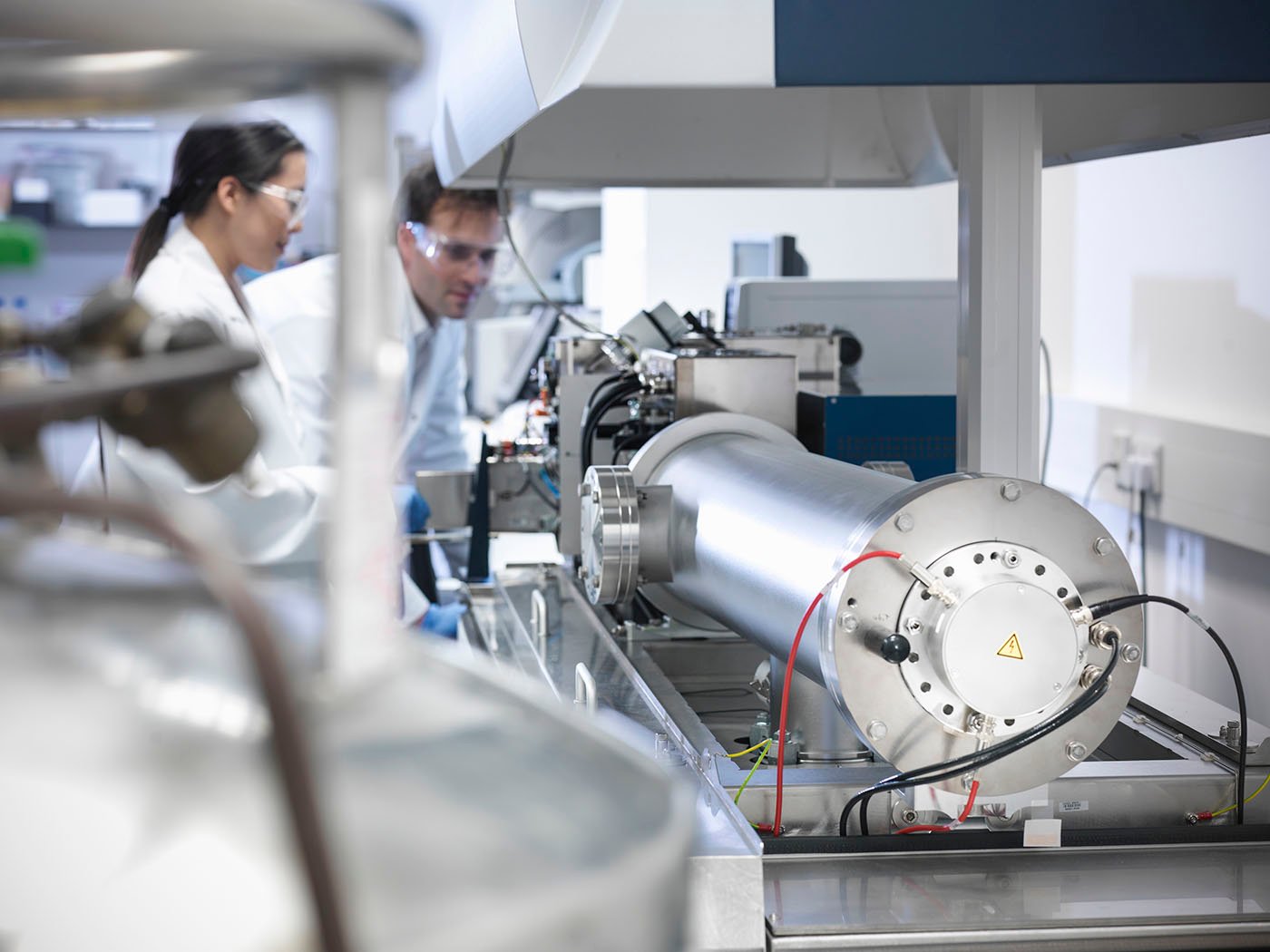
GSK, Imperial College London, and the University of Oxford have founded the Modelling-Informed Medicine Centre (MiMeC) to provide a new U.K. hub for research in the emerging modeling-informed medicine field.
The Modelling-Informed Medicine Centre will create computer models or “digital twins” of organs and diseases to better understand how diseases of the lungs, liver, and kidneys progress, to discover and develop drugs more quickly, and to target medicines more precisely.
The center is backed by £11 million ($14.8 million) funding from GSK and multidisciplinary expertise spanning mathematics, data science, and experimentation from the founding partners.
The partners aim to support the life sciences community by bringing together fragmented research in the field and training a new generation of research and development specialists who understand best practice in this emerging area of biomedical research. It will share its models on an open-source basis and build collaborations with further partners.
GSK plans to use the research to incorporate models of organs into its drug development pipeline within five years, aided by industrial placements it will provide to researchers from the center. The program is led by Helen Byrne, PhD, and Philip Maini, PhD, at the University of Oxford, Steven Niederer, PhD, at Imperial College London, and Anna Sher PhD, at GSK.
“We have seen math used for modeling airplanes, and cars,” said Niederer. “Increasingly, there is a realization that this has benefits in biology, where you can perform virtual experiments in models of humans at great speed and a fraction of the usual cost.”
Building digital twins of organs
At Imperial, Niederer and team will build patient-specific models of organs using artificial intelligence and biological datasets. They will mathematically represent millions of cells in organs such as the lungs, and the mechanistic (or cause-and-effect) relationships they hold to one another, by modeling a proportion of cells found in the real organ.
![Scientist works on a digital twin that will have research applications at the newly founded Modelling-Informed Medicine Centre in the UK. [Sheng-Ya Wang / Imperial College London]](https://www.genengnews.com/wp-content/uploads/2026/03/mimec-225x300.jpg)
Using the models, researchers could perform a simple in vitro experiment into the effect of a drug on a single lung cell and then use the model to simulate how this would translate into larger effects such as changes in the behavior of the airways.
In contrast with computational approaches that only find statistical regularities in biological data, these mechanistic models represent cause and effect, making them potentially more explainable and robust, says the Imperial team.
Eventually, the approach could allow clinicians to use digital twins of specific patients to tailor their treatments in real time, an approach that Niederer’s group is already testing with cardiac patients.
At the University of Oxford, experts will develop and apply mechanistic models to advance understanding of disease processes and inform the design of more effective treatments. The teams will build models grounded in physics, physiology and pharmacology to reveal disease mechanisms. These will include multi-scale models that integrate molecular, cellular and organ-level processes with whole-body physiology.
Designing effective treatments
The scientists will use digital twins and virtual patients to simulate treatment responses, optimize dosing strategies, and design in silico clinical trials. They will also contribute open-source tools, standards for reproducibility, and case studies that showcase the impact of model-informed drug development.
“This exciting new partnership recognizes the pioneering role that the Wolfson Centre for Mathematical Biology has played—and continues to play—in applying mathematics to understand diseases and their response to treatment,” noted Jon Chapman, PhD, head of the Mathematical Institute of the University of Oxford.
MiMeC will focus on the adoption of the mathematical modeling-first mindset in the development of new therapies.
“By cycling between computer modeling, learning from the results, making predictions and then testing them, we can make faster, better decisions in developing new medicines,” explained Sher, MiMeC co-director and quantitative pharmacology systems lead in the respiratory, immunology, and inflammation research unit at GSK.
“The tools and models developed through MiMeC strengthen GSK’s ability to generate virtual patients and digital twins to run computer‑based (in silico) clinical trials, analyze different data types, and test scientific ideas more efficiently.”
The post Creating Computer Models of Lungs, Liver, and Kidneys to Better Understand Disease Progression appeared first on GEN – Genetic Engineering and Biotechnology News.