Introduction
The genus Aloe, a group of more than 450–600 succulent plants with succulent leaves native to Africa and Arabia, has been used for its medicinal and cosmetic purposes for many centuries1,2. Aloe species have long been known for antioxidant, anticancer, anti-inflammatory, antimicrobial, and antifungal activities3, and have notable importance in traditional medicine and even modern personal care4,5. Due to their native origins, profusion of bioactive compounds, and documented importance in ethnomedicinal practices, A. adigratana and A. elegans are notably preferred for scientific investigation3,6,7,8.
Ethiopia’s unparalleled biodiversity and deep ethnomedical traditions provide a rich source of plant species with immense therapeutic potential. In light of the escalating global antibiotic resistance crisis9, the quest for innovative antimicrobial agents from nature’s pharmacopeia is now critically urgent10. A. adigratana and A. elegans, with their documented therapeutic properties, offer a promising opportunity to address this challenge7,8,11. Demonstrating their antibacterial efficacy would pave the way for locally produced hygiene products, satisfying the growing demand for plant-based alternatives and delivering sustainable solutions for prevalent bacterial skin infections. Studies toward conservation and commercial cultivation of these and other Ethiopian species have been underway2,7,12,13,14.
This study focused on evaluating the antibacterial activity of crude extracts from the leaves of A. adigratana and A. elegans against three bacterial pathogens. Standardized microbiological assays were employed to quantify the inhibitory effects of these extracts and define their spectrum of activity. The aim of the research was to demonstrate the antibacterial properties of these locally sourced botanicals to create the foundation for their potential use in common hygiene products like shampoos and soaps, which could be both safe and effective. The study helped promote sustainable practices by reducing synthetic chemical use and highlighting herbal personal care advantages. By validating Ethiopian flora and encouraging native plant research, it ultimately aimed to improve health, hygiene, biodiversity conservation, and local innovation.
Materials and methods
Sample collection and extraction
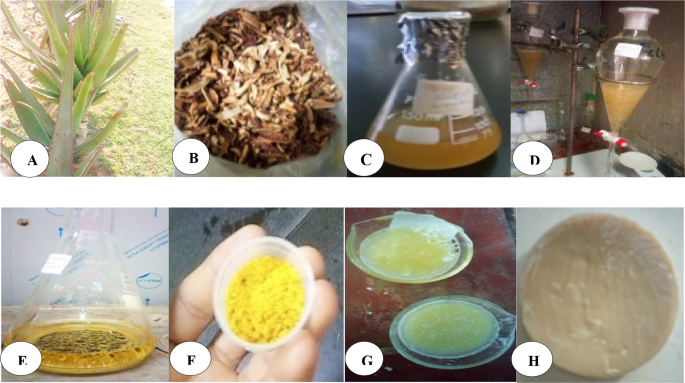
Fresh, mature leaf samples of A. adigratana and A. elegans were collected from Adi-Aynom and Sasun—both located in Adigrat—between November and January 2023. The species were authenticated by Dr. Desta Berhe from the Department of Biology at Mekelle University, and a voucher specimen (HG001) was deposited at the National Herbarium in Addis Ababa. The samples were then thoroughly washed and rinsed with distilled water to remove debris. After being cut into pieces and dried, the plant material (500 g) was ground into a fine powder. Then, 50 g of aloe plants were soaked in 100 mL of methanol and in 100 mL of distilled water in separate round-bottom flasks and shaken for 24 h. The sample was filtered, and the solvents were separated using a rotary evaporator (Fig. 1). The crude extracts from A. adigratana and A. elegans plants were recovered, freeze-dried, and stored at − 20 °C for future use15.

Extraction and formulation of Shampoo and Soap from Aloe species. A Aloe plants. B Dried samples of Aloe plants. C Extract. D Solvent and plant material separation. E Concentrated extract. F Dried extract. G Formulated shampoo. H Formulated soap.
Preliminary qualitative phytochemical screening tests
Phytochemicals were assessed using standard qualitative tests: alkaloids (Wagner’s reagent, reddish-brown precipitate), flavonoids (alkaline test, deep yellow to colorless with 2% NaOH), tannins (ferric chloride, dark green), saponins (frothing test, foam), steroids (Liebermann–Burchardt, dark green with chloroform, H2SO4, acetic acid), glycosides (Salkowski’s, yellow with water, NaOH), and terpenoids (Salkowski reaction, reddish-brown with chloroform, H2SO4)11,16.
Inoculum preparation using 0.5 McFarland standards
To prepare a 0.5 McFarland standard, 50 µl of a 1.175% (wt/v) barium chloride dihydrate (BaCl₂·2 H₂O) solution was added to 9.95 ml of 1% (v/v) H₂SO₄. This standard was then sealed with aluminum foil in a screw-capped amber glass bottle to prevent photodegradation and stored at room temperature in a dark place. Pure colonies of Escherichia coli, Staphylococcus aureus, and Salmonella typhiwere cultured overnight in Muller–Hinton broth at 37 °C to produce suspensions. Each suspension was adjusted to a concentration of 10⁶–10⁸ CFU/ml using the 0.5 McFarland standard, evenly spread on Muller-Hinton agar, and incubated at 37 °C for 24 h 17.
Antibacterial activity of extracts
The disk diffusion method was used to assess the antibacterial activity of plant extracts. Test bacteria were grown on nutrient agar, and a single colony was transferred to nutrient broth, which was then spread onto Muller-Hinton agar plates. Methanol and water extracts of A. adigratana and A. elegans leaves were tested for antibacterial activity using 6 mm sterilized filter paper disks. The disks were impregnated with 10 µl of 10 mg/ml each plant extract and placed onto inoculated plates. The same procedure was followed to test herbal shampoo and soap formulated from these plant extracts. Prior to incubation with the test microorganisms, the plates were allowed to stand at 4 °C for two hrs. Subsequently, plates containing S. typhi, S. aureus, and E. coli were incubated at 37 °C for 24 h. Then, the sizes of the resulting inhibitory zones were measured in millimeters. To ensure reproducibility, each antimicrobial experiment was carried out at least three times. Standard disks of cloxacillin (2 µg) were used as positive controls to confirm the observed antibacterial activity18. Combined extracts of Aloe species were prepared using methanol and water as solvents. Antibacterial activity was evaluated against E. coli, S. aureus, and S. typhi using the agar disc diffusion method (1:1 ratio of 10 mg/mL), with Cloxacillin as the positive control. Zones of inhibition (mm) were measured, and results were expressed as mean ± standard deviation. Statistical significance (p ≤ 0.05) was indicated by superscript letters denoting differences in activity.
Formulation and evaluation of shampoo from extracts of A. adigratana and A. elegans
Shampoo was created using ingredients like coconut oil extract, lemon juice, olive oil, pure glycerin oil, and vitamin E. The shampoo underwent rigorous testing for its physical appearance, performance, and solid content. The study also assessed surface tension, foam volume, foam stability, and wetting time. The pH was determined using a pH meter, while froth behavior assessed dirt dissipation and soap quality. Solid content was measured through drying, and wetting time was observed by oil slices sinking in the shampoo solution. The shampoo was also tested for skin irritation11.
Antibacterial activity of the formulated shampoo
The antibacterial activity assay was conducted against three bacterial strains using the paper-disc diffusion method. Petri plates containing 20 ml of Mueller–Hinton agar were seeded with a 24-h culture of E. coli, S. aureus, and S. typhi. Paper discs were impregnated by 1 ml of 1o mg/ml of test solution and then applied to the agar plates seeded with the respective microbes. Following incubation at 37 °C for 24 h, the diameters of the resulting zones of inhibition were measured and rounded to the nearest millimeter3. The results were tabulated, with cloxacillin serving as the positive control and shampoo without plant extract used as a negative control.
Formulation and characterization of soap from A. adigratana and A. elegans extracts
The soap was made by combining plant extract with nine ingredients, including olive oil, coconut oil, fat, sodium hydroxide, sodium laureth sulfate, glycerin, lemon juice, ethanol, and paraffin oil, forming a homogeneous mixture and solidifying in a mold (Fig. 2). The shampoo formulation involved mixing all six ingredients simultaneously until a uniform, homogeneous solution was obtained, with the concentrations chosen randomly. Herbal soap’s color, odor, and texture were manually assessed; color and clarity were visually inspected against white, and odor was determined by smelling. pH was measured in a 2 g soap/10 ml distilled water solution using a standard pH meter. Foaming ability was assessed by shaking a 2 g soap/50 ml distilled water solution for 2 min and measuring foam height (Table 1). Total Fatty Matter (TFM) was determined by liberating fatty acids through the reaction of soap with acid in hot water, solidifying the fatty acid layer by reheating and adding 7 g of beeswax, and then calculating the %TFM using the formula %TFM = (weight of cake − weight of beeswax) / weight of soap × 10019.

A process flow chart illustrating herbal soap formulation.
Data analysis
Research data were collected from all tests and experiments. All tests and experiments were carried out in triplicate. Data were checked for their normality and analyzed using one-way analysis of variance (ANOVA). Post-hoc comparisons of means (± SD) were carried out using Tukey’s method at an a priori set p value of ≤ 0.05.
Results and discussion
Preliminary phytochemical screening of Aloe species
Phytochemical analysis of water and methanolic extracts from A. adigratana and A. elegans revealed phenols, anthraquinones, alkaloids, and saponins, while flavonoids, terpenoids, tannins, and glycosides were absent. This distinct profile indicates a unique chemical signature specific to these extracts (Table 2). The identified compounds’ antibacterial properties align with observed effects, indicating their unique phytochemical profile drives the specific antimicrobial activity20.
Comparative analysis reveals marked phytochemical variability among Aloe species, influenced by species type, extraction solvent, growth stage, and geographic origin. The absence of flavonoids, terpenoids, tannins, and glycosides in A. adigratana and A. elegans extracts underscores how chemical composition and bioactivity vary with extraction method and plant material used7,21,22. The consistency of these findings with previous research on Aloe species further supports the potential of these plants as sources of bioactive compounds7,8,11,23.
Antibacterial activity of Aloes extracts
The aqueous extract of A. adigratana was highly effective against S. aureus, with an inhibition zone of 17 ± 1.50 mm, while showing the least effect on E. coli (13.5 ± 0.50 mm). Conversely, the methanol extract was most potent against S. aureus (13.0 ± 2.00 mm) and S. typhi (12.0 ± 1.00 mm). These findings demonstrate the antibacterial potential of Aloe extracts, with strong activity against S. aureus and promising effects on E. coli and S. typhi. Unlocking their broader applications in hygiene and medicine requires focused research to optimize extraction, identify active compounds, and overcome E. coli resistance. The distinct efficacy of the methanol extract emphasizes the importance of solvent selection in isolating bioactive agents, reinforcing the value of both A. adigratana extracts for targeted antimicrobial development24.
The study revealed that methanol and aqueous extracts of A. elegans produced varying inhibition zones against E. coli, S. aureus, and S. typhi, indicating its potential as a local antibacterial source influenced by both solvent type and target pathogen. The water extract of A. adigratana exhibited a higher antibacterial activity (17.0b ± 1.50 mm) than cloxacillin (17b ± 0.50 mm) against S. aureus. The aqueous leaf extract of A. adigratana shows strong antibacterial activity, especially against E. coli. This is due to bioactive compounds that disrupt bacterial cell membranes and metabolism, as a previous study has proved its broad-spectrum potential against pathogens like S. aureus and S. typhi25. In contrast, the methanol extract also exhibited highest efficacy against E. coli (12.75 ± 0.25 mm), followed by S. typhi and S. aureus, reinforcing the role of solvent choice in extracting compounds with differential antibacterial effects (Table 3). Aqueous extracts of Aloe elegans showed stronger antibacterial activity than methanol extracts, likely due to water’s polarity enhancing the extraction of active phytochemicals. Although polar solvents generally favor Aloe species, bioactive yield and efficacy remain strain-dependent26,27.
Although methanol and aqueous extracts exhibited comparable antibacterial activity against E. coli and S. typhi (p > 0.05), S. aureus showed a statistically significant response (p ≤ 0.05), particularly to the aqueous extract of A. adigratana. These findings indicate that, while the extracts possess broad-spectrum potential, their efficacy may vary by bacterial strain—consistent with observations reported in earlier studies28. The pronounced activity of A. adigratana aqueous extract against S. aureus highlights water’s efficiency in extracting relevant bioactives and supports its potential for targeted antimicrobial applications29.
The combined antibacterial property of methanol and water extracts of both plants showed varying degrees of response toward the tested bacterial strains. So water and methanol extracts of the plants were reported to synergistic maximum zones of inhibition for S. aureus, which were 18 ± 2.00 and 15.5 ± 2.50, respectively. Followed by 15 ± 2.00 and 13.5 ± 0.50 for S. typhi. S. aureus was more sensitive to the combined plant extract. S. aureus (18 ± 2.00 and 15.5 ± 2.50) demonstrates a significance difference (p ≤ 0.05) for the water and methanol extracts of both plants, while E. coli and S. typhi did not reveal any significant difference (p > 0.05) (Table 4).
Plants generate diverse molecules with potential antimicrobial properties, though their antibiotic activity is often weaker than that of commercial drugs. However, these compounds can synergize with existing antimicrobials to boost efficacy and support the host in combating infection. This likely accounts for the notably strong effect of the combined extracts of A. adigratana and A. elegans against S. aureus30.
Evaluations of lab-formulated shampoo and soaps
Antibacterial activity of formulated shampoo and soap
The herbal shampoo with water extracts of A. adigratana and A. elegans showed strong in vitro antimicrobial activity against E. coli, S. aureus, and S. typhi (Table 5). The highest inhibition was observed against S. aureus, indicating greater susceptibility, likely due to antibacterial metabolites and phytochemicals in the Aloe extracts31. The higher susceptibility of S. aureus is likely due to its different cell wall structure compared to Gram-negative bacteria, which makes it more vulnerable to the active compounds in the Aloe extracts. The statistically significant inhibition zone (p ≤ 0.05) confirms the herbal shampoo’s effectiveness against this specific pathogen32.
The formulated soap demonstrated potent antimicrobial activity, retaining the antibacterial effects of A. adigratana and A. elegans. It showed the highest inhibition against S. aureus (17.5 ± 1.50 mm) and significant activity against E. coli (13 ± 1.00 mm) (Table 5). In line with the shampoo results, S. aureus was more susceptible to the formulated soap, likely due to its distinct cell wall structure compared to Gram-negative bacteria. The soap showed significantly greater antimicrobial efficacy than the control (without Aloe extracts), indicating that while the base had some antibacterial properties, the addition of Aloe extracts markedly enhanced its effectiveness26. A. adigratana and A. elegans in the current formulation showed limited antibacterial efficacy, particularly against P. aeruginosa, likely due to species- and location-dependent variations in phytochemical composition.
The formulated soap—enriched with A. adigratana and A. elegans extracts—exhibited antibacterial activities against both E. coli and S. typhi that were comparable to commercial soap (negative control) but significantly less effective than the positive control, cloxacillin. These findings suggest the need for higher concentrations or optimized combinations of plant extracts to enhance efficacy. Additional research is necessary to improve the soap’s broader-spectrum antibacterial performance. The bioactive compounds targeting E. coli may either exist in insufficient concentrations or have a weaker mechanism of action, indicating that refining the extraction process or increasing plant extract concentrations could strengthen its efficacy against E. coli33. Notably, the soap demonstrated robust antibacterial activity against S. aureus, outperforming commercial soap and showing comparable results to cloxacillin. This results underscores the powerful anti-S. aureus properties of A. adigratana and A. elegans extracts, positioning the soap as a promising natural alternative for combating this pathogen34.
Characterization of formulated shampoo and soap
The formulated shampoo, enriched with A. adigratana and A. elegans extracts, presents a promising profile for a natural hair care product. Its brown, non-transparent appearance and pleasant scent align with consumer expectations for herbal formulations (Table 6). The slightly acidic pH of 6.50, even more favorable than the conventional control’s 7.23, suggests a gentler action on the scalp, potentially reducing the risk of irritation and maintaining the skin’s natural barrier35. While the foam volume (50 mm) and density are lower compared to both controls, the effective dirt dispersion indicates satisfactory cleansing. The 110-second wetting time and 23.5% solid content provide baseline formulation characteristics. Optimization of these properties, while retaining the skin-friendly pH and natural attributes, could enhance market appeal. The similarity in color and clarity to the positive control might offer a familiar aesthetic to consumers36.
The commercially available shampoo (positive control) serves as a benchmark for typical market formulations. Its undefined color and odor suggest a potentially neutral base, allowing for diverse fragrance additions. The slightly alkaline pH (7.23) and high, dense lather (56 mm) reflect common consumer preferences for a perceived strong cleansing action. The excellent dirt dispersion supports this. However, the longer wetting time (150 s) and lower solid content (22%) are notable differences from the formulated herbal shampoo. This highlights a potential trade-off between lather volume and wetting efficiency. The formulated herbal shampoo could differentiate itself by emphasizing its gentler pH and natural origin, potentially appealing to consumers seeking milder alternatives, even if the lather is less voluminous37. Further studies that compare the actual cleansing efficacy and any other scalp benefits of both formulations would be valuable.
The shampoo formulated without plant extracts (negative control) offers key insights into the base formulation. Its bright-yellow color, transparency, and clarity contrast distinctly with the herbal variant, highlighting the visual impact of aloe extracts. An acidic pH of 5.54 confirms that a skin-friendly pH can be achieved without the extracts, implying that other ingredients may slightly elevate the pH. The formulation produces a high, dense lather (54 mm) and shows strong dirt dispersion, indicating effective cleansing performance. A shorter wetting time (105 s) suggests that aloe extracts may slightly delay initial hair wetting. Overall, the comparison reveals that aloe extracts contribute to the brown color, reduced transparency, and potentially influence lather texture, wetting time, and solid content38.
Preliminary analysis of the formulated soap reveals a smooth texture, pleasant scent, and brown color, closely resembling commercial aloe shampoos. With a pH of 6.78, it falls within the skin’s optimal range, suggesting suitability for mild skincare applications. Its foam height (2.5 cm) and TFM content (25%) indicate effective lathering and cleansing properties, while supporting studies confirm that aloe-based lab formulations exhibit comparable qualities to marketed shampoos39. Comparative research shows that Neem Kanti Patanjali and No. 1 soaps have near-neutral to mildly alkaline pH (6.88–7.95), making them skin-friendly, whereas Dove and Sunsilk shampoos are slightly acidic (6.35–6.85), aligning with scalp pH. In contrast, detergents like Surf Excel and Ariel are strongly alkaline (8.16–8.59), which may be harsh on sensitive skin. Natural agents such as Aloe vera (pH 5.40–5.79) and Reetha (pH 7.36–7.74) demonstrate eco-friendly profiles, and dilution was found to reduce extreme pH levels across all samples, highlighting the importance of concentration control. These insights underscore the need for pH-balanced, biodegradable formulations that promote skin health and environmental sustainability, with future research aimed at optimizing product safety and advancing green cleaning technologies11,40 .The consistent skin-compatible pH data from both the formulated shampoo and soap strengthens the potential of A. adigratana and A. elegans as sources of beneficial compounds for personal care applications, which are likely to be less corrosive and with minimum skin reactions—aligning with existing literature and product descriptions. Further studies on the soap’s cleansing power, skin feel, and stability would be useful to strengthen the findings of the present study34.
The formulated soap, enriched with A. adigratana and A. elegans extracts, displayed a skin-friendly pH of 6.78 and a natural brown color, appealing to consumers interested in herbal products. However, its low foaming ability (2.5 cm) and reduced fat content (25%)—well below the commercial high-TFM standard (75.25%)—indicate a potentially harsher and less effective cleansing performance (Table 7). While the aloe extracts enhance the soap’s aesthetic and pH profile, they may compromise its lathering capacity, which is central to cleansing efficacy. This aligns with previous findings that, although herbal soaps offer antimicrobial, nourishing, and aromatherapeutic benefits and are ideal for sensitive skin, they may have limitations such as shorter shelf life and potential allergenicity. Nonetheless, their natural composition makes them a compelling alternative to synthetic soaps for those seeking gentle and sustainable skincare41,42.
Conclusion
The results of the phytochemical analysis revealed that aloe leaf extracts are sources of high alkaloid, anthraquinone, saponin, and phenol contents. These phytochemicals likely contributed to the observed antibacterial activity against the selected three bacterial species. S. aureus was especially susceptible to the plant extracts. Furthermore, the combined extracts of the plants demonstrated more effective antibacterial activity against the selected bacterial species than individual extracts. Additionally, shampoo and soap were successfully prepared and standardized by evaluating various physicochemical properties such as pH, appearance, and odor, all of which exhibited satisfactory effects. This research showed that the shampoo and soap produced using A. adigratana and A. elegans extracts possessed antimicrobial activity, suggesting their potential use as antiseptic shampoo and soap. For commercial use, future research should focus on exploring the phytochemical profiles of the plants and the biocidal properties of the phytochemicals. Findings from such studies could lead to the development of potent, broad-spectrum formulations combating antibiotic resistance. Studies on aloe-based biocidal chemicals can have many benefits, including verifying traditional applications of the aloe species, producing economic benefits for local people, providing sustainable alternatives to synthetic medications, and promoting broader phytochemical exploration.
Data availability
The datasets used and/or analysed during the current study available from the corresponding author on reasonable request.
References
-
Demissew, S. Botanical aspects of Aloes of North East Africa. Bull. Chem. Soc. Ethiop. 10 (1), 74–88 (1996).
-
Berhe, B. D., Sbhatu, D. B., Munawar, T. M. & Gebreyohannes, G. Aloe Monticola reynolds: A refugee of the mountains—contributing towards its conservation through in vitro propagation. Heliyon 9 (12), e22955. https://doi.org/10.1016/j.heliyon.2023.e22955 (2023).
-
Bansod, S. D., Bawaskar, M. S., Gade, A. K. & Rai, M. K. Development of shampoo, soap and ointment formulated by green synthesised silver nanoparticles functionalised with antimicrobial plants oils in veterinary dermatology: treatment and prevention strategies. IET Nanobiotechnol. 9 (4), 165–171. https://doi.org/10.1049/iet-nbt.2014.0042 (2015).
-
Sánchez, M., González-Burgos, E., Iglesias, I. & Gómez-Serranillos, M. P. Pharmacological update properties of Aloe vera and its major active constituents. Molecules 25 (6), 1–37. https://doi.org/10.3390/molecules25061324 (2020).
-
Nejatzadeh-Barandozi, F. Antibacterial activities and antioxidant capacity of Aloe vera. Org. Med. Chem. Lett. 3 (1), 1–8. https://doi.org/10.1186/2191-2858-3-5 (2013).
-
Salehi, B. et al. Aloe genus plants: from farm to food applications and phytopharmacotherapy. Int. J. Mol. Sci. 19 (9), 1–49. https://doi.org/10.3390/ijms19092843 (2018).
-
Gebremariam, A. et al. Aloe adigratana reynolds: preliminary phytochemical Screening, proximate content, essential oil analysis, and in vitro antifungal activity studies of its leaf peels and gel. J. Exp. Pharmacol. 15, 321–332. https://doi.org/10.2147/JEP.S420990 (2023).
-
Sbhatu, D. B. et al. Hair washing formulations from Aloe elegans Todaro gel: the potential for making hair shampoo. Adv. Pharmacol. Pharm. Sci. 2020 (50), 1–9. https://doi.org/10.1155/2020/8835120 (2020).
-
Gebreyohannes, G., Nyerere, A., Bii, C. & Sbhatu, D. B. Challenges of intervention, treatment, and antibiotic resistance of biofilm-forming microorganisms. Heliyon 5 (8), e02192. https://doi.org/10.1016/J.HELIYON.2019.E02192 (2019).
-
Alemu, M. et al. Ethnobotanical study of traditional medicinal plants used by the local people in Habru District, North Wollo Zone, Ethiopia. J. Ethnobiol. Ethnomed. 20 (1), 1–30. https://doi.org/10.1186/s13002-023-00644-x (2024).
-
Sbhatu, D. B. et al. Formulation and physicochemical evaluation of lab-based Aloe adigratana Reynolds shampoos. Int. J. Anal. Chem. 2020, 1–7. https://doi.org/10.1155/2020/6290617 (2020).
-
Welehaweria, M. & Sbhatu, D. B. In vitro micropropagation of Aloe elegans Tod. using offshoot cuttings. BMC Res. Notes. 16, 1–7. https://doi.org/10.1186/s13104-023-06490-0 (2023).
-
Niguse, M., Sbhatu, D. B. & Abraha, H. B. In vitro micropropagation of Aloe elegans Tod. using offshoot cuttings. Sci. World J. 2020 (1), 1–7. https://doi.org/10.1186/s13104-023-06490-0 (2020).
-
Hailu, A., Sbhatu, D. B. & Abraha, H. B. In vitro micropropagation of industrially and medicinally useful plant Aloe Trichosantha Berger using offshoot cuttings. Sci. World J. 2020, 1–7. https://doi.org/10.1155/2020/3947162 (2020).
-
Hadera, G., Gopalakrishnan, V. K., Hagos, Z., Hiruy, M. & Devaki, K. Phytochemical screening and in vitro antioxidant activities of ethanolic gel extract of Aloe adigratana. Reynolds 12(1). (2018).
-
Adhana, H. N. & Kelele, K. G. Phytochemical, antioxidant and antibacterial studies of ethanolic and methanolic extracts of. 8, 53–67. https://doi.org/10.17265/2328-2150/2020.02.003 (2020).
-
Usman, A., Abdulrahman, F. I. & Usman, A. Qualitative phytochemical screening and in vitro antimicrobial effects of methanol stem bark extract of ficus thonningii (Moraceae). Afr. J. Tradit. Complement Altern. Med. 6 (3), 289–295. https://doi.org/10.4314/ajtcam.v6i3.57178 (2009).
-
Habtemariam, M. & Medhanie, G. Screening of biologically active constituents from leaves of Aloe elegans and their antimicrobial activities against clinical pathogens. Afr. J. Microbiol. Res. 11 (8), 366–371. https://doi.org/10.5897/AJMR2016.8425 (2017).
-
Sukhija, P. S. & Palmquist, D. L. Rapid method for determination of total fatty acid content and composition of feedstuffs and feces. J. Agric. Food Chem. 36 (6), 1202–1206. https://doi.org/10.1021/jf00084a019 (1988).
-
Arsene, M. M. J. et al. Phytochemical analysis, antibacterial and antibiofilm activities of Aloe vera aqueous extract against selected resistant Gram-Negative bacteria involved in urinary tract infections. Fermentation 8 (11). https://doi.org/10.3390/fermentation8110626 (2022).
-
Radha, M. H. & Laxmipriya, N. P. Evaluation of biological properties and clinical effectiveness of Aloe vera: a systematic review. J. Tradit Complement. Med. 5 (1), 21–26. https://doi.org/10.1016/j.jtcme.2014.10.006 (2015).
-
Andrea, B. et al. Comparative analysis of some bioactive compounds in leaves of different Aloe species. BMC Chem. 14 (1), 1–11. https://doi.org/10.1186/s13065-020-00720-3 (2020).
-
Hamman, J. H. Composition and applications of Aloe vera leaf gel. Molecules 13 (8), 1599–1616. https://doi.org/10.3390/molecules13081599 (2008).
-
Vaou, N., Stavropoulou, E., Voidarou, C., Tsigalou, C. & Bezirtzoglou, E. Towards advances in medicinal plant antimicrobial activity: a review study on challenges and future perspectives. Microorganisms 9 (10), 1–28. https://doi.org/10.3390/microorganisms9102041 (2021).
-
Asmerom, D., Hailu, G. S., Yimer, E. M., Bitew, H. & Kahsay, G. Antimicrobial evaluation of latex and TLC fractions from the leaves of Aloe adigratana Reynolds. Evid. Based Complement Altern. Med. 2020, 1–10. https://doi.org/10.1155/2020/8312471 (2020).
-
Arbab, S. et al. Comparative study of antimicrobial action of Aloe vera and antibiotics against different bacterial isolates from skin infection. Vet. Med. Sci. 7 (5), 2061–2067. https://doi.org/10.1002/vms3.488 (2021).
-
West, D. P. & Zhu, Y. F. Evaluation of Aloe vera gel gloves in the treatment of dry skin associated with occupational exposure. Am. J. Infect. Control. 31 (1), 40–42. https://doi.org/10.1067/mic.2003.12 (2003).
-
Bhati, N., Jaidka, S. & Somani, R. Evaluation of antimicrobial efficacy of Aloe vera and meswak containing dentifrices with fluoridated dentifrice: an in vivo study. J. Int. Soc. Prev. Community Dent. 5 (5), 394–399. https://doi.org/10.4103/2231-0762.165924 (2015).
-
Pawar, V. C., Bagatharia, S. B. & Thaker, V. S. Antibacterial activity of Aloe vera leaf gel extracts against Staphylococcus aureus. Indian J. Microbiol. 45 (3), 227–229 (2005).
-
Chanda, S. & Rakholiya, K. Combination therapy: Synergism between natural plant extracts and antibiotics against infectious diseases (2011). (2015).
-
Dahiya, P. & Purkayastha, S. Phytochemical screening and antimicrobial activity of some medicinal plants against multi-drug resistant bacteria from clinical isolates. Indian J. Pharm. Sci. 74 (5), 443–450. https://doi.org/10.4103/0250-474X.108420 (2012).
-
Nikolic, P. & Mudgil, P. The cell wall, cell membrane and virulence factors of Staphylococcus aureus and their role in antibiotic resistance. Microorganisms 11 (2), 1–20. https://doi.org/10.3390/microorganisms11020259 (2023).
-
Elisha, I. L., Botha, F. S., McGaw, L. J. & Eloff, J. N. The antibacterial activity of extracts of nine plant species with good activity against Escherichia coli against five other bacteria and cytotoxicity of extracts. BMC Complement Altern. Med. 17 (1), 1–10. https://doi.org/10.1186/s12906-017-1645-z (2017).
-
Valgas, C., De Souza, S. M., Smânia, E. F. A. & Smânia, A. Screening methods to determine antibacterial activity of natural products. Braz. J. Microbiol. 38 (2), 369–380. https://doi.org/10.1590/S1517-83822007000200034 (2007).
-
Abelan, U. S. et al. Potential use of essential oils in cosmetic and dermatological hair products: a review. J. Cosmet. Dermatol. 21 (4), 1407–1418. https://doi.org/10.1111/jocd.14286 (2022).
-
Lukić, M., Pantelić, I. & Savić, S. D. Towards optimal pH of the skin and topical formulations: from the current state of the art to tailored products. Cosmetics 8 (3), 1–18. https://doi.org/10.3390/cosmetics8030069 (2021).
-
Lee, E. J. & Cha, H. J. Inonotus obliquus extract as an inhibitor of α-MSH-induced melanogenesis in B16F10 mouse melanoma cells. Cosmetics 6 (1), 1–16. https://doi.org/10.3390/cosmetics6010013 (2019).
-
Elferjane, M. R. et al. From Aloe vera leaf waste to the extracts with biological potential: optimization of the Extractions, physicochemical Characterization, and biological activities. Plants 12 (14), 1–36. https://doi.org/10.3390/plants12142744 (2023).
-
Santhosh, G., Abhishek, G., Niranjan, R., Pradeep, L. & HD, S. G. Development and evaluation of Aloe vera and Reetha-based polyherbal soap with antimicrobial properties. J. Pharmacogn. Phytochem. 13 (6), 258–261. https://doi.org/10.22271/phyto.2024.v13.i6d.15188 (2024).
-
Chaudhary, N. K. et al. Comparative pH analysis of synthetic and natural cleaning agents: implications for eco-friendly and dermatological safety. Bibechana 22 (2), 181–187. https://doi.org/10.3126/bibechana.v22i2.78901 (2025).
-
Priyanka, G., Ghonge, P. R., Hatwar, P. G., Shelke, R. L. Bakal, S. & Khandare S. Herbal soaps in skincare: natural solution for healthy skin. GSC Biol. Pharm. Sci. 31 (3), 055–063. https://doi.org/10.30574/gscbps.2025.31.3.0218 (2025).
-
Sharma, S., Pradhan, S., Pandit, B. & Mohanty, J. P. Formulation and evaluation of herbal soap taking different bioactive plants by cold saponification method. Int. J. Curr. Pharm. Res. 14 (5), 30–35. https://doi.org/10.22159/ijcpr.2022v14i5.2023 (2022).
Acknowledgements
The authors acknowledge Mekelle University for its financial support.
Funding
The authors are highly indebted to Mekelle University for supporting this research via grant number MU/PG/006/2023. They also thank the Scholars Rescue Fund of the International Institute of Education (SRF-IIF) for granting a fellowship to Dr. Desta Berhe Sbhatu and the UiTM for hosting him during the final preparation of this manuscript.
Ethics declarations
Competing interests
The authors declare no competing interests.
Additional information
Publisher’s note
Springer Nature remains neutral with regard to jurisdictional claims in published maps and institutional affiliations.
Rights and permissions
Open Access This article is licensed under a Creative Commons Attribution-NonCommercial-NoDerivatives 4.0 International License, which permits any non-commercial use, sharing, distribution and reproduction in any medium or format, as long as you give appropriate credit to the original author(s) and the source, provide a link to the Creative Commons licence, and indicate if you modified the licensed material. You do not have permission under this licence to share adapted material derived from this article or parts of it. The images or other third party material in this article are included in the article’s Creative Commons licence, unless indicated otherwise in a credit line to the material. If material is not included in the article’s Creative Commons licence and your intended use is not permitted by statutory regulation or exceeds the permitted use, you will need to obtain permission directly from the copyright holder. To view a copy of this licence, visit http://creativecommons.org/licenses/by-nc-nd/4.0/.
About this article

Cite this article
Sahle, H.G., Sbahtu, D.B. & Gebreyohannes, G. Antibacterial properties of Aloe adigratana and Aloe elegans extracts and their potential applications in shampoo and soap development. Sci Rep 15, 37848 (2025). https://doi.org/10.1038/s41598-025-21755-3
-
Received:
-
Accepted:
-
Published:
-
DOI: https://doi.org/10.1038/s41598-025-21755-3