For months, executives in biopharma and other life sciences have been expressing optimism that in 2026, the industry will emerge from its post-COVID-19 doldrums. They have cited positive trends ranging from the rebound of the market for biotech stocks, to a spate of initial public offering (IPO) filings in recent weeks, to an uptick in merger-and-acquisition (M&A) deals
The most recent sign of hope emerged last week when commercial real estate firm CBRE published its Fourth Quarter 2025 report on the U.S. life sciences market. The report showed the first quarterly decline since the second quarter of 2022 in the vacancy rate for lab/R&D space for the top 13 markets as ranked by CBRE—down 30 basis points (0.3%) to 23.0%, helped by a slowdown in new construction and increases in demand for space.
One manifestation of re-emerging confidence in life sciences is the wave of R&D and manufacturing projects to which U.S. biopharmas and overseas-based companies with substantial U.S. operations have committed.

CBRE Americas Life Sciences Leader
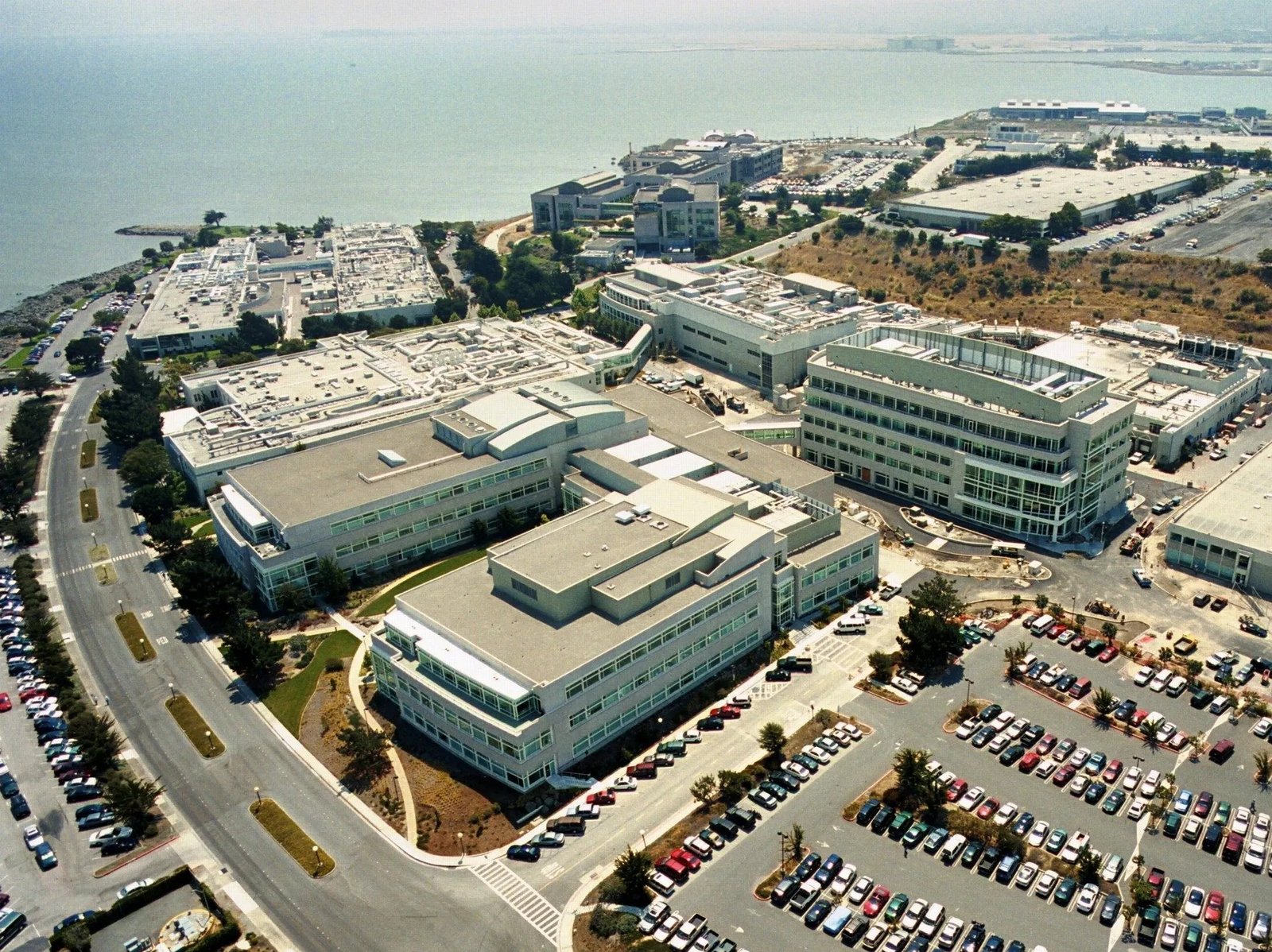
Two examples of new projects can be seen in the San Francisco Bay Area: Genentech, a Member of the Roche Group, has revealed plans for a $5 billion expansion of its South San Francisco campus, which carries the address of One DNA Way. About 14 miles south in Foster City, CA, Gilead Sciences is building a 182,000 square-foot research center within its headquarters campus that, when completed later this year, will house the company’s oncology and inflammation research—part of a broader corporate plan to invest $32 billion in facilities designed to strengthen its R&D and manufacturing operations nationwide.
Yet industry watchers are still split when it comes to two benchmarks of the life-sci market: Will the IPO filings of recent weeks accelerate into a true comeback for first-time public stocks? And will a recent rise in venture capital filings (the second half of last year was the strongest six-month period for venture capital funding of life-sci companies since 2022) translate into an easier time for smaller biopharma startups that need early-stage capital?
GEN Edge recently discussed the U.S. life sciences commercial real estate market with Matthew Gardner, CBRE Americas Life Sciences Leader, in an interview conducted before the recent J.P. Morgan 44th Annual Healthcare Conference. A veteran of more than 30 years in technology and life sciences, Gardner works with CBRE professionals across top-tier U.S. life sciences clusters and emerging markets to advise clients on their real estate needs. He is based in Northern California.
This interview has been lightly edited for length and clarity.
GEN Edge: What is your big-picture view of the state of the life sciences commercial real estate market?
Matt Gardner: Well, there’s a definite dichotomy in the market. I guess the simplest way to describe that dichotomy would be to say that the industry leaders without question are at the wheel. And the capital market has remained slow enough. Although there’s a trickle of M&A, and there’s a trickle of IPOs, we still see, for the most part, more conservative decision-making in the small-cap[italization] part of the market.
We have companies that have to make investments in products, people, and places. But at the moment, and for the last couple of years, the paradigm has been on the small-cap end of the market to make those decisions much more conservatively, think about the cash runway, and actually have to think about the fact that your next fundraising may be in a less-than-ideal market. So, they need to slow the burn.
That still looks true, although slightly improving on the small end of the industry. It has not slowed down the number of products in the pipeline. And that’s an expensive proposition, so that doesn’t necessarily change the outlook. Those recent few IPOs in the second half of 2025 have been helpful, a good signal. But we still need, I would say, more exits to replenish venture capital. In other words, there are lots of venture firms that have not been able to pay out their LPs [limited partners] for a couple of years, so they can’t recycle into the next fund until they’ve had more exits.
There’s been about one acquisition a day for the last week or so here. This helps a lot. This obviously will help cycle through some of that quite a bit.
GEN Edge: What are large-cap companies doing?
Gardner: On the large cap end, and I would love to talk about this a lot, our network is on fire with the growth plans of our multinational clients. So, the way that looks and feels is a little bit new. There have been some recent announcements by top players in the industry that have taken them to new locations, where the industry has not had as much history. That’s a very interesting phenomenon.
We continue to see lots of those large capital projects being brought forward by our multinational clients. That is really exciting stuff. We’ve had a few clients who have had two, three, or four projects they’ve worked on in parallel during this past year. On the whole, that has been a good, exciting proposition. We’re tracking somewhere between $350 billion and $400 billion in announcements coming to the United States.
GEN Edge: Why the dichotomy between giants and small-cap companies? Is it simply an issue of capital, or something more?
Gardner: Do you remember [pioneer biopharma investment banker] Fred Frank? Fred is famous for saying, biotech is pharma unencumbered by revenue. We definitely have a little bit of that happening right now. These large capital projects are driven by companies with significant product portfolios and major revenue. If you were fortunate enough to be in the position, for example, that Merck [& Co.] is with Keytruda[® (pembrolizumab)], or that any of the GLP-1 companies are now in, you can parlay that revenue right back into reinvestment, to whatever degree you’re comfortable doing.
GEN Edge: Keytruda’s among blockbuster drugs set to lose patent exclusivity by 2029; a recent GEN A-List spotlighted 20 such drugs, including another Merck blockbuster, Januvia® (sitagliptin) and Lynparza® (olaparib), which Merck co-developed with AstraZeneca.
Gardner: That’s a really important trend to highlight there, because that’s actually pushing M&A to accelerate. It’s a great market driver because companies with a patent cliff in the next 5 to 10 years have to fill the bag for their sales force. So I think the pressure from M&A, when you add that to the existing pressure from the patent cliff and those kinds of issues, after that, the relative discount that small-cap biotech is at right now, you could go buy.
GEN Edge: If Merck is set to lose revenue, how are they going to have the money they need to carry out big-dollar projects in other locations?
Gardner: Keytruda has set a record for the largest single product by revenue the industry’s ever had. It beat Humira[® (adalimumab)]. So I would say, without wildly speculating about what happens in 2031 or 2032, they’ve still got years of Keytruda revenue, and I think in lots of good ways, they’re reinvesting it in both acquisitions and capital plant, physical plant.
I think a main reason for the dichotomy we discussed before is that the big companies are reinvesting. Now, there are lots of interesting external influences here that we should talk about. The tariff fear and things like the most favored nation pricing definitely prompted a speedier discussion.
I would just add to that the accelerated depreciation that’s in the One Big Beautiful Bill Act (HR 1) is a real benefit. It allows you to speed up the depreciation of manufacturing equipment and lots of expenses related to real estate. If you were doing some capital planning and thinking about something in 2027 or ‘28, you’d have an incentive to pull some of those plans forward if you needed to get into production in the United States to get inside the tariff barrier. It’s an interesting alignment of incentives that might be unique to our industry.
GEN Edge: Is it mainly Washington-driven, or are there other, more standard explanations that might explain the dichotomy between biopharma giants and small caps?
Gardner: Yes, definitely some Washington-driven influences. I think that the FDA and CMS [Centers for Medicare & Medicaid Services] are also getting more creative. I think they’ve had to get more creative because of the pressure that part of the industry was under. At the same time, the conversation in the U.K. has gotten a little bit sour. When companies are thinking about where R&D is going to take place, and where you know you’ll be able to recover your investment in the long run for that R&D, that definitely comes into play in the industry.
GEN Edge: In the U.K., Merck canceled a planned £1 billion ($1.364 billion) London research center while AstraZeneca paused work on a £200 million (about $273 million) Cambridge research facility. How much do these actions tarnish the U.K. as a biotech hotspot?
Gardner: The U.K. has taken a hit recently, but I’m sure it will recover. It’s historically been a tremendous location for pharma. You can see the effect of decisions over the last 20 years, where countries like the U.K. changed their reimbursement policies. R&D moves around, partly on that basis. That’s a bigger discussion that has less to do with this year and the microcosm that we’re in right now. But it is one of the factors in the U.S. reshoring news that totals up to $375 billion.
GEN Edge: How much has the thrust of U.S. biopharma investment shifted to manufacturing, or is R&D still in the mix?
Gardner: It’s mostly a discussion about where the production supply chain is moving, but there is plenty of R&D in there. For example, over the summer, Alexandria Real Estate Equities announced a large lease at a big new R&D campus in San Diego [466,598 square feet] with one of the multinational leaders [undisclosed by Alexandria]. It is very interesting that there was an R&D campus in which a big global biopharma leader was doing something big in San Diego.
In the Bay Area, Gilead Sciences and [Roche subsidiary] Genentech both announced very interesting capital plans for their existing campuses. You’re seeing interesting R&D investments where companies are improving their existing physical plant, spaces that they own, places where they’re competing for talent. That’s a significant factor for the industry.
GEN Edge: We’ve talked about the Bay Area and San Diego. Will mainly leading regions benefit from all this new investment? Or other regions? Eli Lilly just selected Pennsylvania’s Lehigh Valley for a planned $3.5 billion injectables plant, while Amgen is carrying out a $900 million manufacturing expansion near Columbus in New Albany, OH.

Gardner: I’m really glad you raised that, because it’s definitely bringing the industry to some new locations. Obviously, we see lots of things happening in North Carolina, which is a continued trend, but also recently, several announcements in Virginia and Texas. In Ohio, that Amgen facility was significant. There’s also quite a bit happening in Indiana. These are definitely locations where, generally speaking, new investment is completely additive for the industry.
In addition, we also have to expand our industry workforce and training roadmapping for some new locations. North Carolina’s really good at this; they’ve been delivering these programs for years and years and years. But if you look at the recent news in Virginia, it’s actually very significant.
GEN Edge: Both AstraZeneca and Merck chose Virginia over longtime anchor Maryland within DelMarVa, also called the BioHealth Capital Region. Can we expect life sciences activity to be spread out more there going forward?
Gardner: I do think so. There are other things that have come to Virginia as well: There are some pilot energy projects near Richmond, and Loudoun County has some 200 data centers, one of the largest such concentrations in the world. Virginia has had an innovative culture for a long time, and it’s attracted a lot of those kinds of projects. Virginia has prepared itself for this and teed up an economic diversification profile that is definitely working.
We see Texas and Ohio being very competitive for projects, and they’re not limited in any way to the recent life science announcements. They’ve had lots of big power hyperscale projects, and some in the defense industry have gone to those places and built new projects as well.
GEN Edge: A recent CBRE report cited growing demand for biomanufacturing—particularly for GLP-1 drugs—as a key driver of the increased activity. Is this obesity driven, or are other therapies accounting for the increased activity?
Gardner: We’ve continued to see a wave of large-format monoclonal antibody production, so that has not gone away; it’s still there. But you’re right: Definitely, the companies that are in the GLP-1 categories are continuing to find new indications. I would say keep a watching brief on this space. They’re obviously expanding those indications, and they’re having data coming all the time about longer-term cardiovascular benefits. One of the studies was about GLP-1s in sleep apnea. We’re expecting some data on GLP-1s in Alzheimer’s. GLP-1s are already having a miracle drug effect, but potentially even greater as we keep looking. So, don’t take your eye off that corner of the industry; it’s doing incredibly well. And those companies are also reinvesting in a very unique, generational kind of way, so that’s great.
Two, I would point you to the FDA’s town hall on cell and gene therapy last June, followed by the announcement of a pilot program to pay for sickle cell treatment with the state of South Carolina over years, not upfront—a new reimbursement model. As an industry evangelist and a true fan of this type of innovation for patients and cures, the industry needed some new models, right? The costs of some of those things were going through the roof.
That pilot program by the end of summer had 33 states signed up to participate. CMS is working on a new pay-for model, which basically says we’ll reimburse for the therapy based on savings for previously chronic hospitalizations and cost to the system. It’s brilliant, and it has created, I think, a little bit of revived hope that leaders in positions of power know that we can’t afford to let that part of the industry languish. It’s far too important, and the fact that it produces cures is a spectacular promise for the future, so they’ve emphasized it, which is great for us.
GEN Edge: Biopharmas increasingly are integrating AI into drug discovery and development, plus other business operations like clinical trial activity. How quickly is that likely to reshape the life sciences market?
Gardner: It has been happening for a few years that an increasing amount of space in the large R&D operations is moving toward server rooms instead of server closets. If you were to look at a mature mid-cap R&D operation, you might see that, instead of having the data room be an afterthought, it’s now a core part of the plan, and it needs to be.
The other thing is that we’ve seen our industry has differed from others in sensors, utilities, and cybersecurity. The hybrid cloud answer doesn’t work as well for life sciences. Here’s why: One is, in that stage of R&D, the data’s so sensitive and valuable, you don’t want it to leave, and you might not be willing to accept that it’s living with a third party. Two, with some of the new paradigms that we’re dealing with in research, you also have a need to work on improved discovery cycling. Speed is of the essence there. If you can compound the benefits of going through 10,000 potential bioactivity tests a day. This is like the high-throughput screening craze of some time ago, but on hyperscale steroids.
And then third, we had already seen it happening all the way at the end of the system with patients and with production. In a couple of production environments, we helped some clients move around and reshape about two or three years ago. They had taken excess floor plate and turned it into internal server operations because, for example, if you’re measuring 30 or 40 variables in a production process, that generates a ton of data. It turns out that 100,000 gallons will produce a couple of terabytes a year. If you’re making drugs and you can find some efficiency there, it could actually change your whole productivity formula.
GEN Edge: How have precision medicine and FDA regulatory changes affected R&D space?
Gardner: Companies like Tempus AI are great examples of taking data from tens of thousands of prior patients and trying to apply it forward to treatment paradigms and updates. Pretty spectacular potential for the industry. It is having an effect on how a floor or a new space gets designed for growing companies.
The FDA’s removal of some of the animal testing requirements for the industry has also made a major difference in R&D modeling. We already have companies going in completely different directions there with that freedom now. I think there’s lots yet to come in that front. You hear some heads of pharma R&D talking about this a little bit, about how they’re trying to use AI, and there are some flagship companies that I don’t have permission to talk about, who they are.
I would say the industry is all waiting with bated breath to see if, over a long period of time, they can advance to the goal line by reducing the average cost per drug—that’s currently a big number—and reducing the time of development as well.
The post As U.S. Life Sciences Market Recovers, “Definite Dichotomy” Among Companies appeared first on GEN – Genetic Engineering and Biotechnology News.