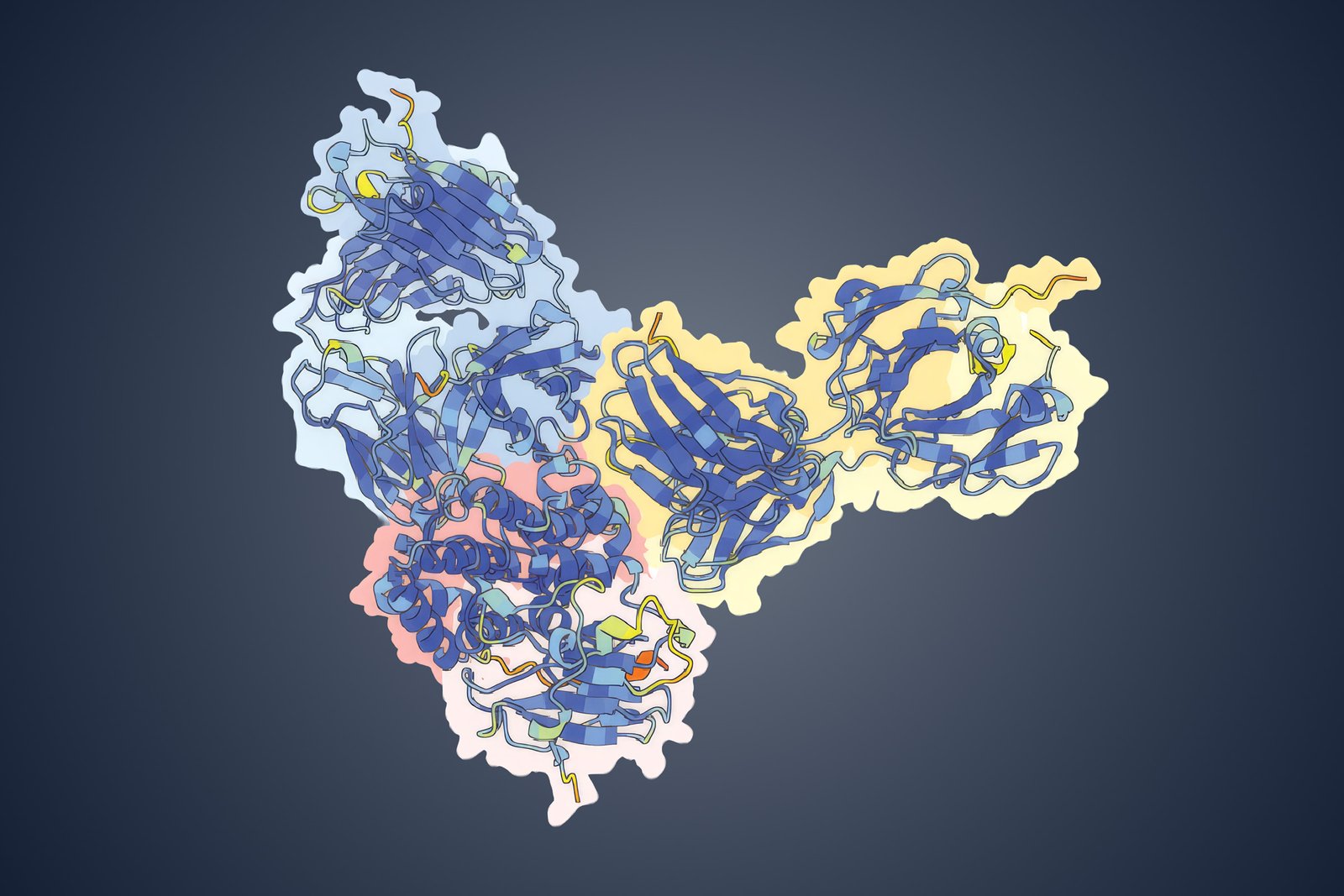
Astellas Pharma has agreed to co-develop and co-commercialize Vir Biotechnology’s most advanced immuno-oncology asset, the prostate cancer candidate VIR-5500, through a collaboration that could generate more than $1.7 billion for the San Francisco biotech, the companies said.
VIR-5500 is a Phase I dual-masked T-cell engager (TCE) candidate designed to target Prostate-Specific Membrane Antigen (PSMA), and developed through the PRO-XTEN® platform licensed by Vir. PRO-XTEN is designed to keep TCEs “masked” or inactive until they reach the tumor microenvironment, in order to reduce off-target effects and improve the drug’s “therapeutic index” or safety margin.
VIR-5500 is one of three PRO-XTEN-developed TCEs that Vir agreed to license from Sanofi (which called the drug SAR446329) under an up-to-$1.986 billion exclusive worldwide license agreement announced in August 2024. Vir is developing another seven PRO-XTEN masked TCE programs in preclinical phases with indications that include lung, colorectal and bladder cancers.
“What is really, truly unique about this platform is that every target you have, you don’t need to always design a new mask. It’s really plug-and-play,” Vir’s CEO Marianne De Backer, PhD, MBA, told GEN last year. “We have the same mask on the three clinical assets.”
Vir’s second PRO-XTEN TCE is VIR-5525, which is being studied as a monotherapy and in combinations with Merck & Co.’s blockbuster cancer immunotherapy Keytruda® (pembrolizumab) in EGFR-expressing solid tumors such as non-small cell lung cancer (NSCLC), colorectal cancer (CRC), head and neck squamous cell carcinoma (HNSCC), and cutaneous squamous cell carcinoma (cSCC).

After dosing the first patient with VIR-5525 (which Sanofi calls SAR446368) triggered a $75 million milestone payment to shareholders of PRO-XTEN’s original developer Amunix Pharmaceuticals, which Sanofi acquired in 2022.
The third PRO-XTEN TCE is VIR-5818, which is being developed to treat a variety of HER2-expressing solid tumors, including breast cancer and colorectal cancer (CRC), also in combination with Keytruda.
The agreement with Sanofi marked the start of Vir’s pivot to treating cancer as well as infectious disease, from focusing primarily on infectious disease drugs. Vir has agreed to share a portion of proceeds from the Astellas collaboration with Sanofi.
VIR-5500 is now being evaluated in an ongoing Phase I trial (NCT05997615) designed to assess its safety, pharmacokinetics, and preliminary efficacy in patients with advanced, metastatic prostate cancer, both as monotherapy and in combinations with the Astellas/Pfizer co-marketed Xtandi® (enzalutamide) and/or the Bayer/Orion co-marketed Nubeqa® (darolutamide).
Recouping revenue
For Astellas, VIR-5500 offers the possibility of recouping prostate cancer drug revenue that the company stands to lose when Xtandi loses the protection of key U.S. patents in 2027. Xtandi racked up $8.278 billion in sales last year, consisting of ¥941.4 billion ($6.084 billion) generated by Astellas and $2.194 billion by Pfizer.
The potential for new revenue from treating prostate cancer enthused investors on the collaboration enough to send Vir shares jumping 36% from $7.56 to $10.29 Tuesday at 9:51 a.m., within the first half hour of trading, before settling down to $9.49 and a 28% gain.
Roanna Ruiz, PhD, senior managing director, biopharma/cardiovascular, pulmonary & endocrine disorders, and a senior research analyst with Leerink Partners, wrote Monday in a research note that the Astellas collaboration “has benefits of pairing VIR with a market leader in prostate cancer, de-risking the path ahead by shifting 60% of global costs to Astellas, and extending cash runway into 2Q28, giving VIR the financial flexibility to advance its broader PRO-XTEN pipeline.”
“We view Astellas as an ideal strategic partner for VIR that maximizes the commercial potential of VIR-5500 while preserving meaningful long-term economics for VIR,” Ruiz added.
Vir should also prove attractive to investors given the positive clinical profile of VIR-5500 that emerged from the 22 patients dosed with 3,000, 3,500, or 4,000 µg/kg every three weeks among the 58 patients receiving the drug as monotherapy in the Phase I trial, from which the company offered several positive results as of the January 9, 2026 data cut-off, including:
- 82% (14 of 17 PSA-evaluable patients) showed declines of at least 50% in Prostate-Specific Antigen (PSA) blood level (PSA50)
- 53% (9 of 17) showed declines of at least 90% in PSA blood level (PSA90).
- 45% (5 of 11 evaluable patients) showed objective responses on the RECIST (Response Evaluation Criteria in Solid Tumors) scale. Of the five responders, four achieved confirmed responses with one patient pending confirmation.
“Given these big updates simultaneously de-risk, validate, and expand VIR’s capabilities in oncology, we expect substantial upside in VIR stock in the near term,” Ruiz wrote.
Vir has agreed to continue the Phase I trial until responsibility is transitioned to Astellas, after which the pharma will oversee all development activities.
‘Potentially best-in-class’
“Our deep expertise in this disease area, combined with a growing immuno-oncology (IO) pipeline of biologics, including T-cell engagers, uniquely positions us to help advance VIR-5500, a potentially best-in-class T-cell engager for prostate cancer,” Adam Pearson, Astellas’ chief strategy officer, said Monday in a statement. “This strategic collaboration allows Astellas and Vir Biotechnology to combine our expertise and reaffirms our commitment to improving the lives of people with prostate cancer.”
Vir and Astellas said their collaboration will position the companies to advance VIR-5500 into pivotal trials next year. Astellas will also be exclusively responsible for commercializing VIR-5500 outside the U.S., where Vir will have the option to co-promote the candidate with Astellas, in return for equally sharing profits and losses.
In return, Astellas has agreed to pay Vir $335 million in upfront and near-term payments—including $240 million in cash, $75 million in equity investment at a 50% premium, and a near-term $20 million milestone—plus up to $1.37 billion in payments tied to achieving development, regulatory, and sales milestones, as well as tiered, double-digit royalties on ex-U.S. net sales.
Astellas has agreed to oversee 60% of development costs, with Vir assuming the other 40%.
“Astellas is an ideal collaborator for the VIR-5500 program given the company’s successful track record advancing therapies across the treatment continuum, building blockbuster franchises and delivering value to patients through strategic development alliances with other biotech partners,” stated Vir CEO Marianne De Backer, PhD, MBA.
She said Vir believes the collaboration also reflects confidence in its PRO-XTEN platform, which her company believes has broad potential across multiple solid tumor indications: “This collaboration will enable more rapid advancement of VIR-5500 to potentially benefit more people living with prostate cancer.”
The post Astellas, Vir Biotechnology Launch Up-to-$1.7B Prostate Cancer Collaboration appeared first on GEN – Genetic Engineering and Biotechnology News.