
Hentze, M. W., Castello, A., Schwarzl, T. & Preiss, T. A brave new world of RNA-binding proteins. Nat. Rev. Mol. Cell Biol. 19, 327–341 (2018).
Gebauer, F., Schwarzl, T., Valcárcel, J. & Hentze, M. W. RNA-binding proteins in human genetic disease. Nat. Rev. Genet. 22, 185–198 (2021).
Buccitelli, C. & Selbach, M. mRNAs, proteins and the emerging principles of gene expression control. Nat. Rev. Genet. 21, 630–644 (2020).
Caudron-Herger, M., Jansen, R. E., Wassmer, E. & Diederichs, S. RBP2GO: a comprehensive pan-species database on RNA-binding proteins, their interactions and functions. Nucleic Acids Res. 49, D425–D436 (2021).
Wassmer, E., Koppány, G., Hermes, M., Diederichs, S. & Caudron-Herger, M. Refining the pool of RNA-binding domains advances the classification and prediction of RNA-binding proteins. Nucleic Acids Res. 52, 7504–7522 (2024).
Gerstberger, S., Hafner, M. & Tuschl, T. A census of human RNA-binding proteins. Nat. Rev. Genet. 15, 829–845 (2014).
Corley, M., Burns, M. C. & Yeo, G. W. How RNA-binding proteins interact with RNA: molecules and mechanisms. Mol. Cell 78, 9–29 (2020).
Hafner, M. et al. CLIP and complementary methods. Nat. Rev. Methods Primers 1, 20 (2021).
Ramanathan, M., Porter, D. F. & Khavari, P. A. Methods to study RNA–protein interactions. Nat. Methods 16, 225–234 (2019).
Ule, J. et al. CLIP identifies Nova-regulated RNA networks in the brain. Science 302, 1212–1215 (2003).
Hafner, M. et al. Transcriptome-wide identification of RNA-binding protein and microRNA target sites by PAR-CLIP. Cell 141, 129–141 (2010).
Sugimoto, Y. et al. Analysis of CLIP and iCLIP methods for nucleotide-resolution studies of protein-RNA interactions. Genome Biol. 13, R67 (2012).
Chakrabarti, A. M., Haberman, N., Praznik, A., Luscombe, N. M. & Ule, J. Data science issues in studying protein–RNA interactions with CLIP technologies. Annu. Rev. Biomed. Data Sci. 1, 235–261 (2018).
Lin, C. & Miles, W. O. Beyond CLIP: advances and opportunities to measure RBP–RNA and RNA–RNA interactions. Nucleic Acids Res. 47, 5490–5501 (2019).
Vieira-Vieira, C. H. & Selbach, M. Opportunities and challenges in global quantification of RNA-protein interaction via UV cross-linking. Front. Mol. Biosci. 8, 669939 (2021).
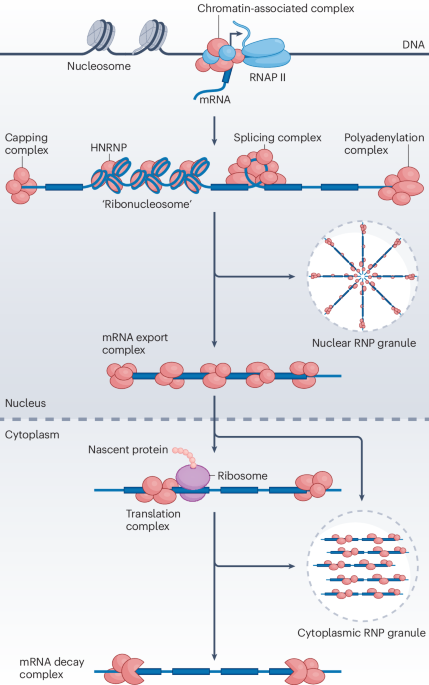
Mitchell, S. F. & Parker, R. Principles and properties of eukaryotic mRNPs. Mol. Cell 54, 547–558 (2014).
Hirose, T., Ninomiya, K., Nakagawa, S. & Yamazaki, T. A guide to membraneless organelles and their various roles in gene regulation. Nat. Rev. Mol. Cell Biol. 24, 288–304 (2023).
Håkansson, K. & Wigley, D. B. Structure of a complex between a cap analogue and mRNA guanylyl transferase demonstrates the structural chemistry of RNA capping. Proc. Natl Acad. Sci. USA 95, 1505–1510 (1998).
Li, Y., Wang, Q., Xu, Y. & Li, Z. Structures of co-transcriptional RNA capping enzymes on paused transcription complex. Nat. Commun. 15, 4622 (2024).
Izaurralde, E. et al. A nuclear cap binding protein complex involved in pre-mRNA splicing. Cell 78, 657–668 (1994).
Hamm, J. & Mattaj, I. W. Monomethylated cap structures facilitate RNA export from the nucleus. Cell 63, 109–118 (1990).
Spirin, A. S. Messenger ribonucleoproteins (informosomes) and RNA-binding proteins. Mol. Biol. Rep. 5, 53–57 (1979).
McKnight, S. L. & Miller, O. L. Ultrastructural patterns of RNA synthesis during early embryogenesis of Drosophila melanogaster. Cell 8, 305–319 (1976).
Conway, G., Wooley, J., Bibring, T. & LeStourgeon, W. M. Ribonucleoproteins package 700 nucleotides of pre-mRNA into a repeating array of regular particles. Mol. Cell. Biol. 8, 2884–2895 (1988).
Piñol-Roma, S., Choi, Y. D., Matunis, M. J. & Dreyfuss, G. Immunopurification of heterogeneous nuclear ribonucleoprotein particles reveals an assortment of RNA-binding proteins. Genes Dev. 2, 215–227 (1988).
König, J. et al. iCLIP reveals the function of hnRNP particles in splicing at individual nucleotide resolution. Nat. Struct. Mol. Biol. 17, 909–915 (2010).
Domanski, M. et al. 40S hnRNP particles are a novel class of nuclear biomolecular condensates. Nucleic Acids Res. 50, 6300–6312 (2022).
Rogalska, M. E., Vivori, C. & Valcárcel, J. Regulation of pre-mRNA splicing: roles in physiology and disease, and therapeutic prospects. Nat. Rev. Genet. 24, 251–269 (2023).
Akinyi, M. V. & Frilander, M. J. At the intersection of major and minor spliceosomes: crosstalk mechanisms and their impact on gene expression. Front. Genet. 12, 700744 (2021).
Enders, M., Neumann, P., Dickmanns, A. & Ficner, R. Structure and function of spliceosomal DEAH-box ATPases. Biol. Chem. 404, 851–866 (2023).
Pan, Q., Shai, O., Lee, L. J., Frey, B. J. & Blencowe, B. J. Deep surveying of alternative splicing complexity in the human transcriptome by high-throughput sequencing. Nat. Genet. 40, 1413–1415 (2008).
Brody, Y. et al. The in vivo kinetics of RNA polymerase II elongation during co-transcriptional splicing. PLoS Biol. 9, e1000573 (2011).
Pandit, S., Wang, D. & Fu, X.-D. Functional integration of transcriptional and RNA processing machineries. Curr. Opin. Cell Biol. 20, 260–265 (2008).
Bentley, D. L. Rules of engagement: co-transcriptional recruitment of pre-mRNA processing factors. Curr. Opin. Cell Biol. 17, 251–256 (2005).
Buratowski, S. Connections between mRNA 3′ end processing and transcription termination. Curr. Opin. Cell Biol. 17, 257–261 (2005).
Luo, M. L. et al. Pre-mRNA splicing and mRNA export linked by direct interactions between UAP56 and Aly. Nature 413, 644–647 (2001).
Giudice, J. & Jiang, H. Splicing regulation through biomolecular condensates and membraneless organelles. Nat. Rev. Mol. Cell Biol. 25, 683–700 (2024).
Proudfoot, N. J. Ending the message: poly(A) signals then and now. Genes Dev. 25, 1770–1782 (2011).
Tian, B., Hu, J., Zhang, H. & Lutz, C. S. A large-scale analysis of mRNA polyadenylation of human and mouse genes. Nucleic Acids Res. 33, 201–212 (2005).
Turner, R. E., Pattison, A. D. & Beilharz, T. H. Alternative polyadenylation in the regulation and dysregulation of gene expression. Semin. Cell Dev. Biol. 75, 61–69 (2018).
Shi, Y. et al. Molecular architecture of the human pre-mRNA 3′ processing complex. Mol. Cell 33, 365–376 (2009).
Turner, R. E. et al. Requirement for cleavage factor IIm in the control of alternative polyadenylation in breast cancer cells. RNA 26, 969–981 (2020).
Passmore, L. A. & Coller, J. Roles of mRNA poly(A) tails in regulation of eukaryotic gene expression. Nat. Rev. Mol. Cell Biol. 23, 93–106 (2022).
Mabin, J. W. et al. The exon junction complex undergoes a compositional switch that alters mRNP structure and nonsense-mediated mRNA decay activity. Cell Rep. 25, 2431–2446.e7 (2018).
Le Hir, H., Saulière, J. & Wang, Z. The exon junction complex as a node of post-transcriptional networks. Nat. Rev. Mol. Cell Biol. 17, 41–54 (2016).
Le Hir, H., Izaurralde, E., Maquat, L. E. & Moore, M. J. The spliceosome deposits multiple proteins 20–24 nucleotides upstream of mRNA exon–exon junctions. EMBO J. 19, 6860–6869 (2000).
Ballut, L. et al. The exon junction core complex is locked onto RNA by inhibition of eIF4AIII ATPase activity. Nat. Struct. Mol. Biol. 12, 861–869 (2005).
Boehm, V. & Gehring, N. H. Exon junction complexes: supervising the gene expression assembly line. Trends Genet. 32, 724–735 (2016).
Xie, Y. et al. Cryo-EM structure of the yeast TREX complex and coordination with the SR-like protein Gbp2. eLife 10, e65699 (2021).
Strässer, K. et al. TREX is a conserved complex coupling transcription with messenger RNA export. Nature 417, 304–308 (2002).
Viphakone, N. et al. TREX exposes the RNA-binding domain of Nxf1 to enable mRNA export. Nat. Commun. 3, 1006 (2012).
Pacheco-Fiallos, B. et al. mRNA recognition and packaging by the human transcription–export complex. Nature 616, 828–835 (2023).
He, P. C. et al. Exon architecture controls mRNA m6A suppression and gene expression. Science 379, 677–682 (2023).
Lejeune, F., Ishigaki, Y., Li, X. & Maquat, L. E. The exon junction complex is detected on CBP80-bound but not eIF4E-bound mRNA in mammalian cells: dynamics of mRNP remodeling. EMBO J. 21, 3536–3545 (2002).
Gehring, N. H., Lamprinaki, S., Kulozik, A. E. & Hentze, M. W. Disassembly of exon junction complexes by PYM. Cell 137, 536–548 (2009).
Adivarahan, S. et al. Spatial organization of single mRNPs at different stages of the gene expression pathway. Mol. Cell 72, 727–738.e5 (2018).
Bensaude, O., Barbosa, I., Morillo, L., Dikstein, R. & Le Hir, H. Exon-junction complex association with stalled ribosomes and slow translation-independent disassembly. Nat. Commun. 15, 4209 (2024).
Sonenberg, N. & Hinnebusch, A. G. Regulation of translation initiation in eukaryotes: mechanisms and biological targets. Cell 136, 731–745 (2009).
Bhat, M. et al. Targeting the translation machinery in cancer. Nat. Rev. Drug Discov. 14, 261–278 (2015).
Marcotrigiano, J., Gingras, A. C., Sonenberg, N. & Burley, S. K. Cap-dependent translation initiation in eukaryotes is regulated by a molecular mimic of eIF4G. Mol. Cell 3, 707–716 (1999).
Dever, T. E., Dinman, J. D. & Green, R. Translation elongation and recoding in eukaryotes. Cold Spring Harb. Perspect. Biol. 10, a032649 (2018).
Schoenberg, D. R. & Maquat, L. E. Regulation of cytoplasmic mRNA decay. Nat. Rev. Genet. 13, 246–259 (2012).
Müller-McNicoll, M. & Neugebauer, K. M. How cells get the message: dynamic assembly and function of mRNA-protein complexes. Nat. Rev. Genet. 14, 275–287 (2013).
Tucker, M. et al. The transcription factor associated Ccr4 and Caf1 proteins are components of the major cytoplasmic mRNA deadenylase in Saccharomyces cerevisiae. Cell 104, 377–386 (2001).
Jonas, S. et al. An asymmetric PAN3 dimer recruits a single PAN2 exonuclease to mediate mRNA deadenylation and decay. Nat. Struct. Mol. Biol. 21, 599–608 (2014).
Wang, Z., Jiao, X., Carr-Schmid, A. & Kiledjian, M. The hDcp2 protein is a mammalian mRNA decapping enzyme. Proc. Natl Acad. Sci. USA 99, 12663–12668 (2002).
Chang, C.-T., Bercovich, N., Loh, B., Jonas, S. & Izaurralde, E. The activation of the decapping enzyme DCP2 by DCP1 occurs on the EDC4 scaffold and involves a conserved loop in DCP1. Nucleic Acids Res. 42, 5217–5233 (2014).
Brothers, W. R., Ali, F., Kajjo, S. & Fabian, M. R. The EDC4-XRN1 interaction controls P-body dynamics to link mRNA decapping with decay. EMBO J. 42, e113933 (2023).
Halbach, F., Reichelt, P., Rode, M. & Conti, E. The yeast ski complex: crystal structure and RNA channeling to the exosome complex. Cell 154, 814–826 (2013).
Weick, E.-M. & Lima, C. D. RNA helicases are hubs that orchestrate exosome-dependent 3′–5′ decay. Curr. Opin. Struct. Biol. 67, 86–94 (2021).
Dehecq, M. et al. Nonsense-mediated mRNA decay involves two distinct Upf1-bound complexes. EMBO J. 37, e99278 (2018).
Loh, B., Jonas, S. & Izaurralde, E. The SMG5–SMG7 heterodimer directly recruits the CCR4–NOT deadenylase complex to mRNAs containing nonsense codons via interaction with POP2. Genes Dev. 27, 2125–2138 (2013).
Boehm, V. et al. SMG5-SMG7 authorize nonsense-mediated mRNA decay by enabling SMG6 endonucleolytic activity. Nat. Commun. 12, 3965 (2021).
Dostie, J. & Dreyfuss, G. Translation is required to remove Y14 from mRNAs in the cytoplasm. Curr. Biol. 12, 1060–1067 (2002).
Chamieh, H., Ballut, L., Bonneau, F. & Le Hir, H. NMD factors UPF2 and UPF3 bridge UPF1 to the exon junction complex and stimulate its RNA helicase activity. Nat. Struct. Mol. Biol. 15, 85–93 (2008).
Kim, V. N., Kataoka, N. & Dreyfuss, G. Role of the nonsense-mediated decay factor hUpf3 in the splicing-dependent exon-exon junction complex. Science 293, 1832–1836 (2001).
Monaghan, L., Longman, D. & Cáceres, J. F. Translation-coupled mRNA quality control mechanisms. EMBO J. 42, e114378 (2023).
Presnyak, V. et al. Codon optimality is a major determinant of mRNA stability. Cell 160, 1111–1124 (2015).
Doma, M. K. & Parker, R. Endonucleolytic cleavage of eukaryotic mRNAs with stalls in translation elongation. Nature 440, 561–564 (2006).
Frischmeyer, P. A. et al. An mRNA surveillance mechanism that eliminates transcripts lacking termination codons. Science 295, 2258–2261 (2002).
Damianov, A. et al. Rbfox proteins regulate splicing as part of a large multiprotein complex LASR. Cell 165, 606–619 (2016).
Peyda, P., Lin, C.-H., Onwuzurike, K. & Black, D. L. The Rbfox1/LASR complex controls alternative pre-mRNA splicing by recognition of multipart RNA regulatory modules. Genes Dev. 39, 364–383 (2025).
Keenan, R. J., Freymann, D. M., Walter, P. & Stroud, R. M. Crystal structure of the signal sequence binding subunit of the signal recognition particle. Cell 94, 181–191 (1998).
Cusack, S. RNA–protein complexes. Curr. Opin. Struct. Biol. 9, 66–73 (1999).
Bousard, A. et al. The role of Xist-mediated Polycomb recruitment in the initiation of X-chromosome inactivation. EMBO Rep. 20, e48019 (2019).
Lu, Z. et al. Structural modularity of the XIST ribonucleoprotein complex. Nat. Commun. 11, 6163 (2020).
Protter, D. S. W. et al. Intrinsically disordered regions can contribute promiscuous interactions to RNP granule assembly. Cell Rep. 22, 1401–1412 (2018).
Xiao, R. et al. Pervasive chromatin-RNA binding protein interactions enable RNA-based regulation of transcription. Cell 178, 107–121.e18 (2019).
Hiragami-Hamada, K., Tani, N. & Nakayama J.-I. in RNA–Chromatin Interactions. Methods in Molecular Biology Vol. 2161 (ed. Ørom, U. A. V.) 89–99 (Humana, 2020).
Rajagopal, V. et al. Proteome-wide identification of RNA-dependent proteins in lung cancer cells. Cancers 14, 6109 (2022).
Rajagopal, V. et al. An atlas of RNA-dependent proteins in cell division reveals the riboregulation of mitotic protein-protein interactions. Nat. Commun. 16, 2325 (2025).
Hentze, M. W., Sommerkamp, P., Ravi, V. & Gebauer, F. Rethinking RNA-binding proteins: riboregulation challenges prevailing views. Cell 188, 4811–4827 (2025).
Huppertz, I. et al. Riboregulation of enolase 1 activity controls glycolysis and embryonic stem cell differentiation. Mol. Cell 82, 2666–2680.e11 (2022).
Spizzichino, S. et al. Structure-based mechanism of riboregulation of the metabolic enzyme SHMT1. Mol. Cell 84, 2682–2697.e6 (2024).
Castello, A. et al. Insights into RNA biology from an atlas of mammalian mRNA-binding proteins. Cell 149, 1393–1406 (2012).
Mahmoudi, S. et al. WRAP53 is essential for Cajal body formation and for targeting the survival of motor neuron complex to Cajal bodies. PLoS Biol. 8, e1000521 (2010).
Enwerem, I. I. et al. Coilin association with Box C/D scaRNA suggests a direct role for the Cajal body marker protein in scaRNP biogenesis. Biol. Open 3, 240–249 (2014).
Sawyer, I. A., Sturgill, D., Sung, M.-H., Hager, G. L. & Dundr, M. Cajal body function in genome organization and transcriptome diversity. BioEssays 38, 1197–1208 (2016).
Lafontaine, D. L. J., Riback, J. A., Bascetin, R. & Brangwynne, C. P. The nucleolus as a multiphase liquid condensate. Nat. Rev. Mol. Cell Biol. 22, 165–182 (2021).
Banani, S. F., Lee, H. O., Hyman, A. A. & Rosen, M. K. Biomolecular condensates: organizers of cellular biochemistry. Nat. Rev. Mol. Cell Biol. 18, 285–298 (2017).
Iarovaia, O. V. et al. Nucleolus: a central hub for nuclear functions. Trends Cell Biol. 29, 647–659 (2019).
Hein, N., Hannan, K. M., George, A. J., Sanij, E. & Hannan, R. D. The nucleolus: an emerging target for cancer therapy. Trends Mol. Med. 19, 643–654 (2013).
Hirose, T. et al. NEAT1 long noncoding RNA regulates transcription via protein sequestration within subnuclear bodies. Mol. Biol. Cell 25, 169–183 (2014).
Nakagawa, S., Yamazaki, T. & Hirose, T. Molecular dissection of nuclear paraspeckles: towards understanding the emerging world of the RNP milieu. Open Biol. 8, 180150 (2018).
Yamazaki, T. et al. Functional domains of NEAT1 architectural lncRNA induce paraspeckle assembly through phase separation. Mol. Cell 70, 1038–1053.e7 (2018).
An, H., Tan, J. T. & Shelkovnikova, T. A. Stress granules regulate stress-induced paraspeckle assembly. J. Cell Biol. 218, 4127–4140 (2019).
Jain, S. et al. ATPase-modulated stress granules contain a diverse proteome and substructure. Cell 164, 487–498 (2016).
Protter, D. S. W. & Parker, R. Principles and properties of stress granules. Trends Cell Biol. 26, 668–679 (2016).
Sheth, U. & Parker, R. Decapping and decay of messenger RNA occur in cytoplasmic processing bodies. Science 300, 805–808 (2003).
Aizer, A. et al. Quantifying mRNA targeting to P-bodies in living human cells reveals their dual role in mRNA decay and storage. J. Cell Sci. 127, 4443–4456 (2014).
Kedersha, N. et al. Stress granules and processing bodies are dynamically linked sites of mRNP remodeling. J. Cell Biol. 169, 871–884 (2005).
Decker, C. J. & Parker, R. P-bodies and stress granules: possible roles in the control of translation and mRNA degradation. Cold Spring Harb. Perspect. Biol. 4, a012286 (2012).
Youn, J.-Y. et al. Properties of stress granule and P-body proteomes. Mol. Cell 76, 286–294 (2019).
Vorobeva, M. A., Skvortsov, D. A. & Pervouchine, D. D. Cooperation and competition of RNA secondary structure and RNA–protein interactions in the regulation of alternative splicing. Acta Naturae 15, 23–31 (2023).
Dassi, E. Handshakes and fights: the regulatory interplay of RNA-binding proteins. Front. Mol. Biosci. 4, 67 (2017).
Nag, S., Goswami, B., Das Mandal, S. & Ray, P. S. Cooperation and competition by RNA-binding proteins in cancer. Semin. Cancer Biol. 86, 286–297 (2022).
Wang, H., Ding, N., Guo, J., Xia, J. & Ruan, Y. Dysregulation of TTP and HuR plays an important role in cancers. Tumor Biol. 37, 14451–14461 (2016).
Bhandare, S., Goldberg, D. S. & Dowell, R. Discriminating between HuR and TTP binding sites using the k-spectrum kernel method. PLoS One 12, e0174052 (2017).
von Hacht, A. et al. Identification and characterization of RNA guanine-quadruplex binding proteins. Nucleic Acids Res. 42, 6630–6644 (2014).
Adlhart, M., Hoffmann, D., Polyansky, A. A. & Žagrović, B. Coding relationship links RNA G-quadruplexes and protein RGG motifs in RNA-binding protein autoregulation. Proc. Natl Acad. Sci. USA 122, e2413721122 (2025).
Luige, J., Armaos, A., Tartaglia, G. G. & Ørom, U. A. V. Predicting nuclear G-quadruplex RNA-binding proteins with roles in transcription and phase separation. Nat. Commun. 15, 2585 (2024).
Ye, X. et al. Two distinct binding modes provide the RNA-binding protein RbFox with extraordinary sequence specificity. Nat. Commun. 14, 701 (2023).
Jain, N., Lin, H.-C., Morgan, C. E., Harris, M. E. & Tolbert, B. S. Rules of RNA specificity of hnRNP A1 revealed by global and quantitative analysis of its affinity distribution. Proc. Natl Acad. Sci. USA 114, 2206–2211 (2017).
Rodriguez-Rivas, J., Marsili, S., Juan, D. & Valencia, A. Conservation of coevolving protein interfaces bridges prokaryote–eukaryote homologies in the twilight zone. Proc. Natl Acad. Sci. USA 113, 15018–15023 (2016).
Harris, S. E. et al. Understanding species-specific and conserved RNA-protein interactions in vivo and in vitro. Nat. Commun. 15, 8400 (2024).
Teppa, E., Zea, D. J. & Marino-Buslje, C. Protein–protein interactions leave evolutionary footprints: High molecular coevolution at the core of interfaces. Protein Sci. 26, 2438–2444 (2017).
Wilkinson, M. E. et al. Postcatalytic spliceosome structure reveals mechanism of 3′-splice site selection. Science 358, 1283–1288 (2017).
Beusch, I. & Madhani, H. D. Understanding the dynamic design of the spliceosome. Trends Biochem. Sci. 49, 583–595 (2024).
Madhani, H. D. & Guthrie, C. A novel base-pairing interaction between U2 and U6 snRNAs suggests a mechanism for the catalytic activation of the spliceosome. Cell 71, 803–817 (1992).
Fica, S. M. et al. RNA catalyses nuclear pre-mRNA splicing. Nature 503, 229–234 (2013).
Hainzl, T., Huang, S. & Sauer-Eriksson, A. E. Structural insights into SRP RNA: an induced fit mechanism for SRP assembly. RNA 11, 1043–1050 (2005).
Lin, Y.-H. & Bundschuh, R. RNA structure generates natural cooperativity between single-stranded RNA binding proteins targeting 5′ and 3′UTRs. Nucleic Acids Res. 43, 1160–1169 (2015).
Rouskin, S., Zubradt, M., Washietl, S., Kellis, M. & Weissman, J. S. Genome-wide probing of RNA structure reveals active unfolding of mRNA structures in vivo. Nature 505, 701–705 (2014).
Lewis, C. J. T., Pan, T. & Kalsotra, A. RNA modifications and structures cooperate to guide RNA–protein interactions. Nat. Rev. Mol. Cell Biol. 18, 202–210 (2017).
Poudyal, R. R., Sieg, J. P., Portz, B., Keating, C. D. & Bevilacqua, P. C. RNA sequence and structure control assembly and function of RNA condensates. RNA 27, 1589–1601 (2021).
Wang, X. & He, C. Dynamic RNA modifications in posttranscriptional regulation. Mol. Cell 56, 5–12 (2014).
Gallardo-Dodd, C. J. & Kutter, C. The regulatory landscape of interacting RNA and protein pools in cellular homeostasis and cancer. Hum. Genomics 18, 109 (2024).
Zhou, K. I. et al. Regulation of co-transcriptional pre-mRNA splicing by m6A through the low-complexity protein hnRNPG. Mol. Cell 76, 70–81.e9 (2019).
Meyer, K. D. et al. Comprehensive analysis of mRNA methylation reveals enrichment in 3′ UTRs and near stop codons. Cell 149, 1635–1646 (2012).
Liu, N. et al. N6-methyladenosine-dependent RNA structural switches regulate RNA–protein interactions. Nature 518, 560–564 (2015).
Du, H. et al. YTHDF2 destabilizes m6A-containing RNA through direct recruitment of the CCR4–NOT deadenylase complex. Nat. Commun. 7, 12626 (2016).
Karijolich, J. & Yu, Y.-T. Spliceosomal snRNA modifications and their function. RNA Biol. 7, 192–204 (2010).
Schwartz, S. et al. Transcriptome-wide mapping reveals widespread dynamic-regulated pseudouridylation of ncRNA and mRNA. Cell 159, 148–162 (2014).
Karijolich, J. & Yu, Y.-T. Converting nonsense codons into sense codons by targeted pseudouridylation. Nature 474, 395–398 (2011).
Tomikawa, C. Pseudouridine modifications in transfer RNA and tRNA pseudouridine synthases. J. Mol. Biol. 437, 169183 (2025).
Borchardt, E. K., Martinez, N. M. & Gilbert, W. V. Regulation and function of RNA pseudouridylation in human cells. Annu. Rev. Genet. 54, 309–336 (2020).
Zhao, Y., Dunker, W., Yu, Y.-T. & Karijolich, J. The role of noncoding RNA pseudouridylation in nuclear gene expression events. Front. Bioeng. Biotechnol. 6, 8 (2018).
Carlile, T. M. et al. Pseudouridine profiling reveals regulated mRNA pseudouridylation in yeast and human cells. Nature 515, 143–146 (2014).
Gao, Y. & Fang, J. RNA 5-methylcytosine modification and its emerging role as an epitranscriptomic mark. RNA Biol. 18, 117–127 (2021).
Squires, J. E. et al. Widespread occurrence of 5-methylcytosine in human coding and non-coding RNA. Nucleic Acids Res. 40, 5023–5033 (2012).
Yang, X. et al. 5-methylcytosine promotes mRNA export — NSUN2 as the methyltransferase and ALYREF as an m5C reader. Cell Res. 27, 606–625 (2017).
Liu, Y. et al. mRNA m5C controls adipogenesis by promoting CDKN1A mRNA export and translation. RNA Biol. 18, 711–721 (2021).
Lunde, B. M., Moore, C. & Varani, G. RNA-binding proteins: modular design for efficient function. Nat. Rev. Mol. Cell Biol. 8, 479–490 (2007).
Agarwal, A. & Bahadur, R. P. Modular architecture and functional annotation of human RNA-binding proteins containing RNA recognition motif. Biochimie 209, 116–130 (2023).
Ramos, A. et al. RNA recognition by a Staufen double-stranded RNA-binding domain. EMBO J. 19, 997–1009 (2000).
Dejgaard, K. & Leffers, H. Characterisation of the nucleic-acid-binding activity of KH domains. Different properties of different domains. Eur. J. Biochem. 241, 425–431 (1996).
Linder, P. & Jankowsky, E. From unwinding to clamping — the DEAD box RNA helicase family. Nat. Rev. Mol. Cell Biol. 12, 505–516 (2011).
Jarmoskaite, I. & Russell, R. RNA helicase proteins as chaperones and remodelers. Annu. Rev. Biochem. 83, 697–725 (2014).
Ottoz, D. S. M. & Berchowitz, L. E. The role of disorder in RNA binding affinity and specificity. Open Biol. 10, 200328 (2020).
Wang, J. et al. A molecular grammar governing the driving forces for phase separation of prion-like RNA binding proteins. Cell 174, 688–699.e16 (2018).
Van Treeck, B. & Parker, R. Emerging roles for intermolecular RNA-RNA interactions in RNP assemblies. Cell 174, 791–802 (2018).
Zeke, A. et al. Deep structural insights into RNA-binding disordered protein regions. Wiley Interdiscip. Rev. RNA 13, e1714 (2022).
Niedner-Boblenz, A. et al. Intrinsically disordered RNA-binding motifs cooperate to catalyze RNA folding and drive phase separation. Nucleic Acids Res. 52, 14205–14228 (2024).
Nott, T. J., Craggs, T. D. & Baldwin, A. J. Membraneless organelles can melt nucleic acid duplexes and act as biomolecular filters. Nat. Chem. 8, 569–575 (2016).
Naganuma, T. et al. Alternative 3′-end processing of long noncoding RNA initiates construction of nuclear paraspeckles. EMBO J. 31, 4020–4034 (2012).
Järvelin, A. I., Noerenberg, M., Davis, I. & Castello, A. The new (dis)order in RNA regulation. Cell Commun. Signal. 14, 9 (2016).
Ganser, L. R. et al. The roles of FUS-RNA binding domain and low complexity domain in RNA-dependent phase separation. Structure 32, 177–187.e5 (2024).
Hanson, K. A., Kim, S. H. & Tibbetts, R. S. RNA-binding proteins in neurodegenerative disease: TDP-43 and beyond. Wiley Interdiscip. Rev. RNA 3, 265–285 (2012).
Tsang, B., Pritišanac, I., Scherer, S. W., Moses, A. M. & Forman-Kay, J. D. Phase separation as a missing mechanism for interpretation of disease mutations. Cell 183, 1742–1756 (2020).
Mensah, M. A. et al. Aberrant phase separation and nucleolar dysfunction in rare genetic diseases. Nature 614, 564–571 (2023).
Lee, J. M., Hammarén, H. M., Savitski, M. M. & Baek, S. H. Control of protein stability by post-translational modifications. Nat. Commun. 14, 201 (2023).
Sternburg, E. L., Gruijs da Silva, L. A. & Dormann, D. Post-translational modifications on RNA-binding proteins: accelerators, brakes, or passengers in neurodegeneration? Trends Biochem. Sci. 47, 6–22 (2022).
England, W. E. et al. An atlas of posttranslational modifications on RNA binding proteins. Nucleic Acids Res. 50, 4329–4339 (2022).
Howard, J. M. & Sanford, J. R. The RNAissance family: SR proteins as multifaceted regulators of gene expression. Wiley Interdiscip. Rev. RNA 6, 93–110 (2015).
Qamar, S. et al. FUS phase separation is modulated by a molecular chaperone and methylation of arginine cation-π interactions. Cell 173, 720–734.e15 (2018).
Li, W.-J. et al. Profiling PRMT methylome reveals roles of hnRNPA1 arginine methylation in RNA splicing and cell growth. Nat. Commun. 12, 1946 (2021).
Ryan, V. H. et al. Mechanistic view of hnRNPA2 low-complexity domain structure, interactions, and phase separation altered by mutation and arginine methylation. Mol. Cell 69, 465–479.e7 (2018).
Hofweber, M. & Dormann, D. Friend or foe—post-translational modifications as regulators of phase separation and RNP granule dynamics. J. Biol. Chem. 294, 7137–7150 (2019).
Gwon, Y. et al. Ubiquitination of G3BP1 mediates stress granule disassembly in a context-specific manner. Science 372, eabf6548 (2021).
Wang, Z., Zhang, C., Fan, C. & Liu, Y. Post-translational modifications in stress granule and their implications in neurodegenerative diseases. Biochim. Biophys. Acta Gene Regul. Mech. 1866, 194989 (2023).
Velázquez-Cruz, A., Baños-Jaime, B., Díaz-Quintana, A., De la Rosa, M. A. & Díaz-Moreno, I. Post-translational control of RNA-binding proteins and disease-related dysregulation. Front. Mol. Biosci. 8, 658852 (2021).
Miao, W., Porter, D. F., Lopez-Pajares, V. & Khavari, P. A. Regulation of RNA-binding proteins by small biomolecules. Nat. Rev. Mol. Cell Biol. https://doi.org/10.1038/s41580-025-00914-4 (2025).
Miao, W. et al. Glucose dissociates DDX21 dimers to regulate mRNA splicing and tissue differentiation. Cell 186, 80–97.e26 (2023).
Miao, W. et al. Glucose binds and activates NSUN2 to promote translation and epidermal differentiation. Nucleic Acids Res. 52, 13577–13593 (2024).
Chen, T. et al. NSUN2 is a glucose sensor suppressing cGAS/STING to maintain tumorigenesis and immunotherapy resistance. Cell Metab. 35, 1782–1798.e8 (2023).
Sahadevan, S. et al. htseq-clip: a toolset for the preprocessing of eCLIP/iCLIP datasets. Bioinformatics 39, btac747 (2023).
Zarnegar, B. J. et al. irCLIP platform for efficient characterization of protein–RNA interactions. Nat. Methods 13, 489–492 (2016).
Baker, M., Khosravi, R. & Salton, M. in RNA-Protein Complexes and Interactions. Methods in Molecular Biology Vol. 2666 (ed. Lin, R. J.) 107–114 (Humana, 2023).
Zhao, J. et al. Genome-wide identification of Polycomb-associated RNAs by RIP-seq. Mol. Cell 40, 939–953 (2010).
Gavin, A.-C. et al. Functional organization of the yeast proteome by systematic analysis of protein complexes. Nature 415, 141–147 (2002).
Street, L. A. et al. Large-scale map of RNA-binding protein interactomes across the mRNA life cycle. Mol. Cell 84, 3790–3809.e8 (2024).
Steinmetz, B., Smok, I., Bikaki, M. & Leitner, A. Protein–RNA interactions: from mass spectrometry to drug discovery. Essays Biochem. 67, 175–186 (2023).
Kramer, K. et al. Photo-cross-linking and high-resolution mass spectrometry for assignment of RNA-binding sites in RNA-binding proteins. Nat. Methods 11, 1064–1070 (2014).
Giambruno, R. & Nicassio, F. Proximity-dependent biotinylation technologies for mapping RNA-protein interactions in live cells. Front. Mol. Biosci. 9, 1062448 (2022).
Lu, M. & Wei, W. Proximity labeling to detect RNA–protein interactions in live cells. FEBS Open Bio 9, 1860–1868 (2019).
Bai, X., McMullan, G. & Scheres, S. H. W. How cryo-EM is revolutionizing structural biology. Trends Biochem. Sci. 40, 49–57 (2015).
Fica, S. M. & Nagai, K. Cryo-electron microscopy snapshots of the spliceosome: structural insights into a dynamic ribonucleoprotein machine. Nat. Struct. Mol. Biol. 24, 791–799 (2017).
Zeng, C., Jian, Y., Vosoughi, S., Zeng, C. & Zhao, Y. Evaluating native-like structures of RNA-protein complexes through the deep learning method. Nat. Commun. 14, 1060 (2023).
Jackson, R. W., Smathers, C. M. & Robart, A. R. General strategies for RNA X-ray crystallography. Molecules 28, 2111 (2023).
Grünewald, K. et al. Three-dimensional structure of herpes simplex virus from cryo-electron tomography. Science 302, 1396–1398 (2003).
Bäuerlein, F. J. B. & Baumeister, W. Towards visual proteomics at high resolution. J. Mol. Biol. 433, 167187 (2021).
Nogales, E., Louder, R. K. & He, Y. Cryo-EM in the study of challenging systems: the human transcription pre-initiation complex. Curr. Opin. Struct. Biol. 40, 120–127 (2016).
Tacheny, A., Dieu, M., Arnould, T. & Renard, P. Mass spectrometry-based identification of proteins interacting with nucleic acids. J. Proteom. 94, 89–109 (2013).
Gräwe, C., Stelloo, S., van Hout, F. A. H. & Vermeulen, M. RNA-centric methods: toward the interactome of specific RNA transcripts. Trends Biotechnol. 39, 890–900 (2021).
Siprashvili, Z. et al. The noncoding RNAs SNORD50A and SNORD50B bind K-Ras and are recurrently deleted in human cancer. Nat. Genet. 48, 53–58 (2016).
Kretz, M. et al. Control of somatic tissue differentiation by the long non-coding RNA TINCR. Nature 493, 231–235 (2013).
West, J. A. et al. The long noncoding RNAs NEAT1 and MALAT1 bind active chromatin sites. Mol. Cell 55, 791–802 (2014).
Chu, C. et al. Systematic discovery of Xist RNA binding proteins. Cell 161, 404–416 (2015).
McHugh, C. A. et al. The Xist lncRNA interacts directly with SHARP to silence transcription through HDAC3. Nature 521, 232–236 (2015).
Yap, K., Chung, T. H. & Makeyev, E. V. Hybridization-proximity labeling reveals spatially ordered interactions of nuclear RNA compartments. Mol. Cell 82, 463–478.e11 (2022).
Tsue, A. F. et al. Multiomic characterization of RNA microenvironments by oligonucleotide-mediated proximity-interactome mapping. Nat. Methods 21, 2058–2071 (2024).
da Rocha, S. T. & Heard, E. Novel players in X inactivation: insights into Xist-mediated gene silencing and chromosome conformation. Nat. Struct. Mol. Biol. 24, 197–204 (2017).
Fanucchi, S. et al. Immune genes are primed for robust transcription by proximal long noncoding RNAs located in nuclear compartments. Nat. Genet. 51, 138–150 (2019).
Ramanathan, M. et al. RNA–protein interaction detection in living cells. Nat. Methods 15, 207–212 (2018).
Yoon, J.-H., Srikantan, S. & Gorospe, M. MS2-TRAP (MS2-tagged RNA affinity purification): tagging RNA to identify associated miRNAs. Methods 58, 81–87 (2012).
Liu, S. et al. Identification of lncRNA MEG3 binding protein using MS2-tagged RNA affinity purification and mass spectrometry. Appl. Biochem. Biotechnol. 176, 1834–1845 (2015).
Tsai, B. P., Wang, X., Huang, L. & Waterman, M. L. Quantitative profiling of in vivo-assembled RNA-protein complexes using a novel integrated proteomic approach. Mol. Cell. Proteom. 10, M110.007385 (2011).
Yoon, J.-H. & Gorospe, M. in RNA-Protein Complexes and Interactions. Methods in Molecular Biology Vol. 1421 (ed. Lin, R. J.) 15–22 (Humana, 2016).
Lu, M., Wang, Z., Wang, Y. & Ren, B. CRISPR-guided proximity labeling of RNA–protein interactions. Genes 13, 1549 (2022).
Cao, H. et al. Progress of CRISPR-Cas13 mediated live-cell RNA imaging and detection of RNA-protein interactions. Front. Cell Dev. Biol. 10, 866820 (2022).
Núñez-Álvarez, Y. et al. A CRISPR-dCas13 RNA-editing tool to study alternative splicing. Nucleic Acids Res. 52, 11926–11939 (2024).
Apostolopoulos, A. et al. dCas13-mediated translational repression for accurate gene silencing in mammalian cells. Nat. Commun. 15, 2205 (2024).
Zhang, Z. et al. Capturing RNA–protein interaction via CRUIS. Nucleic Acids Res. 48, e52 (2020).
Yi, W. et al. CRISPR-assisted detection of RNA–protein interactions in living cells. Nat. Methods 17, 685–688 (2020).
Baltz, A. G. et al. The mRNA-bound proteome and its global occupancy profile on protein-coding transcripts. Mol. Cell 46, 674–690 (2012).
Perez-Perri, J. I. et al. Discovery of RNA-binding proteins and characterization of their dynamic responses by enhanced RNA interactome capture. Nat. Commun. 9, 4408 (2018).
Perez-Perri, J. I. et al. The RNA-binding protein landscapes differ between mammalian organs and cultured cells. Nat. Commun. 14, 2074 (2023).
Castello, A. et al. Comprehensive identification of RNA-binding domains in human cells. Mol. Cell 63, 696–710 (2016).
Mullari, M., Lyon, D., Jensen, L. J. & Nielsen, M. L. Specifying RNA-binding regions in proteins by peptide cross-linking and affinity purification. J. Proteome Res. 16, 2762–2772 (2017).
Bao, X. et al. Capturing the interactome of newly transcribed RNA. Nat. Methods 15, 213–220 (2018).
Huang, R., Han, M., Meng, L. & Chen, X. Transcriptome-wide discovery of coding and noncoding RNA-binding proteins. Proc. Natl Acad. Sci. USA 115, E3879–E3887 (2018).
Shchepachev, V. et al. Defining the RNA interactome by total RNA-associated protein purification. Mol. Syst. Biol. 15, e8689 (2019).
Queiroz, R. M. L. et al. Comprehensive identification of RNA–protein interactions in any organism using orthogonal organic phase separation (OOPS). Nat. Biotechnol. 37, 169–178 (2019).
Urdaneta, E. C. & Beckmann, B. M. Fast and unbiased purification of RNA-protein complexes after UV cross-linking. Methods 178, 72–82 (2020).
Trendel, J. et al. The human RNA-binding proteome and its dynamics during translational arrest. Cell 176, 391–403.e19 (2019).
He, C. et al. High-resolution mapping of RNA-binding regions in the nuclear proteome of embryonic stem cells. Mol. Cell 64, 416–430 (2016).
Panhale, A. et al. CAPRI enables comparison of evolutionarily conserved RNA interacting regions. Nat. Commun. 10, 2682 (2019).
Bae, J. W., Kwon, S. C., Na, Y., Kim, V. N. & Kim, J.-S. Chemical RNA digestion enables robust RNA-binding site mapping at single amino acid resolution. Nat. Struct. Mol. Biol. 27, 678–682 (2020).
Bae, J. W., Kim, S., Kim, V. N. & Kim, J.-S. Photoactivatable ribonucleosides mark base-specific RNA-binding sites. Nat. Commun. 12, 6026 (2021).
Mallam, A. L. et al. Systematic discovery of endogenous human ribonucleoprotein complexes. Cell Rep. 29, 1351–1368.e5 (2019).
Caudron-Herger, M. et al. R-DeeP: proteome-wide and quantitative identification of RNA-dependent proteins by density gradient ultracentrifugation. Mol. Cell 75, 184–199.e10 (2019).
Gerovac, M. et al. Global discovery of bacterial RNA-binding proteins by RNase-sensitive gradient profiles reports a new FinO domain protein. RNA 26, 1448–1463 (2020).
Brannan, K. W. et al. SONAR discovers RNA-binding proteins from analysis of large-scale protein-protein interactomes. Mol. Cell 64, 282–293 (2016).
Jin, W. et al. HydRA: deep-learning models for predicting RNA-binding capacity from protein interaction association context and protein sequence. Mol. Cell 83, 2595–2611.e11 (2023).
Bressin, A. et al. TriPepSVM: de novo prediction of RNA-binding proteins based on short amino acid motifs. Nucleic Acids Res. 47, 4406–4417 (2019).
Ghosh, P. & Sowdhamini, R. Genome-wide survey of putative RNA-binding proteins encoded in the human proteome. Mol. BioSyst. 12, 532–540 (2016).
Liao, J.-Y. et al. RBPWorld for exploring functions and disease associations of RNA-binding proteins across species. Nucleic Acids Res. 53, D220–D232 (2025).
Liao, J.-Y. et al. EuRBPDB: a comprehensive resource for annotation, functional and oncological investigation of eukaryotic RNA binding proteins (RBPs). Nucleic Acids Res. 48, D307–D313 (2020).
Esteban-Serna, S., McCaughan, H. & Granneman, S. Advantages and limitations of UV cross-linking analysis of protein–RNA interactomes in microbes. Mol. Microbiol. 120, 477–489 (2023).
Mortimer, S. A., Kidwell, M. A. & Doudna, J. A. Insights into RNA structure and function from genome-wide studies. Nat. Rev. Genet. 15, 469–479 (2014).
Flynn, R. A. et al. Transcriptome-wide interrogation of RNA secondary structure in living cells with icSHAPE. Nat. Protoc. 11, 273–290 (2016).
Raj, A., van den Bogaard, P., Rifkin, S. A., van Oudenaarden, A. & Tyagi, S. Imaging individual mRNA molecules using multiple singly labeled probes. Nat. Methods 5, 877–879 (2008).
Chen, K. H., Boettiger, A. N., Moffitt, J. R., Wang, S. & Zhuang, X. RNA imaging. Spatially resolved, highly multiplexed RNA profiling in single cells. Science 348, aaa6090 (2015).
Xiang, J. S., Schafer, D. M., Rothamel, K. L. & Yeo, G. W. Decoding protein–RNA interactions using CLIP-based methodologies. Nat. Rev. Genet. 25, 879–895 (2024).
Yi, S., Singh, S. S., Rozen-Gagnon, K. & Luna, J. M. Mapping RNA–protein interactions with subcellular resolution using colocalization CLIP. RNA 30, 920–937 (2024).
Benhalevy, D., Anastasakis, D. G. & Hafner, M. Proximity-CLIP provides a snapshot of protein-occupied RNA elements in subcellular compartments. Nat. Methods 15, 1074–1082 (2018).
Lorenz, D. A. et al. Multiplexed transcriptome discovery of RNA-binding protein binding sites by antibody-barcode eCLIP. Nat. Methods 20, 65–69 (2023).
Wolin, E. et al. SPIDR enables multiplexed mapping of RNA-protein interactions and uncovers a mechanism for selective translational suppression upon cell stress. Cell 188, 5384–5402.e25 (2025).
Ducoli, L. et al. irCLIP-RNP and Re-CLIP reveal patterns of dynamic protein assemblies on RNA. Nature 641, 769–778 (2025).
Her, H., Rothamel, K. L., Nguyen, G. G., Boyle, E. A. & Yeo, G. W. Mudskipper detects combinatorial RNA binding protein interactions in multiplexed CLIP data. Cell Genomics 4, 100603 (2024).
Van Nostrand, E. L. et al. A large-scale binding and functional map of human RNA-binding proteins. Nature 583, 711–719 (2020).
Van Nostrand, E. L. et al. Principles of RNA processing from analysis of enhanced CLIP maps for 150 RNA binding proteins. Genome Biol. 21, 90 (2020).
Logsdon, G. A., Vollger, M. R. & Eichler, E. E. Long-read human genome sequencing and its applications. Nat. Rev. Genet. 21, 597–614 (2020).
Wang, Y., Zhao, Y., Bollas, A., Wang, Y. & Au, K. F. Nanopore sequencing technology, bioinformatics and applications. Nat. Biotechnol. 39, 1348–1365 (2021).
Monzó, C., Liu, T. & Conesa, A. Transcriptomics in the era of long-read sequencing. Nat. Rev. Genet. 26, 681–701 (2025).
Garalde, D. R. et al. Highly parallel direct RNA sequencing on an array of nanopores. Nat. Methods 15, 201–206 (2018).
Kim, Y. et al. Nanopore direct RNA sequencing of human transcriptomes reveals the complexity of mRNA modifications and crosstalk between regulatory features. Cell Genom. 5, 100872 (2025).
Castaldi, P. J., Abood, A., Farber, C. R. & Sheynkman, G. M. Bridging the splicing gap in human genetics with long-read RNA sequencing: finding the protein isoform drivers of disease. Hum. Mol. Genet. 31, R123–R136 (2022).
Su, Y. et al. Comprehensive assessment of mRNA isoform detection methods for long-read sequencing data. Nat. Commun. 15, 3972 (2024).
Castells-Garcia, A. et al. Super resolution microscopy reveals how elongating RNA polymerase II and nascent RNA interact with nucleosome clutches. Nucleic Acids Res. 50, 175–190 (2022).
Sarkar, J. & Myong, S. in Nanoscale Imaging. Methods in Molecular Biology Vol. 1814 (ed. Lyubchenko, Y.) 325–338 (Humana, 2018).
Thomsen, J. et al. DeepFRET, a software for rapid and automated single-molecule FRET data classification using deep learning. eLife 9, e60404 (2020).
Ji, J., Wang, W. & Chen, C. Single-molecule techniques to visualize and to characterize liquid-liquid phase separation and phase transition. Acta Biochim. Biophys. Sin. 55, 1023–1033 (2023).
Khyzha, N., Ahmad, K. & Henikoff, S. Profiling transcriptome composition and dynamics within nuclear compartments using SLAM-RT&Tag. Mol. Cell 85, 1366–1380.e4 (2025).
Ghidini, A., Cléry, A., Halloy, F., Allain, F. H. T. & Hall, J. RNA-PROTACs: degraders of RNA-binding proteins. Angew. Chem. Int. Ed. 60, 3163–3169 (2021).
Bheemireddy, S., Sandhya, S., Srinivasan, N. & Sowdhamini, R. Computational tools to study RNA-protein complexes. Front. Mol. Biosci. 9, 954926 (2022).
Wang, T. et al. Design and bioinformatics analysis of genome-wide CLIP experiments. Nucleic Acids Res. 43, 5263–5274 (2015).
Grønning, A. G. B. et al. DeepCLIP: predicting the effect of mutations on protein-RNA binding with deep learning. Nucleic Acids Res. 48, 7099–7118 (2020).
Horlacher, M. et al. Towards in silico CLIP-seq: predicting protein-RNA interaction via sequence-to-signal learning. Genome Biol. 24, 180 (2023).
Pan, X., Fang, Y., Liu, X., Guo, X. & Shen, H.-B. RBPsuite 2.0: an updated RNA-protein binding site prediction suite with high coverage on species and proteins based on deep learning. BMC Biol. 23, 74 (2025).
Xu, Y. et al. PrismNet: predicting protein–RNA interaction using in vivo RNA structural information. Nucleic Acids Res. 51, W468–W477 (2023).
Singh, J., Hanson, J., Paliwal, K. & Zhou, Y. RNA secondary structure prediction using an ensemble of two-dimensional deep neural networks and transfer learning. Nat. Commun. 10, 5407 (2019).
Shen, T. et al. Accurate RNA 3D structure prediction using a language model-based deep learning approach. Nat. Methods 21, 2287–2298 (2024).
Penić, R. J., Vlašić, T., Huber, R. G., Wan, Y. & Šikić, M. RiNALMo: general-purpose RNA language models can generalize well on structure prediction tasks. Nat. Commun. 16, 5671 (2025).
Loureiro, R. J., Maiti, S., Mondal, K., Mukherjee, S. & Bujnicki, J. M. Modeling flexible RNA 3D structures and RNA-protein complexes. Curr. Opin. Struct. Biol. 94, 103137 (2025).
Fox, D. M., MacDermaid, C. M., Schreij, A. M. A., Zwierzyna, M. & Walker, R. C. RNA folding using quantum computers. PLoS Comput. Biol. 18, e1010032 (2022).
Abramson, J. et al. Accurate structure prediction of biomolecular interactions with AlphaFold 3. Nature 630, 493–500 (2024).
Baek, M. et al. Accurate prediction of protein-nucleic acid complexes using RoseTTAFoldNA. Nat. Methods 21, 117–121 (2024).
Krishna, R. et al. Generalized biomolecular modeling and design with RoseTTAFold All-Atom. Science 384, eadl2528 (2024).
Carvajal-Patiño, J. G. et al. RNAmigos2: accelerated structure-based RNA virtual screening with deep graph learning. Nat. Commun. 16, 2799 (2025).
Huang, Z. et al. Partner-RBR: predicting multitype RNA-Binding residues based on mutual learning. J. Chem. Inf. Model. 65, 10783–10794 (2025).
Chu, L.-C. et al. pyRBDome: a comprehensive computational platform for enhancing RNA-binding proteome data. Life Sci. Alliance 7, e202402787 (2024).
Sun, J. et al. Precise prediction of phase-separation key residues by machine learning. Nat. Commun. 15, 2662 (2024).
Zhang, J., Lang, M., Zhou, Y. & Zhang, Y. Predicting RNA structures and functions by artificial intelligence. Trends Genet. 40, 94–107 (2023).
Wei, J., Chen, S., Zong, L., Gao, X. & Li, Y. Protein–RNA interaction prediction with deep learning: structure matters. Brief. Bioinform. 23, bbab540 (2022).
Diao, B., Luo, J. & Guo, Y. A comprehensive survey on deep learning-based identification and predicting the interaction mechanism of long non-coding RNAs. Brief. Funct. Genomics 23, 314–324 (2024).
Zhao, H., Yang, Y., Janga, S. C., Kao, C. C. & Zhou, Y. Prediction and validation of the unexplored RNA-binding protein atlas of the human proteome. Proteins 82, 640–647 (2014).
Choi, Y. et al. Time-resolved profiling of RNA binding proteins throughout the mRNA life cycle. Mol. Cell 84, 1764–1782.e10 (2024).
Fronk, A. D. et al. Development and validation of AI/ML derived splice-switching oligonucleotides. Mol. Syst. Biol. 20, 676–701 (2024).
Wu, D. et al. Generative modeling for RNA splicing predictions and design. Preprint at bioRxiv https://doi.org/10.1101/2025.01.20.633986 (2025).
Yang, K. et al. Machine learning-optimized targeted detection of alternative splicing. Nucleic Acids Res. 53, gkae1260 (2025).
Liu, X. et al. Base-resolution binding profile prediction of proteins on RNAs with deep learning. Nucleic Acids Res. 53, gkaf748 (2025).
Kovalevskiy, O., Mateos-Garcia, J. & Tunyasuvunakool, K. AlphaFold two years on: validation and impact. Proc. Natl Acad. Sci. USA 121, e2315002121 (2024).
Hennig, J. Structural biology of RNA and protein-RNA complexes after AlphaFold3. ChemBioChem 26, e202401047 (2025).
Bahai, A., Kwoh, C. K., Mu, Y. & Li, Y. Systematic benchmarking of deep-learning methods for tertiary RNA structure prediction. PLoS Comput. Biol. 20, e1012715 (2024).
Kuret, K., Amalietti, A. G., Jones, D. M., Capitanchik, C. & Ule, J. Positional motif analysis reveals the extent of specificity of protein–RNA interactions observed by CLIP. Genome Biol. 23, 191 (2022).
Lee, F. C. Y. & Ule, J. Advances in CLIP technologies for studies of protein-RNA interactions. Mol. Cell 69, 354–369 (2018).
Bu, F. et al. RNA-Puzzles Round V: blind predictions of 23 RNA structures. Nat. Methods 22, 399–411 (2025).
Kwon, D. RNA function follows form – why is it so hard to predict? Nature 639, 1106–1108 (2025).
Zhang, S., Li, J., Zhou, Y. & Chen, S.-J. Enhancing RNA 3D structure prediction in CASP16: integrating physics-based modeling with machine learning for improved predictions. Proteins 94, 239–248 (2025).
Childs-Disney, J. L. et al. Targeting RNA structures with small molecules. Nat. Rev. Drug Discov. 21, 736–762 (2022).
Bennett, C. F. Therapeutic antisense oligonucleotides are coming of age. Annu. Rev. Med. 70, 307–321 (2019).
Licatalosi, D. et al. HITS-CLIP yields genome-wide insights into brain alternative RNA processing. Nature 456, 464–469 (2008).
Van Nostrand, E. L. et al. Robust transcriptome-wide discovery of RNA-binding protein binding sites with enhanced CLIP (eCLIP). Nat. Methods 13, 508–514 (2016).
Porter, D. F. et al. easyCLIP analysis of RNA-protein interactions incorporating absolute quantification. Nat. Commun. 12, 1569 (2021).
May, D. G. & Roux, K. J. in Proximity Labeling: Methods and Protocols Vol. 2008 (eds Sunbul, M. & Jäschke, A.) 83–95 (Humana, 2019).
Kalocsay, M. in Proximity Labeling. Methods in Molecular Biology Vol. 2008 (eds Sunbul, M. & Jäschke, A.) 41–55 (Humana, 2019).
Ke, A. & Doudna, J. A. Crystallization of RNA and RNA–protein complexes. Methods 34, 408–414 (2004).
Panda, A. C., Martindale, J. L. & Gorospe, M. Affinity pulldown of biotinylated RNA for Detection of protein-RNA complexes. Bio-protocol 6, e2062 (2016).
Walker, S. C., Good, P. D., Gipson, T. A. & Engelke, D. R. in RNA Detection and Visualization: Methods and Protocols Vol. 714 (ed. Gerst, J. E.) 423–444 (Humana, 2011).
Simon, M. D. et al. The genomic binding sites of a noncoding RNA. Proc. Natl Acad. Sci. USA 108, 20497–20502 (2011).
Chu, C. & Chang, H.Y. in X-Chromosome Inactivation. Methods in Molecular Biology Vol. 1861 (ed. Sado, T.) 37–45 (Humana, 2018).
McHugh, C. A. & Guttman, M. in RNA Detection: Methods and Protocols Vol. 1649 (ed. Gaspar, I.) 473–488 (Humana, 2018).
Castello, A. et al. in Post-Transcriptional Gene Regulation. Methods in Molecular Biology Vol. 1358 (ed. Dassi, E.) 131–139 (Humana, 2016).
Ament, I. H., DeBruyne, N., Wang, F. & Lin, L. Long-read RNA sequencing: a transformative technology for exploring transcriptome complexity in human diseases. Mol. Ther. 33, 883–894 (2025).
Sun, L. et al. Predicting dynamic cellular protein–RNA interactions by deep learning using in vivo RNA structures. Cell Res. 31, 495–516 (2021).
Zhang, H. et al. Algorithm for optimized mRNA design improves stability and immunogenicity. Nature 621, 396–403 (2023).
Li, S. et al. CodonBERT large language model for mRNA vaccines. Genome Res. 34, 1027–1035 (2024).
Li, S. et al. mRNA-LM: full-length integrated SLM for mRNA analysis. Nucleic Acids Res. 53, gkaf044 (2025).
Hwang, G. et al. ASOptimizer: optimizing antisense oligonucleotides through deep learning for IDO1 gene regulation. Mol. Ther. Nucleic Acids 35, 102186 (2024).
Delre, P., Cerchia, C. & Lavecchia, A. Artificial intelligence in the development of small nucleic acid therapeutics: toward smarter and safer medicines. Drug Discov. Today 30, 104488 (2025).
Leckie, J. et al. Artificial intelligence-driven design of antisense oligonucleotides for precision medicine in neuromuscular disorders. Genes 16, 1468 (2025).