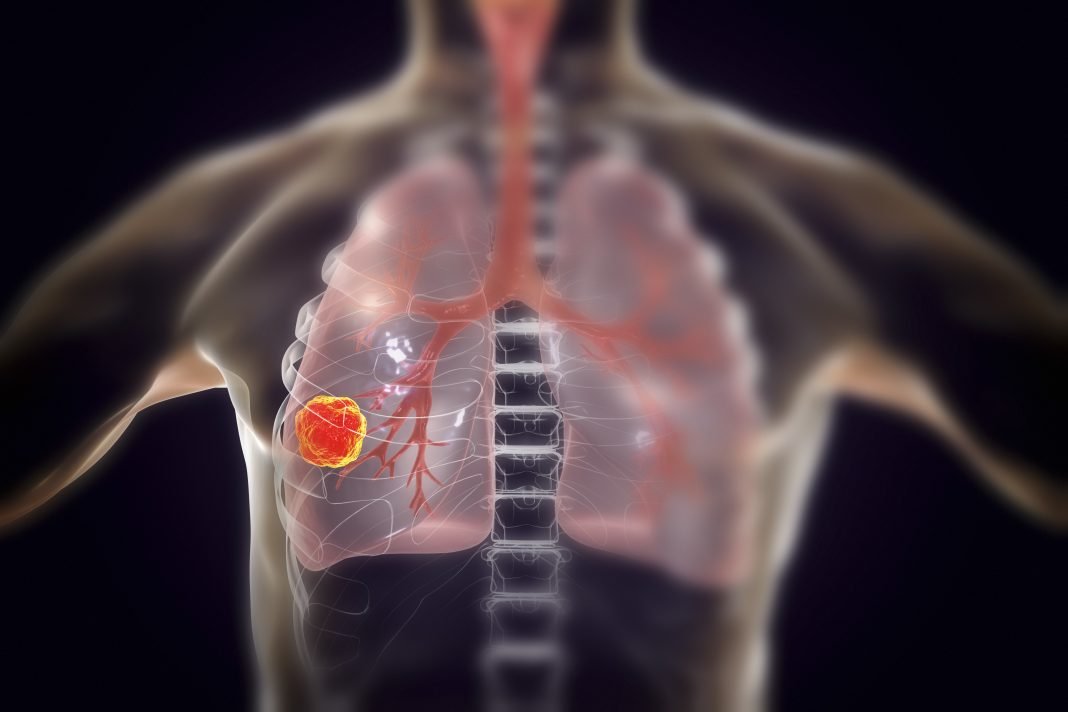
A preclinical study headed by researchers at NYU Langone Health has shown how a protein made by stressed cancer cells helps lung and pancreatic tumors evade the immune system. The study found that new drugs designed to block the action of a protein called lipocalin 2 (LCN2) slowed cancer growth in mice by enabling the immune system to target tumor cells. The drugs made aggressive cancers more vulnerable to immunotherapies, which help the immune system attack cancer cells.
The research, headed by Thales Papagiannakopoulos, PhD, associate professor in the department of pathology at the NYU Grossman School of Medicine, and published in Nature (“The integrated stress response promotes immune evasion through lipocalin 2”), centered on a cellular survival pathway called the integrated stress response (ISR), which cells use to endure stressful conditions, such as a lack of nutrients. Cancer cells, with their abnormal, aggressive growth, face a continual threat of starvation, are always stressed, and always have the ISR turned on.
The ISR in cancer cells triggers the production of a protein called activating transcription factor 4 (ATF4), which in turn triggers the action of many genes that help cancer cells survive. “The ISR and its master transcriptional effector, ATF4, are emerging as key players that respond to several intrinsic stressors during tumorigenesis and contribute to therapy resistance,” the investigators reported. Their newly reported work shows that ATF4 also instructs the cell to release LCN2 to protect the tumor from the immune system. Co-corresponding author Papagiannakopoulos explained, “Stressed cancer cells have learned to call for help through LCN2, which shields them from the immune system.”
The researchers’ studies found that LCN2 passes on the ATF4 message to switch macrophages, a type of immune cell abundant in tumors, into an immunosuppressive mode, which keeps cancer-killing T cells from entering the tumor. “An unbiased genetic screen of ATF4-regulated genes identifies lipocalin 2 (LCN2) as the principal ATF4-dependent effector that impairs anti-tumor immunity by favoring infiltration with immunosuppressive interstitial macrophages,” the authors wrote. “We found that LCN2 has a profound effect on the transcriptional state of macrophages, which can have a crucial role in modulating the infiltration and function of both CD4+ and CD8+ T cells.”
When the research team engineered mice to both develop cancer and lack LCN2, tumor growth slowed. That this effect happened only in mice with healthy immune systems suggested that an important role for LCN2 is to block the immune attack on tumors. “This study shows that, in the context of a fully immunocompetent setting, loss of ATF4 in several solid tumors significantly hinders tumorigenesis, and that this immunomodulatory role of ATF4 is mediated through the induction of LCN2,” the authors stated.
Whereas ATF4 operates inside cancer cells, LCN2 is released outside, where it can be more easily targeted by drugs, the researchers said. “Because LCN2 is a secreted protein, it should be readily targetable with antibodies,” they further suggested. The team developed an antibody therapy to bind and block LCN2, which kept it from manipulating macrophages, letting the sidelined T cells back into tumors.
When treated with an antibody that blocked LCN2, tumors in mice became flooded with T cells and shrank. “We found that anti-LCN2 antibodies have robust efficacy in aggressive tumor models,” they stated. Combining the LCN2 antibody with an existing immunotherapy drug worked even better, extending survival in mice with aggressive lung cancer.
Next, the team examined tumor samples from more than 100 lung cancer patients and 30 pancreatic cancer patients. High LCN2 levels were linked to a median survival of 52 months, compared to 79 months for patients with low levels. “… LCN2 expression in human lung and pancreatic tumors positively correlated with tumor grade, decreased T cell infiltration, shorter overall survival, and poor responses to immunotherapy.”
“Our results provide a clear rationale for developing therapies that target LCN2 in lung cancer patients,” said co-corresponding study author Shohei Koide, PhD, professor in the department of biochemistry and molecular pharmacology at NYU Grossman School of Medicine, and director of cancer biologics at the Perlmutter Cancer Center. “We also want to explore whether this mechanism is active in other cancer types that resist immunotherapy.”
In their paper, the team concluded “Our study shows that the ATF4–LCN2 axis has a cell-extrinsic role in suppressing anti-cancer immunity, and could pave the way for an immunotherapy approach that targets LCN2.”
The post Cancer Immunotherapy Improved Using Targeted Stress Protein appeared first on GEN – Genetic Engineering and Biotechnology News.