
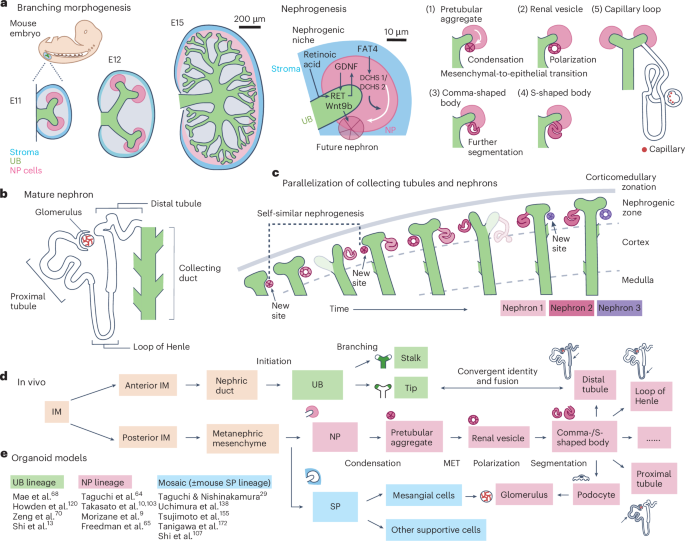
McMahon, A. P. Development of the mammalian kidney. Curr. Top. Dev. Biol. 117, 31–64 (2016).
Tekguc, M. et al. Kidney organoids: a pioneering model for kidney diseases. Transl. Res. 250, 1–17 (2022).
US Department of Health and Human Services. Advancing American kidney health https://aspe.hhs.gov/system/files/pdf/262046/AdvancingAmericanKidneyHealth.pdf (2019).
Kidney Health Initiative. Technology roadmap for innovative approaches to renal replacement therapy https://www.asn-online.org/g/blast/files/KHI_RRT_Roadmap1.0_FINAL_102318_web.pdf (2018).
US Food and Drug Administration. FDA announces plan to phase out animal testing requirement for monoclonal antibodies and other drugs https://www.fda.gov/news-events/press-announcements/fda-announces-plan-phase-out-animal-testing-requirement-monoclonal-antibodies-and-other-drugs (2025).
National Institutes of Health. NIH to prioritize human-based research technologies https://www.nih.gov/news-events/news-releases/nih-prioritize-human-based-research-technologies (2025).
Dorison, A., Forbes, T. A. & Little, M. H. What can we learn from kidney organoids?. Kidney Int. 102, 1013–1029 (2022).
Little, M. H. & McMahon, A. P. Mammalian kidney development: principles, progress, and projections. Cold Spring Harb. Perspect. Biol. 4, a008300 (2012).
Morizane, R. et al. Nephron organoids derived from human pluripotent stem cells model kidney development and injury. Nat. Biotechnol. 33, 1193–1200 (2015).
Takasato, M. et al. Directing human embryonic stem cell differentiation towards a renal lineage generates a self-organizing kidney. Nat. Cell Biol. 16, 118–126 (2014).
Vanslambrouck, J. M., Tan, K. S., Mah, S. & Little, M. H. Generation of proximal tubule-enhanced kidney organoids from human pluripotent stem cells. Nat. Protoc. 18, 3229–3252 (2023).
Li, Z. & Lindström, N. O. Building a kidney tree: functional collecting duct from human pluripotent stem cells. Dev. Cell 57, 2251–2253 (2022).
Shi, M., Fu, P., Bonventre, J. V. & McCracken, K. W. Directed differentiation of ureteric bud and collecting duct organoids from human pluripotent stem cells. Nat. Protoc. 18, 2485–2508 (2023).
Little, M. H. & Combes, A. N. Kidney organoids: accurate models or fortunate accidents. Genes Dev. 33, 1319–1345 (2019).
Adler, M. et al. Emergence of division of labor in tissues through cell interactions and spatial cues. Cell Rep. 42, 112412 (2023).
Steinberg, M. S. Reconstruction of tissues by dissociated cells. Science 141, 401–408 (1963).
Brassard, J. A. & Lutolf, M. P. Engineering stem cell self-organization to build better organoids. Cell Stem Cell 24, 860–876 (2019).
Pfeifer, C. R., Shyer, A. E. & Rodrigues, A. R. Creative processes during vertebrate organ morphogenesis: biophysical self-organization at the supracellular scale. Curr. Opin. Cell Biol. 86, 102305 (2024).
Li, R. & Bowerman, B. Symmetry breaking in biology. Cold Spring Harb. Perspect. Biol. 2, a003475 (2010).
Lancaster, M. A. & Knoblich, J. A. Organogenesis in a dish: modeling development and disease using organoid technologies. Science 345, 1247125 (2014).
Serra, D. et al. Self-organization and symmetry breaking in intestinal organoid development. Nature 569, 66–72 (2019).
Srivastava, V. et al. Configurational entropy is an intrinsic driver of tissue structural heterogeneity. Preprint at bioRxiv https://doi.org/10.1101/2023.07.01.546933 (2023).
Cerchiari, A. E. et al. A strategy for tissue self-organization that is robust to cellular heterogeneity and plasticity. Proc. Natl Acad. Sci. USA 112, 2287–2292 (2015).
Garner, R. M., McGeary, S. E., Klein, A. M. & Megason, S. G. Tissue fluidity mediates a trade-off between the speed and accuracy of multicellular patterning by cell sorting. Biophys. J. 124, 4157–4175 (2025).
Garreta, E. et al. Rethinking organoid technology through bioengineering. Nat. Mater. 20, 145–155 (2021).
Sasai, Y. Cytosystems dynamics in self-organization of tissue architecture. Nature 493, 318–326 (2013).
Lefevre, J. G. et al. Self-organisation after embryonic kidney dissociation is driven via selective adhesion of ureteric epithelial cells. Development 144, 1087–1096 (2017).
Leclerc, K. & Costantini, F. Mosaic analysis of cell rearrangements during ureteric bud branching in dissociated/reaggregated kidney cultures and in vivo. Dev. Dyn. 245, 483–496 (2016).
Taguchi, A. & Nishinakamura, R. Higher-order kidney organogenesis from pluripotent stem cells. Cell Stem Cell 21, 730–746 (2017).
Brassard, J. A., Nikolaev, M., Hübscher, T., Hofer, M. & Lutolf, M. P. Recapitulating macro-scale tissue self-organization through organoid bioprinting. Nat. Mater. 20, 22–29 (2021).
Laurent, J. et al. Convergence of microengineering and cellular self-organization towards functional tissue manufacturing. Nat. Biomed. Eng. 1, 939–956 (2017).
Autorino, C. & Petridou, N. I. Critical phenomena in embryonic organization. Curr. Opin. Syst. Biol. 31, 100433 (2022).
Force, E., Lamy, D., Debernard, S., Savouré, A. & Dacher, M. Developmental transitions involve common biological processes across living beings. Heliyon 11, e42995 (2025).
Levin, M. et al. The mid-developmental transition and the evolution of animal body plans. Nature 531, 637–641 (2016).
Rankin, S. A. et al. Timing is everything: reiterative Wnt, BMP and RA signaling regulate developmental competence during endoderm organogenesis. Dev. Biol. 434, 121–132 (2018).
Waddington, C. H. The Strategy of the Genes (Routledge, 2015).
Barresi, M. J. F. & Gilbert, S. F. Developmental Biology (Oxford University Press, 2020).
Metzger, R. J., Klein, O. D., Martin, G. R. & Krasnow, M. A. The branching programme of mouse lung development. Nature 453, 745–750 (2008).
Sznurkowska, M. K. et al. Defining lineage potential and fate behavior of precursors during pancreas development. Dev. Cell 46, 360–375 (2018).
Jheon, A. H., Seidel, K., Biehs, B. & Klein, O. D. From molecules to mastication: the development and evolution of teeth. Wiley Interdiscip. Rev. Dev. Biol. 2, 165–182 (2013).
Buijtendijk, M. F. J., Barnett, P. & van den Hoff, M. J. B. Development of the human heart. Am. J. Med. Genet. C Semin. Med. Genet. 184, 7–22 (2020).
Fuhrmann, S. Eye morphogenesis and patterning of the optic vesicle. Curr. Top. Dev. Biol. 93, 61–84 (2010).
Gjorevski, N. et al. Tissue geometry drives deterministic organoid patterning. Science 375, eaaw9021 (2022).
Short, K. M. et al. Global quantification of tissue dynamics in the developing mouse kidney. Dev. Cell 29, 188–202 (2014).
Mugford, J. W., Yu, J., Kobayashi, A. & McMahon, A. P. High-resolution gene expression analysis of the developing mouse kidney defines novel cellular compartments within the nephron progenitor population. Dev. Biol. 333, 312–323 (2009).
Brown, A. C. et al. Role for compartmentalization in nephron progenitor differentiation. Proc. Natl Acad. Sci. USA 110, 4640–4645 (2013).
Prahl, L. S. et al. Jamming of nephron-forming niches in the developing mouse kidney creates cyclical mechanical stresses. Nat. Mater. 23, 1582–1591 (2024).
Prahl, L. S., Viola, J. M., Liu, J. & Hughes, A. J. The developing murine kidney actively negotiates geometric packing conflicts to avoid defects. Dev. Cell 58, 110–120 (2023).
Lefevre, J. G. et al. Branching morphogenesis in the developing kidney is governed by rules that pattern the ureteric tree. Development 144, 4377–4385 (2017).
Grindel, S. H. et al. A mechanical pacemaker sets rhythmic nephron formation in the kidney. Preprint at bioRxiv https://doi.org/10.1101/2023.11.21.568157 (2025).
Porter, C. M., Qian, G. C., Grindel, S. H. & Hughes, A. J. Highly parallel production of designer organoids by mosaic patterning of progenitors. Cell Syst. 15, 649–661 (2024).
Selden, N. S. et al. Chemically programmed cell adhesion with membrane-anchored oligonucleotides. J. Am. Chem. Soc. 134, 765–768 (2012).
Todhunter, M. E. et al. Programmed synthesis of three-dimensional tissues. Nat. Methods 12, 975–981 (2015).
Viola, J. M. et al. Guiding cell network assembly using shape-morphing hydrogels. Adv. Mater. 32, e2002195 (2020).
Weber, R. J., Liang, S. I., Selden, N. S., Desai, T. A. & Gartner, Z. J. Efficient targeting of fatty-acid modified oligonucleotides to live cell membranes through step-wise assembly. Biomacromolecules 15, 4621–4626 (2014).
Zandrini, T., Florczak, S., Levato, R. & Ovsianikov, A. Breaking the resolution limits of 3D bioprinting: future opportunities and present challenges. Trends Biotechnol. 41, 604–614 (2023).
Lawlor, K. T. et al. Cellular extrusion bioprinting improves kidney organoid reproducibility and conformation. Nat. Mater. 20, 260–271 (2021).
Skylar-Scott, M. A. et al. Biomanufacturing of organ-specific tissues with high cellular density and embedded vascular channels. Sci. Adv. 5, eaaw2459 (2019).
Singh, N. K. et al. Three-dimensional cell-printing of advanced renal tubular tissue analogue. Biomaterials 232, 119734 (2020).
Lin, N. Y. C. et al. Renal reabsorption in 3D vascularized proximal tubule models. Proc. Natl Acad. Sci. USA 116, 5399–5404 (2019).
Wolf, K. J., Weiss, J. D., Uzel, S. G. M., Skylar-Scott, M. A. & Lewis, J. A. Biomanufacturing human tissues via organ building blocks. Cell Stem Cell 29, 667–677 (2022).
Osathanondh, V. & Potter, E. L. Development of human kidney as shown by microdissection. III. Formation and interrelationship of collecting tubules and nephrons. Arch. Pathol. 76, 290–302 (1963).
Hughes, A. J. et al. Engineered tissue folding by mechanical compaction of the mesenchyme. Dev. Cell 44, 165–178 (2018).
Taguchi, A. et al. Redefining the in vivo origin of metanephric nephron progenitors enables generation of complex kidney structures from pluripotent stem cells. Cell Stem Cell 14, 53–67 (2014).
Freedman, B. S. Modelling kidney disease with CRISPR-mutant kidney organoids derived from human pluripotent epiblast spheroids. Nat. Commun. 6, 8715 (2015).
Howden, S. E. & Little, M. H. Generating kidney organoids from human pluripotent stem cells using defined conditions. Methods Mol. Biol. 2155, 183–192 (2020).
Morizane, R. & Bonventre, J. V. Generation of nephron progenitor cells and kidney organoids from human pluripotent stem cells. Nat. Protoc. 12, 195–207 (2017).
Mae, S.-I. et al. Expansion of human iPSC-derived ureteric bud organoids with repeated branching potential. Cell Rep. 32, 107963 (2020).
Takasato, M., Er, P. X., Chiu, H. S. & Little, M. H. Generation of kidney organoids from human pluripotent stem cells. Nat. Protoc. 11, 1681–1692 (2016).
Zeng, Z. et al. Generation of patterned kidney organoids that recapitulate the adult kidney collecting duct system from expandable ureteric bud progenitors. Nat. Commun. 12, 3641 (2021).
Howden, S. E., Vanslambrouck, J. M., Wilson, S. B., Tan, K. S. & Little, M. H. Reporter-based fate mapping in human kidney organoids confirms nephron lineage relationships and reveals synchronous nephron formation. EMBO Rep. 20, e47483 (2019).
Vanslambrouck, J. M. et al. A toolbox to characterize human induced pluripotent stem cell-derived kidney cell types and organoids. J. Am. Soc. Nephrol. 30, 1811–1823 (2019).
McNamara, H. M., Solley, S. C., Adamson, B., Chan, M. M. & Toettcher, J. E. Recording morphogen signals reveals mechanisms underlying gastruloid symmetry breaking. Nat. Cell Biol. 26, 1832–1844 (2024).
Cebrian, C., Asai, N., D’Agati, V. & Costantini, F. The number of fetal nephron progenitor cells limits ureteric branching and adult nephron endowment. Cell Rep. 7, 127–137 (2014).
Velazquez, J. J. et al. Gene regulatory network analysis and engineering directs development and vascularization of multilineage human liver organoids. Cell Syst. 12, 41–55 (2021).
Skylar-Scott, M. A. et al. Orthogonally induced differentiation of stem cells for the programmatic patterning of vascularized organoids and bioprinted tissues. Nat. Biomed. Eng. 6, 449–462 (2022).
Legnini, I. et al. Spatiotemporal, optogenetic control of gene expression in organoids. Nat. Methods 20, 1544–1552 (2023).
Suh, K. et al. Large-scale control over collective cell migration using light-activated epidermal growth factor receptors. Cell Syst. 16, 101203 (2025).
Karner, C. M. et al. Canonical Wnt9b signaling balances progenitor cell expansion and differentiation during kidney development. Development 138, 1247–1257 (2011).
Lawlor, K. T. et al. Nephron progenitor commitment is a stochastic process influenced by cell migration. eLife 8, e41156 (2019).
Mederacke, M., Conrad, L., Doumpas, N., Vetter, R. & Iber, D. Geometric effects position renal vesicles during kidney development. Cell Rep. 42, 113526 (2023).
Ramalingam, H. et al. Disparate levels of β-catenin activity determine nephron progenitor cell fate. Dev. Biol. 440, 13–21 (2018).
O’Brien, L. L. et al. Wnt11 directs nephron progenitor polarity and motile behavior ultimately determining nephron endowment. eLife 7, e40392 (2018).
Anand, G. M. et al. Controlling organoid symmetry breaking uncovers an excitable system underlying human axial elongation. Cell 186, 497–512 (2023).
van Oostrom, M. J. et al. Coupling of cell proliferation to the segmentation clock ensures robust somite scaling. Preprint at bioRxiv https://doi.org/10.1101/2025.01.10.632257 (2025).
Hubaud, A. & Pourquié, O. Signalling dynamics in vertebrate segmentation. Nat. Rev. Mol. Cell Biol. 15, 709–721 (2014).
Peng, Z. et al. Somites are a source of nephron progenitors in zebrafish. Nat. Commun. 16, 6914 (2025).
Hayashi, S., Suzuki, H. & Takemoto, T. The nephric mesenchyme lineage of intermediate mesoderm is derived from TBX6-expressing derivatives of neuro-mesodermal progenitors via BMP-dependent OSR1 function. Dev. Biol. 478, 155–162 (2021).
Soueid-Baumgarten, S., Yelin, R., Davila, E. K. & Schultheiss, T. M. Parallel waves of inductive signaling and mesenchyme maturation regulate differentiation of the chick mesonephros. Dev. Biol. 385, 122–135 (2014).
Sanaki-Matsumiya, M. et al. Periodic formation of epithelial somites from human pluripotent stem cells. Nat. Commun. 13, 2325 (2022).
Miao, Y. et al. Reconstruction and deconstruction of human somitogenesis in vitro. Nature 614, 500–508 (2023).
Engleka, K. A. et al. Insertion of Cre into the Pax3 locus creates a new allele of Splotch and identifies unexpected Pax3 derivatives. Dev. Biol. 280, 396–406 (2005).
Canty, L., Zarour, E., Kashkooli, L., François, P. & Fagotto, F. Sorting at embryonic boundaries requires high heterotypic interfacial tension. Nat. Commun. 8, 157 (2017).
Manning, M. L., Foty, R. A., Steinberg, M. S. & Schoetz, E.-M. Coaction of intercellular adhesion and cortical tension specifies tissue surface tension. Proc. Natl Acad. Sci. USA 107, 12517–12522 (2010).
Combes, A. N., Davies, J. A. & Little, M. H. Cell–cell interactions driving kidney morphogenesis. Curr. Top. Dev. Biol. 112, 467–508 (2015).
Liu, J., Prahl, L. S., Huang, A. Z. & Hughes, A. J. Measurement of adhesion and traction of cells at high yield reveals an energetic ratchet operating during nephron condensation. Proc. Natl Acad. Sci. USA 121, e2404586121 (2024).
Morsut, L. et al. Engineering customized cell sensing and response behaviors using synthetic Notch receptors. Cell 164, 780–791 (2016).
Toda, S., Blauch, L. R., Tang, S. K. Y., Morsut, L. & Lim, W. A. Programming self-organizing multicellular structures with synthetic cell–cell signaling. Science 361, 156–162 (2018).
Stevens, A. J. et al. Programming multicellular assembly with synthetic cell adhesion molecules. Nature 614, 144–152 (2023).
Georgas, K. et al. Analysis of early nephron patterning reveals a role for distal RV proliferation in fusion to the ureteric tip via a cap mesenchyme-derived connecting segment. Dev. Biol. 332, 273–286 (2009).
Fausto, C. C. et al. Defining and controlling axial nephron patterning in human kidney organoids with synthetic Wnt-secreting organizers. Preprint at bioRxiv https://doi.org/10.1101/2024.11.30.626171 (2024).
Lindström, N. O. et al. Integrated β-catenin, BMP, PTEN, and Notch signalling patterns the nephron. eLife 3, e04000 (2015).
Takasato, M. et al. Kidney organoids from human iPS cells contain multiple lineages and model human nephrogenesis. Nature 526, 564–568 (2015).
Vanslambrouck, J. M. et al. Enhanced metanephric specification to functional proximal tubule enables toxicity screening and infectious disease modelling in kidney organoids. Nat. Commun. 13, 5943 (2022).
Yamada, T. et al. Synthetic organizer cells guide development via spatial and biochemical instructions. Cell 188, 778–795 (2025).
Martyn, I., Kanno, T. Y., Ruzo, A., Siggia, E. D. & Brivanlou, A. H. Self-organization of a human organizer by combined Wnt and Nodal signalling. Nature 558, 132–135 (2018).
Shi, M. et al. Integrating collecting systems in human kidney organoids through fusion of distal nephron to ureteric bud. Cell Stem Cell 32, 1055–1070 (2025).
Ballermann, B. J. Glomerular endothelial cell differentiation. Kidney Int. 67, 1668–1671 (2005).
Chang, C.-H. & Davies, J. A. In developing mouse kidneys, orientation of loop of Henle growth is adaptive and guided by long-range cues from medullary collecting ducts. J. Anat. 235, 262–270 (2019).
Lancaster, M. A. et al. Guided self-organization and cortical plate formation in human brain organoids. Nat. Biotechnol. 35, 659–666 (2017).
Nerger, B. A. et al. 3D hydrogel encapsulation regulates nephrogenesis in kidney organoids. Adv. Mater. 36, e2308325 (2024).
Lang, C., Conrad, L. & Iber, D. Organ-specific branching morphogenesis. Front. Cell Dev. Biol. 9, 671402 (2021).
Chi, X. et al. RET-dependent cell rearrangements in the Wolffian duct epithelium initiate ureteric bud morphogenesis. Dev. Cell 17, 199–209 (2009).
Packard, A., Klein, W. H. & Costantini, F. RET signaling in ureteric bud epithelial cells controls cell movements, cell clustering and bud formation. Development 148, dev199386 (2021).
Riccio, P., Cebrian, C., Zong, H., Hippenmeyer, S. & Costantini, F. RET and ETV4 promote directed movements of progenitor cells during renal branching morphogenesis. PLoS Biol. 14, e1002382 (2016).
Shakya, R., Watanabe, T. & Costantini, F. The role of GDNF/RET signaling in ureteric bud cell fate and branching morphogenesis. Dev. Cell 8, 65–74 (2005).
Costantini, F. Renal branching morphogenesis: concepts, questions, and recent advances. Differentiation 74, 402–421 (2006).
Qiao, J., Sakurai, H. & Nigam, S. K. Branching morphogenesis independent of mesenchymal–epithelial contact in the developing kidney. Proc. Natl Acad. Sci. USA 96, 7330–7335 (1999).
Shi, M. et al. Human ureteric bud organoids recapitulate branching morphogenesis and differentiate into functional collecting duct cell types. Nat. Biotechnol. 41, 252–261 (2023).
Howden, S. E. et al. Plasticity of distal nephron epithelia from human kidney organoids enables the induction of ureteric tip and stalk. Cell Stem Cell 28, 671–684 (2021).
Shakya, R. et al. The role of GDNF in patterning the excretory system. Dev. Biol. 283, 70–84 (2005).
Basson, M. A. et al. Sprouty1 is a critical regulator of GDNF/RET-mediated kidney induction. Dev. Cell 8, 229–239 (2005).
Basson, M. A. et al. Branching morphogenesis of the ureteric epithelium during kidney development is coordinated by the opposing functions of GDNF and Sprouty1. Dev. Biol. 299, 466–477 (2006).
Goodwin, K. et al. Smooth muscle differentiation shapes domain branches during mouse lung development. Development 146, dev181172 (2019).
Kim, H. Y. et al. Localized smooth muscle differentiation is essential for epithelial bifurcation during branching morphogenesis of the mammalian lung. Dev. Cell 34, 719–726 (2015).
Buchmann, B. et al. Mechanical plasticity of collagen directs branch elongation in human mammary gland organoids. Nat. Commun. 12, 2759 (2021).
Wang, S., Matsumoto, K., Lish, S. R., Cartagena-Rivera, A. X. & Yamada, K. M. Budding epithelial morphogenesis driven by cell–matrix versus cell–cell adhesion. Cell 184, 3702–3716 (2021).
Harunaga, J. S., Doyle, A. D. & Yamada, K. M. Local and global dynamics of the basement membrane during branching morphogenesis require protease activity and actomyosin contractility. Dev. Biol. 394, 197–205 (2014).
Huang, A. Z. et al. Engineering kidney developmental trajectory using culture boundary conditions. Nat. Commun. 16, 7829 (2025).
Kurtzeborn, K. et al. Epithelial cell shape changes contribute to regulation of ureteric bud branching morphogenesis. FEBS J. 292, 6253–6282 (2025).
Carroll, T. J. & Yu, J. The kidney and planar cell polarity. Curr. Top. Dev. Biol. 101, 185–212 (2012).
Chakraborty, S., Peak, K. E., Gleghorn, J. P., Carroll, T. J. & Varner, V. D. Quantifying spatial patterns of tissue stiffness within the embryonic mouse kidney. Methods Mol. Biol. 2805, 171–186 (2024).
Tang, Z. et al. Mechanical forces program the orientation of cell division during airway tube morphogenesis. Dev. Cell 44, 313–325 (2018).
Packard, A. et al. Luminal mitosis drives epithelial cell dispersal within the branching ureteric bud. Dev. Cell 27, 319–330 (2013).
Menshykau, D. et al. Image-based modeling of kidney branching morphogenesis reveals GDNF–RET based Turing-type mechanism and pattern-modulating Wnt11 feedback. Nat. Commun. 10, 239 (2019).
Gsell, S., Tlili, S., Merkel, M. & Lenne, P.-F. Marangoni-like tissue flows enhance symmetry breaking of embryonic organoids. Nat. Phys. 21, 644–653 (2025).
Combes, A. N., Zappia, L., Er, P. X., Oshlack, A. & Little, M. H. Single-cell analysis reveals congruence between kidney organoids and human fetal kidney. Genome Med. 11, 3 (2019).
Uchimura, K., Wu, H., Yoshimura, Y. & Humphreys, B. D. Human pluripotent stem cell-derived kidney organoids with improved collecting duct maturation and injury modeling. Cell Rep. 33, 108514 (2020).
Montesano, R., Schaller, G. & Orci, L. Induction of epithelial tubular morphogenesis in vitro by fibroblast-derived soluble factors. Cell 66, 697–711 (1991).
Santos, O. F. & Nigam, S. K. HGF-induced tubulogenesis and branching of epithelial cells is modulated by extracellular matrix and TGF-β. Dev. Biol. 160, 293–302 (1993).
Ruiter, F. A. A. et al. Soft, dynamic hydrogel confinement improves kidney organoid lumen morphology and reduces epithelial–mesenchymal transition in culture. Adv. Sci. 9, e2200543 (2022).
Peak, K. E. et al. Photo-induced changes in tissue stiffness alter epithelial budding morphogenesis in the embryonic lung. Preprint at bioRxiv https://doi.org/10.1101/2024.08.22.609268 (2024).
Yavitt, F. M. et al. In situ modulation of intestinal organoid epithelial curvature through photoinduced viscoelasticity directs crypt morphogenesis. Sci. Adv. 9, eadd5668 (2023).
Morley, C. D. et al. Quantitative characterization of 3D bioprinted structural elements under cell generated forces. Nat. Commun. 10, 3029 (2019).
Gjorevski, N. & Nelson, C. M. Endogenous patterns of mechanical stress are required for branching morphogenesis. Integr. Biol. 2, 424–434 (2010).
Tang, M. J., Worley, D., Sanicola, M. & Dressler, G. R. The RET–glial cell-derived neurotrophic factor (GDNF) pathway stimulates migration and chemoattraction of epithelial cells. J. Cell Biol. 142, 1337–1345 (1998).
Hyeon, B., Lee, H., Kim, N. & Heo, W. D. Optogenetic dissection of RET signaling reveals robust activation of ERK and enhanced filopodia-like protrusions of regenerating axons. Mol. Brain 16, 56 (2023).
Bugaj, L. J., Choksi, A. T., Mesuda, C. K., Kane, R. S. & Schaffer, D. V. Optogenetic protein clustering and signaling activation in mammalian cells. Nat. Methods 10, 249–252 (2013).
Town, J. P. & Weiner, O. D. Local negative feedback of Rac activity at the leading edge underlies a pilot pseudopod-like program for amoeboid cell guidance. PLoS Biol. 21, e3002307 (2023).
Hirashima, T. & Matsuda, M. ERK-mediated curvature feedback regulates branching morphogenesis in lung epithelial tissue. Curr. Biol. 34, 683–696 (2024).
Michos, O. et al. Kidney development in the absence of Gdnf and Spry1 requires Fgf10. PLoS Genet. 6, e1000809 (2010).
Chau, A. H., Walter, J. M., Gerardin, J., Tang, C. & Lim, W. A. Designing synthetic regulatory networks capable of self-organizing cell polarization. Cell 151, 320–332 (2012).
Cavanaugh, K. E., Staddon, M. F., Munro, E., Banerjee, S. & Gardel, M. L. RhoA mediates epithelial cell shape changes via mechanosensitive endocytosis. Dev. Cell 52, 152–166 (2020).
Kao, R. M., Vasilyev, A., Miyawaki, A., Drummond, I. A. & McMahon, A. P. Invasion of distal nephron precursors associates with tubular interconnection during nephrogenesis. J. Am. Soc. Nephrol. 23, 1682–1690 (2012).
Tsujimoto, H. et al. A modular differentiation system maps multiple human kidney lineages from pluripotent stem cells. Cell Rep. 31, 107476 (2020).
Palakkan, A. A. et al. Production of kidney organoids arranged around single ureteric bud trees, and containing endogenous blood vessels, solely from embryonic stem cells. Sci. Rep. 12, 12573 (2022).
Wilson, S. B., Santos, I. P., Wildfang, L., Imsa, K. & Little, M. H. Generation of multi-lineage kidney assembloids with integration between nephrons and a single exiting collecting duct. Preprint at bioRxiv https://doi.org/10.1101/2025.02.27.640561 (2025).
Huycke, T. R. et al. Patterning and folding of intestinal villi by active mesenchymal dewetting. Cell 187, 3072–3089 (2024).
López-García, I. et al. Epithelial tubule interconnection driven by HGF–MET signaling in the kidney. Proc. Natl Acad. Sci. USA 121, e2416887121 (2024).
Kamei, C. N., Gallegos, T. F., Liu, Y., Hukriede, N. & Drummond, I. A. Wnt signaling mediates new nephron formation during zebrafish kidney regeneration. Development 146, dev168294 (2019).
England, A. R. et al. Identification and characterization of cellular heterogeneity within the developing renal interstitium. Development 147, dev190108 (2020).
Wilson, S. B. & Little, M. H. The origin and role of the renal stroma. Development 148, dev199886 (2021).
Drake, K. A. et al. Transcription factors YAP/TAZ and SRF cooperate to specify renal myofibroblasts in the developing mouse kidney. J. Am. Soc. Nephrol. 33, 1694–1707 (2022).
Barry, D. M. et al. Molecular determinants of nephron vascular specialization in the kidney. Nat. Commun. 10, 5705 (2019).
Kobayashi, A. et al. Identification of a multipotent self-renewing stromal progenitor population during mammalian kidney organogenesis. Stem Cell Reports 3, 650–662 (2014).
Das, A. et al. Stromal–epithelial crosstalk regulates kidney progenitor cell differentiation. Nat. Cell Biol. 15, 1035–1044 (2013).
Rosselot, C. et al. Non-cell-autonomous retinoid signaling is crucial for renal development. Development 137, 283–292 (2010).
Hum, S., Rymer, C., Schaefer, C., Bushnell, D. & Sims-Lucas, S. Ablation of the renal stroma defines its critical role in nephron progenitor and vasculature patterning. PLoS ONE 9, e88400 (2014).
Levinson, R. S. et al. FOXD1-dependent signals control cellularity in the renal capsule, a structure required for normal renal development. Development 132, 529–539 (2005).
Rowan, C. J. et al. Hedgehog-GLI signaling in FOXD1-positive stromal cells promotes murine nephrogenesis via TGFβ signaling. Development 145, dev159947 (2018).
Fetting, J. L. et al. FOXD1 promotes nephron progenitor differentiation by repressing decorin in the embryonic kidney. Development 141, 17–27 (2014).
Tanigawa, S. et al. Generation of the organotypic kidney structure by integrating pluripotent stem cell-derived renal stroma. Nat. Commun. 13, 611 (2022).
Davies, J. A. Organizing organoids: stem cells branch out. Cell Stem Cell 21, 705–706 (2017).
Wu, H. et al. Comparative analysis and refinement of human PSC-derived kidney organoid differentiation with single-cell transcriptomics. Cell Stem Cell 23, 869–881 (2018).
Wilson, S. B. et al. Classification of indeterminate and off-target cell types within human kidney organoid differentiation. Preprint at bioRxiv https://doi.org/10.1101/2025.05.16.654519 (2025).
Chen, A. X. et al. Controlled apoptosis of stromal cells to engineer human microlivers. Adv. Funct. Mater. 30, 1910442 (2020).
Loza, O. et al. A synthetic planar cell polarity system reveals localized feedback on FAT4–DS1 complexes. eLife 6, e24820 (2017).
Munro, D. A. D. & Davies, J. A. Vascularizing the kidney in the embryo and organoid: questioning assumptions about renal vasculogenesis. J. Am. Soc. Nephrol. 29, 1593–1595 (2018).
Honeycutt, S. E. et al. Netrin 1 directs vascular patterning and maturity in the developing kidney. Development 150, dev201886 (2023).
Luo, P. M., Gu, X., Chaney, C., Carroll, T. & Cleaver, O. Stromal netrin 1 coordinates renal arteriogenesis and mural cell differentiation. Development 150, dev201884 (2023).
Munro, D. A. D., Hohenstein, P. & Davies, J. A. Cycles of vascular plexus formation within the nephrogenic zone of the developing mouse kidney. Sci. Rep. 7, 3273 (2017).
Ryan, A. R. et al. Vascular deficiencies in renal organoids and ex vivo kidney organogenesis. Dev. Biol. 477, 98–116 (2021).
Maggiore, J. C. et al. A genetically inducible endothelial niche enables vascularization of human kidney organoids with multilineage maturation and emergence of renin expressing cells. Kidney Int. 106, 1086–1100 (2024).
Miao, Y. et al. Co-development of mesoderm and endoderm enables organotypic vascularization in lung and gut organoids. Cell 188, 4295–4313 (2025).
Kroll, K. T. et al. A perfusable, vascularized kidney organoid-on-chip model. Biofabrication 16, 045003 (2024).
Homan, K. A. et al. Flow-enhanced vascularization and maturation of kidney organoids in vitro. Nat. Methods 16, 255–262 (2019).
van den Berg, C. W. et al. Renal subcapsular transplantation of PSC-derived kidney organoids induces neo-vasculogenesis and significant glomerular and tubular maturation in vivo. Stem Cell Reports 10, 751–765 (2018).
van den Berg, C. W., Koudijs, A., Ritsma, L. & Rabelink, T. J. In vivo assessment of size-selective glomerular sieving in transplanted human induced pluripotent stem cell-derived kidney organoids. J. Am. Soc. Nephrol. 31, 921–929 (2020).
Bantounas, I. et al. Generation of functioning nephrons by implanting human pluripotent stem cell-derived kidney progenitors. Stem Cell Reports 10, 766–779 (2018).
Sallam, M. & Davies, J. Connection of ES cell-derived collecting ducts and ureter-like structures to host kidneys in culture. Organogenesis 17, 40–49 (2021).
Fusco, A. N., Oxburgh, L. & Carroll, T. J. The kidney stroma in development and disease. Nat. Rev. Nephrol. 21, 756–777 (2025).
Schnell, J. et al. Controlling nephron precursor differentiation to generate proximal-biased kidney organoids with emerging maturity. Nat. Commun. 16, 8136 (2025).
Huang, B. et al. Spatially patterned kidney assembloids recapitulate progenitor self-assembly and enable high-fidelity in vivo disease modeling. Cell Stem Cell 32, 1614–1633 (2025).
Tran, T. et al. A scalable organoid model of human autosomal dominant polycystic kidney disease for disease mechanism and drug discovery. Cell Stem Cell 29, 1083–1101 (2022).
Cruz, N. M. et al. Modelling ciliopathy phenotypes in human tissues derived from pluripotent stem cells with genetically ablated cilia. Nat. Biomed. Eng. 6, 463–475 (2022).
Majumdar, A., Vainio, S., Kispert, A., McMahon, J. & McMahon, A. P. Wnt11 and RET/GDNF pathways cooperate in regulating ureteric branching during metanephric kidney development. Development 130, 3175–3185 (2003).
Gottschalk, C. W. & Mylle, M. Evidence that the mammalian nephron functions as a countercurrent multiplier system. Science 128, 594 (1958).