- Article
- Open access
- Published:
Scientific Reports volume 15, Article number: 26357 (2025) Cite this article
Subjects
Abstract
The isolation of functional bioactive compounds from microalgae as sustainable sources has emerged as a new area of focus in pharmacology and functional food research. The use of natural ingredients in food products has become very popular today, while desserts made with preservatives and artificial colors have been shown to significantly increase the risk of cancer. Therefore, this study aimed to extract phycoerythrin (PE) from the cyanobacterium Nostoc sp. and produce and evaluate a semi-prepared probiotic dessert containing Lactobacillus plantarum for 60 days. The stability of the PE was evaluated over 72 h at room temperature. Following this evaluation, dairy desserts containing nano-emulsion of PE and 1% L. plantarum were formulated under different treatments, C0: no PE and L. plantarum, T1: 0.5% PE; T2: 1% PE; T3: 1.5% PE; T4: 2% PE. Then, different physicochemical composition, colorimetric properties, antimicrobial and antioxidant capabilities, and sensory evaluation were performed. Based on the results, protein content, moisture content, and texture stiffness showed that the addition of PE caused a significant increase by 1.59, 1.02, and 3.25 times in comparison to control, respectively. However, no significant effect on the fat and ash content of the samples was observed. The pH and acidity results also showed that the addition of PE increased and decreased in T4 treatment by 1.02 and 0.87 times compared to the control on day 60, respectively (p < 0.05). Furthermore, the addition of PE caused a significant decrease in the brightness index (L*), which was 0.76 times in T4 compared to the control sample. However, the yellowness and redness indexes had increased by 1.94 and 2.3 times, respectively. The total phenol content and antioxidant activity in T4 treatment had also increased by 1.10 and 2.12 times compared to the control sample, respectively. The microbial analysis revealed no Escherichia coli growth in any of the treatments, and a 0.56 times decrease in the total count of mold and yeast in the T4 treatment compared to the control sample. The survival of probiotic bacteria in T4 treatment had increased by 1.08 times. The results of flavor and overall acceptability showed that the addition of PE caused a significant increase in the sensory evaluation, while odor and color had decreased. The results suggest that the prepared dairy dessert can serve as a beneficial probiotic product for a period of 60 days.
Introduction
Cyanobacteria are recognized as the earliest oxygen-producing photosynthetic microorganisms on Earth, contributing to atmospheric oxygen levels for approximately 3 billion years. Cyanobacteria, commonly referred to as blue-green algae, are primary photosynthetic microorganisms present in diverse environments such as freshwater, oceans, soil, and bare rocks1.
Natural compounds obtained from cyanobacteria exhibit diverse biological activities, particularly in the context of food and food additives. Cyanobacteria are abundant in sugars, fibers, proteins, peptides, lipids, fatty acids, minerals, and vitamins. They serve as significant sources of secondary metabolites, including polysaccharides, sterols, tocopherols, terpenes, polyphenols, phycobilins, and phycobiliproteins. These compounds exhibit antioxidant, anti-cancer, anti-inflammatory, antihypertensive, lipid-lowering, immune-modulating, neuroprotective, antiviral, and antimicrobial properties2.
Phycobiliproteins are water-soluble fluorescent proteins that function as receptors in photosynthesis. Phycobilisomes in phycobiliproteins capture light and convert it into energy. Phycobiliproteins are categorized into phycocyanins, allophycocyanins, and phycoerythrins. PEs are predominantly located in red algae, specifically within the groups Rhodophyta, Cyanophyta, and Cryptophyta, as well as in cyanobacteria. Phycoerythrin (PE) is a water-soluble chromoprotein complex classified within the phycobilin-protein family. PE is a chromoprotein with a molecular weight of 240 kDa, characterized by its distinct pink/red coloration. The peak absorption is observed at a wavelength of 565 nm. PE displays fluorescence under UV light and functions as an auxiliary light-absorbing pigment, enhancing the absorption properties of chlorophyll3.
Milk and dairy products contain bioactive compounds essential for various biochemical and physiological processes. Consequently, dairy products play a significant role in a nutritious diet4.
However Xiong et al., 2022 found prevalence of aflatoxin M1 in yogurt and milk in central eastern China5.Fermented dairy foods confer health benefits when consumed in adequate quantities as part of a balanced diet consistently6. Fermented dairy foods also supply the body with essential nutrients, including vitamins and minerals7. Moreover they are rapidly expanding within the food industry8. They not only supply essential nutrients and energy but also positively influence specific biological functions9. This is achieved by enhancing physiological responses or mitigating disease risk, primarily through the protection of the intestinal epithelial layer and the maintenance of intestinal balance and immune homeostasis10.
Probiotics are beneficial non-pathogenic microorganisms that confer health advantages when incorporated into food products11. Dairy products serve as effective carriers of probiotics owing to their buffered environment, low oxygen levels, high fat content, and dense matrix, rendering them a preferred option within this category12,13. Fermented milk products provide health advantages, such as natural nutrients and lactic acid bacteria, infection protection, immune system enhancement, and improved digestion and absorption of lactose and minerals14.
Lactic acid bacteria, including Lactobacillus, Streptococcus, Lactococcus, Bifidobacterium, and Leuconostoc, represent the predominant probiotic bacterial strains found in fermented dairy products15, functioning either as starter cultures or as natural constituents in raw materials16,17.
The demand for superfoods with health benefits is increasing significantly, as they offer a unique opportunity to convert everyday foods into cost-effective health delivery mechanisms for a burgeoning population. Most available superfoods are categorized as premium products, limiting their use to a small segment of consumers, which hinders their full potential. An urgent transition to a sustainable and environmentally friendly food production system is necessary to ensure the availability of highly nutritious foods for all, enhance public health, and meet nutritional requirements. The beneficial effects of probiotic bacteria such as Lactobacillus plantarum have been established over many years and are extensively utilized in the food industry. Conversely, numerous studies have validated the health benefits and color-producing capabilities of phycobiliproteins derived from microalgae, including cyanobacteria18,19,20,21. Previous studies indicate that the incorporation of cyanobacterial pigment in dairy products, such as cheese and ice cream, yields significant antioxidant and antibacterial activities22,23,24,25,26. However, there has been no investigation into the formulation of dairy desserts fortified with both probiotic bacteria and PE. Therefore, the aim of this study was to investigate the effect of different concentrations of PE on the survival of probiotic bacteria in dairy desserts during 60 days of storage.
Material and methods
Culture conditions of the Nostoc sp.
The Cyanobacterial strain Nostoc sp. isolated from Cyanobacteria culture collection (CCC) of the herbarium ALBORZ at the Science and Research Branch, Islamic Azad University, Tehran) was grown in zarrouk medium and illuminated (300 m−2 s−1) in a growth room at 28 ± 2 °C for 30 days27.
Extraction and purification of analytical grade of PE
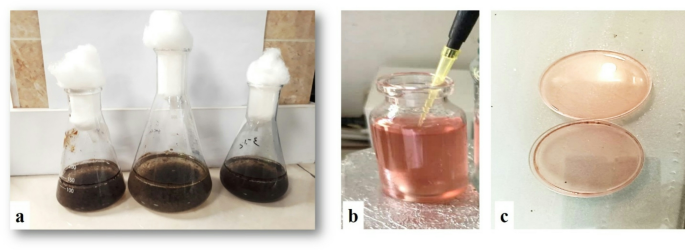
The extraction of PE was carried out as described by Nowruzi et al.28. The PE were extracted from 500 mL of homogenized log-phase (14-day-old) culture after being centrifuged at 4000 rpm to obtain a pellet. The pellet was suspended in 100 mL of 20 mM potassium phosphate buffer (pH 7.1). Extraction was carried out by repeated freezing (−20°C) and thawing (room temperature) methods for 4 days until cell biomass became dark purple. Cell debris was removed by centrifugation at 5,000 rpm for 10 min, and a crude extract was obtained (Fig. 1). Purification was carried out according to Afreen and Fatma29. Solid ammonium sulfate was slowly added to the crude extract to achieve 65% saturation by continuous stirring. The resulting solution was allowed to stand for 12 h in a cold room and centrifuged at 4500 × g for 10 min. The pellets were resuspended in a small volume of 50 mM acetic acid-sodium acetate buffer (pH 7.1) and dialyzed overnight. The extracts were recovered from the dialysis membrane and filtered through a 0.45 μm filter. The absorption spectrum was determined by scanning the sample in a range of 300–750 nm wavelengths with a Specord 200 spectrophotometer (Analytik Jena, Germany). The amounts of PE were calculated from measurements of the absorbance 565nm using the following Eqs. (1)–(3). The purity of PE was calculated at each step as the purity ratio A555/A28030
$${text{PC }}left( {mu {text{g mL}}^{{ – {1}}} } right) , = frac{{left( {{text{OD }}620{text{nm}} – 0.7{text{OD }}650{text{nm}}} right)}}{7.38}$$
(1)
$${text{APC }}left( {mu {text{g mL}}^{{ – {1}}} } right) , = frac{{left( {{text{OD }}650{text{nm}} – 0.19{text{OD }}620{text{nm}}} right)}}{5.65}$$
(2)
$${text{PE }}left( {mu {text{g mL}}^{{ – {1}}} } right) , = frac{{({text{OD }}565{text{nm}} – 2.8left[ {{text{PC}}} right] – 1.34left[ {{text{APC}}} right]}}{12.7}$$
(3)

Culture of the Nostoc sp. (a), Separation and purification of PE (b), freeze dried PE (c).
Stability of PE
The PE solution was prepared in a 50 mM phosphate buffer at pH 7.2 and incubated at room temperature for 72 h. Then the stability of the PE was evaluated in triplicate over another 72 h at room temperature. Changes in PE concentration were determined from the corresponding UV–Vis absorption spectra every 24 h18.
Antioxidant activity of purified PE
2, 2 diphenyl-1-Dipicrylhydrazyl (DPPH) assay was conducted following the method of Shanab et al31 with modifications. 710 μg. mL−1 of purified PE was mixed with 1 mL of DPPH reagent. After incubating 30 min in the dark at room temperature, the absorbance was measured at 517 nm. Ascorbic acid (100 μg/ml) was used as a positive control. The antioxidant activity is calculated according to Eq. (4).
$${text{Activity}}left( % right) = Ac – At/Ac times , 100$$
(4)
where At was the absorbance of the sample and Ac the absorbance of DPPH.
Fat content of purified PE
Fat Content The fat content of the ice cream was determined according to the Iranian Standard 2450 using the Gerber method. It was performed using a Gerber butyrometer or fatometer, and the percentage was measured using the following formula (5)32.
$${text{Fat percentage}}left( % right) , = frac{{{text{Fat with baloon weight}} – {text{Emplty baloon weight}}}}{{text{IDry sample weight}}} times 100$$
(5)
Preparation of PE nano-emulsion
Sodium alginate and PE were prepared and kept for 24 h at 4 °C for dehydration. Then the PE was well mixed with sodium alginate in a ratio of 1:1. and stirred at room temperature for 1 h. Then, the pH was adjusted to 7 using 0.5 M NaOH solutions. The mixture was first homogenized for 2 min at a speed of 12,000 rpm using a homogenizer to form coarse emulsions, and finally, nano-emulsions were formed using a two-stage valve homogenizer33.
Preparation of microbial suspension and microencapsulation of probiotic bacteria
The preparation of microbial suspension was done by culturing the L. plantarum ATCC 1058 (18 h) in 500 mL of MRS broth medium at a temperature of 37 °C. Bacterial cells were collected by a centrifuge at a speed of 5000 rpm at a temperature of 37 °C 10 min. The collected cells were washed twice with 0.9% normal saline solution under the mentioned conditions and finally diluted with normal saline solution to 100 mL34.
The process of encapsulating probiotic bacteria was achieved using two grams of sodium alginate were added to a beaker holding 100 mL of distilled water. The mixture was then stirred with a magnet at a speed of 200 rpm until the sodium alginate was completely dissolved in the distilled water. To allow the sodium alginate to be absorbed, the mixture was refrigerated overnight. Subsequently, the sample was removed from the refrigerator and allowed to equilibrate with the ambient temperature in the laboratory. Then, 18 g of an aseptic sodium alginate solution and 1 g of a bacterial suspension to match that of a 0.5 McFarland standard (1.5 × 10⁸ CFU/mL) were introduced into 100 mL of liquid canola oil, which already included 1.5 g of Tween 8035. A magnetic stirrer was used to agitate the oil at 900 rpm. To start the gelatinization process, 40 mL of an emulsion with calcium ions was added. This was made by mixing 60 g of liquid canola oil, 1.5 g of Tween 80, and 5.62 mmol of calcium chloride. The agitation procedure continued for a duration of 20 min until alginate droplets were generated.
In the end, a two-phase system was created, with oil in the top phase and sodium alginate grains settled in a calcium chloride solution in the bottom phase. Subsequently, the solution was transferred to the decanter funnel, and 40 mL of peptone saline buffer was introduced to facilitate phase separation. The solution was exposed to these conditions for a duration of 30 min, after which the capsules were effortlessly extracted from the decanter. The aforementioned stages were executed in a totally aseptic environment. Following the production and separation of the microcapsules from the oily phase, a bath sonicator was used for 30 min under sterile conditions to decrease the particle size36.
Preparation of dairy dessert
The dairy dessert was formulated by producing dairy dessert powder. First, non-fat dry milk, sugar, starch, salt, and gelatin were mixed and prepared according to Table 1. Then, 1 g of prepared probiotic bacteria and different levels of coated PE (0, 0.5, 1, 1.5, and 2%) were added to the mixture37. The dairy dessert powder was kept for two months, and dairy dessert was prepared at intervals of 10 days, and the subsequent analyses were performed.
The preparation of dairy dessert (containing 750 mL of 3% milk fat milk with 250 mL of a 9% SNF mixture) from dairy dessert powder was carried out by adding mono- and diglyceride emulsifier, stabilizer, and milk powder at concentrations of 1%, 0.04%, and 3%, respectively.
Firstly, milk powder was dissolved in water, and mono- and diglyceride was combined with milk fat. Cream production was done by using an Ultra-Turrax T45 disperser homogenizer for 4 min at 70 °C and 10,000 rpm. After that, gelatin was dispersed in Grape Juice Concentrate (GJC) and added to the mixture and homogenized for 2 min at 75 °C and 10,000 rpm. Before characterization tests, samples were kept at 2 °C overnight38 (Fig. 2).

Preparation of dairy dessert. Dairy dessert ingredients (non-fat dry milk, sugar, starch, salt and gelatin) (a), Adding PE (b), prepared dairy dessert with different concentration of PE (0, 0.5, 1, 1.5 and 2%) (c), Produced dairy dessert (d).
Probiotic dairy dessert analysis
Moisture
5 gr of the dairy dessert is weighed precisely using an analytical balance and is placed in the oven at 130 °C for 2 h, then it is cooled and weight. The moisture content is calculated according to Eq. (6)39.
$${text{Moisture content }}left( % right) , = frac{{{text{Initial weight}} – {text{Final weight}}}}{{text{Initial weight}}} times 100$$
(6)
Ash
Ash content is determined by a gravimetric incineration method. 5 g of the dairy dessert is placed in a crucible and incinerated in a muffle furnace at a temperature of approximately 550 °C. Then ash is cooled in a desiccator to avoid moisture absorption. The ash content is calculated as the percentage of the initial sample weight that remains as ash after incineration according to Eq. (7)39.
$${text{Ash content }}left( % right) , = frac{{{text{ weight of Ash residue }}left( {text{g}} right)}}{{{text{weight of original sample }}left( {text{g}} right)}} times 100$$
(7)
Protein
Protein content measured by determining the total nitrogen content using the micro-Kjeldahl method. 5 g of the dairy dessert is digested with concentrated sulfuric acid, then the mixture is neutralized with a NaOH and the liberated ammonia is distilled. The nitrogen content is calculated based on the volume of acid neutralized by the ammonia according to Eq. (8)39.
$${text{Protein content }}left( % right) = {text{Nitrogen}} times 6.38$$
(8)
where the conversion factor for dairy products is 6.38.
pH
The pH of the probiotic dairy dessert and its changes were measured using a pH meter at a temperature of 25 °C40.
Acidity
The dairy dessert sample is homogenized at 25 °C using a vortex mixer for 30 s to ensure uniform distribution of solids. Then 10 mL of the prepared sample is pipetted into a clean titration vessel. 2–3 drops of phenolphthalein indicator are added. The burette is filled with 0.1 N NaOH solution. Titration is performed while continuous stirring is maintained. The endpoint is determined by adding NaOH dropwise until a stable pale pink color persists for ≥ 15 s when viewed against a white background. The amount of acidity was calculated according to Eq. (9)4.
$${text{Acidity }}left( {{text{as}}% {text{ lactic acid}}} right) , = frac{{left( {V – V_{b} } right) times N times 0.09}}{W} times 100$$
(9)
where: (V) = Sample titration volume (mL), (V_{b}) = Blank titration volume (mL), (N) = NaOH normality (0.1 N), (W) = Sample weight (g), 0.09 = Milliequivalent weight of lactic acid (g/meq).
Texture profile analysis
The hardness of the flavored dairy dessert was determined using a texture analyzer (Brookfield, USA) by a compression test after 72 h of storage at 25°. The sample was compressed using a cylinder probe of 25 mm diameter to 10 mm penetration depth with 1 mm/s pre- and post-test speed and 1 mm/s test speed41.
Color parameters
For evaluation of the color parameters of dairy desserts, the digital colorimetry technique was used. The surface color of samples was determined by a digital Canon camera. The resulted pictures were studied by Adobe Photoshop CS 6 Software and main color parameters such as L*, a*, and b* were extracted. The color changes (ΔE*) was also determined using the provided Eq. (10)42.
$$Delta E * = sqrt {left( {Delta L *} right)2 + left( {Delta a *} right)2 + left( {Delta b *} right)2}$$
(10)
Total phenol content
The amount of phenolic compounds was determined by the Folin–Ciocalteu method using gallic acid as a standard. 10 mg of the sample was added to 3 g of distilled water, 0.25 mL of Folin–Ciocalteu reagent, and 2 mL of sodium bicarbonate and kept in a hot water bath at 37 °C for 30 min. The absorbance of the samples was read at a wavelength of 765 nm, and the results were read in terms of gallic acid (mg/g)43.
Antioxidant properties by DPPH method
The 2, 2-diphenyl-1-picrylhydrazyl (DPPH) radical scavenging assay was used to assess the radical scavenging capacity of fermentation broth at 0 and 72 h. In summary, the experiment was conducted using 96-well microtiter plates (Greiner Bio-One International GmbH, Germany) containing 100 μL of DPPH radical solution (165 μM, dissolved in methanol, Sigma-Aldrich) and 100 μL of the dairy dessert. The reaction mixtures were kept in a dark environment at a temperature of 30 °C for a duration of 30 min. The measurements of absorbance were conducted at a wavelength of 517 nm using a UV–Vis spectrophotometer44.
Microbial analysis
The study involved transferring 25 g of samples from treated and control to Sterile Stomacher Package and homogenizing them. E. coli was incubated at 30–35 °C for 18–24 h in Violet Red Bile Glucose Agar medium, while yeast extract glucose chloramphenicol agar medium was used for total yeast and mold count45. Results were expressed as log10 cfu/g of samples and the inoculated plates were incubated at 25 °C for 2–5 days under aerobic conditions46.
Probiotic bacteria viability tests
MRS bile agar culture medium was used to count probiotic bacteria. Incubation was done at a temperature of 37 °C for 72 h47. After the end of this period, the plates were checked, and if colonies were observed, they were counted and reported48.
Sensorial evaluation
Pegah Fars Company trained panelists evaluated the sensory descriptors of dairy dessert samples using a 9-point hedonic scale. They assessed appearance, color, syneresis, odor, texture, consistency, spreadability, flavor, saltiness, bitterness, mouthfeel, and pleasantness at the beginning, 30 days, and end of storage.
Statistical analysis
The experiment’s results were analyzed using ANOVA with SPSS version 22, with a 95% significance level. The Tukey’s grouping tests assessed differences in mean values after ANOVA detection. Three replicated measurements were conducted for each treatment, and mean values were determined49.
Results
Spectroscopy, purity, and stability of extracted PE
The results showed that the maximum adsorption (ƛmax) of PE extracted from Nostoc sp. was reported at a wavelength of 571 nm with an absorption of 1.8%. Based on the results, the purity and stability were 0.174 ± 0.01 and 100.00 ± 0.00, respectively. The results of purity and stability (%) of PE extracted from Nostoc sp. showed a significant decrease during 72 h (Table 2).
Antioxidant activity and fat content of purified PE
IC 50 value in DPPH method was of 0.081 mg/ml that of ascorbic acid (vitamin-C), IC50 = 0.06 mg/ ml which was used as standard. Fat content of purified PE was recorded as 2.70%.
Test results of semi-prepared probiotic dairy dessert
Protein
The results showed that different treatments had a significant effect on the protein content of the samples (p < 0.05). The addition of PE caused a significant increase in the protein content of the samples (p < 0.05). Based on the results provided in Table 3, the highest and lowest protein content belonged to T4 (5.51 ± 0.02%) and the control sample (3.46 ± 0.01%), respectively. The results showed that the protein content in T4 treatment had increased by 1.59 times compared to the control sample.
Fat and ash content
The results of the average amount of fat and ash in semi-prepared dry powder of probiotic dairy dessert are shown in Table 3. According to the results of different treatments, there was no significant effect on the fat and ash content of the samples (p > 0.05). All samples had the same fat and ash content without statistically significant difference (p > 0.05).
Moisture
The results showed that different treatments and storage times had a significant effect on the moisture content of the samples (p < 0.05). According to the results, the control sample showed the lowest moisture content (p < 0.05). However, during 60 days of storage, an increase in moisture content was observed in all investigated groups (p < 0.05). The samples containing PE showed a higher moisture content than the control sample (p < 0.05). This increase in moisture content was more pronounced at concentrations of 1.5 and 2% nano-emulsions, with increase of 1.01 and 1.02 times for T3 and T4 treatments, respectively, compared to the control, (p < 0.05) on day 60 (Table 4).
pH and acidity
The results showed that different treatments and storage time had a significant effect on the pH and acidity of the samples (p < 0.05). According to the results, during 60 days of storage, a decrease in pH and an increase in acidity were observed in all investigated groups (p < 0.05). The samples containing PE showed the lowest and highest pH and acidity value compared to the control sample (p < 0.05). On day 60, T4 treatment increased pH and acidity by 1.02 and 0.872 times, respectively, in comparison to the control sample (p < 0.05) (Table 4).
Texture stiffness
The results showed that different treatments had a significant effect on the stiffness of the samples (p < 0.05). According to the results, the addition of PE caused a significant increase in the tissue stiffness of the samples, which was more evident with the increase in the percentage of PE nano-emulsions (p < 0.05). The results showed that the texture value in T4 treatment had increased by 3.25 times compared to the control sample (Table 5).
Calorimetric results
Brightness (L*)
The results showed that the addition of PE nano-emulsion caused a significant decrease in the brightness index of the samples (p < 0.05). This significant decrease was more evident with an increasing percentage of PE during 60 days (p < 0.05). The results showed that on day 60, the brightness index of the samples in T4 treatment had decreased by 0.76 times compared to the control sample (Table 6).
Redness (a*) and yellowness (b*) parameters
The results showed that the addition of PE caused a significant increase in the yellowness and redness index of the samples (p < 0.05). This significant increase was more apparent as the percentage of PE nano-emulsion increased (p < 0.05). The results showed that the yellowness and redness index of the samples in T4 treatment had increased by 1.94 and 2.3 times compared to the control sample on day 60 (Table 6).
The color change (ΔE)
The results of the average amount of ΔE of probiotic dairy dessert showed that different treatments and duration had a significant effect on the amount of ΔE of the samples (p < 0.05). According to the results, the addition of PE caused a significant increase in ΔE of the samples (p < 0.05). However, during 60 days of shelf life, a significant increase in ΔE was reported in all investigated groups (p < 0.05) (Table 7).
Total phenol content
The results showed that the addition of PE nano-emulsion caused a significant increase in the phenol content of all samples (p < 0.05). This significant increase was more apparent as the percentage of PE nano-emulsion increased (p < 0.05). However, during 60 days of shelf life, a significant decrease in total phenol content was reported in all investigated groups (p < 0.05). The results showed that the total phenol content in T4 treatment had increased by 1.10 times compared to the control sample on day 60 (Table 8).
Antioxidant activity by DPPH method
The results showed that the addition of PE caused a significant increase in the antioxidant activity of the samples (p < 0.05). This significant increase was more evident with an increasing percentage of PE (p < 0.05). However, during 60 days of shelf life, a significant decrease in antioxidant activity was reported in all investigated groups (p < 0.05). However, the antioxidant activity in T4 treatment had increased by 2.12 times compared to the control sample on day 60 (Table 9).
Microbial analysis
Total count of E. coli
According to the results, E. coli growth was not observed in any of the treatments during 60 days of storage.
Total count of mold and yeast
The results showed that no mold or yeast growth was observed on the investigated treatments during 10 days (p > 0.05). The experiment reported the growth of mold and yeast on dairy desserts from the 20th day. The results showed that the addition of PE caused a significant decrease in the amount of mold and yeast in the samples (p < 0.05). This significant decrease was more evident with an increasing percentage of PE (p < 0.05). However, within 60 days of shelf life, a significant increase in the amount of mold and yeast was reported in all investigated groups (p < 0.05). The results showed that the total count of mold and yeast in T4 treatment had decreased by 0.56 times compared to the control sample on day 60 (Table 10).
The survival of probiotic bacteria
The results showed that from the 10th day of the experiment, a significant decrease in the viability of probiotic bacteria was reported in the investigated samples (p < 0.05). According to the results, the addition of PE caused a significant increase in the viability of probiotic bacteria, which was more significant with the increase in the concentration of PE (p < 0.05). A significant decrease in the viability of probiotic bacteria was reported in all investigated groups during the storage period (p < 0.05). The results showed that the survival of probiotic bacteria in T4 treatment had increased by 1.08 times compared to the control sample on day 60 (Table 11).
Sensorial evaluation
Flavor and overall acceptability
The results showed that the highest scores for flavor and overall acceptability were observed on the first day across all studied groups (p < 0.05). From the 10th day of the experiment onward, a significant decrease in flavor scores values was reported in the samples (p < 0.05).
However, the overall results show that although the flavor and overall acceptability scores decrease over time, this decrease is slower in the treatments containing PE, which means that on day 60, the highest flavor and overall acceptability scores belong to the T3 and T4 treatments (p < 0.05) (Table 12).
Odor and color
The results showed that the addition of PE caused a significant decrease in the odor and color scores of the samples (p < 0.05), however a significant decrease in odor scores was reported in the samples (p < 0.05). The decrease in taste and odor scores in treatments containing high concentrations of PE was less pronounced compared to other treatments, therefore, the highest taste and odor scores belonged to treatment T4 (p < 0.05) (Table 12).
Discussion
Dairy desserts are popular worldwide due to their nutritional and sensory qualities. Consumers are increasingly interested in healthier and more functional products, making dairy desserts attractive vehicles for incorporating functional ingredients such as probiotics and prebiotics50. The success of dairy probiotics can be attributed to their positive image among consumers, who are becoming more aware of the direct impact of food on their health51,52,53.
Milk-based desserts are popular among health-conscious consumers due to their high nutritional value. Adding probiotic cultures to these desserts enhances product value and appeals to individuals interested in healthy foods. Probiotics, as active agents in intestinal fermentation, contribute to both local and systemic effects54,55.
Microalgae-derived bioactive substances, including cyanobacteria, have attracted significant interest in pharmacology and food production. Cyanobacteria provide a diverse range of structural compounds with antimicrobial properties28,56. Moreover there are some review paper about the innovative and healthier dry products through the addition of microalgae57.
PE exhibits antioxidant potential through its ability to eliminate free radicals. As consumer awareness increases, PE, due to its natural coloring properties, has emerged as a promising alternative to synthetic dyes. Recently, the pink hue derived from PE has been incorporated into dairy products, including milkshakes and yogurt, rather than being limited to processed foods. This enhances the visual appeal and adds color to otherwise bland foods28. Therefore, this study aims to extract and purify natural edible PE and to produce a dairy dessert containing L. plantarum and PE extracted from the cyanobacterium Nostoc sp. These processes were carried out during the maintenance period.
Cyanobacteria utilize phycobiliproteins, which are protein-based colored pigments, for photosynthesis, enabling them to absorb light within the 450–650 nm spectral range58.
The absorption spectra of these pigments are influenced by the chromophore composition, which is related to the twist angles of the A and B rings. Under physiological conditions, PE exhibits strong light absorption in the 470–570 nm spectral range59. The spectroscopy results of PE extracted from the cyanobacterium Nostoc sp. indicated an absorption peak at a wavelength of 571 nm, with a maximum absorbance (ƛmax) of 1.859. The findings of Camara-Artigas et al. (2012) and Dumay et al. (2014) also reported that PE exhibits absorption within the wavelength range of 470–570 nm60,61. Research indicates that the A₅₆₅/A₂₈₀ ratio serves as a measure of PE purity. This purity ratio acts as an index of the degree of purification, with values of 0.7 indicating food grade, 3.9 denoting reactive grade, and values exceeding 4 classified as analytical grade62. The concentration of PE may vary due to the color adaptation mechanism. Under low light intensity, the synthesis of PE is enhanced, resulting in elongated rod structures3. Dewi et al. (2020) reported a purity index for the crude extract of PE ranging from 0.1946 to 0.2255, which contrasts with the results of our study63. Hussain et al. (2017) reported a purity ratio of 3.02 and a PE concentration of 0.111 mg/mL64. Our findings indicated that storage duration significantly reduced the purity of PE.
The stability of pure PE in samples is crucial for their acceptance in the food industry. Studies have shown that PE can remain stable for up to 48 h at 4 °C and 20 °C. The color stability of PE depends on the chromophore, while its structural stability is influenced by the protein backbone. The average stability of the pigment decreases with storage duration. However, PE extracted from Lyngbya sp. was found to be stable at temperatures up to 40 °C for 2 h65,66,67. Overall, the stability of PE is essential for its application in the food industry. In comparison, Gosh et al. (2020) reported that PE extracted from Lyngbya sp. remained stable at 40 °C for 2 h65.
The study found that adding PE significantly increased the protein content in the semi-prepared dry powder of probiotic dairy dessert, with a more pronounced increase observed at higher PE concentrations. PE is a fluorescent protein compound composed of bilins linked to tetrapyrrole groups within apoproteins. It belongs to the phycobiliprotein family, which consists of a primary protein structure associated with phycobilins68,69. Therefore, the increase in protein content of dairy desserts containing PE is well justified. Mohammadi-Gouraji et al. (2019) and Alizadeh Khaledabad et al. (2020) found that adding microalgae biomass, such as Arthrospira platensis (Spirulina) with 70% protein content, to yogurt and dairy products increases their protein content. This addition can enhance the nutritional characteristics and functional properties of fermented milk products70,71.
The average fat content results indicated that various treatments did not significantly affect the fat levels in the samples, all of which exhibited a consistent fat content of 2%, potentially attributable to PE. In alignment with our findings, Sangian et al. (2022) demonstrated that the incorporation of PE did not influence the fat content of yogurt samples72. Nefasa et al. (2022) showed that incorporating PE at levels up to 5% did not significantly affect the fat content of pasteurized milk samples73. Similar to the fat results, the ash content results showed no significant differences. In this regard, studies by Pan-utai et al. (2019) and Soni et al. (2020) found no significant effect of fresh Spirulina extract or Lactobacillus acidophilus and Bifidobacterium strains on the ash content of yogurt74,75.
Based on the results, an increase in moisture content was observed across all investigated groups over a 60-day storage period. Samples containing PE exhibited higher moisture content, particularly at concentrations of 1.5% and 2%, compared to the control sample. Research indicates that water-holding capacity is correlated with the ability of proteins, fats, and dietary fibers to retain water within the product’s structure. The inclusion of cyanobacteria, which is rich in protein and dietary fiber, significantly influences the formulation of frozen desserts by reducing product syneresis and enhancing moisture content76. In comparison to our study, Valikboni et al. (2024) demonstrated that cheese enriched with PE extracted from Spirulina sp. exhibited higher moisture content25. Kalhor et al. (2022) reported that dairy samples containing a nano-emulsion extract of Echinophora platyloba showed a reduction in moisture content over a 21-day storage period77.
The natural acidity of milk arises from the presence of caseins, acid phosphates, and citrates. Variations in the acidity and pH of dairy products significantly influence their physicochemical and sensory properties78. The addition of PE to probiotic dairy dessert samples resulted in a decrease in pH and an increase in acidity. The growth of lactic acid bacteria in milk can be attributed to the high protein content of phycobiliproteins.
Cyanobacterial pigments provide valuable proteins and carbohydrates that improve the nitrogen and carbon sources in the formula, thereby enhancing the growth of probiotic bacteria during fermentation74. Nova et al. (2020) found that adding Arthrospira platensis microalgae biomass to fermented beverages can affect taste, nutritional composition, and overall quality79.
The hydrophilic protein molecules of cyanobacteria compete with water molecules, resulting in a weaker and less stable gel structure. This can cause non-binding and complex interactions. Tissue hardness depends on dry matter content, protein quantity, and type, with high protein levels promoting cross-linking and leading to a stiff, dense structure76. The results showed that the addition of PE to the samples increased tissue stiffness.
Bchir et al. (2019) found that yogurts fortified with Arthrospira platensis at concentrations above 0.3% increased gel hardness by more than 0.67 newtons compared to the control sample. This increase is attributed to acidification by lactic bacteria, water absorption, and the high protein content of the algae, which enhances biomolecular interactions, resulting in a stiffer gel80,81.
Microalgae biomass serves as a natural colorant in dairy products, providing a viable alternative to artificial dyes. Microalgal pigments, including chlorophylls, carotenoids, and phycobiliproteins, contribute to the coloration of dairy products, producing hues that range from green to red or yellow, depending on the specific species used. The use of natural colorants enhances the visual appeal of the product and positively influences consumer perception82. The study found that PE increased the redness and yellowness indices of the samples while decreasing the brightness index, with the extent of reduction depending on the PE concentration. This change may be attributed to the increased viscosity of samples enriched with probiotics and PE83. Arslan and colleagues (2021) demonstrated that the addition of phycocyanin extracted from Spirulina caused a significant decrease in the brightness index of yogurt samples84.
The addition of PE significantly increased the total phenol content of probiotic dairy desserts, with a greater increase observed at higher PE concentrations; however, a significant decrease occurred after 60 days. The increased total phenol content in dairy desserts utilizing alginate microcoatings can be attributed to the interaction between polyphenol compounds and the residual alginate matrix, which results from the absorption of polyphenols into cross-linked calcium alginate85.
Encapsulation in alginate microcoatings and their incorporation into dairy desserts represent an effective approach to stabilize total phenols in the final products. These findings align with those of Kalhor et al. (2022), who demonstrated an increase in the phenolic content and antioxidant activity of the nano-emulsion extract of Echinophora platyloba77. However, processing conditions significantly affect the phenolic content in grains, which may increase or decrease depending on the type of process and barley variety86.
PE is a highly effective antioxidant found in microalgae, alongside polyphenols, phycobiliproteins, and vitamins. These water-soluble antioxidants delay lipid oxidation by inhibiting free radical formation or propagation through various mechanisms, including reactive species generation, metal ion chelation, oxygen quenching, interruption of self-oxidative chain reactions, and reduction of local O2 concentration. The efficiency of antioxidants is determined by their ability to terminate free radical chain reactions87.
Based on the results, the addition of PE significantly increased the antioxidant activity of probiotic dairy desserts; however, within 60 days of shelf life, all investigated groups experienced a significant decrease. Barkallah et al. (2017) found a correlation between yogurt pigment content and antioxidant capacity, possibly due to increased levels of chlorophylls, carotenoids, and phycocyanin in yogurt enriched with Spirulina platensis88.
The average count of E. coli in the probiotic dairy dessert indicated that no growth was detected in any of the treatments over a 60-day storage period. Iranian National Standard No. 14681 (1402) stipulates that the presence of Enterobacteriaceae bacteria in dairy desserts is not permissible. All examined groups fell within the acceptable standard limits. The results showed that the addition of PE significantly reduced mold and yeast counts in probiotic dairy dessert samples, complying with Iran’s national standard of 100 cfu/mL, which represents the maximum allowable growth of mold and yeast during 20 days of storage.
Mohammadi-Gouraji et al. (2019) demonstrated that incorporating 8% phycocyanin into yogurt samples completely inhibited the proliferation of E. coli, Staphylococcus aureus, and coliforms, while also significantly reducing the growth of molds and yeasts70. Karuppannan et al. (2024) examined the antibacterial properties of PE derived from the Portieria hornemannii against pathogens including Bacillus subtilis, Bacillus cereus, Shigella, and E. coli89. The present study found that adding PE to probiotic dairy desserts significantly increased the survival of probiotic bacteria, possibly due to the protective effects of coating materials such as polymers and prebiotics. However, no significant differences were observed between groups, and from the 10th day onward, the viability of probiotic bacteria decreased.
Probiotics in dairy products initiate fermentation of lactose, producing secondary metabolites such as alcohol, carbon dioxide, and lactic acid. Over time, substrate availability decreases, reducing bacterial growth and population. The pH of probiotic-containing food directly affects their survival; low pH reduces the probiotic survival rate90,91, therefore, encapsulation could be a solution.
According to the World Food and Agriculture Organization (FAO), a probiotic product must contain at least 106 cfu/mL of bacteria at the time of consumption. Based on the obtained results, except for the control sample, all treatments containing PE maintained a bacterial population above this standard for up to 60 days. Mazinani et al. (2016) incorporated Spirulina platensis at a concentration of 0.8% into ultra-filtered feta cheese containing Lactobacillus acidophilus. S. platensis was found to significantly enhance the viability of L. acidophilus compared to samples without algae92. Sensory properties of food significantly influence consumer preferences and product acceptability, thereby aiding in recipe optimization. Taste is the primary factor in food choice, and unpleasant flavors from additives can deter consumers from consuming beneficial foods, even if those foods offer health benefits93.
The sensory evaluation of taste showed the highest scores on the first day, with no significant differences observed between groups. From the 10th day onward, taste, mouthfeel, color, and overall acceptance scores decreased. The addition of PE enhanced the taste sensory evaluation; however, olfactory evaluation significantly decreased, especially at higher PE concentrations. Despite these changes, no statistically significant differences were found between groups. Pehlivan et al. (2023) demonstrated that enriching ayran—a salty and frothy yogurt beverage from Turkey—with Chondrus crispus and Chlorella vulgaris microalgae led to a decrease in all sensory scores across samples. Among the algae-containing samples, the one with both C. vulgaris and C. crispus exhibited a marginally higher overall acceptance score94.
Safety characteristics are necessary to evaluate potential probiotics and PE. In our study, we didn’t evaluate the in vitro and in vivo safety of our isolates and PE, due to the limitations in methodological standardization crucial to assessing their physiological benefits and health-promoting properties. In the future, all the strains and purified PE should be tested to evaluate hemolytic activity and sensitivity to clinical antimycotics and antibiotics agent, as they should not carry transmissible resistance genes. An important requirement for probiotic strains and natural pigments is that they must be resistant to antimicrobials to ensure protection during therapeutic or preventive use, while avoiding strains with acquired resistance that could limit effectiveness in human applications.
Conclusion
This study aims to extract and purify the natural edible PE, as well as to investigate and produce a semi-prepared probiotic dairy dessert containing L. plantarum and PE extracted from the cyanobacterium Nostoc sp.. These processes were carried out during the maintenance period.
Overall, the use of sodium alginate in the preparation of PE nano-emulsion and the enrichment of probiotic dairy desserts with nano-emulsion improved the physicochemical, textural, microbial and sensory parameters of dairy desserts. Our results also indicate that T4 treatment, which was the most effective in this study, maintained its beneficial effects for up to 60 days. Given the promising probiotic properties of these dairy desserts, they could be considered strong candidates for future biotechnological. Applications. Moreover, the use of other strains with potential probiotic properties and natural pigments extracted from cyanobacteria would be of significant interest to both the food and pharmaceutical industries.
Data availability
The datasets used and/or analyzed during the current study available from the corresponding author on reasonable request.
Code availability
Not applicable.
References
-
Zahra, Z., Choo, D. H., Lee, H. & Parveen, A. Cyanobacteria: Review of current potentials and applications. Environments 7, 13 (2020).
-
Chen, H., Qi, H. & Xiong, P. Phycobiliproteins—A family of algae-derived biliproteins: Productions, characterization and pharmaceutical potentials. Mar. Drugs 20, 450 (2022).
-
Tan, H. T. et al. A review on a hidden gem: Phycoerythrin from blue-green algae. Mar. Drugs 21, 28 (2022).
-
Chandan, R. C. Role of milk and dairy foods in nutrition and health. Dairy processing and quality assurance 428–466 (Wiley, Hoboken, 2015).
-
Xiong, J. et al. Occurrence of aflatoxin M1 in yogurt and milk in central-eastern China and the risk of exposure in milk consumers. Food Control 137, 108928 (2022).
-
Mehwish, A. U. et al. Rohail (2023) A review exploring the incorporation of microalgae to enhance the nutritional profile and health benefits of dairy products. Agrobiol. Rec. 13, 92–100 (2023).
-
Al Garory, N. H. S., Abdul-Abbas, S. J. & Al-Hashimi, A. G. The role of fermented dairy products in human health. Bionatura 8, 1–10 (2023).
-
Khurana, H. & Kanawjia, S. Recent trends in development of fermented milks. Curr. Nutr. Food Sci. 3, 91–108 (2007).
-
Fernández, M., Hudson, J. A., Korpela, R. & de los Reyes-Gavilán, C. G. Impact on human health of microorganisms present in fermented dairy products: An overview. BioMed Res. Int. 2015, 412714 (2015).
-
Kaur, H., Kaur, G. & Ali, S. A. Dairy-based probiotic-fermented functional foods: An update on their health-promoting properties. Fermentation 8(9), 425 (2022).
-
Gul, S. T., Alsayeqh, A. F. Probiotics improve physiological parameters and meat production in broiler chicks (2023).
-
Beheshtipour, H., Mortazavian, A. M., Mohammadi, R., Sohrabvandi, S. & Khosravi-Darani, K. Supplementation of Spirulina platensis and Chlorella vulgaris algae into probiotic fermented milks. Compr. Rev. Food Sci. Food Saf. 12, 144–154 (2013).
-
Karimi, R., Sohrabvandi, S. & Mortazavian, A. Sensory characteristics of probiotic cheese. Compr. Rev. Food Sci. Food Saf. 11, 437–452 (2012).
-
Kechagia, M. et al. Health benefits of probiotics: A review. Int. Sch. Res. Not. 2013, 481651 (2013).
-
Evivie, S. E., Huo, G.-C., Igene, J. O. & Bian, X. Some current applications, limitations and future perspectives of lactic acid bacteria as probiotics. Food Nutr. Res. 61, 1318034 (2017).
-
Ağagündüz, D. et al. Dairy lactic acid bacteria and their potential function in dietetics: The food–gut-health axis. Foods 10, 3099 (2021).
-
Ayed, L., M’hir, S., Nuzzolese, D., Di Cagno, R. & Filannino, P. Harnessing the health and techno-functional potential of lactic acid bacteria: A comprehensive review. Foods 13, 1538 (2024).
-
Galetović, A. et al. Use of phycobiliproteins from atacama cyanobacteria as food colorants in a dairy beverage prototype. Foods 9, 244 (2020).
-
Żymańczyk-Duda, E., Samson, S. O., Brzezińska-Rodak, M. & Klimek-Ochab, M. Versatile applications of cyanobacteria in biotechnology. Microorganisms 10, 2318 (2022).
-
Gupta, A. & Mani, I. Beneficial effects of psychobiotic bacteria, cyanobacteria, algae, and modified yeast in various food industries. Recent advances in food biotechnology 161–173 (Springer, Cham, 2022).
-
Nowruzi, B., Konur, O. & Anvar, S. A. A. The stability of the phycobiliproteins in the adverse environmental conditions relevant to the food storage. Food Bioprocess Technol. 15, 2646–2663 (2022).
-
Bajestani, M. S., Anvar, S. A. A., Nowruzi, B. & Golestan, L. Production of cheese and ice cream enriched with biomass and supernatant of spirulina platensis with emphasis on organoleptic and nutritional properties. Iran. J. Vet. Med. 18, 263–278 (2024).
-
Bajestani, M. S., Anvar, S. A. A., Nowruzi, B. & Golestan, L. Production of cheese and ice cream enriched with biomass and supernatant of spirulina platensis with emphasis on organoleptic and nutritional properties. Iran. J. Vet. Med. 18, 263–278 (2000).
-
Nowruzi, B., Anvar, S. A. A. & Shafaroodi, A. Study of phycocyanin powder on probiotic bacteriologically and antioxidant properties of yogurt at 4 °C. Nutrire 49, 42 (2024).
-
Valikboni, S. Q., Anvar, S. A. A. & Nowruzi, B. Study of the effect of phycocyanin powder on physicochemical characteristics of probiotic acidified feta-type cheese during refrigerated storage. Nutrire 49, 41 (2024).
-
Chamari, M., Anvar, S. A. A., Pourahmad, R., Nowruzi, B. & Yousefi, S. Study of alginate-encapsulated phycoerythrin in promoting the biological activity of synbiotic ice cream with Lactobacillus casei. Sci. Rep. 14, 15471 (2024).
-
Liu, L. et al. Nostosins, trypsin inhibitors isolated from the terrestrial cyanobacterium Nostoc sp. strain FSN. J. Nat. Prod. 77, 1784–1790 (2014).
-
Nowruzi, B., Anvar, S. A. A. & Ahari, H. Extraction, purification and evaluation of antimicrobial and antioxidant properties of phycoerythrin from terrestrial cyanobacterium Nostoc sp. FA1. J. Microb. World 13, 138–153 (2020).
-
Afreen, S. & Fatma, T. Laccase production and simultaneous decolorization of synthetic dyes by cyanobacteria. Int. J. Innov. Res. Sci. Eng. Technol. 2, 3563–3568 (2013).
-
Mishra, S. & Mishra, D. A novel remote sensing algorithm to quantify phycocyanin in cyanobacterial algal blooms. Environ. Res. Lett. 9, 114003 (2014).
-
Shanab, S. M., Mostafa, S. S., Shalaby, E. A. & Mahmoud, G. I. Aqueous extracts of microalgae exhibit antioxidant and anticancer activities. Asian Pac. J. Trop. Biomed. 2, 608–615 (2012).
-
Stafilov, T. et al. Study of nitrogen pollution in the Republic of North Macedonia by moss biomonitoring and Kjeldahl method. J. Environ. Sci. Health Part A 55, 759–764 (2020).
-
Zhong, Y. et al. Phycocyanin-chitosan complex stabilized emulsion: Preparation, characteristics, digestibility, and stability. Int. J. Biol. Macromol. 260, 129253 (2024).
-
Kailasapathy, K. Microencapsulation of probiotic bacteria: Technology and potential applications. Curr. Issues Intest. Microbiol. 3, 39–48 (2002).
-
Loyeau, P. A., Spotti, M. J., Vinderola, G. & Carrara, C. R. Encapsulation of potential probiotic and canola oil through emulsification and ionotropic gelation, using protein/polysaccharides Maillard conjugates as emulsifiers. Lwt 150, 111980 (2021).
-
Kowalska, E., Ziarno, M., Ekielski, A. & Żelaziński, T. Materials used for the microencapsulation of probiotic bacteria in the food industry. Molecules 27, 3321 (2022).
-
Seuvre, A.-M., Turci, C. & Voilley, A. Effect of the temperature on the release of aroma compounds and on the rheological behaviour of model dairy custard. Food Chem. 108, 1176–1182 (2008).
-
Vanderghem, C., Danthine, S., Blecker, C. & Deroanne, C. Effect of proteose-peptone addition on some physico-chemical characteristics of recombined dairy creams. Int. Dairy J. 17, 889–895 (2007).
-
AOAC. Official methods of analysis of AOAC International. AOAC International Rockville, MD, USA. (2016).
-
Horwitz, W., Latimer, G. Official methods of analysis of AOAC International, vol. 1. AOAC International, Gaithersburg, Md. (2000).
-
Bogdan, C., Moldovan, M. L., Man, I. M. & Crișan, M. Preliminary study on the development of an antistretch marks water-in-oil cream: Ultrasound assessment, texture analysis, and sensory analysis. Clin. Cosmet. Investig. Dermatol. 9, 249–255 (2016).
-
Fernandez-Avila, C., Gutierrez-Merida, C. & Trujillo, A. Physicochemical and sensory characteristics of a UHT milk-based product enriched with conjugated linoleic acid emulsified by ultra-high pressure homogenization. Innov. Food Sci. Emerg. Technol. 39, 275–283 (2017).
-
Rezaei Savadkouhi, N., Ariaii, P. & Charmchian Langerodi, M. The effect of encapsulated plant extract of hyssop (Hyssopus officinalis L.) in biopolymer nanoemulsions of Lepidium perfoliatum and Orchis mascula on controlling oxidative stability of soybean oil. Food Sci. Nutr. 8, 1264–1271 (2020).
-
Rajauria, G., Jaiswal, A. K., Abu-Gannam, N. & Gupta, S. Antimicrobial, antioxidant and free radical-scavenging capacity of brown seaweed Himanthalia elongata from western coast of Ireland. J. Food Biochem. 37, 322–335 (2013).
-
ISO. Microbiology of food and animal feeding stuffs: Horizontal method for the enumeration of microorganisms: Colony-count technique at 30 °C; ISO (2003).
-
Standardization, I. O. f. ISO 6611: 2004. Milk and milk products—Enumeration of colony‐forming units of yeasts and/or moulds—Colony‐count technique at 25 degrees C. International Organization for Standardization Geneve, Switzerland (2004).
-
Ding, W. & Shah, N. Acid, bile, and heat tolerance of free and microencapsulated probiotic bacteria. J. Food Sci. 72, M446–M450 (2007).
-
Zamfir, M., Angelescu, I.-R. & Grosu-Tudor, S.-S. In vitro evaluation of commercial probiotic products containing streptococcus salivarius k12 by assessment of probiotic viability and inhibitory potency against respiratory pathogens. Processes 11, 622 (2023).
-
Nowruzi, B. et al. Optimization of cultivation conditions to maximize extracellular investments of two Nostoc strains. Arch. Hydrobiol. Suppl. Algol. Stud 142, 63–76 (2013).
-
Okur, Ö. D. Utilization of natural plant sources in a traditional dairy dessert, Muhallebi. Cogent Food Agric. 9, 2200601 (2023).
-
Bidura, I. G. N. G., Siti, N. W., Wibawa, A. A. P. P., Puspani, E., Candrawati, D. P. M. A. Improving the quality of tofu waste by mixing it with carrots and probiotics as a feed source of probiotics and β-carotene (2023).
-
Cardarelli, H. R., Aragon-Alegro, L. C., Alegro, J. H., de Castro, I. A. & Saad, S. M. Effect of inulin and Lactobacillus paracasei on sensory and instrumental texture properties of functional chocolate mousse. J. Sci. Food Agric. 88, 1318–1324 (2008).
-
Fatha, L. & Ayoubi, R. A revisit to the role of gender, age, subjective and objective knowledge in consumers’ attitudes towards organic food. J. Strateg. Mark. 31, 499–515 (2023).
-
Silva, C. C. et al. Dairy probiotic products. Microbes in the food industry 139–215 (Wiley, Hoboken, 2023).
-
Lamsar, H. & Abhilasha, A. Dairy-based functional food products. Industrial application of functional foods, ingredients and nutraceuticals 127–170 (Elsevier, Amsterdam, 2023).
-
Nowruzi, B., Ahmadi, M., Bouaïcha, N., Khajerahimi, A. E. & Anvar, S. A. A. Studying the impact of phycoerythrin on antioxidant and antimicrobial activity of the fresh rainbow trout fillets. Sci. Rep. 14, 2470 (2024).
-
Hernández, H., Nunes, M. C., Prista, C. & Raymundo, A. Innovative and healthier dairy products through the addition of microalgae: A review. Foods 11, 755 (2022).
-
Novoveská, L. et al. Overview and challenges of large-scale cultivation of photosynthetic microalgae and cyanobacteria. Mar. Drugs 21, 445 (2023).
-
Bermejo, R., Tobaruela, D. J., Talavera, E. M., Orte, A. & Alvarez-Pez, J. M. Fluorescent behavior of B-phycoerythrin in microemulsions of aerosol OT/water/isooctane. J. Colloid Interface Sci. 263, 616–624 (2003).
-
Camara-Artigas, A. et al. pH-dependent structural conformations of B-phycoerythrin from Porphyridium cruentum. FEBS J. 279, 3680–3691 (2012).
-
Dumay, J., Morancais, M., Munier, M., Le Guillard, C. & Fleurence, J. Phycoerythrins: Valuable proteinic pigments in red seaweeds. Adv. Bot. Res. 71, 321–343 (2014).
-
Afreen, S. & Fatma, T. Extraction, purification and characterization of phycoerythrin from Michrochaete and its biological activities. Biocatal. Agric. Biotechnol. 13, 84–89 (2018).
-
Dewi, N., Santoso, J., Setyaningsih, I., Hardingtyas, S. Extraction of phycoerythrin from Kappaphycus alvarezii seaweed using ultrasonication. IOP conference series: Earth and environmental science. IOP Publishing (2020).
-
Hussain, A. et al. Blends and composites of exopolysaccharides; properties and applications: A review. Int. J. Biol. Macromol. 94, 10–27 (2017).
-
Ghosh, T. & Mishra, S. Studies on extraction and stability of C-phycoerythrin from a marine cyanobacterium. Front. Sustain. Food Syst. 4, 102 (2020).
-
Nath, P. C. et al. C-phycoerythrin production from Anabaena sp. BTA 903: Optimization, production kinetics, thermodynamic, and stability analysis. Biomass Convers. Biorefinery 14, 19739–19751 (2024).
-
Eshaghzadeh, H., Shahbazi, M., Akhavan, S. R. & Pereira, L. Purification and characterization of phycoerythrin from the Caspian Sea red macroalga (Osmundea caspica). J. Appl. Phycol. 35, 317–330 (2023).
-
Muthusamy, S., Udhayabaskar, S., Udayakumar, G. P., Kirthikaa, G. & Sivarajasekar, N. Properties and applications of natural pigments produced from different biological sources—A concise review. Sustain. Dev. Energy Environ. Sel. Proc. ICSDEE 2020, 105–119 (2019).
-
Mehwish, A. U. et al. Rohail, 2023. A review exploring the incorporation of microalgae to enhance the nutritional profile and health benefits of dairy products. Agrobiol. Rec. 13, 92–100 (2023).
-
Mohammadi-Gouraji, E., Soleimanian-Zad, S. & Ghiaci, M. Phycocyanin-enriched yogurt and its antibacterial and physicochemical properties during 21 days of storage. Lwt 102, 230–236 (2019).
-
Khaledabad, M. A., Ghasempour, Z., Kia, E. M., Bari, M. R. & Zarrin, R. Probiotic yoghurt functionalised with microalgae and Zedo gum: Chemical, microbiological, rheological and sensory characteristics. Int. J. Dairy Technol. 73, 67–75 (2020).
-
Sangian, M., Soltani, M., Hanifi, H. & Abdali, N. Investigation of the effect of phycocyanin extracted from spirulina platensis and persimmon powder on physicochemical and sensory characteristics of yogurt. Egypt. J. Vet. Sci. 53, 75–86 (2022).
-
Nefasa, A. N., Nisa, E. Z. & Christwardana, M. Effect of storage on the chemical quality of pasteurized milk with supplemented soybean oil and phycocyanin. J. Bioresour. Environ. Sci. 1, 52–56 (2022).
-
Pan-utai, W. & Iamtham, S. Physical extraction and extrusion entrapment of C-phycocyanin from Arthrospira platensis. J. King Saud Univ.-Sci. 31, 1535–1542 (2019).
-
Soni, R. et al. Development of probiotic yogurt: Effect of strain combination on nutritional, rheological, organoleptic and probiotic properties. J. Food Sci. Technol. 57, 2038–2050 (2020).
-
Shafie, E. & Goli, M. Optimization of Cantaloupe pudding formula through replacing Spirulina platensis and stevia with milk powder and sugar using response surface methodology (RSM). Iran. Food Sci. Technol. Res. J. 16, 73–84 (2020).
-
Kalhor, F. & Abdolmaleki, F. Microbiological, biochemical, and organoleptic properties of probiotic dairy desserts made from camel milk and Echinophora platyloba extract nanoemolsiun. Res. Innov. Food Sci. Technol. 11, 183–198 (2022).
-
Zolfaghari, A. & Ansari, S. Physicochemical and microbiological properties of Chaerophyllum, Oliveria and Zataria essential oils and their effects on the sensory properties of a fermented dairy drink, ‘doogh’. Int. J. Food Prop. 23, 1540–1555 (2020).
-
Nova, P. et al. Foods with microalgae and seaweeds fostering consumers health: A review on scientific and market innovations. J. Appl. Phycol. 32, 1789–1802 (2020).
-
Bchir, B., Felfoul, I., Bouaziz, M., Gharred, T., Yaich, H., Noumi, E., Snoussi, M., Bejaoui, H., Kenzali, Y., Blecker, C. Investigation of physicochemical, nutritional, textural, and sensory properties of yoghurt fortified with fresh and dried spirulina (Arthrospira platensis). Int. Food Res. J. 26 (2019).
-
Malik, P., Kempanna, C. & Paul, A. Quality characteristics of ice cream enriched with Spirulina powder. Int. J. Food Nutr. Sci. 2, 44–50 (2013).
-
Terpou, A., Bosnea, L., Mataragkas, M., Markou, G. Influence of Incorporated Arthrospira (Spirulina) platensis on the Growth of Microflora and Physicochemical Properties of Feta-Type Cheese as Functional Food. In Proceedings MDPI (2020).
-
Kim, S. Y., Hyeonbin, O., Lee, P. & Kim, Y.-S. The quality characteristics, antioxidant activity, and sensory evaluation of reduced-fat yogurt and nonfat yogurt supplemented with basil seed gum as a fat substitute. J. Dairy Sci. 103, 1324–1336 (2020).
-
Arslan, A. et al. Bovine colostrum and its potential for human health and nutrition. Front. Nutr. 8, 651721 (2021).
-
Ćujić, N. et al. Optimization of polyphenols extraction from dried chokeberry using maceration as traditional technique. Food Chem. 194, 135–142 (2016).
-
Sharma, P. et al. Fate of polyphenols and antioxidant activity of barley during processing. Food Rev. Intl. 38, 163–198 (2022).
-
Tavakoli, S. et al. Recent advances in the application of microalgae and its derivatives for preservation, quality improvement, and shelf-life extension of seafood. Crit. Rev. Food Sci. Nutr. 62, 6055–6068 (2022).
-
Barkallah, M. et al. Effect of Spirulina platensis fortification on physicochemical, textural, antioxidant and sensory properties of yogurt during fermentation and storage. Lwt 84, 323–330 (2017).
-
Karuppannan, S. et al. Reliable quality of R-phycoerythrin derived from Portieria hornemannii for effective antioxidant, antibacterial, and anticancer activity. Biomed. Eng. Adv. 7, 100116 (2024).
-
Sah, B. N. P., Vasiljevic, T., McKechnie, S. & Donkor, O. Physicochemical, textural and rheological properties of probiotic yogurt fortified with fibre-rich pineapple peel powder during refrigerated storage. LWT-Food Sci. Technol. 65, 978–986 (2016).
-
Afzaal, M. et al. Functional exploration of free and encapsulated probiotic bacteria in yogurt and simulated gastrointestinal conditions. Food Sci. Nutr. 7, 3931–3940 (2019).
-
Mazinani, S., Fadaei, V. & Khosravi-Darani, K. Impact of Spirulina platensis on physicochemical properties and viability of Lactobacillus acidophilus of probiotic UF feta cheese. J. Food Process. Preserv. 40, 1318–1324 (2016).
-
Golmakani, M.-T., Soleimanian-Zad, S., Alavi, N., Nazari, E. & Eskandari, M. H. Effect of Spirulina (Arthrospira platensis) powder on probiotic bacteriologically acidified feta-type cheese. J. Appl. Phycol. 31, 1085–1094 (2019).
-
Pehlivan, A. D., Yadel, İ, Kılıç, N. & Öztürk, H. İ. The incorporation of Chlorella vulgaris and Chondrus crispus algae in the production of functional ayran drinks: Effects on physicochemical, microbiological, and sensory characteristics. J. Food Meas. Charact. 17, 3019–3032 (2023).
Acknowledgements
Not applicable
Funding
No funding was received for this work.
Ethics declarations
Competing interests
The authors declare that they have no competing interests.
Ethical approval
Not applicable.
Informed consent
No human participants were involved in this study.
Additional information
Publisher’s note
Springer Nature remains neutral with regard to jurisdictional claims in published maps and institutional affiliations.
Rights and permissions
Open Access This article is licensed under a Creative Commons Attribution-NonCommercial-NoDerivatives 4.0 International License, which permits any non-commercial use, sharing, distribution and reproduction in any medium or format, as long as you give appropriate credit to the original author(s) and the source, provide a link to the Creative Commons licence, and indicate if you modified the licensed material. You do not have permission under this licence to share adapted material derived from this article or parts of it. The images or other third party material in this article are included in the article’s Creative Commons licence, unless indicated otherwise in a credit line to the material. If material is not included in the article’s Creative Commons licence and your intended use is not permitted by statutory regulation or exceeds the permitted use, you will need to obtain permission directly from the copyright holder. To view a copy of this licence, visit http://creativecommons.org/licenses/by-nc-nd/4.0/.
About this article

Cite this article
Enayatian, A., Anvar, S.A.A. & Nowruzi, B. Evaluation of semi prepared probiotic dessert containing phycoerythrin and Lactobacillus plantarum for period of up to two months within the refrigerator. Sci Rep 15, 26357 (2025). https://doi.org/10.1038/s41598-025-11972-1
-
Received:
-
Accepted:
-
Published:
-
DOI: https://doi.org/10.1038/s41598-025-11972-1