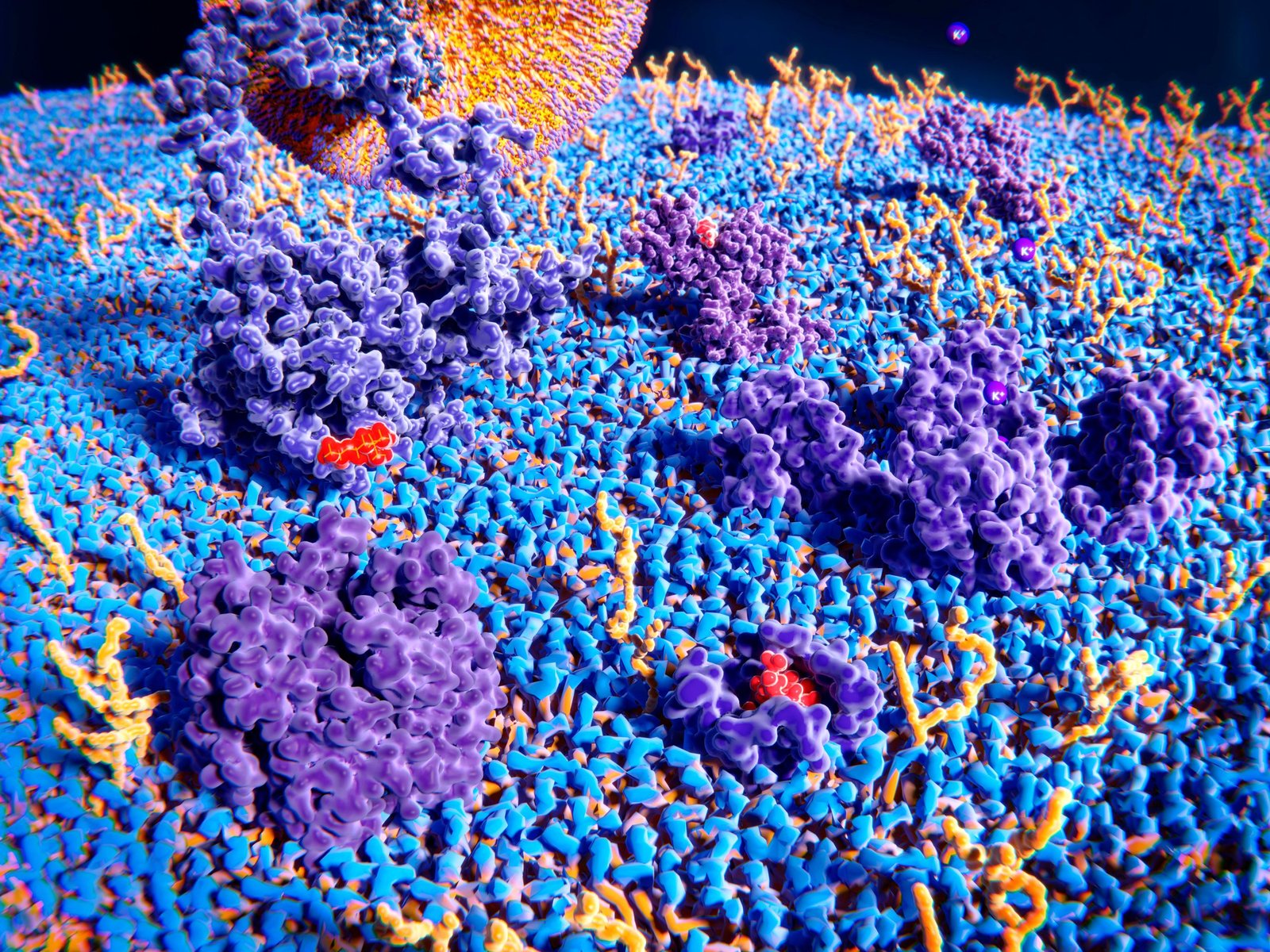
Five years ago, Nobel laureate Carolyn Bertozzi, PhD, and her team described novel small RNA-glycan conjugates, glycosylated RNAs (glycoRNAs), on the cell surface. These small non-coding RNAs have since been identified in cancer and immune cells.
Continuing research into glycoRNAs has aimed at identifying their inherent function. Now a team stemming from the Bertozzi lab, led by Ryan Flynn, MD, PhD, at the Stem Cell and Regenerative Biology Program at Boston Children’s Hospital, has described the development of glycoRNA presentation on the cell surface.
“The work here was an exploration of the simple question: what cellular pathways control glycoRNA accumulation on the cell surface?” Flynn told GEN.
Their research was published in Nature in a paper entitled, “glycoRNA complexed with heparan sulfate regulates VEGF-A signaling.”
Importance of glycoRNAs
“GlycoRNAs physically connect RNAs with secretory glycans and are positioned on the surface of mammalian cells,” Flynn told GEN. “While just recently discovered, they represent an interface of two important aspects of cell biology; namely RNA and carbohydrate polymers.”
The ability of immune cells to sense RNA is critical to speedy innate immune response, often via inflammation, to invaders in the body. Hosts have a variety of mechanisms to identify RNAs and prevent a response to self-RNA. How glycoRNAs are involved with the immune response and self-sensing is still unknown.
Flynn explained that from a conceptual point of view, glycoRNAs can have involvement in a wide range of regulatory functions by virtue of being presented on the cell surface. The process by which these RNAs are created and deployed to the cell surface is the primary focus of this study.
The team employed multiple methodologies to develop insight into the production and control of glycoRNAs including genetic screening, in vitro and in vivo models, and imaging techniques. “We collaborated with Ritu Raman’s lab at MIT to establish the effects of glycoRNA removal on vascular formation in 3D models, Eliezer Calo’s lab at MIT to characterize the glycoRNA-VEGF-A effects in zebrafish and Timothy Hla’s lab here at Boston Children’s Hospital to extend this to the murine retinal vasculature,” said Flynn.
Flynn summarized the results of these collaborations and experiments simply: “glycoRNAs on the cell surface bind and repress the pro-angiogenesis factor vascular endothelial growth factor A (VEGF-A).”
However, this finding was all but simple. Flynn described a process of deduction beginning with genetic screenings implicating HS as a regulator of the glycoRNAs, which led them to surmise that HS might in turn also depend on glycoRNAs. “We used genetic screens and multi-color confocal imaging to discover and establish the spatial effects of heparan sulfate (HS) on glycoRNAs,” Flynn shared.
They also identified glycoRNA-dependent activity of VEGF-A, but Flynn noted that he was “initially surprised that the heparan binding domain of VEGF-A was responsible for glycoRNA binding.” This surprise didn’t last long, and he pointed out that this connection may lead to a better understanding of the biological history of this system.
“After some thought, this observation actually opened up a larger concept that perhaps the biochemical and evolutionary strategy to bind HS is similar to that of RNA, allowing VEGF-A and other factors to pursue multiple types of client polyanions (of which RNA and HS both are),” he said.
In the end, this work is fundamental in adding to the broader understanding of cellular biology and inter-cellular interactions.
“Understanding the organization of HS-binding proteins, glycoRNAs, and cell surface RNA binding proteins could enable better modeling of developmental and homeostatic processes in complex cellular environments,” Flynn concluded.
The post Function of Cell Surface glycoRNAs Identified appeared first on GEN – Genetic Engineering and Biotechnology News.