Li, Y. et al. Biodegradable magnesium combined with distraction osteogenesis synergistically stimulates bone tissue regeneration via CGRP-FAK-VEGF signaling axis. Biomaterials 275, 120984. https://doi.org/10.1016/j.biomaterials.2021.120984 (2021).
Karipidou, N. et al. A critical review of commercial Collagen-Based scaffolds in bone regeneration: functional properties and clinical evidence from Infuse® bone graft. J. Funct. Biomaterials. 16, 313 (2025).
Kulikauskas, M. R., Bautch, V. L. & X, S. & The versatility and paradox of BMP signaling in endothelial cell behaviors and blood vessel function. Cell. Mol. Life Sci. 79, 77. https://doi.org/10.1007/s00018-021-04033-z (2022).
Bhatti, F. U. R. et al. The effects of high fat diet, bone healing, and BMP-2 treatment on endothelial cell growth and function. Bone 146, 115883. https://doi.org/10.1016/j.bone.2021.115883 (2021).
Vantucci, C. E. et al. BMP-2 delivery strategy modulates local bone regeneration and systemic immune responses to complex extremity trauma. Biomaterials Sci. 9, 1668–1682. https://doi.org/10.1039/d0bm01728k (2021).
Mumcuoglu, D. et al. Injectable BMP-2 delivery system based on collagen-derived microspheres and alginate induced bone formation in a time- and dose-dependent manner. Eur. Cell. Mater. 35, 242–254. https://doi.org/10.22203/eCM.v035a17 (2018).
Wang, H. et al. Phenylboronic acid modified polyethyleneimine alginate Chitosan dynamic hydrogels combination with adipose derived stem cells for controlled delivery of BMP2 to promote bone regeneration and modulating macrophage and angiogenesis. International J. Biol. Macromolecules, 329, 147767 (2025).
Han, S. et al. Programmed BMP-2 release from biphasic calcium phosphates for optimal bone regeneration. Biomaterials 272, 120785 (2021).
Seims, K. B., Hunt, N. K. & Chow, L. W. Strategies to control or mimic growth factor activity for Bone, Cartilage, and osteochondral tissue engineering. Bioconjug. Chem. 32, 861–878. https://doi.org/10.1021/acs.bioconjchem.1c00090 (2021).
Miguez, P. A. et al. Mitigation of BMP-induced inflammation in craniofacial bone regeneration and improvement of bone parameters by dietary hesperidin. Sci. Rep. 14, 2602. https://doi.org/10.1038/s41598-024-52566-7 (2024).
Dong, R. et al. Incorporating hydrogel (with low polymeric Content) into 3D-Printed PLGA scaffolds for local and sustained release of BMP2 in repairing large segmental bone defects. Adv. Healthc. Mater. 14, 2403613 (2025).
Zhuang, W. et al. A 3D-printed bioactive Polycaprolactone scaffold assembled with core/shell microspheres as a sustained BMP2-releasing system for bone repair. Biomaterials Adv. 133, 112619. https://doi.org/10.1016/j.msec.2021.112619 (2022).
Filipović, L., Kojadinović, M. & Popović, M. Exosomes and exosome-mimetics as targeted drug carriers: where we stand and what the future holds? J. Drug Deliv. Sci. Technol. 68, 103057 (2022).
Sun, Y. et al. Mesenchymal stem cells-derived exosomes for drug delivery. Stem Cell Res. Ther. 12, 561. https://doi.org/10.1186/s13287-021-02629-7 (2021).
Yang, L. et al. Stem cell recruitment polypeptide hydrogel microcarriers with exosome delivery for osteoarthritis treatment. J. Nanobiotechnol. 22 https://doi.org/10.1186/s12951-024-02765-1 (2024).
Liang, Y. et al. Engineering exosomes for targeted drug delivery. Theranostics 11, 3183–3195. https://doi.org/10.7150/thno.52570 (2021).
Cecchin, R. et al. Extracellular vesicles: the next generation in gene therapy delivery. Mol. Therapy: J. Am. Soc. Gene Therapy. 31, 1225–1230. https://doi.org/10.1016/j.ymthe.2023.01.021 (2023).
Wang, P. et al. Collagen binding properties separates two functionally distinct subpopulations of milk extracellular vesicles regarding bone regenerative capacity. Materials Today Bio, 33, 102115 (2025).
Zeng, M. et al. Emerging trends in the application of extracellular vesicles as novel oral delivery vehicles for therapeutics in inflammatory diseases. International J. Nanomedicine, 19, 8573–8601 (2024).
Xi, Y. et al. Injectable thymosin β4-Modified hyaluronic acid hydrogel with exosomes for stem cell homing and Neuronic–Angiogenic–Osteogenic coupled cranial repair. ACS Nano. 19, 22710–22724. https://doi.org/10.1021/acsnano.4c10386 (2025).
Chen, L. et al. Multifunctional hydrogel enhances bone regeneration through sustained release of stromal Cell-Derived Factor-1α and exosomes. Bioactive Mater. 25, 460–471. https://doi.org/10.1016/j.bioactmat.2022.07.030 (2023).
Bahar, D. et al. Repair of rat calvarial bone defect by using exosomes of umbilical Cord–Derived mesenchymal stromal cells embedded in Chitosan/Hydroxyapatite scaffolds. International J. Oral & Maxillofacial Implants 37, 943-950 (2022).
He, Y. et al. BMP2 enhance the osteogenic effect of BMSCs-derived exosomes in skull defect of diabetic rats. Mater. Design. 248, 113517 (2024).
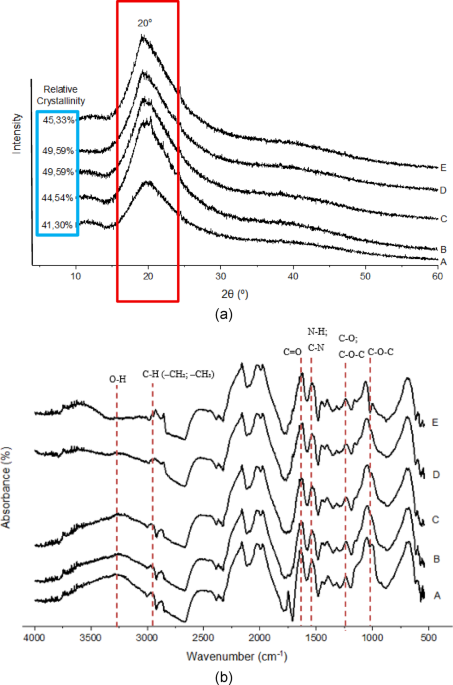
Fletes-Vargas, G. et al. Porous Chitosan hydrogels produced by physical crosslinking: physicochemical, structural, and cytotoxic properties. Polymers 15, 2203 (2023).
Zhai, Y. et al. Spatiotemporal blood vessel specification at the osteogenesis and angiogenesis interface of biomimetic nanofiber-enabled bone tissue engineering. Biomaterials 276, 121041 (2021).
Wang, P. et al. Internal and external co-induction pineal 3D printed scaffolds for bone and blood vessel regeneration. Mater. Today Adv. 21, 100456. https://doi.org/10.1016/j.mtadv.2023.100456 (2024).
Zheng, H. et al. Mechanisms and structure-activity relationships of natural polysaccharides as potential anti-osteoporosis agents: A review. Int. J. Biol. Macromol. 298, 139852. https://doi.org/10.1016/j.ijbiomac.2025.139852 (2025).
Xu, J. et al. Targeting type H vessels in bone-related diseases. J. Cell. Mol. Med. 28, e18123. https://doi.org/10.1111/jcmm.18123 (2024).
Qi, J., Wu, H. & Liu, G. Novel strategies for Spatiotemporal and controlled BMP-2 delivery in bone tissue engineering. Cell Transplant. 33, 09636897241276733. https://doi.org/10.1177/09636897241276733 (2024).
Song, Y. et al. Optimizing therapeutic outcomes: preconditioning strategies for MSC-derived extracellular vesicles. Front. Pharmacol. 16, 1509418 (2025).
Wu, Z. et al. Regulation of bone homeostasis: signaling pathways and therapeutic targets. MedComm 5, e657 (2024).
Liu, X. et al. Porous collagen sponge loaded with large efficacy-potentiated exosome-mimicking nanovesicles for diabetic skin wound healing. ACS Biomaterials Sci. Eng. 10, 975–986. https://doi.org/10.1021/acsbiomaterials.3c01282 (2024).
Zhang, L. et al. NSCs migration promoted and drug delivered exosomes-collagen scaffold via a bio‐specific peptide for one‐step spinal cord injury repair. Adv. Healthc. Mater. 10, 2001896. https://doi.org/10.1002/adhm.202001896 (2021).
Liu, X. et al. Exosome-loaded hydrogels for craniofacial bone tissue regeneration. Biomed. Mater. 19, 052002. https://doi.org/10.1088/1748-605X/ad525c (2024).
Mei, H. et al. Enhanced PDGFR/Wnt/β-catenin activity of mesenchymal stem cells with high migration ability rescue bone loss of osteoporosis. Cell. Signal. 97, 110394. https://doi.org/10.1016/j.cellsig.2022.110394 (2022).
Zhu, L. et al. Application of BMP in bone tissue engineering. Front. Bioeng. Biotechnol. 10, 810880. https://doi.org/10.3389/fbioe.2022.810880 (2022).
Peng, Y. et al. Type H blood vessels in bone modeling and remodeling. Theranostics 10, 426. https://doi.org/10.7150/thno.34126 (2020).
Gao, X. et al. An electrostatic encapsulation strategy to motivate 3D-printed polyelectrolyte scaffolds for repair of osteoporotic bone defects. Bioactive Mater. 46, 1–20. https://doi.org/10.1016/j.bioactmat.2024.12.007 (2025).
Yao, H. et al. Controlled release of bone morphogenetic Protein-2 augments the coupling of angiogenesis and osteogenesis for accelerating mandibular defect repair. Pharmaceutics 14, 2397. https://doi.org/10.3390/pharmaceutics14112397 (2022).
Wang, J. et al. Surface components and biological interactions of extracellular vesicles. ACS Nano. 19, 8433–8461 (2025).
Xu, C. et al. Hydrogel-integrated exosome mimetics derived from osteogenically induced mesenchymal stem cells in spheroid culture enhance bone regeneration. Biomaterials 317, 123088. https://doi.org/10.1016/j.biomaterials.2025.123088 (2025).
Li, F. et al. Engineering stem cells to produce exosomes with enhanced bone regeneration effects: an alternative strategy for gene therapy. J. Nanobiotechnol. 20, 135. https://doi.org/10.1186/s12951-022-01347-3 (2022).
Siddiqui, I. F. S., Muthu, M. L. & Reinhardt, D. P. Isolation and adipogenic differentiation of murine mesenchymal stem cells harvested from macrophage-depleted bone marrow and adipose tissue. Adipocyte 13, 2350751 (2024).
Zhang, M. H. et al. Noggin Combined With Human Dental Pulp Stem Cells to Promote Skeletal Muscle Regeneration. Stem cells international 2812390 (2024). (2024).
Xu, J. et al. Targeting type H vessels in bone-related diseases. J. Cell. Mol. Med. 28, e18123 (2024).
Chen, Y. et al. Protocol for isolating and characterizing extracellular vesicles by ultracentrifugation from bone marrow-derived macrophages. STAR. Protocols. 6, 104098 (2025).
Chahsetareh, H. et al. Alginate hydrogel-PCL/gelatin nanofibers composite scaffold containing mesenchymal stem cells-derived exosomes sustain release for regeneration of tympanic membrane perforation. Int. J. Biol. Macromol. 262, 130141. https://doi.org/10.1016/j.ijbiomac.2024.130141 (2024).
Kong, B. et al. Structural color medical patch with surface Dual-Properties of wet bioadhesion and Slipperiness. Advanced science (Weinheim. Baden-Wurttemberg Germany). 9, e2203096. https://doi.org/10.1002/advs.202203096 (2022).
Zhu, W. et al. Injectable and assembled calcium Sulfate/Magnesium silicate 3D scaffold promotes bone repair by in situ osteoinduction. Bioengineering 12, 599 (2025).
Liu, C. et al. ZFP36 regulates the osteogenic differentiation of adipose-derived mesenchymal stem cells in osteoporosis by mediating KLF3 mRNA degradation. Sci. Rep. 15, 14386. https://doi.org/10.1038/s41598-025-98738-x (2025).
Ceylan, S. et al. Molecular Weight-Dependent Boron release effect in PVA/Chitosan cryogels and in vitro mineralization evaluations by osteoblast cells. Biopolymers 116, e23654 (2025).