Introduction
Rapid expansion of urbanization, industrialization and population increase have led to generation of huge amounts of wastes over the whole world1,2. Managing these wastes is one of the most serious environmental problems confronting urban areas in developing countries3. Vermicomposting technology is globally becoming a popular organic waste management technique4. Vermicomposting is the bioconversion of organic waste into a bio-fertilizer due to earthworm activity5. Vermicomposting technology is a fast growing one with its pollution free, cost effective and efficient nature6.It defines the exciting potential for waste diminution, fertilizer production, as well as an assortment of possible uses for the future7.
According to Kuznetsov, et al.8 the vermicomposting process is a massive process and operating conditions such as temperatures, pH, electrical conductivity and moisture content levels must be optimized. Normally, the vermicomposting process takes place in vermi-reactors which include plastic, earthed pots and wood worm bins. In the vermicompost method microorganisms begin the process, but it is the red worm that plays the largest role in converting organic matter (OM) subjected to preliminary decomposition processes (e.g. hydrolysis or fermentation)9. When the organic material passes through the gut of the earth worm it again increases the surface area of the material so that the microorganisms can break it down further10.
According to11 during vermicomposting earthworms act as mechanical blenders by transforming the OM, they modify its biological, physical and chemical status, gradually reducing its C:N ratio, increasing the surface area exposed to microorganisms and making it much more favourable for microbial activity and further decomposition. Traditionally, vermicompost has been generated with animal manure as the substrate and has been recognized as a good soil conditioner and fertilizer12; while in recent years, other organic substrates or biodegradable wastes materials like human and animal waste, plant product, wood, paper, food waste, leave grass, chicken waste like vegetable and fruit wastes have also been vermicomposted and the products have been found to be as good as the manure based vermicompost13,14.
According to Hettiarachchi, et al.15, municipal solid waste in many developing countries is particularly suitable for reduction through composting, as it contains a much higher proportion of organic material compared to that in industrialized nations. The huge amounts of biodegradable organic wastes that generate every day in urban and agriculture areas creating disposal problems on the environmental, gas emissions, public health, economic and social levels especially in developing countries16. These huge amounts of organic wastes could be a renewable source for agriculture sectors and the wastes can be converted into valuable compost by applying vermicomposting technology. The approach reduces pollution and provides a valuable substitute for chemical fertilizers17. Since the conventional approaches to organic waste management are capital intensive and costly there is a need for somewhat more low technology approach to reduction of organic waste and biodegradable waste material is the sustainable source for organic manure production for improving the livelihood of any farming community18.
Similar to many developing countries, Ethiopia faces rapid population growth in conjunction with natural growth, as well as high rates of rural-to-urban and urban-to-urban migration, which pose numerous environmental problems in general, and solid waste management (both organic and inorganic) in particular19. Inadequate organic solid waste management has resulted in the accumulation of waste on open land, in drainage systems, on roads, and in residential areas18. Uncollected and poorly managed organic solid waste poses serious health and environmental hazards to residents, especially the urban poor who live near informal and often illegal waste dumps20. Waste disposal has become a major public health issue and a critical factor affecting environmental quality, and in Ethiopian cities it has emerged as one of the most intractable environmental challenges today. The main problem facing the cities is the open and random dumping of refuse.
The rapid growth of urban populations and economic activities has led to the accumulation of biodegradable waste, characterized by high organic content. However, the municipality of Dambi Dollo town has not allocated a budget for the collection, transportation, and disposal of this waste, resulting in its uncontrolled dumping at open disposal sites. The open dumping and burning of waste pose serious health and environmental risks to the residents of the town. Vermitechnology, however, remains relatively unknown in many parts of the country. It is therefore timely for Ethiopian cities, particularly Dambi Dollo, to consider adopting biological waste treatment systems such as vermitechnology, which utilize appropriate biological organisms for waste management. Vermicomposting offers an efficient and eco-friendly method to convert biodegradable waste into high-quality manure within a relatively short period, using earthworm species21. Unlike conventional composting, vermicomposting minimizes nutrient losses and preserves beneficial microorganisms, as the process occurs under mesophilic rather than thermophilic conditions22.
Despite the growing global adoption of vermicomposting as a sustainable waste management strategy, substantial knowledge gaps remain concerning its efficiency, optimization, and applicability in tropical African environments specially Ethiopia, where waste composition, climatic conditions, and resource constraints differ markedly from temperate regions that dominate current research. Existing studies have predominantly focused on animal manure or single-source organic substrates14,61,67, offering limited understanding of the potential for locally available agro-industrial and municipal wastes such as coffee husk, paper waste, and vegetable residues to be effectively recycled through vermicomposting. Furthermore, the influence of integrating heterogeneous substrates with cow dung on decomposition dynamics and nutrient stabilization under tropical conditions is still poorly understood. The present study addresses these gaps by providing empirical evidence on the bioconversion performance of Eisenia fetida using regionally sourced biodegradable wastes in western Ethiopia. Therefore, this research lies in its context-specific application of vermitechnology to transform diverse organic residues into nutrient-enriched bio-fertilizers that comply with international standards, thereby contributing to global efforts toward sustainable waste valorization, circular bio-economy development, and climate-resilient agricultural systems.
Several epigeic earthworm species, including Eisenia fetida, Eudrilus eugeniae, and Perionyx excavatus, have been identified as potential candidates for decomposing organic waste materials23. Among them, the red worm Eisenia fetida is widely regarded as the most efficient species for converting organic matter into compost, owing to its intensive feeding, rapid breeding, long life cycle, high fertility, and strong tolerance to varying environmental conditions24. Despite its potential, vermitechnology remains poorly known in many parts of Ethiopia. Hence, it is an opportune time for Ethiopian cities particularly Dambi Dollo to adopt biological waste treatment systems such as vermitechnology, which utilize suitable biological organisms for effective waste management.
The main objective of this study was to evaluate the conversion of biodegradable waste into compost through the vermicomposting of coffee husks, paper waste, and vegetable waste, using Eisenia fetida. Cow dung was incorporated as an additional organic substrate to stabilize nutrient requirements and accelerate decomposition. Specifically, the study aimed to assess the physico-chemical properties of biodegradable wastes after vermicomposting and to compare the quality of the resulting vermicompost against established standards.
Material and methods
Description of study area
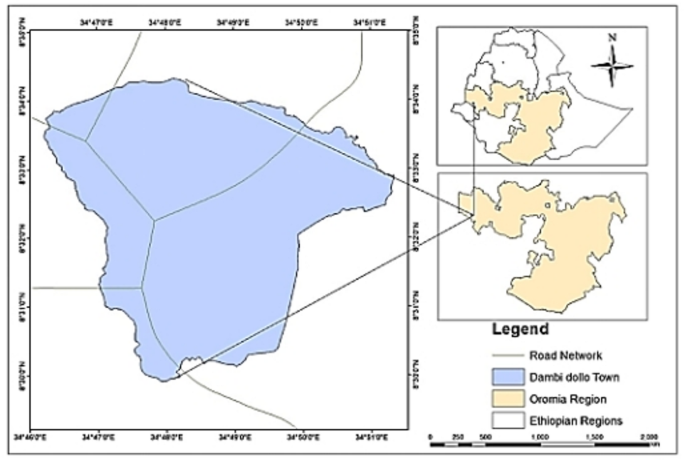
The study was conducted at Dambi Dollo University, a fourth-generation public higher education institution located in Dambi Dollo City, the administrative center of the Kellem Wollega Zone in the Oromia Regional State of Ethiopia (Fig. 1). The university served as a major academic and socio-economic hub for the surrounding communities. Dambi Dollo was situated in the western part of Ethiopia, approximately 654 km west of Addis Ababa, the capital of both the country and the region. The town was bordered by Yangi and Aano Mikael to the north, Tabor to the northwest, Ifa Galano to the east, Karro Baha to the south, Walgayi and Kure Gayibi to the southeast, and Shakkoo and Shogo to the west. Geographically, the study area lay between 8° 30′ 0″ N and 8° 35′ 0″ N latitude and 34° 47′ 0″ E–34° 51′ 0″ E longitude, with an average elevation of 1,750 m above sea level (m a.s.l.). This location and altitude endowed the town with distinctive climatic and ecological characteristics, making it significant for both socio-economic and academic studies.

Map of study area.
Research design
The experiment was conducted at the Dambi Dollo University Research Center, Ethiopia, to evaluate the vermicomposting potential of locally available organic waste materials. A Randomized Block Design (RBD) was adopted to minimize experimental error and to account for environmental variability. Three treatments were established, each with three replications (n = 3): T1 (CH+CD): Coffee husk combined with cow dung (3:1 ratio); T2 (PW+CD): Paper waste combined with cow dung (3:1 ratio) and T₃ (VWo): Vegetable waste without cow dung.
Samples were collected at three fixed intervals Day 0, Day 30, and Day 60 to monitor temporal variations in substrate quality and decomposition dynamics. This design facilitated the assessment of nutrient transformation, organic matter degradation, and biological activity over time. Randomization of experimental units was applied to minimize potential positional and environmental biases such as variation in light, temperature, and humidity within the experimental area.
Procurement of substrates and earthworms
Biodegradable wastes were collected from diverse sources within Dambi Dollo town to ensure representative sampling: Coffee husk from a local dry coffee processing plant, Paper waste from administrative offices of Dambi Dollo University, Vegetable waste from the municipal open market, and Cow dung from nearby livestock-owning households. The collected wastes were manually sorted to remove non-biodegradable contaminants, shredded, and air-dried for 3–5 days to attain a uniform texture. The materials were then sieved (2 mm mesh) to ensure homogeneity prior to mixing. Epigeic earthworms (Eisenia fetida) were obtained from the Asossa Agricultural Research Institute (AARI), Benishangul-Gumuz Regional State. Mature, clitellated individuals (0.3–0.5 g) were selected and acclimatized for 48 hours in pre-conditioned cow dung prior to introduction into the experimental units.
Experimental setup
Pre-decomposition phase
A 10-day pre-decomposition phase was conducted to reduce volatile gases and heat accumulation that could harm the worms. Each substrate mixture was placed in plastic containers (40 cm × 30 cm × 20 cm) perforated with 5–6 holes (0.5 cm diameter) for aeration and leachate drainage. Substrates were moistened daily to maintain approximately 60–70% moisture content and manually turned to enhance microbial activity. The pre-decomposition process was performed under shade at ambient temperatures ranging from 25 to 28 °C, providing suitable conditions for microbial stabilization.
Vermicomposting phase
Following pre-decomposition, thirty (30) mature, clitellated Eisenia fetida were introduced into each treatment container. The experiment was maintained for 60 days under semi-controlled outdoor conditions. Containers were covered with fine mesh to prevent predation by ants, birds, and rodents while maintaining adequate aeration. Moisture content was sustained at 60–70% through periodic sprinkling of distilled water, and temperature was monitored daily to remain within the range of 22–28°C. Throughout the vermicomposting process, samples were collected at Day 0, Day 30, and Day 60 from each replicate to evaluate physicochemical and biological transformations. The following parameters were monitored: Physico-chemical: pH, electrical conductivity (EC), organic carbon (OC), total nitrogen (TN), C: N ratio, available phosphorus (P), exchangeable potassium (K), organic matter (OM), and ash content. Biological: earthworm biomass, cocoon production, and survival rate however this section was not presented in this part.
Data analysis
Analytical procedure
Chemical analyses were conducted in the soil laboratory at Jimma University College of Agriculture and Veterinary Medicine following standard procedures. The pH of the samples (pH-H2O) was determined using a pH meter, where pH represents the negative logarithm of hydrogen ion concentration25. Electrical conductivity (EC, expressed in mS/cm) was measured with a conductivity meter26. Total organic carbon (%) was analyzed using the Walkley–Black method27, while total nitrogen (%) was determined by the Kjeldahl method28, and the C:N ratio was subsequently calculated. Available phosphorus was measured following the Olsen method29. Exchangeable potassium content was determined by flame photometry, with samples extracted using Morgan’s solution30. Ash content was determined by placing dried samples in a furnace at 550 °C for 5 h, cooling them, and dissolving the residue in 10 mL of 6N HCl for further analysis31.
Statistical analysis
All statistical analyses were performed using SAS software (Version 9.4; SAS Institute Inc., Cary, NC, USA; https://bit.ly/3O2yQpD) and Microsoft Excel for data organization and graphical presentation. Treatments were considered as independent variables, and data were analyzed using one-way analysis of variance (ANOVA) at a significance level of p < 0.05. Mean separations were carried out using Tukey’s HSD test where applicable. The results were presented in tables and descriptive graphs and compared with relevant quality standards established by the World Health Organization (WHO) and the Institute of Standards and Industrial Research of Iran (ISIRI)32.
Methodological justification
The use of a randomized block design with replicated treatments ensured statistical robustness and minimized environmental variability. The integration of both organic and mixed substrates allowed comparative assessment of decomposition dynamics under realistic waste management conditions in Ethiopia. The inclusion of multiple sampling intervals provided temporal resolution of nutrient and biomass changes, thereby enhancing the scientific rigor and ecological relevance of the experiment.
Results and discussion
Characterization of physicochemical properties of wastes
Characterization of waste materials before the vermicomposting process is critically important in understanding the properties of each substrate at the original level and helps to demonstrate their difference due to vermicomposting.
The initial physicochemical properties of the three substrates showed considerable variation (Table 1). Coffee husk with cow dung (CH+CD) and paper waste with cow dung (PW+CD) exhibited alkaline pH values of 8.94 and 8.50, respectively, whereas vegetable waste without cow dung (VWo) was acidic (pH 5.09). Electrical conductivity (EC) was highest in PW+CD (2.71 mS/cm) and lowest in VWo (1.09 mS/cm). Organic matter (OM) and organic carbon (OC) contents were greatest in PW+CD (53.79% and 31.20%, respectively), while VWo recorded the lowest values (42.02% OM and 24.39% OC). Total nitrogen (TN) was highest in VWo (1.82%) and lowest in PW+CD (1.01%), resulting in a comparatively wide C:N ratio in PW+CD (30.80) versus narrower ratios in CH+CD (20.78) and VWo (13.39). Available phosphorus (AP) was highest in CH+CD (13.53 ppm), followed by VWo (10.55 ppm) and PW+CD (9.76 ppm). Exchangeable potassium (AK) was greatest in CH+CD (2.72 mg/kg) and least in VWo (1.94 mg/kg). Ash content remained relatively similar across treatments, ranging from 14.18% in PW+CD to 14.43% in Vegetable waste.
Effects of vermicompost physicochemical parameters
The effects of earthworms on the physicochemical properties of waste materials during the vermicomposting process at different time intervals are presented in Table 2. The table summarizes the changes in parameters such as organic matter (OM), organic carbon (OC), total nitrogen (TN), C:N ratio, available phosphorus (AP), exchangeable potassium (EK), and ash content, measured at 0, 30, and 60 days, along with their significance levels at p < 0.05. During vermicomposting, noticeable changes were observed due to earthworm activity. The mean pH decreased progressively from 7.51 at day 0 to 7.24 at day 30, and further to 7.03 at day 60, indicating a consistent downward trend. Electrical conductivity (EC) fluctuated over time, declining from 1.91 mS/cm at day 0 to 1.24 mS/cm at day 60; however, this change was not statistically significant (p < 0.05). Overall, both pH and EC exhibited decreasing trends during the vermicomposting process, although the variations were not significant.
During the vermicomposting process, substantial changes were observed in the physicochemical properties of the substrates. Organic matter (OM) and organic carbon (OC) exhibited significant reductions over time. OM declined from an initial value of 47.06% to 22.29% after 60 days, while OC decreased from 21.39 to 8.63%. Similarly, the progressive reductions in OM (47.0%, 39.0%, and 29.2%) and OC (27.3%, 22.65%, and 16.9%) across the time intervals were statistically significant (p < 0.05). These declines reflect the enhanced mineralization of organic substrates by earthworm activity. Consequently, the C: N ratio also showed a consistent reduction, falling by 59.36% from its initial value.
In contrast, nutrient-related parameters demonstrated significant increments. Total nitrogen increased from 1.38% at the start to 2.20% at the end of the experiment, representing a 59% rise. Available phosphorus rose markedly from 11.17 to 20.85 ppm (an 86.6% increase), while exchangeable potassium nearly doubled from 2.26 to 4.43 mg/kg (95.8% increase). Ash content also increased dramatically, rising more than threefold from 14.29 to 47.62%. These results confirm that vermicomposting enhances nutrient enrichment through mineralization and concentration effects.
Among the treatments, paper waste combined with cow dung (PW+CD) exhibited the highest organic matter (47.1%) and organic carbon content, while coffee husk and vegetable waste contained comparatively lower OM values (35.85% and 32.2%, respectively). The highest total nitrogen was observed in vegetable waste, whereas the highest C:N ratio occurred in paper waste with cow dung. Coffee husk was characterized by elevated available phosphorus (20.4 ppm) and exchangeable potassium (4.09 g/kg), though it contained the least ash. Analysis of variance (ANOVA) indicated highly significant differences in OM and OC among treatments (p < 0.05).
Dynamics of physicochemical properties after vermicomposting
The physicochemical properties of vermicompost after 60 days are summarized in Table 3. PH remained near neutral in CH + CD (8.00) and PW + CD (7.80), while VW was comparatively acidic (5.96). Electrical conductivity showed no significant variation among treatments (1.50–1.85 mS/cm). Organic matter and organic carbon were highest in PW + CD (47.16% and 27.35%), followed by CH + CD (35.85% and 20.80%) and VW (32.30% and 18.73%). Total nitrogen content was greatest in VW (2.13%), moderate in CH + CD (1.90%), and lowest in PW + CD (1.28%), resulting in C: N ratios of 9.57, 12.65, and 22.33, respectively. Available phosphorus was significantly higher in CH + CD (20.49 ppm) compared with PW + CD (13.28 ppm) and VW (15.27 ppm). Exchangeable potassium followed a similar trend, with CH + CD recording the highest value (4.09 mg/kg), while PW + CD (3.08 mg/kg) and VW (3.07 mg/kg) were lower. Ash content was markedly greater in VW (42.86%) than in PW + CD (33.33%) and CH + CD (28.57%). Collectively, these results indicate faster decomposition and nutrient mineralization in VW, balanced enrichment in CH + CD, and slower stabilization but higher organic retention in PW + CD.
Physicochemical changes during vermicomposting
Figure 2 shows notable changes in substrate properties after 60 days of vermicomposting. The pH of CH + CD and PW + CD declined toward neutrality (8.94 → 8.00 and 8.50 → 7.80), while VW rose from 5.09 to 5.96, indicating stabilization favorable for plant growth. Electrical conductivity decreased across treatments, reflecting utilization of soluble salts. Organic matter and carbon declined, especially in CH + CD and VW, whereas PW + CD retained higher levels due to slower lignocellulos degradation. Total nitrogen increased in all treatments, with the highest enrichment in VW. The C: N ratio dropped markedly, confirming stabilization, though PW + CD remained relatively high, suggesting incomplete maturity. Available phosphorus, exchangeable potassium, and ash all increased, with CH + CD and VW showing the greatest gains. Overall, vermicomposting enhanced nutrient availability, reduced the C:N ratio, and promoted stabilization, with VW decomposing fastest, CH + CD showing balanced enrichment, and PW + CD decomposing more slowly.

Comparison of physicochemical properties before and after vermicomposting.
Evaluation of vermicomposting based on WHO and ISIRI standards
Vermicompost produced from coffee husk with cow dung, paper waste with cow dung, and vegetable waste showed a mean organic matter content of 38.44%, slightly below WHO standards but above ISIRI Grade 1 and 2 thresholds (Table 4). Total carbon averaged 22.29%, exceeding both standards, while total nitrogen was 1.78%, marginally below WHO requirements but above ISIRI limits. The resulting C:N ratio was 14.67, indicating sufficient stabilization. Available phosphorus reached 16.65 ppm, representing a significant increase compared with both standards. Electrical conductivity decreased by 2.49 mS/m relative to WHO values but exceeded ISIRI ranges, while pH values remained within acceptable limits. Ash content remained below WHO benchmarks. Overall, the measured parameters indicate effective nutrient concentration and compost maturity.
The study demonstrated that Eisenia fetida effectively transformed coffee husk, paper waste, and vegetable residues into nutrient-rich vermicompost over the experimental period. Significant improvements were observed in key physico-chemical parameters, including pH, electrical conductivity, organic matter, organic carbon, total nitrogen, available phosphorus, and exchangeable potassium, reflecting nutrient enrichment and compost stabilization. Treatments combining cow dung with coffee husk or paper waste accelerated decomposition compared to vegetable residues alone. Overall, the final vermicompost met WHO and ISIRI quality standards, confirming that vermicomposting provides an efficient, sustainable, and locally adaptable method for converting organic wastes into high-quality fertilizers, with important implications for circular economy and agricultural productivity in tropical regions.
Discussion
Effects of vermicompost on physicochemical properties
PH
Vermicomposting resulted in a significant decline in pH in paper waste and coffee husk, whereas vegetable wastes exhibited a slight increase. Mean pH values in vegetable wastes differed significantly from those of paper waste and coffee husk, though all treatments remained within the optimal range for vermicomposting (6.0–7.5)33. The observed shift from alkaline to acidic conditions is largely attributed to fungal and mesophilic activity, along with the formation of organic acids34. Similar trends have been reported in fruit- and vegetable-based vermicomposting systems35, where microbial metabolism produces CO2 and organic acids, thereby lowering pH36,37. Additional factors contributing to acidity include nitrogen and phosphorus mineralization into nitrites, nitrates, and orthophosphates, as well as the bioconversion of organics into intermediate acids38. Conversely, some studies noted increased pH due to ammonia release and cation discharge during organic matter mineralization2. Neutral pH is particularly beneficial for decomposition efficiency, partly due to NH₄⁺ secretion reducing available H⁺ ions. These findings align with previous studies indicating that earthworms accelerate substrate stabilization and enhance nutrient bioavailability39.
Electric conductivity (EC)
Electrical conductivity (EC) generally declined during vermicomposting, indicating reduced salinity, which is a desirable property for crop growth. Mean EC values decreased from 1.91 mS/cm at day 0 to 1.38 mS/cm at day 30 and 1.24 mS/cm at day 60. Among treatments, EC values were 1.50 mS/cm in vegetable wastes, 1.85 mS/cm in paper wastes, and 1.54 mS/cm in coffee husk. The low value of Electrical conductivity shows the greater the decomposition rate. A decrease in the electrical conductivity values in vermicomposting may be due to the presence of exchangeable Ca, Mg, and K40. From the Tables 1 and 2, the vermin casts have been reported with a higher Base Exchange Capacity and are rich in total organic matter, phosphorus and potassium with a reduced electrical conductivity41. In opposite of this, Medvedev, et al.42 reported increments in EC during the process. The increase in EC in the vermicompost could be due to the loss of weight of organic matter and the release of different mineral salts in available forms37.
Organic matter
The organic matter (OM) content of the substrates showed a marked decline during vermicomposting, decreasing from 46.06% at day 0 to 39.06% at day 30 and 29.21% at day 60, representing a 40.46% reduction from the initial value. Substrate-specific reductions were also observed: coffee husk + cow dung declined by 69%, paper waste + cow dung by 65% and vegetable waste by 71%. The reduction in OM is attributed to microbial activity and earthworm metabolism, which convert degradable carbon into CO2 and stabilize the organic fraction43,44. The resulting vermicompost was darker, odorless, and homogenous, reflecting improved stabilization. These findings align with earlier reports that OM loss depends on substrate type and progresses with composting time45. Therefore, the reduction in organic matter not only decreases the environmental pollution load but also improves the nutrient composition of the vermicompost, thereby enhancing its value as a bio fertilizer for sustainable agriculture.
Organic carbon (OC)
Organic carbon showed a significant reduction from its initial value, exhibiting a consistent declining trend as decomposition progressed. Vermicompost treated with Eisenia fetida differed significantly from their respective original substrates (p < 0.05). The reduction was particularly pronounced in vegetable wastes and coffee husk supplemented with cow dung, compared to paper wastes. Similar findings were reported by Abd El-Satar46 who noted that mineralization of organic matter in sludge by red worm’s results in a considerable decrease in total organic carbon content. The reduction of organic carbon in vermicomposting is largely due to mineralization of organic matter by microorganisms and earthworms. Earthworms enhance substrate aeration and surface area through fragmentation, while their secretions stimulate microbial growth, together accelerating respiration and carbon loss47,48.
Total nitrogen (TN)
Compared to the initial levels, total nitrogen (TN) increased significantly in all vermireactors treated with Eisenia fetida (Table 2). This increasing trend is consistent with earlier studies which reported elevated nitrogen content in vermicompost49,50. The enhancement of nitrogen is mainly attributed to the mineralization of protein-rich organic matter51, microbial oxidation of ammonium to nitrate51 and the contribution of nitrogenous excretory products, mucus, enzymes, and decaying worm tissues during the vermicomposting process52. Earthworm activity therefore plays a pivotal role in enriching the nitrogen pool of the final product.
However, some studies have reported declines in nitrogen content due to volatilization of ammonia during composting53. Such discrepancies across experiments are often linked to variations in substrate quality, physical structure, and chemical composition, which influence the mineralization of nitrogenous compounds and the extent of nitrogen retention54.The present study found the highest nitrogen enrichment in treatments with Esinia fetida, suggesting that this species has a greater efficiency and adaptability in nutrient mineralization under the given conditions. Similar findings have been reported for vermicompost derived from diverse feed substrates confirming the important role of earthworm microbe interactions in enhancing nutrient availability55,56.
Available phosphorous (AP)
Vermicomposting of all three waste types with Eisenia fetida resulted in significantly higher levels of available phosphorus compared to both the initial substrates (p < 0.05). In the present study, AP increased from 11.17 at day 0 to 20.85 ppm after 60 days of vermicomposting, representing an 86% increment. This finding aligns with earlier studies reporting that vermicomposted vegetable wastes contain more phosphorus than their untreated counterparts57. The observed increase in AP is generally attributed to the combined activity of earthworms and phosphorus-solubilizing microorganisms present in vermicompost. Passage of organic matter through the worm gut enhances the conversion of phosphorus into plant-available forms, facilitated by phosphatase enzymes and microbial activity58.
Similar mechanisms of phosphorus enrichment have been attributed to the release of phosphatases in the worm gut as well as to the activity of P-solubilizing microbes in worm casts36. The balanced nutrient profile of vermicompost provides nutrients in readily available forms, enhancing plant uptake. According to Oyege and Balaji Bhaskar59 report the nutrient uptake of nitrogen, phosphorus, potassium, and magnesium in rice was highest when vermicompost was applied in combination with chemical fertilizer, highlighting its role as a sustainable soil amendment.
Exchangeable potassium (EK)
Exchangeable potassium (EK) increased consistently in all waste types during vermicomposting with Eisenia fetida, with statistically significant differences observed compared to initial levels (p < 0.05, Table 1). This trend aligns with previous reports indicating that total potassium can increase by 23.6–43.6% during vermicomposting with Eisenia andrei60. The gradual rise in potassium is also influenced by the quantity and type of raw organic waste used and confirms that the composting process was proceeding effectively61.
Earthworm activity enhances EK through both biological and microbial mechanisms62. The symbiotic microflora in the gut and casts, combined with secretions such as mucus and water, accelerate the degradation of ingested organic matter, releasing readily available potassium63. In the present study, coffee husk and paper waste exhibited the highest EK levels after 60 days; this reflects the direct influence of red worms on microbial populations and organic-matter mineralization dynamics64.
Some studies, however, have reported lower potassium levels in vermicompost compared to initial substrates, likely due to intensive decomposition of the raw material65. Nevertheless, potassium is generally more readily available for plant uptake than nitrogen or phosphorus because it is not tightly bound in organic matter66. Therefore, the increasing trend of EK from initial to final compost across all treatments underscores the combined role of earthworm activity, microbial mineralization, and nutrient release from parent materials during the vermicomposting process.
Ash
In the present study, ash content increased significantly during vermicomposting, in contrast to reports by Usmani, et al.67, who observed a gradual decline in dry ash content and available phosphorus after 60 days. This discrepancy may be due to differences in substrate composition, earthworm species, or experimental conditions68. Ash represents the inorganic residue remaining after organic matter decomposition and serves as a direct indicator of the mineral content of the substrates67. The substantial increase of Ash observed reflects the concentration of essential mineral nutrients including P, K, Na, Ca, Mg, Fe, Mn, Zn, and Cu as organic fractions are degraded69. These finding shows that, the ability of vermicomposting to enhance the mineral nutrient status of organic wastes, thereby increasing their agronomic value as bio fertilizers.
Quality assessment of vermicompost
The quality of vermicompost is influenced by worm species, raw materials, and composting duration. Nutrient enrichment was evident, with available phosphorus (16.65 ppm) significantly higher than both WHO and ISIRI standards, while potassium levels and other essential nutrients were also improved. Electrical conductivity decreased slightly relative to WHO guidelines but remained within acceptable ranges, and pH values fell entirely within recommended limits. Ash content was below WHO benchmarks, reflecting adequate stabilization. These findings align with previous reports that vermicompost enhances soil fertility by providing mineralizable nutrients and improving physical properties such as porosity, aeration, and water retention70,71,72. Compared to conventional composts, vermicompost generally have finer texture, higher nutrient content, and greater microbial activity. Earthworms facilitate decomposition through gut- and cast-associated processes, enhancing mineralization and nutrient availability73. The C:N ratio is widely recognized as an indicator of compost maturity, with values below 20–22 indicating adequate stabilization74. The observed increases in nitrogen, phosphorus, and potassium reflect mineralization and microbial activity during vermicomposting (Zargar, 2017). Vermicomposting also improves soil porosity, aeration, water retention, and nutrient availability59,75. The results confirm that vermicompost derived from Eisenia fetida is a nutrient-rich, mature organic fertilizer, demonstrating that vermitechnology provides a sustainable approach for managing biodegradable waste while producing high-quality soil amendments.
Overall, the findings of this study demonstrate that Eisenia fetida efficiently converted coffee husk, paper waste, and vegetable residues into stable, nutrient-rich vermicompost within 60 days. Significant improvements were observed in essential physico-chemical parameters including pH, organic matter, total nitrogen, available phosphorus, and exchangeable potassium confirming effective mineralization and humification processes. The study’s novel contribution lies in evaluating combinations of coffee husk and paper waste with cow dung, and vegetable residues without cow dung, under Ethiopian tropical conditions. This experimental design highlights the adaptability of vermicomposting for diverse local substrates and its potential to address waste management challenges in developing regions. The nutrient-enriched vermicompost produced met WHO and ISIRI standards, underscoring its agronomic value and sustainability. Temporal monitoring further revealed dynamic interactions between earthworms and microorganisms, reinforcing the biological efficiency of the process.
Accordingly, vermicomposting is a cost-effective, ecologically sound, and locally adaptable approach for converting organic waste into high-quality fertilizers, supporting circular economy goals and enhancing smallholder agriculture in Ethiopia, particularly within the communities of Dambi Dollo. The study has practical implications across multiple sectors. Smallholder and peri-urban farmers in the study area can use nutrient-rich vermicompost to improve soil fertility, increase crop yields, and reduce reliance on chemical fertilizers. Municipalities and waste management agencies can adopt vermicomposting to sustainably process biodegradable household and market wastes, alleviating landfill pressure and reducing environmental pollution. Agro-industrial enterprises, such as local coffee processing plants and food markets, can valorize organic residues into value-added fertilizers, generating revenue while promoting sustainable practices. Additionally, horticulture, landscaping, and organic farming industries can benefit from vermicompost to enhance soil structure and plant growth. Collectively, these applications highlight the cross-sectoral potential of vermicomposting for sustainable waste management, circular economy development, and climate-resilient agriculture in Ethiopia and in sub-sahan Africa.
Conclusion and recommendations
Vermicomposting technology, which utilizes earthworms as natural bioreactors, proved highly effective in transforming organic wastes such as coffee husk, paper waste, and vegetable residues into nutrient-rich vermicompost. Eisenia fetida, a species with broad environmental tolerance, successfully facilitated decomposition over the 60-day period. The process resulted in significant improvements in key physicochemical parameters, including increased organic matter, total nitrogen, available phosphorus, exchangeable potassium, and ash content, alongside reductions in pH, electrical conductivity, organic carbon, and the C:N ratio. These changes demonstrate effective nutrient enrichment and stabilization, confirming the capacity of vermicomposting to convert diverse organic wastes into high-quality biofertilizer. Eisenia fetida performed particularly well in processing coffee husk and paper waste mixed with cow dung, as well as vegetable waste alone, producing compost that can enhance soil fertility and reduce reliance on chemical fertilizers. Vermicomposting offers a practical, low-cost solution for managing the large volumes of organic waste generated by households and markets, mitigating environmental impacts, improving ecosystem carrying capacity, and supporting sustainable agricultural development. The benefits of this study extend across multiple sectors. Smallholder and peri-urban farmers can use vermicompost to improve soil health and crop productivity, while municipalities and waste management agencies can adopt vermicomposting to reduce landfill burden and environmental pollution. Agro-industrial enterprises, such as coffee processing plants and food markets, can valorize organic residues into high-quality fertilizers, creating new revenue streams and promoting sustainable practices. Additionally, horticulture, landscaping, and organic farming industries can utilize vermicompost to enhance soil structure and plant growth. A key logistical limitation identified was the need to source Eisenia fetida from distant locations, highlighting the importance of developing local vermiculture facilities. Accordingly, local governments and relevant agencies are encouraged to promote vermicomposting through community education, training programs, and establishment of local vermiculture projects. Expanding the adoption of vermitechnology can enhance waste management, reduce environmental pollution, maximize the value of organic waste as a renewable resource, and contribute to circular economy initiatives. As this study demonstrates, with proper management, “waste is not waste” but a valuable input for sustainable agriculture and climate-resilient development.
Data availability
The datasets generated and analyzed during the current study are available from the corresponding author on reasonable request.
References
-
Chen, D.M.-C., Bodirsky, B. L., Krueger, T., Mishra, A. & Popp, A. The world’s growing municipal solid waste: Trends and impacts. Environ. Res. Lett. 15, 074021 (2020).
-
Rao, D. et al. Multifaceted characteristics of biochar and its implementation in environmental management in a sustainable way. Environ. Qual. Manage. 34, e22305 (2024).
-
Ferronato, N. & Torretta, V. Waste mismanagement in developing countries: A review of global issues. Int. J. Environ. Res. Public Health 16, 1060 (2019).
-
Alshehrei, F. & Ameen, F. Vermicomposting: A management tool to mitigate solid waste. Saudi J. Biol. Sci. 28, 3284–3293 (2021).
-
Devi, C. & Khwairakpam, M. Weed biomass: Bioconversion through composting followed by vermicomposting to optimize time required. Bioresour. Technol. Rep. 21, 101326 (2023).
-
Ahmad, A. et al. Vermicomposting methods from different wastes: an environment friendly, economically viable and socially acceptable approach for crop nutrition: a review. Int. J. Food Sci. Agric. 5(3), 314–322 (2021).
-
Enebe, M. C. & Erasmus, M. Vermicomposting technology-A perspective on vermicompost production technologies, limitations and prospects. J. Environ. Manage. 345, 118585 (2023).
-
Kuznetsov, E. V., Khadzhidi, A. E., Poltorak, Y. A. & Kuznetsova, M. Operator model to control process of obtaining vermicompost. EurAsian J. BioSci. 13, 315–321 (2019).
-
Geleta, Z. T. & Daka, Y. S. Effects of vermiconversion on coffee husk, paper waste and vegetable waste using red worm (Eisenia fetida) in Begi Woreda, Ethiopia (2023).
-
Ahmed, N. & Al-Mutairi, K. A. Earthworms effect on microbial population and soil fertility as well as their interaction with agriculture practices. Sustainability 14, 7803 (2022).
-
Emam, M. S. A. & Mohamed, M. A.-S. Handbook of Research on Principles and Practices for Orchards Management 15–32 (IGI Global Scientific Publishing, 2022).
-
Thakur, A. et al. A review on vermicomposting: By-products and its importance. Plant Cell Biotechnol. Mol. Biol. 22, 156–164 (2021).
-
Kamar Zaman, A. M. & Yaacob, J. S. Exploring the potential of vermicompost as a sustainable strategy in circular economy: Improving plants’ bioactive properties and boosting agricultural yield and quality. Environ. Sci. Pollut. Res. 29, 12948–12964 (2022).
-
Domínguez, J. & Gómez-Brandón, M. Vermicomposting: composting with earthworms to recycle organic wastes. In Management of Organic Waste, 29–48 (2012).
-
Hettiarachchi, H., Meegoda, J. N. & Ryu, S. Organic waste buyback as a viable method to enhance sustainable municipal solid waste management in developing countries. Int. J. Environ. Res. Public Health 15, 2483 (2018).
-
Sequeira, V. & Chandrashekar, J. Vermicomposting of biodegradable municipal solid waste using indigenous Eudrilus sp. earthworms. Int. J. Curr. Microbiol. Appl. Sci. 4, 356–365 (2015).
-
Chew, K. W. et al. Transformation of biomass waste into sustainable organic fertilizers. Sustainability 11, 2266 (2019).
-
Zohoori, M. & Ghani, A. Municipal solid waste management challenges and problems for cities in low-income and developing countries. Int. J. Sci. Eng. Appl. 6, 39–48 (2017).
-
Hailemariam, A. Population Dynamics and Rural-Urban Migration in Ethiopia: Challenges and Opportunities. Economic Development, Population Dynamics, and Welfare 159–212 (2021).
-
Assefa, M. & Girma, B. The impacts of poor solid waste management in legetafo-legedadi town, Oromia, Ethiopia. Urban Region. Plann. 5, 61–69 (2020).
-
Singh, P. K., Singh, A., Fatima, N. & Singh, K. Vermicomposting: An ecofriendly approach towards solid waste management. Mun. Ent. Zool. 19, 25–64 (2024).
-
Kumari, S., Manyapu, V. & Kumar, R. Recent advances in composting and vermicomposting techniques in the cold region: Resource recovery, challenges, and way forward. In Advanced Organic Waste Management, 131–154 (2022).
-
Suthar, S. Growth and fecundity of earthworms: Perionyx excavatus and Perionyx sansibaricus in cattle waste solids. Environmentalist 29, 78–84 (2009).
-
Das, D., Bhattacharyya, P., Ghosh, B. & Banik, P. Bioconversion and biodynamics of Eisenia foetida in different organic wastes through microbially enriched vermiconversion technologies. Ecol. Eng. 86, 154–161 (2016).
-
Bringmark, L. & Board, S. E. P. Methods of soil chemistry in integrated monitoring. In Methods for Integrated Monitoring in the Nordic Countries, 169–206 (1989).
-
Mandal, U. K. et al. Bulk soil electrical conductivity for coastal salt affected soils of West Bengal. (2015).
-
Mylavarapu, R., Sikora, F. & Moore, K. Walkley-black method. In Soil Test Methods from the Southeastern United States 158 (2014).
-
Bremner, J. M. Nitrogen‐total. In Methods of Soil Analysis: Part 3 Chemical Methods 5, 1085–1121 (1996).
-
Olsen, S. & Khasawneh, F. Use and limitations of physical‐chemical criteria for assessing the status of phosphorus in soils. In The Role of Phosphorus in Agriculture, 361–410 (1980).
-
Pratt, P. Potassium. Methods of soil analysis: Part 2 chemical and microbiological properties 9, 1022–1030(1965).
-
Murugu, D. K. et al. From farm to fork: Crickets as alternative source of protein, minerals, and vitamins. Front. Nutr. 8, 704002 (2021).
-
Pirsaheb, M., Khosravi, T. & Sharafi, K. Domestic scale vermicomposting for solid waste management. Int. J. Recycl. Organ. Waste Agric. 2, 4 (2013).
-
GHANASHYAM, M. M. A. Effect of Different Media on Rootstock Growth and Budding Success in Nagpur Mandarin, dr. Panjabrao Deshmukh Krishi Vidyapeeth (2024).
-
Fernández-López, M. G., Batista-García, R. A. & Aréchiga-Carvajal, E. T. Alkaliphilic/alkali-tolerant fungi: Molecular, biochemical, and biotechnological aspects. J. Fungi 9, 652 (2023).
-
Kacprzak, M. et al. Cycles of carbon, nitrogen and phosphorus in poultry manure management technologies–environmental aspects. Crit. Rev. Environ. Sci. Technol. 53, 914–938 (2023).
-
Ajibade, S., Mupambwa, H. A., Simon, B. & Gulyas, M. Vermicomposting for Sustainable Food Systems in Africa 171–186 (Springer, 2023).
-
Lim, S. L., Wu, T. Y., Lim, P. N. & Shak, K. P. Y. The use of vermicompost in organic farming: Overview, effects on soil and economics. J. Sci. Food Agric. 95, 1143–1156 (2015).
-
Xiong, Q. et al. The effective combination of humic acid phosphate fertilizer regulating the form transformation of phosphorus and the chemical and microbial mechanism of its phosphorus availability. Agronomy 13, 1581 (2023).
-
Chaulagain, A. et al. Effect of feeding materials on yield, quality of vermicompost, multiplication and reproduction of Eisenia foetida. Kathmandu Univ. J. Sci. Eng. Technol. 13, 15–25 (2017).
-
Oo, A. N., Iwai, C. & Saenjan, P. Soil properties and maize growth in saline and nonsaline soils using cassava-industrial waste compost and vermicompost with or without earthworms. Land Degrad. Dev. 26, 300–310 (2015).
-
Van Groenigen, J. W. et al. How fertile are earthworm casts? A meta-analysis. Geoderma 338, 525–535 (2019).
-
Medvedev, A. et al. The effect of casting technique and severe straining on the microstructure, electrical conductivity, mechanical properties and thermal stability of the Al–1.7 wt% Fe alloy. Materials 16, 3067 (2023).
-
Wang, W. et al. How do earthworms affect the soil organic carbon fractions and CO2 emissions after incorporation of different maize straw-derived materials. J. Soils Sediments 21, 3632–3644 (2021).
-
Chaker, R. et al. Carbon and nitrogen balances and CO2 emission after exogenous organic matter application in arid soil. Carbon Manag. 10, 23–36 (2019).
-
Amante, G. Advancing agricultural sustainability: Vermicomposting as a biochemical pathway for improved soil health and climate resilience (2024).
-
Abd El-Satar, A. M. Organic Fertilization of Soil with Bioremediated Sewage Sludge in Egypt and Sudan, Cairo University (2023).
-
Lemtiri, A. et al. Impacts of earthworms on soil components and dynamics. A review. Biotechnologie, Agronomie, Société et Environnement 18, 121–133 (2014).
-
Frouz, J. Effects of soil macro-and mesofauna on litter decomposition and soil organic matter stabilization. Geoderma 332, 161–172 (2018).
-
Pączka, G., Mazur-Pączka, A., Garczyńska, M., Kostecka, J. & Butt, K. R. Effects of vermireactor modifications on the welfare of earthworms Eisenia fetida (Sav.) and properties of vermicomposts. Agriculture 10, 481 (2020).
-
Hait, S. & Tare, V. Transformation and availability of nutrients and heavy metals during integrated composting–vermicomposting of sewage sludges. Ecotoxicol. Environ. Saf. 79, 214–224 (2012).
-
Wang, H. et al. Performance and mechanism of improved soluble organic carbon recovery from municipal wastewater through the coagulation-enhanced high-rate contact stabilization process. ACS ES&T Eng. 3, 174–182 (2023).
-
Ahmad, A. et al. Vermicomposting by bio-recycling of animal and plant waste: A review on the miracle of nature. J. Innovat. Sci. 8, 175–187 (2022).
-
Yang, X. et al. Impact of composting methods on nitrogen retention and losses during dairy manure composting. Int. J. Environ. Res. Public Health 16, 3324 (2019).
-
Krithika, C., Santhi, R., Maragatham, S., Parimala Devi, R. & Vijayalakshmi, D. Unleashing the potential of blackgram: Exploring the impact of diverse nutrient prescription techniques on Alfisols. Commun. Soil Sci. Plant Anal. 56, 1500–1520 (2025).
-
Raimi, A. et al. Diversity and predicted functional roles of cultivable bacteria in vermicompost: Bioprospecting for potential inoculum. Arch. Microbiol. 204, 261 (2022).
-
Devi, J., Pegu, R., Mondal, H., Roy, R. & Bhattacharya, S. S. Earthworm stocking density regulates microbial community structure and fatty acid profiles during vermicomposting of lignocellulosic waste: Unraveling the microbe-metal and mineralization-humification interactions. Biores. Technol. 367, 128305 (2023).
-
Wijaya, L. et al. Integrated organic–inorganic amendments enhance sorghum productivity and soil fertility in degraded ultisols. J. Saudi Soc. Agric. Sci. 24, 4 (2025).
-
Cao, J., Huang, Y. & Wang, C. Rhizosphere interactions between earthworms (Eisenia fetida) and arbuscular mycorrhizal fungus (Funneliformis mosseae) promote utilization efficiency of phytate phosphorus in maize. Appl. Soil. Ecol. 94, 30–39 (2015).
-
Oyege, I. & Balaji Bhaskar, M. S. Effects of vermicompost on soil and plant health and promoting sustainable agriculture. Soil Syst. 7, 101 (2023).
-
Macktoobian, M. Life Cycle Assessment of Vermicomposting Process, University of South-Eastern Norway (2024).
-
Mengqi, Z., Shi, A., Ajmal, M., Ye, L. & Awais, M. Comprehensive review on agricultural waste utilization and high-temperature fermentation and composting. Biomass Convers. Biorefinery 13, 5445–5468 (2023).
-
Kooch, Y. & Kuzyakov, Y. in Earthworms and Ecological Processes, 357–372 (Springer, 2024).
-
Edwards, C. A. & Arancon, N. Q. Biology and Ecology of Earthworms, 233–274 (Springer, 2022).
-
Adegbeye, M. J., Salem, A. Z. M., Reddy, P. R. K., Elghandour, M. M. M. & Oyebamiji, K. J. Resources use Efficiency in Agriculture, 1–45 (Springer, 2020).
-
A’ali, R., Jafarpour, M., Kazemi, E. & Pessarakli, M. Effects of raw materials on vermicompost qualities. J. Plant Nutr. 40, 1635–1643 (2017).
-
Delgado, A., Quemada, M., Mateos, L. & Villalobos, F. J. Principles of Agronomy for Sustainable Agriculture, 415–437 (Springer, 2024).
-
Usmani, Z., Kumar, V., Rani, R., Gupta, P. & Chandra, A. Changes in physico-chemical, microbiological and biochemical parameters during composting and vermicomposting of coal fly ash: A comparative study. Int. J. Environ. Sci. Technol. 16, 4647–4664 (2019).
-
Katiyar, R. B. et al. Optimization of engineering and process parameters for vermicomposting. Sustainability 15, 8090 (2023).
-
Ram, L. & Masto, R. Fly ash for soil amelioration: a review on the influence of ash blending with inorganic and organic amendments. Earth Sci. Rev. 128, 52–74 (2014).
-
SHAH, M. A. H. J-18-M-554, Sher-e-Kashmir University of Agricultural Sciences and Technology of Jammu, (2020).
-
Grantina-Ievina, L., Andersone, U., Berkolde-Pīre, D., Nikolajeva, V. & Ievinsh, G. Critical tests for determination of microbiological quality and biological activity in commercial vermicompost samples of different origins. Appl. Microbiol. Biotechnol. 97, 10541–10554 (2013).
-
Emamu, T. & Wakgari, T. The effect of integrated application of Vermicompost and NPS fertilizer on soil physicochemical properties and yield of maize (Zea May L.) crop at Toke Kutaye district, Western Ethiopia. Stechnolock Plant Biol. Res 1, 1–16 (2021).
-
Huang, K., Bhat, S. A., Li, F. & Kumar, V. Earthworm Technology in Organic Waste Management: Recent Trends and Advances (2023).
-
Tippawan, P., Jienkulsawad, P., Limleamthong, P. & Arpornwichanop, A. Composting time minimization of mature vermicompost using desirability and response surface methodology approach. Comput. Chem. Eng. 167, 108037 (2022).
-
Ansari, A. A., Ori, L. & Ramnarain, Y. I. Soil Health Restoration and Management, 83–112 (Springer, 2019).
Acknowledgements
The author gratefully acknowledges Asosa Research Center for providing the required earthworm species (Eisenia fetida). Special thanks are also extended to Dambi Dollo University, the College, and its staff members for their valuable support and contributions throughout this study.
Funding
The authors declare that no funding, financial support, or grant has been received from any organization, institution, or agency for the conduct of this research, authorship, or publication of this article.
Ethics declarations
Competing interests
The authors declare no competing interests.
Additional information
Publisher’s note
Springer Nature remains neutral with regard to jurisdictional claims in published maps and institutional affiliations.
Rights and permissions
Open Access This article is licensed under a Creative Commons Attribution-NonCommercial-NoDerivatives 4.0 International License, which permits any non-commercial use, sharing, distribution and reproduction in any medium or format, as long as you give appropriate credit to the original author(s) and the source, provide a link to the Creative Commons licence, and indicate if you modified the licensed material. You do not have permission under this licence to share adapted material derived from this article or parts of it. The images or other third party material in this article are included in the article’s Creative Commons licence, unless indicated otherwise in a credit line to the material. If material is not included in the article’s Creative Commons licence and your intended use is not permitted by statutory regulation or exceeds the permitted use, you will need to obtain permission directly from the copyright holder. To view a copy of this licence, visit http://creativecommons.org/licenses/by-nc-nd/4.0/.
About this article

Cite this article
Telila, Z., Shifera, Y. Harnessing Eisenia fetida for the vermconversion of biodegradable wastes in Dambi Dollo town, Ethiopia. Sci Rep 15, 44375 (2025). https://doi.org/10.1038/s41598-025-28044-z
-
Received:
-
Accepted:
-
Published:
-
Version of record:
-
DOI: https://doi.org/10.1038/s41598-025-28044-z