uniQure (NASDAQ: QURE) shares finished the regular trading week down only 9% despite the FDA’s hard-line stance and public criticism against the company’s Huntington’s disease (HD) gene therapy candidate AMT-130.
But the agency’s broadsides against uniQure still took their toll on the company’s stock after a roller-coaster week that saw shares plummeting 42% last Monday and Tuesday and flattening on Wednesday, before rebounding 58% Thursday and Friday as investors weighed in on the cold peace that turned into a red-hot (verbal) war.
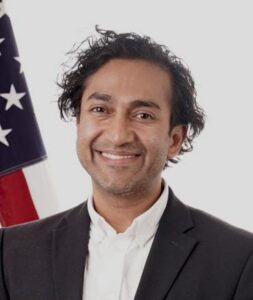
However, shares zoomed another 51% in Friday after-hours trading as soon as it was announced that Vinayak (Vinay) Prasad, MD, was resigning as the FDA’s chief medical and scientific officer and director of the FDA’s Center for Biologics Evaluation and Research (CBER), effective at the end of April.
At the center of uniQure’s stock gyrations is the agency’s doubling down against approving AMT-130 under Prasad’s direction of CBER. The FDA center assesses gene therapy applications like uniQure’s as well as vaccine applications like mRNA-1010, the seasonal flu vaccine candidate of Moderna (NASDAQ: MRNA) that also encountered agency resistance before President Donald Trump voiced frustration to Prasad’s boss, FDA Commissioner Martin Makary, MD—a claim denied by the administration.
The FDA stunned uniQure in November when it told the company that what it had called “game-changing” data in September, showing significant slowing of HD progression in patients treated with the gene therapy candidate, may not be enough to secure FDA approval. The data prompted one analyst to predict AMT-130 would generate $4 billion peak worldwide annual sales by 2032, though a consensus of other analysts forecasted just $1.7 billion in peak sales.
“Strong” sham surgery recommendation
The FDA stepped up its jawboning against uniQure on March 2, when it issued what the company termed a “strong” recommendation to conduct a prospective, randomized, double-blind, sham surgery-controlled study to support a future marketing application for AMT-130. The FDA concluded that data from uniQure’s earlier Phase I/II study, which compared AMT-130 to an external control, were not sufficient to provide the primary evidence of effectiveness needed for the agency to approve AMT-130.
Key among uniQure’s Phase I/II results was the statistically significant 75% slowing of disease progression as measured by the composite Unified Huntington’s Disease Rating Scale (cUHDRS) in patients treated with the high dose of 6×10¹³ gc/subject of AMT-130. That more than met the primary endpoint of the Phase I/II study, which consisted of trials in the United States (NCT04120493) and Europe (NCT05243017).
The positive data explain why patients would even take the risk of an invasive double-blind sham surgery, though some patients wouldn’t even receive the gene therapy, while the data negates the need for the extra study, HD advocate Rachel Reising said in a video posted on X.
“Yes, with any surgery, there is a risk. But most people in the Huntington’s disease community who would qualify for the surgery have said that they would accept the risk if it means they could have 75% of their life back. That is a huge number,” Resing said. “I, along with so many people are frustrated that the FDA is not listening to us. They’re not listening to patient voices.”
Clash on sham surgery risk

Walid Abi-Saab, MD, uniQure’s chief medical officer, told analysts on the company’s quarterly earnings call on March 2 that during the sham surgery, “patients would be anesthetized for an extended period of time, 10 to 12 hours, where you have to cut through the skin and maybe superficially drill a hole on the skull without really going through the bone.”
“These elements represent risk for these patients, especially if the length of the study is two or three years, and they would spend all this time not knowing whether they get a drug or not,” Abi-Saab added.
The U.S. Department of Health and Human Services (HHS) defended the FDA sham trial request by aiming another broadside at uniQure: “The company’s description of what the control arm participants are going through is completely distorted,” HHS spokesman Andrew Nixon told Bloomberg News.
Uy Ear, a vice president and senior equity analyst at Mizuho Securities specializing in the U.S. healthcare and biotechnology sectors, said the sham surgery requirement would not only slow down development of AMT-130: “We believe such a study would be challenging to execute and potentially unethical,” he wrote, as quoted by The Wall Street Journal. Mizuho chopped its 12-month price target on uniQure shares 64%, from $33 to $12.
uniQure stock responded to the FDA’s new trial request by nosediving over two trading days, from $15.63 on February 27 to $9.03 on Tuesday, before the price flattened on Wednesday, closing up one cent (0.01%) at $9.04.
“Stone cold negative”
On Thursday, the FDA intensified its verbal war with uniQure through an unusual telephone briefing for a group of reporters primarily from national general-interest news outlets. GEN did not receive an invitation to the call, during which an official who insisted on anonymity took issue with an earlier placebo-controlled clinical trial conducted by uniQure, saying (as quoted by Reuters) that the trial outcome “was stone cold negative. We have a failed product here.”
The anonymous official, who was not confirmed at deadline, was identified as Prasad by Rep. Jake Auchincloss (D-MA), setting off public criticism by a Prasad supporter about the Congressman’s campaign contributions from donors tied to biopharma.
Yet instead of further crushing uniQure stock, the FDA’s singling out of uniQure had the effect of rallying investors to the company’s stock, which rebounded with an 18% jump Thursday to $10.65, then a 34% leap Friday, finishing the week at $14.27.
Two theories emerged to explain the stock bounce-back: The stock had been underpriced after the Monday–Tuesday selloff, and investors responded by “buying the dip.” And some investors speculated that uniQure would seek a smoother path to AMT-130 approvals outside the United States, namely through more clinical studies in Europe and/or the U.K. uniQure will actively pursue talks with regulators in both regions, Kylie O’Keefe, uniQure’s chief customer and strategy officer, said on the earnings call.
But there was no doubt why uniQure shares rocketed 64% to $23.41 Friday after hours as of 5:45 pm ET, before settling to $21.55 and a 51% gain—the announcement of Prasad’s sudden second resignation.
“Matter of when, not if”
“Recent backlash over the last several weeks/months suggested the ‘writing was on the wall,’ and Prasad’s departure was a matter of when, not if,” observed Mani Foroohar, MD, a senior research analyst with Leerink Partners focused on genetic medicines.
“Net/net, we see several positive readthroughs across our genetic medicine universe and the broader rare disease landscape,” Foroohar wrote in a research note, citing the after-hours stock increases of uniQure and three other companies:
- Regenxbio (NASDAQ: RGNX)—Up 29.5% to $11.20 at 5:04 p.m. before settling at $10.14 and a 17% gain.
- Neurogene (NASDAQ; NGNE)—Up 0.14% to $22.20 at 7:05 p.m.
- Lexeo Therapeutics (NASDAQ: LXEO)—Up 4% to $7.12 before settling at $6.86 and a 15% gain.
Makary praised Prasad on X, citing his roles in carrying out policies such as lowering the number of required pivotal trials from two to one, and launching the “Plausible Mechanism” framework for reviewing drugs for ultra-rare diseases.
“Under his leadership, his center hit a record number of approvals in Dec[ember],” Makary added. “He got a tremendous amount accomplished within his one-year sabbatical from UCSF [University of California, San Francisco].”
After declining comment immediately following the Thursday call, uniQure itself jumped into the proverbial fray Friday with a statement expressing confidence in the data it submitted to the agency and AMT-130’s potential to treat HD, as well as support for the FDA’s stated goal of developing meaningful treatments for patients with rare diseases.
“Highly irregular, unprecedented”
“The recent statements made by anonymous FDA sources to the press have been highly irregular, unprecedented, and are incomplete or entirely incorrect,” uniQure fumed. “We do not believe they reflect a fair and faithful reading of the documents we have submitted or those we have received from the agency.”
“uniQure is ready to move forward,” the company added. “We welcome renewed direct conversation, in the interest of restoring and preserving the integrity of the review process and bettering the lives of patients.”
HD patient advocates have rallied behind uniQure and AMT-130. The Huntington’s Disease Society of America (HDSA) issued a statement urging the FDA to show regulatory flexibility in evaluating rare disease treatments, and defending placebo-controlled trials as gold-standard science while acknowledging the “heavy weight” borne by patients in placebo trial arms.
“For our families, a two-year sham-controlled period is not a ‘neutral’ observation window; it is a period of active, irreversible neurodegeneration. Every month spent in a placebo/sham arm represents a loss of neurons that no future treatment can restore,” HDSA stated. By the time a sham-group participant may eventually receive the therapy, they may have progressed past the therapeutic window where a treatment could have best preserved their quality of life.”
Amy Gray, president and CEO of HDSA, told the patient news website Being Patient that the organization “just wants the FDA to honor their previous guidance.”
Could Have Been Worse: Moderna Shares Climb on Up-to-$2.5B Settlement with Arbutus, Roivant
Bad as it is being on the hook for up to $2.25 billion—including $950 million that must be paid upfront—it could have been much worse for Moderna (NASDAQ: MRNA). The mRNA-based vaccine developer had faced a much steeper potential settlement of its patent dispute with two other companies over the lipid nanoparticle (LNP) technology used in its SpikeVax® COVID-19 jabs.
Arbutus Biopharma (NASDAQ: ABUS) and Genevant Sciences, a subsidiary of Roivant Sciences (NASDAQ: ROIV), joined Moderna in resolving their five-year LNP dispute on the eve of a trial at the Court of Appeals for the Federal Circuit (CAFC). Moderna agreed to pay the upfront $950 million in July to Arbutus and Genevant Sciences, a developer of nucleic acid delivery platforms with a portfolio of LNP patents.
Moderna also agreed to pay the companies up to $1.3 billion should a federal appellate court rule that Genevant’s and Arbutus’s claims against Moderna for patent infringement are not barred under Title 28 of the U.S. Code, Section 1498, except for doses found to have gone to U.S. government employees by the U.S. District Court for the District of Delaware, which heard the initial patent case (1:22-cv-00252). Moderna has argued that U.S. taxpayers should be liable under Section 1498 for its infringement of the Genevant and Arbutus LNP patents for sales made under one of its government contracts.
Under the settlement, Moderna agreed that CAFC should enter a judgment of infringement and no invalidity for four Genevant/Arbutus patents—No. 9,504,651, an LNP formulation patent providing apparatus and processes for producing liposomes, titled “Lipid Compositions for Nucleic Acid Delivery”; and three “molar ratio patents” (Nos. 8,492,359, 9,364,435, and 11,141378), all titled “Lipid Formulations for Nucleic Acid Delivery” and covering formulation, production, delivering, and/or administering lipid particles.
Genevant also agreed to grant Moderna a global nonexclusive license to LNP delivery technology for infectious disease applications, as well as a covenant not to sue for certain Genevant/Arbutus patents and Moderna products.
“Nobel laureates, industry executives, and prominent researchers have long recognized that Arbutus scientists changed the drug development landscape when they invented LNP delivery technology, enabling nucleic acids, including mRNA, to be used for medicines and opening a new world of possibilities,” Arbutus CEO Lindsay Androski stated. “Moderna has finally acknowledged the same.”
16% surge
Investors responded to the settlement with a mini surge that sent Moderna shares jumping 16% from $49.83 to $57.80 on Wednesday. The stock bump reflected apparent investor relief that the vaccine developer didn’t have to shell out even more money to Genevant and Arbutus.
“The settlement value was better than feared,” Myles R. Minter, PhD, a partner and biotechnology analyst with William Blair, commented in a research note. “Investors were contemplating the impact of Moderna being liable for close to $5 billion in projected liability, which would raise potential liquidity concerns if a judgment granting payment of this magnitude was made at trial/appeal.”
Roivant shares increased 6% over two days, from $27.85 to $29.52 Wednesday, then to $29.72 Thursday. Arbutus shares dipped 1% during that period, from $4.75 to $4.70.
“We see Moderna moving past this litigation overhang as a positive clearing event,” Minter added, because the company has gained certainty that it will be well funded this year as it reads out multiple late-stage data readouts for intismeran autogene (mRNA-4157 or V940), the cancer vaccine it is developing with Merck & Co. (NYSE: MRK).
In January, Moderna and Merck read out positive median five-year interim data from the Phase IIb KEYNOTE-942/mRNA-4157-P201 trial (NCT03897881) assessing the combination of intismeran autogene and Merck’s blockbuster cancer immunotherapy Keytruda® (pembrolizumab) as adjuvant treatment for high-risk melanoma (stage III/IV) following complete resection. Moderna has said that the companies anticipate releasing additional data on the cancer vaccine from:
- The Phase III INTerpath-001 trial (NCT05933577) evaluating intismeran autogene as an adjuvant treatment for melanoma.
- The Phase II INTerpath-004 study (NCT06307431) comparing the cancer vaccine plus Keytruda to Keytruda plus placebo as an adjuvant treatment for renal cell carcinoma.
- The Phase I KEYNOTE-603 trial (NCT03313778) studying intismeran autogene as an adjuvant therapy for pancreatic cancer and peri-operative gastric cancer.
All of these indications “represent new long-term growth drivers for the company,” Minter noted. He maintained his firm’s “Market perform” rating on Moderna shares.
De-risking opportunity
Why did Roivant agree to the settlement rather than pursue a trial where it potentially stood to gain far more from Moderna?
“This settlement represents an opportunity to significantly de-risk our LNP litigation while ensuring a meaningful and immediate financial outcome,” Matt Gline, CEO of Roivant Sciences, told GEN. “Securing $950 million in near-term cash, with the significant upside potential of a further $1.3 billion, provides certainty and allows us to crystallize the value of this IP for Genevant and Arbutus.”
By directing the CAFC to enter a judgment of no invalidity for the LNP patents, Gline explained, the settlement “provides helpful support in our other cases.”
Those cases include Genevant/Arbutus’s ongoing patent dispute with Pfizer (NYSE: PFE) and BioNTech (NASDAQ: BNTX), which partnered to develop SpikeVax’s rival COVID-19 mRNA-based vaccine, Comirnaty®.
Gline said Roivant’s litigation with Pfizer and BioNTech is ongoing and proceeding through standard legal process following a favorable claim construction hearing or “Markman ruling” in September 2025 that determined the scope of patent protection.
Asked what settlement efforts had occurred with Pfizer and BioNTech, Gline replied: “As with most patent disputes, parties may have discussions at various stages of litigation, but we cannot comment on specific conversations.”
While SpikeVax generated $48 billion in sales between 2020 and 2025, Pfizer and BioNTech racked up $101 billion ($23 billion U.S., $78 billion ex-U.S.) during that period, giving the companies roughly two-thirds of the mRNA-based COVID-19 vaccine market.
Would that make Roivant less likely to entertain a settlement with Pfizer and BioNTech than it was with Moderna? Gline isn’t saying.
“Each case is evaluated independently based on its legal merits and what outcome best serves the company and its shareholders,” the Roivant CEO said. “Our priority is ensuring that our intellectual property is appropriately recognized and that any outcome, whether through litigation or a negotiated resolution, reflects the value of the foundational technology developed by Genevant and Arbutus.”
Leaders and laggards
- Day One Biopharmaceuticals (NASDAQ: DAWN) shares catapulted 66% from $12.78 to $21.20 Friday after the Brisbane, CA-based targeted therapy developer announced it was being acquired by privately held, foundation-governed Servier Group for approximately $2.5 billion. French-based Servier reasons that the deal will reinforce Servier’s position in targeted therapies for rare cancers by expanding its drug pipeline and helping it fulfill its Servier 2030 strategy by strengthening its oncology “pillar.” At $21.50 a share cash, the deal price represented premiums of approximately 68% over the closing price of Day One shares on Thursday, and approximately 86% over the one-month volume weighted average price (VWAP) of Day One as of that day. Servier expects to use existing cash and investments to fund the transaction, which is subject to customary closing conditions and is expected to close in the second quarter.
- Tango Therapeutics (NASDAQ: TNGX) shares soared 36% from $12.35 to $16.83 Thursday, in part after the company announced it had entered into a clinical supply agreement of undisclosed value with Erasca (NASDAQ: ERAS) for its pan-RAS molecular glue ERAS-0015, with the aim of conducting a clinical trial evaluating Tango’s cancer candidate vopimetostat, an oral PRMT5 inhibitor, in combination with ERAS-0015 for pancreatic cancer and other tumor types. Investors were also buoyed by news that Boxer Capital management had purchased 1,104,734 additional shares of Tango stock valued at $9.52 million based on quarterly average pricing. As a result, Boxer’s stake in Tango increased to 10,876,219 shares valued at $96.36 million, based on the purchase of shares and stock price increases.
The post StockWatch: Under Fire from FDA, uniQure Stock Roller-Coasters appeared first on GEN – Genetic Engineering and Biotechnology News.