A new study has uncovered new genetic rules that determine how CD8 “killer” T cells choose between becoming long-lasting, protective immune cells or slipping into exhausted, dysfunctional states. Turning off just two of these genes allowed exhausted T cells to regain their tumor-killing capacity.
The paper published in Nature titled, “Atlas-guided discovery of transcription factors for T-cell programming,” establishes a predictive framework to reprogram T cells to sustain immune memory while preserving their ability to fight cancer and infections, offering broad implications for cancer immunotherapy and infectious disease research.
The multi-institutional study was led by researchers at the Salk Institute for Biological Studies, UNC Lineberger Comprehensive Cancer Center, and UC San Diego.
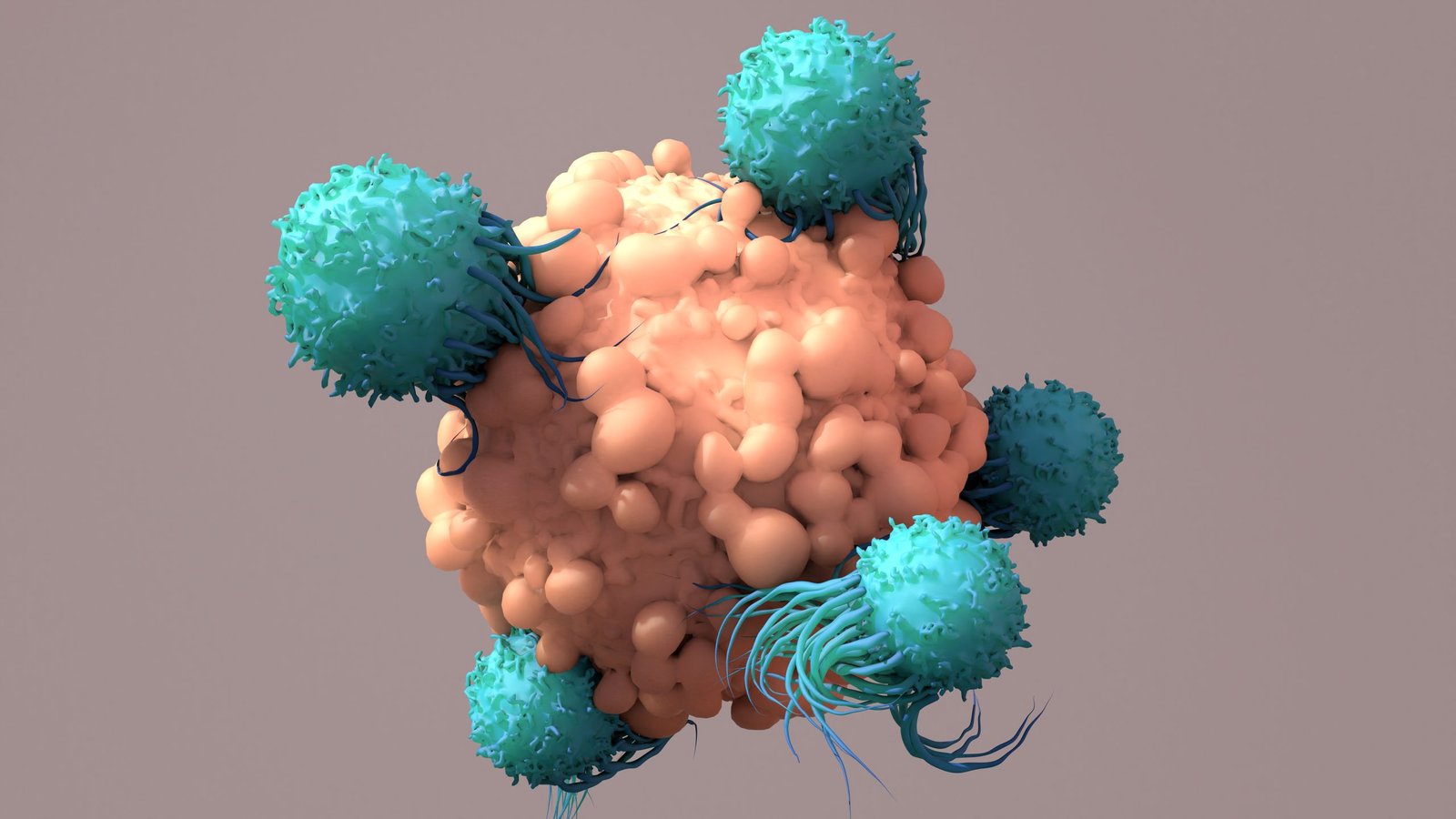
CD8 T cells play a central role in the immune system by identifying and attacking virus-infected cells and cancer cells. However, during chronic infections or within tumors, these cells can gradually lose their killing capacity and enter T-cell exhaustion.
The authors created a detailed genetic atlas of various CD8 T-cell states, capturing how these immune cells change across a spectrum from highly protective to deeply dysfunctional. The atlas distinguishes between protective and exhausted CD8 T-cell states based on the genetic level.
“Our long-term goal is to make immune therapies work better by creating clear ‘recipes’ for designing T cells,” said Susan Kaech, PhD, a professor at the Salk Institute and co-corresponding author of the study. “To do that, we first needed to identify which molecular ingredients are uniquely active in one T-cell state but not others. By building a comprehensive atlas of CD8 T-cell states, we were able to pinpoint the key factors that define protective versus dysfunctional programs—information that is essential for precisely engineering effective immune responses.”
The researchers analyzed nine distinct CD8 T-cell states and identified specific transcription factors that act like molecular switches, steering T cells toward either long-term function or exhaustion.
Two transcription factors, ZSCAN20 and JDP2, had not previously been linked to T-cell exhaustion. Disabling these transcription factors caused exhausted T cells to regain their ability to kill tumors without losing their capacity for long-term immune memory.
“We flipped specific genetic switches in the T cells to see if we could restore their tumor-killing function without damaging their ability to provide long-term immune protection,” said H. Kay Chung, PhD, assistant professor at UNC Lineberger and another co-corresponding author. “We found that it was indeed possible to separate these two outcomes.”
The study challenges the long-standing belief that immune exhaustion is an unavoidable consequence of prolonged immune activity.
This genetic atlas of T-cell states can guide the development of supercharged T cells for use in cellular therapies such as adoptive cell transfer (ACT) and CAR T-cell therapy.
“Once we had this map, we could start giving T cells much clearer instructions—helping them keep the traits that allow them to fight cancer or infection over the long term, while avoiding the pathways that cause them to burn out,” said Kaech. “By separating these two programs, we can begin to design immune cells that are both durable and effective in cancer and chronic infection.”
The researchers say the findings should be especially relevant for treating solid tumors, where separating protective immune responses from exhaustion is critical for effective therapy.
“Because genes work together in complex regulatory networks that are difficult to decipher, powerful computational tools are essential to pinpoint which regulators drive specific cell states,” said Wei Wang, PhD, professor at UC San Diego and co-corresponding author. “This study shows that we can begin to precisely manipulate immune cell fates and unlock new possibilities for enhancing immune therapies.”
The post T-Cell Programming Transcription Factors Unveiled by Atlas Discovery appeared first on GEN – Genetic Engineering and Biotechnology News.